News

Posts tagged:

LCMS

Rapid Growth for Mozambique’s Lutherans

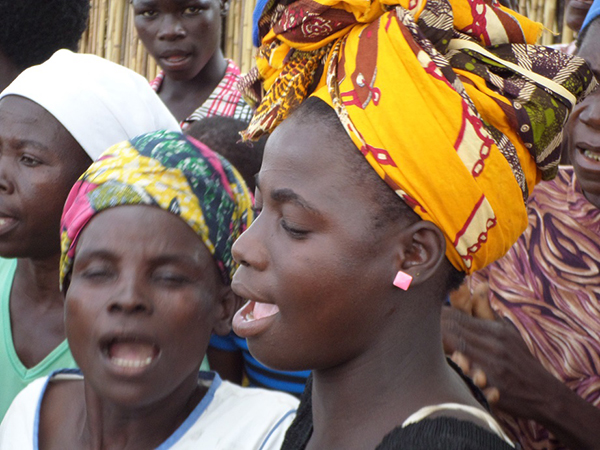
Mozambican women sing during a worship service.

Mozambican women sing during a worship service.

MOZAMBIQUE – Missions in Mozambique continue to bear fruit as the Lutheran Church of Concord in Mozambique (Igreja Luterana da Concórdia em Moçambique – ILCM) shares the good news of Jesus Christ.

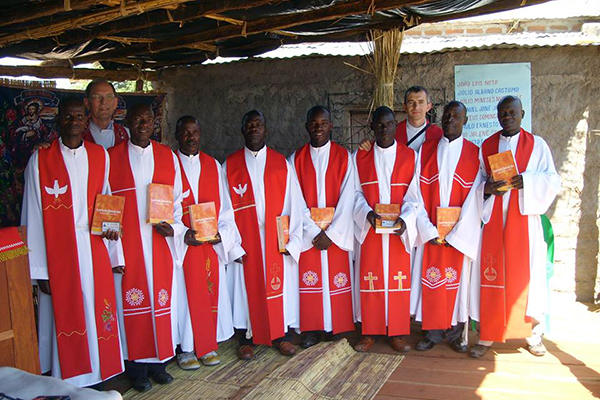
In August 2015, the ILCM celebrated the ordination of its first graduating class of pastors—eight pastors to serve the young church body’s then ten churches. The celebration saw approximately 1,000 members converge on Villa de Sena, an event which drew considerable local and even national attention.

Amambo and Maviga

Among those discussing the event were Christians in Amambo, who heard the story from a local woman, who herself heard it from a truck driver. The Christian community in Amambo had been left on their own five years earlier, when the priest serving them left the village. Without pastoral care, the congregation remained isolated and alone, slowly dwindling as members fell away. The news of the ILCM ordination celebration encouraged the remaining congregation members to try to make contact with the Lutherans they had just learned of.

Two members travelled twenty kilometers by bike to a nearby town, where they found transportation by truck to Villa de Sena. In total, their trip took two days along rough roads in territory known to be frequented by lions. When they finally arrive in Villa de Sena, they were directed to Rev. Manuel Jambo, President of the ILCM, who welcomed them into his home. After a night of conversation they joined President Jambo and Rev. Mateus Sifa at the local church for worship. They returned to Amambo with the good news that the Lutherans had agreed to visit them to begin a course of instruction.
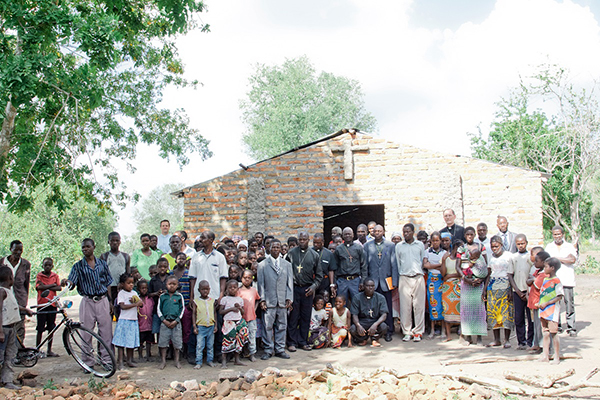
Rev. Winterle and pastors of the Lutheran Church of Concord in Mozambique visit the congregation in Amambo.

Rev. Winterle and pastors of the Lutheran Church of Concord in Mozambique visit the congregation in Amambo.

Within a few weeks, the newly ordained pastors from the ILCM did indeed visit. And on September 6, 2015, members, pastors, and visitors dedicated the Lutheran Church of Amambo. Just three weeks later, they dedicated another congregation fifty kilometers away in Maviga, as the members of Amambo shared the clear Gospel message they were now receiving.

Nine months later, international partners had the opportunity to visit the Amambo congregation. Rev. Carlos Winterle, a Brazilian pastor serving the Free Evangelical Lutheran Synod in South Africa (FELSISA) with long-time involvement in the mission in Mozambique, and Rev. Shauen Trump, Area Director for Eastern and Southern Africa for The Lutheran Church—Missouri Synod (LCMS), joined eight local pastors in visiting the community. 110 members were on hand to welcome them. Knowing that the guests would be unable to visit Maviga on the same trip, the congregation there also sent a delegation to welcome them as well—twenty-one representatives who travelled the fourteen-hour journey by foot.

Cado
Women and children in Cado sing.

Women and children in Cado sing.

The village of Cado similarly found themselves interested in learning more about Lutherans—though their reasons for doing so are somewhat different. The Christians of Cado paid dearly for pastoral services, struggling under the tyranny of a pastor who mandated a substantial cash payment for each visit. It was not until villagers started going to town, some forty-five kilometers away, to find a market for their goods that they realized not all churches operate in the same way.

When the possibility of life together under a different model came to light, the congregation took action to learn more. They sent out two youth by bicycle to Villa de Sena to make inquiries of the churches there—and once they arrived they met President Jambo and Rev. Sifa. President Jambo hosted the two Cado villagers in his home, where they discussed the theology of stewardship, offerings, and matters of financial administration in the church. Through these discussions, President Jambo was able to clearly share the Gospel, and explain the church’s focus on Word and Sacraments.

That Sunday, the two villagers attended São Paulo Lutheran Church in Villa de Sena, and got to see these focuses in practice. By the end of the service, their path was clear. They explained to the church members in Villa de Sena that they were sent out to find a parent church body for their congregation, and that they had been convicted that the Lutheran church was the one they had come to find. The Cado villagers requested the blessing of the São Paulo congregation to send a pastor to support a Lutheran church in Cado.

A few weeks later, three Lutheran pastors traveled to visit the people of Cado. The first Lutheran service was attended by fifty villagers meeting under a tree. Within a year, the congregation had grown to eighty.

Cado-Nhachiva
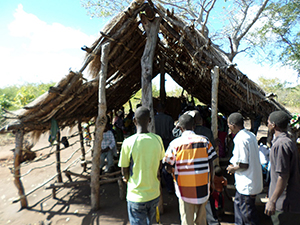
The congregation in Nhachiva assembles.

The congregation in Nhachiva assembles.

It was in ministering to the community of Cado that another mission opportunity presented itself. Rev. Sifa was traveling the forty-five kilometer trip home from Cado—a trip that would be taxing in the best of circumstances, and even more so on one of Africa’s typical heavy one-speed bicycles on rough dirt roads. About ten kilometers into the trip, Rev. Sifa stopped at a trading centre for rest and a refreshment. While there, a teacher noted his clerical collar and asked if he were a priest. Rev. Sifa explained he was a pastor of the Lutheran Church, and they began to discuss the history and doctrine of Lutheranism. Interested in what the pastor had to say, the teacher asked him to consider starting a church in his village of Cado-Nhachiva.

Several weeks later, Rev. Sifa was on his way to Cado again. On the way he found the teacher and several other villagers waiting for him in Cado-Nhachiva. Rev. Sifa spoke with them and invited to travel with him to the church in Cado. They went. Not much later, Cado-Nhachiva held its first worship service, with 80 people attending. Today 150 members regularly attend services where the Gospel is clearly proclaimed.

Suero

The clarity of the Gospel preaching done by Lutherans is making an impact elsewhere in Mozambique too. In Chemba, a local community radio station host learned that firsthand. In Chemba, as in communities across Mozambique, the radio station gives regular airtime to local pastors. But when Lutheran pastor Rev. Julio Castomo had his first moment on air, the host was taken aback by his message. It was so different from the other preachers who came for their five-minute radio time.

After the broadcast, the host spoke extensively with Rev. Castomo about his message and about the church. The next day, he came to visit the pastor in his home. And that Sunday, he came to church to learn more. Immediately afterwards, he travelled to his home village of Suero to tell his extended family about the love of Christ. They asked him to go back to Chemba, collect Rev. Castomo, and bring him to tell them himself. After a few evangelistic visits, the people of Suero organized a church and invited Rev. Castomo to come. The first week 60 people attended. The next week there were 80.

And Others
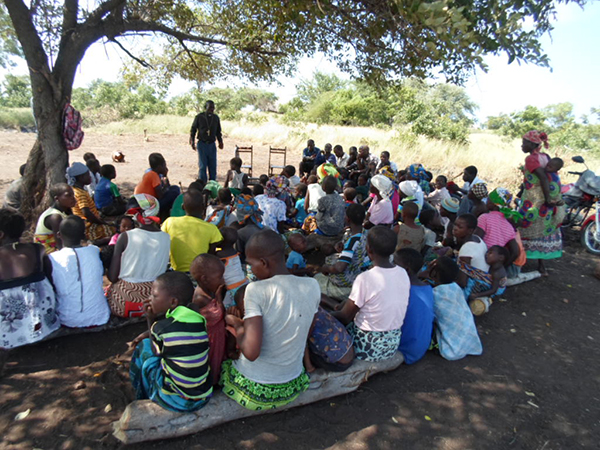
Preaching in one of the new congregations near Kapasseni.

Preaching in one of the new congregations near Kapasseni.

The ILCM has welcomed other churches too. Rev. Rui Jalene Souza of Kapasseni has seen his evangelistic visits to nearby villages bear fruit, with four new congregations planted in the area. And an independent congregation in Mutarara, hearing of the ILCM’s work, recently sent two representatives forty kilometers to Villa de Sena looking for a church body with substance. The dedication of a Lutheran congregation in Mutarara is expected in the near future. Work continues in other areas as well.

There is a burning desire in Mozambique for clear Gospel preaching, both among the unchurched and those lacking pastoral care. The Lutheran Church of Concord in Mozambique is meeting that need, and they are supported in that work by faithful international partners. The Evangelical Lutheran Church of Brazil (IELB); the Free Evangelical Lutheran Synod in South Africa (FELSISA); The Lutheran Church—Missouri Synod (LCMS); The Mission of the Lutheran Churches (Bleckmarer Mission) of the Independent Evangelical Lutheran Church of Germany (SELK); and Redeemer Lutheran Church (Victoria, B.C., Canada) have all signed a memorandum of understanding with the pastors of the Lutheran Church of Concord in Mozambique to provide guidance to ongoing mission work in the country.

Lutheran missions in Mozambique grew out of the work of now retired Lutheran Church–Canada (LCC) pastor Rev. Joseph Alfazema and his wife Perpetua. Their work resulted in the creation of the Kapasseni Project, a Canadian organization that helped lead to the creation of a Mozambican Lutheran church body.

IELB, FELSISA, LCC, SELK, and the LCMS are all member churches of the International Lutheran Council, a global association of confessional Lutheran church bodies.

———————

The above article incorporates reporting by Rev. Shauen Trump based on translation by Rev. Winterle. Photos are by them, Carlotta C. Thies, Rony Marquardt, and Mateus Sifa.
Philippine Lutherans sign protocol agreement with Missouri Synod

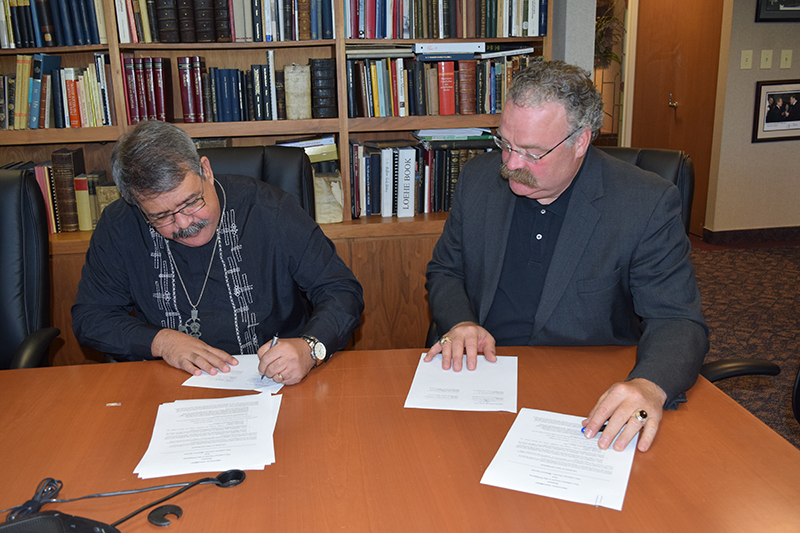
LCP President Antonio Reyes and LCMS President Matthew Harrison sign the protocol agreement.

LCP President Antonio Reyes and LCMS President Matthew Harrison sign the protocol agreement.

USA – On June 8, the Lutheran Church of the Philippines (LCP) and The Lutheran Church—Missouri Synod (LCMS) signed a protocol agreement during a meeting in St. Louis, Missouri.

The agreement outlines how the two church bodies will work together going forward in such areas as higher education (theological education), cooperation in mission work, communications, and other programs. It further highlights that the basis for fellowship between the two churches is their joint witness to the authority of Holy Scripture and subscription to the Book of Concord.

The protocol agreement was signed by LCP President Antonio Reyes and LCMS President Matthew Harrison, as well as LCP Vice President Felipe Ehican and LCMS Director of Church Relations Al Collver.

The Lutheran Church of the Philippines has approximately 25,000 members. The LCMS has approximately two million members. Both churches are members of the International Lutheran Council, a global association of confessional Lutheran churches.

———————

LCMS reelects Matthew Harrison

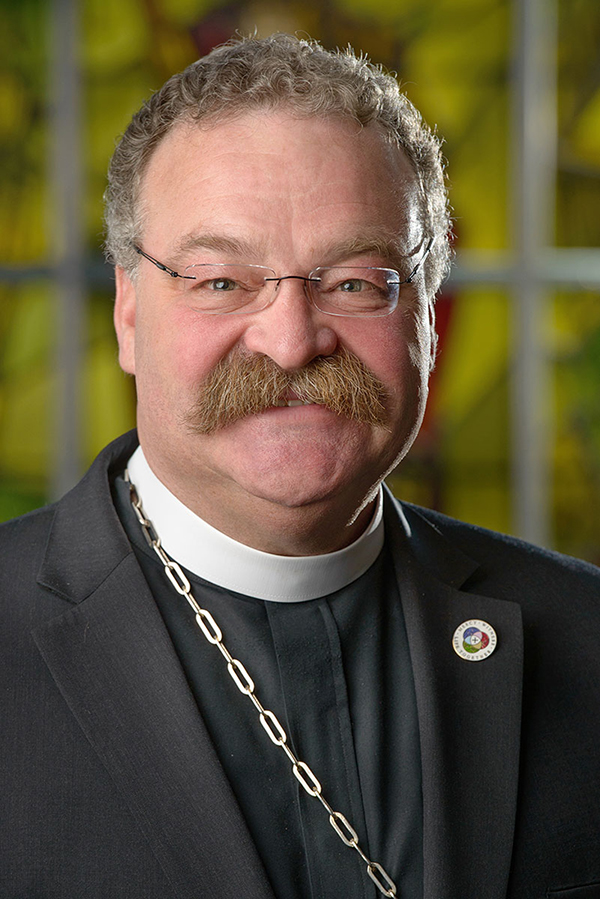
President Matthew C. Harrison (Photo: LCMS Communications).

President Matthew Harrison (Photo: LCMS Communications).

USA – The Lutheran Church—Missouri Synod (LCMS) has announced that Rev. Dr. Matthew C. Harrison has been reelected as President.

President Harrison was elected on the first ballot, receiving 56.96 percent of the votes cast. This is President Harrison’s third term, having first been elected to serve as president of the LCMS in 2010.

Also nominated were Rev. Dr. Dale A. Meyer and Rev. Dr. David P.E. Maier, who received 36.66 percent and 6.38 percent of the votes respectively.

News of President Harrison’s reelection comes several weeks before the LCMS holds its 2016 national convention. In the LCMS, presidential elections are held four weeks in advance of the national convention. Voting delegates from each congregation in the synod were invited to vote electronically from June 11-14, and the results of the election were made public June 15.

Delegates will gather in Milwaukee at the Wisconsin Center for the 66th convention of the LCMS from July 9-14, 2016. Elections for Vice-Presidents and other synodical officers will take place during the convention.

The LCMS, an American church body with more than two million members, is a member of the International Lutheran Council, a global association of confessional Lutheran churches.
———————

SELK welcomes New Director to Wittenberg

SELK representatives welcome Director Kristin Lange to Wittenberg.

SELK representatives welcome Director Kristen Lange to Wittenberg.

WITTENBERG, Germany – On April 7, representatives of the Independent Evangelical Lutheran Church of Germany (SELK) met with the new Director of the International Lutheran Society of Wittenberg (ILSW), Kristen Lange, in Wittenberg’s Old Latin School.

Since the historic building in Wittenberg’s Old Town was restored and renovated as a study and welcome center, it began serving in its new role during the past year.  The comprehensive building phase was headed up by Rev. David Mahsman. Now, as things transition into the programming phase, Kristen Lange has assumed responsibilities as its director. The SELK works together in the ILSW with its U.S. partner, The Lutheran Church-Missouri Synod (LCMS). The LCMS’ mission department employs Director Lange as a missionary to Germany.

Director Lange, an academically-trained linguist (in German and English), had opportunity to visit with SELK Bishop Dr. Hans-Jörg Voigt, SELK District Presidents Peter Brückmann (of Berlin) and Thomas Junker (of Weissenfels), Rev. Markus Fischer (of Trinity Lutheran Church, Leipzig, which has responsibility for Wittenberg), Ulrich Schroeder (of Dresden) and Dr. Andrea Grünhagen (of Hannover, a theological resource executive). The SELK delegation took the opportunity to get acquainted and extend a sincere welcome to Germany. Rev. Mahsman also participated in the conversation, which, in addition to information about SELK church structures and procedures, considered upgrading a preaching presence in Wittenberg, as well as public relations, outreach, and preparations for the “World Reformation Exhibition,” planned for Wittenberg as part of the 2017 Reformation anniversary.

Bishop Voigt explained to SELK-News that he is filled with gratitude every time he visits the Old Latin School. “The strong LCMS engagement, which also involved the SELK, has brought results. I wish Kristen Lange a good adjustment to Germany and the Lord’s blessing for her work.”

Translation:  Robert Bugbee

Confessional Lutherans and Anglicans in North America draw closer together


ACNA-LCMS-LCC-2016-banner

NORTH AMERICA – Participants in the Anglican Church in North America (ACNA), The Lutheran Church—Missouri Synod (LCMS), and Lutheran Church–Canada’s (LCC) ongoing ecumenical dialogue have released an interim report on their work so far. Entitled “On Closer Acquaintance,” the document is the culmination of six years of regular discussions between the three church bodies, and highlights the discovery of significant doctrinal agreement between the Anglican and Lutheran participants.

The authors are clear that there is still much work to be done before altar and pulpit fellowship between the two sides would be possible. Nevertheless, they have found the discussions promising enough to publicly declare their prayer “that, in the time and manner of His choosing, our Lord would grant each side in our conversations to acknowledge our ‘first cousin’ to be in fact a true sister church, with the result that we would welcome each other wholeheartedly to our respective altars and enjoy the blessed situation in which our clergy and people would be interchangeable with each other as we stand under the grace of God and work for His kingdom.”

In the meantime, they encourage all three church bodies to “consider the ways in which we can cooperate and come together in ways that fall short of full communion but do allow the greatest measure of cooperation while maintaining full theological integrity.”

The report can be download here.

Church leaders react

The leaders of the three churches welcomed the report warmly, reflecting on the growing relationship between confessional Anglicans and Lutherans.

“In a time when so many churches are departing from the teachings of the Bible, it has been refreshing to see the stand for Scriptural Truth that is being made by The Lutheran Church—Missouri Synod and Lutheran Church–Canada,” said ACNA Archbishop Foley Beach. “We agree on the essentials of the Faith, and share a common desire to evangelize North America with the Gospel of Jesus Christ.”

The LCMS’ President Matthew Harrison had a similar perspective. “In these trying times for global Christianity, we were joyously surprised and deeply heartened to learn of ACNA and its struggle to be faithful to the New Testament and historic Christian faith,” he said. “By God’s grace we have found real friends who have encouraged us deeply. We have been inspired by the journey of these men and women out of a church body which had abandoned the New Testament. They have sacrificed greatly, virtually all of them losing the properties of their respective congregations due to the structure of the Episcopal Church. I pray that we would be so courageous facing such difficulties.”

LCC President Robert Bugbee praised the dialogue and the growing theological consensus between confessional Lutherans and Anglicans. “These discussions have been marked by great thoroughness and theological integrity,” he noted. “Nobody reached for easy compromises, nor did anyone paper over matters that needed to be fully worked through on the basis of God’s Word. Biblical Christians throughout North America face many pressures, not only with the secularization of our society, but also because of the doctrinal decay and revisionism in much of mainline Christianity. We thank the Lord for the commitment of our Anglican friends, and ask Him to use our witness to hold Christ the Saviour out to people all around us.”

All three leaders were present for the most recent round of dialogue between the LCMS, ACNA, and LCC, held February 8-9 in St. Louis, Missouri. A major focus of the meeting was finalizing the report on the six-year dialogue so far.

A Comparison of Doctrinal Positions

The report begins by recounting the close history of Anglicans and Lutherans, suggesting that while they are not as yet “sister churches” they are “the closest ecumenical cousins in Christendom.” Moreover, the current divisions in world Anglicanism mirror similar divisions in world Lutheranism. In these situations confessional Anglicans and confessional Lutherans find they have much in common. Each tradition also has much to offer the other: “We note that while Anglicans have been famous for their patterns of prayer and devotion, Lutherans have majored in more precise doctrinal definition and theological precision,” the report states. “While both sides acknowledge the essential quality of both lex credendi and lex orandi, it may be that Lutherans can assist Anglicans toward more careful attention to the first and that Anglicans can help Lutherans to deepen their practice of the second.”

The report continues by comparing the doctrinal positions of the two traditions at length. The churches have found strong agreement on a number of areas, including the subjects of the Trinity, the person of Jesus Christ, the authority of Scripture, the creeds, original sin, justification, and good works.

The talks have also identified areas that require further discussion. In particular, the report notes that “the ordering of the ministry is the area where we have found the most work, study, and discussion needs to be done to reach a common understanding of the connection between our practices.” To that end, the paper encourages Lutherans to “consider the ways in which the ministry of the bishop (as distinct from presbyter) is already at work among them” and encourages Anglicans to consider “how recognition of the office of bishop can go hand in hand with acknowledgement of the unicity of the office instituted by Christ.” Likewise, the report identifies the diaconate as another topic that would be beneficial to discuss.

The two sides also address the topic of female ordination in the report. The LCMS and LCC both understand the ordained ministry to preclude women. The report notes that a majority within ACNA also hold this position even as they are “engaged at the present time in a consensus-seeking discussion with the minority within its midst that takes the opposite view.”

Additional doctrinal stances compared in the report include the Church, Holy Baptism, Holy Communion, Holy Absolution, and the role of Christian rulers.

Moving Forward

“When our open-ended conversations began six years ago, some of the signatories to this report approached our task with a mixture of low expectations and a certain nervousness before the unknown,” the report admits in its conclusion. “All of us are somewhat surprised to have discovered the deep common bonds between us in the Body of Christ, and to have registered the large measure of consensus that we have documented above. We regard these things that we have discovered together as a gift of the Lord, and trust Him to use our findings to His glory and to the good of the universal Church. As we commend this report to the people and clergy of ACNA, LCMS, and LCC, we encourage Lutherans and Anglicans to remember each other in prayer, embrace one another in Christian love, to encourage each other to confess Christ boldly in our ever darkening times, and to support each other in mission and outreach in faithfulness to Him who has laid the same Great Commission on us all.”

Elsewhere in the report the authors write, “We earnestly hope that these pages may be read and pondered as widely as possible by the clergy and people of our respective church bodies, not only in private but also in the setting of Bible classes, clergy and theological conferences, and other appropriate forums of Christian education.”

Lutheran Church–Canada and The Lutheran Church—Missouri Synod are both members of the International Lutheran Council, a global association of confessional Lutheran church bodies.
———————

LCMS, WELS, and ELS leaders report significant doctrinal agreement

wels-els-lcms

USA – The Lutheran Church—Missouri Synod (LCMS), the Wisconsin Evangelical Lutheran Synod (WELS), and the Evangelical Lutheran Synod (ELS) have released a report noting significant doctrinal agreement between the three synods, following three years of informal dialogue.

Following a fourth meeting held December 2, 2015, leaders of the three synods agreed to the publication of A Report on the Meetings of ELS, LCMS, and WELS Leaders 2012-2015. Among the representatives present for the event were LCMS President Matthew C. Harrison, WELS President Mark Schroeder, and ELS President John A. Moldstad.

Primary among the contents of the report is an assessment of the doctrinal agreement already shared by the three synods. “We agree that the Bible is the inspired, inerrant Word of God and the only source of authority for doctrine and practice,” the report notes. “We agree that the chief message of the Bible is justification by grace through faith in the merits of Jesus Christ, and that the entire Bible is Christ-centered. All of us also confess without reservation (quia) that the Lutheran Confessions are a correct exposition of the Holy Scriptures.”

The LCMS previously enjoyed fellowship together with the ELS and the WELS until 1955 and 1961, the document notes, before breaking fellowship as a result of doctrinal controversies in the LCMS that peaked in the 1970s. Today, the three synods share such a level of doctrinal agreement that there is a strong desire for further discussion “with the hope that we may be able to come to full agreement under the guidance and blessing of the Holy Spirit.” They note, however, that a number of issues still need to be resolved, writing, “All of us are convinced that church fellowship requires complete agreement in doctrine.”

“It has been a joy to meet with and talk with faithful Lutherans from the WELS and ELS,” said Rev. Dr. Albert B. Collver III, Director of LCMS Church Relations. “We pray that the Lord would continue to bless this endeavor and, Deo volente [God willing], grant a restoration of fellowship between the three synods at some point in the future.”

Read the full report here.

The Lutheran Church—Missouri Synod is a member church of the International Lutheran Council and has approximately 2.1 million members. The Wisconsin Evangelical Lutheran Synod (approximately 400 thousand members) and the Evangelical Lutheran Synod (approximately 20 thousand members) are American churches in full-fellowship with each other. WELS and ELS are member churches of the Confessional Evangelical Lutheran Conference.

———————

LCMS and NALC representatives meet in St. Louis

(Back Row Left to Right): Dr. Joel Lehenbauer (LCMS), Bishop John Bradosky (NALC), Rev. Larry Vogel (LCMS). (Front Row Left to Right): Rev. John Pless (LCMS), Dr. Albert Collver (LCMS), Rev. Mark Chavez (NALC), Rev. Paull Spring (NALC), Rev. David Wendel (NALC)

(Back Row Left to Right): Dr. Joel Lehenbauer (LCMS), Bishop John Bradosky (NALC), Rev. Larry Vogel (LCMS). (Front Row Left to Right): Rev. John Pless (LCMS), Dr. Albert Collver (LCMS), Rev. Mark Chavez (NALC), Rev. Paull Spring (NALC), Rev. David Wendel (NALC)

USA – Representatives of The Lutheran Church—Missouri Synod and the North American Lutheran Church met September 9-10, 2015 in St. Louis, Missouri to continue their bi-annual consultations. The series of meetings began December 2011, at the invitation of President Matthew Harrison of the LCMS as the church bodies seek greater understanding of the other church, ways that there may be cooperation in externals, and be mutually supportive, in spite of differences that exist. A representative of Lutheran Church–Canada normally participates in the meetings as well.

This consultation was the second meeting focusing on Holy Scripture. Four questions were presented and discussed: How did the Bible get here? What kind of book is the Bible? Which method is most suitable for interpreting the Bible? What is the proper use of the Bible?

In addition to presentation of church body reports, other areas of common concern were discussed, including the recent Supreme Court Obergefell decision in the United States, the challenge to marriage in North America, and the response to the persecution of Christians today.

The representatives will meet again in March 2016.

Representing the LCMS were the Rev. Dr. Albert Collver, Director of Church Relations-Assistant to the President; the Rev. Dr. Joel Lehenbauer, Executive Director of the Commission on Theology and Church Relations; the Rev. John Pless, Assistant Professor of Pastoral Ministry and Missions at Concordia Theological Seminary, Fort Wayne; the Rev. Larry Vogel, Associate Director of the Commission on Theology and Church Relations.

Representing the NALC were the Rev. John Bradosky, Bishop; the Rev. Paull Spring, Bishop Emeritus; the Rev. Mark Chavez, General Secretary; the Rev. Dr. David Wendel, Assistant to the Bishop for Ministry and Ecumenism.

———————

Norwegian Lutheran Mission holds meetings with LCMS/ILC

Norwegian Lutheran Mission representatives Hjalmar Bø and Øyvind Åsland pose with ILC/LCMS representative Albert Collver at recent meetings in St. Louis, Missouri.

Norwegian Lutheran Mission representatives Hjalmar Bø and Øyvind Åsland pose with ILC/LCMS representative Albert Collver at recent meetings in St. Louis, Missouri.

ST. LOUIS, MISSOURI – On August 19, 2015, Øyvin Åsland, Executive Director of the Norwegian Lutheran Mission (NLM), and Hjalmar Bø, Director NLM International Department, came to St. Louis, Missouri to visit with The Lutheran Church–Church Missouri Synod and to learn more about the International Lutheran Council (ILC).

The Norwegian Lutheran Mission (NLM) was formed in 1891 as Det Norske Lutherske Kinamisjonsforbund (the Norwegian Lutheran Federation for Mission in China). The NLM is connected to the revival movements in Norway and adheres to the Holy Scriptures, the Ecumenical Creeds, the Augsburg Confession, and Luther’s Small and Large Catechisms. Their slogan is “The World for Christ.” It has approximately 2,500 chapters across Norway and runs nearly 30 schools from the elementary to college-levels. It further operates more than 40 kindergartens and community centers across the country.

The Norwegian Lutheran Mission operates in several of the same countries where the LCMS also operates. For instance, the Norwegian Lutheran Missionaries established Tabor Evangelical College in Ethiopia. Currently, some of Tabor Evangelical College’s faculty are pursuing doctoral studies through the LCMS’ Concordia Seminary in Saint Louis. Missionaries from the NLM have also had frequent contact with LCMS missionaries in places such as Hong Kong, Taiwan, Latin America, and Africa. Although there have been many informal contacts through the years, this is the first time that the Norwegian Lutheran Mission has sought official contacts with the Missouri Synod and with the International Lutheran Council.

The Norwegian Lutheran Mission has been seeking to plant Lutheran churches around the world since 1891 (three years before the LCMS itself began international mission work). Historically, the NLM has been a movement within, but independent of, the Church of Norway. It has, for example, opposed certain actions of the Church of Norway (such as the ordination of women). But the Norwegian Lutheran Mission recently voted to establish its own “religious communities” by a vote of 548 in favor to 121 against.

This vote marks a shift for the NLM, as it moves from being a mission agency inside the Church of Norway to a church in its own rite. As such, the NLM has begun to wrestle with the implications of this decision, including how it will relate to other churches in the world and what sorts of relationships it will seek.

Rev. Dr. Albert Collver (LCMS Director of Church Relations and ILC Executive Assistant) noted that the first formal visit with the Norwegian Lutheran Mission went well, and that members are looking forward to more visits in the future.

———————

First graduating class of pastors for Mozambican Lutherans

Mozambique’s newly ordained pastors pose with TEE instructors Rev. Carlos Winterle (back left) and Rev. André Plamer (back right).

Mozambique’s newly ordained pastors pose with TEE instructors Rev. Carlos Winterle (back left) and Rev. André Plamer (back right).

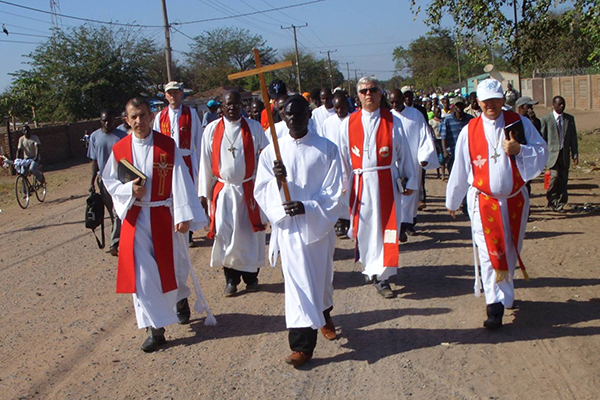
MOZAMBIQUE – Mozambican Lutherans celebrated a major milestone on August 9, 2015, as Concordia Lutheran Church– Mozambique celebrated its first graduating class of eight pastors. The event drew significant local and national attention: more than a thousand people gathered in the Vila de Sena for the ordinations, including local dignitaries, and national television gave ten minutes of coverage to the event. Special church dignitaries in attendance included President Egon Kopereck of the Evangelical Lutheran Church of Brazil (IELB) and Bishop Dieter Reinstorf of the Free Evangelical Lutheran Synod in South Africa (FELSISA).

More than a thousand people march through the Vila de Sena on the way to the ordination of Mozambique’s first Lutheran pastors.

More than a thousand people march through the Vila de Sena on the way to the ordination of Mozambique’s first Lutheran pastors.

The CLCM is a young church body, and prior to this year’s graduating class had no pastors of its own. Instead, ministry in the region was overseen by those studying for by the. In 2014, the students received certification as deacons in preparation for their 2015 ordinations. Their ordination marks the end of five years of study through the Theological Education by Extension (TEE) program, an initiative of the IELB.

More than a thousand people march through the Vila de Sena on the way to the ordination of Mozambique’s first Lutheran pastors.

More than a thousand people march through the Vila de Sena on the way to the ordination of Mozambique’s first Lutheran pastors.

The ordination of the new pastors could not come soon enough, as the MLC continues to grow quickly (visiting professors in the TEE program were sometimes called on to conduct hundreds of baptisms at a time). Already a new class of students is beginning studies through the TEE program—and the class size has grown to fifteen.

In 2014, mission developments in Mozambique took another step forward as partners in the region signed a new Memorandum of Understanding on the TEE program. Signatories included the IELB, the current TEE students, the Kuwangisana Organization, the Kapasseni Project, FELSISA, and The Lutheran Church—Missouri Synod (LCMS). The MOU calls for the construction of a permanent seminary building: the Concordia Lutheran Center.

Lutheran missions in Mozambique grew out of the work of retired Lutheran Church–Canada (LCC) pastor Rev. Joseph Alfazema and his wife Perpetua. Their work resulted in the creation of the Kapasseni Project, an LCC listed service organization that continues to support missions in Mozambique.

LCC, FELSISA, the LCMS, and IELB are all member churches of the International Lutheran Council.

———————

New Presiding Bishop for Tanzanian Lutherans

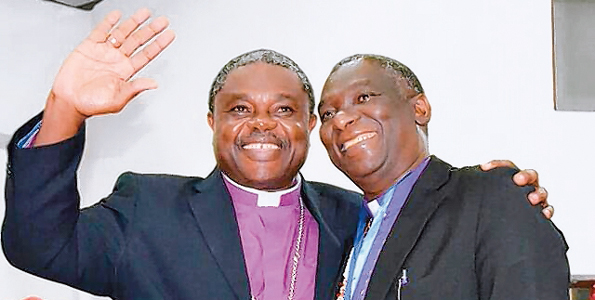
Outgoing Presiding Bishop Alex Malasusa waves with Bishop Elect Frederick Shoo after the latter’s election to serve as head of the Evangelical Lutheran Church of Tanzania.

Outgoing Presiding Bishop Alex Malasusa waves with Bishop Elect Frederick Shoo after the latter’s election to serve as head of the Evangelical Lutheran Church of Tanzania.

TANZANIA – On August 16, the Evangelical Lutheran Church in Tanzania (ELCT) elected a new Presiding Bishop at its 19th Church Assembly at Makumira University near Arusha. Rev. Dr. Frederick Onael Shoo was elected to a four-year term as head of the ELCT.

Prior to his election, Bishop Elect Shoo served as bishop of the ELCT’s Northern Diocese. He earned the moniker “the tree bishop” due to his work planting trees to help preserve the shrinking glaciers of Kilimanjaro. PBS featured this work in a 2012 report. Bishop Shoo was first ordained for pastoral ministry in 1986.

Bishop Shoo succeeds Bishop Alex Gehaz Malalusa, who has retired after completing two four-year terms as head of the ELCT.

The ELCT is the world’s second largest Lutheran church body, with a growing membership of more than 6.5 million members as of 2014. The church body is affiliated with the Lutheran World Federation. A number of the ELCT’s bishops have in recent years also developed friendly relations with The Lutheran Church—Missouri Synod (LCMS), a member church of the International Lutheran Council.

One such area of cooperation has been the ELCT’s Bishop Emmanuel Makala Training Center in northern Tanzania. The Center has been a joint venture of the ELCT’s South-East of Lake Victoria Diocese and the LCMS, with the LCMS providing financial support for the training program as well as providing theological professors. That partnership culminated in March with the first graduating class of the Center, as 21 new pastoral candidates were ordained and seven deaconesses commissioned for service in the ELCT.

———————

Signup for ILC Updates