News

Canadian Lutherans elect new president

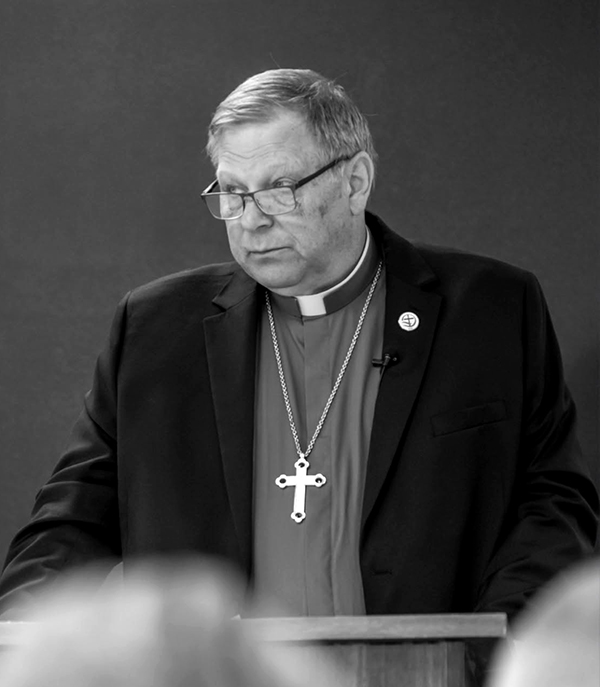
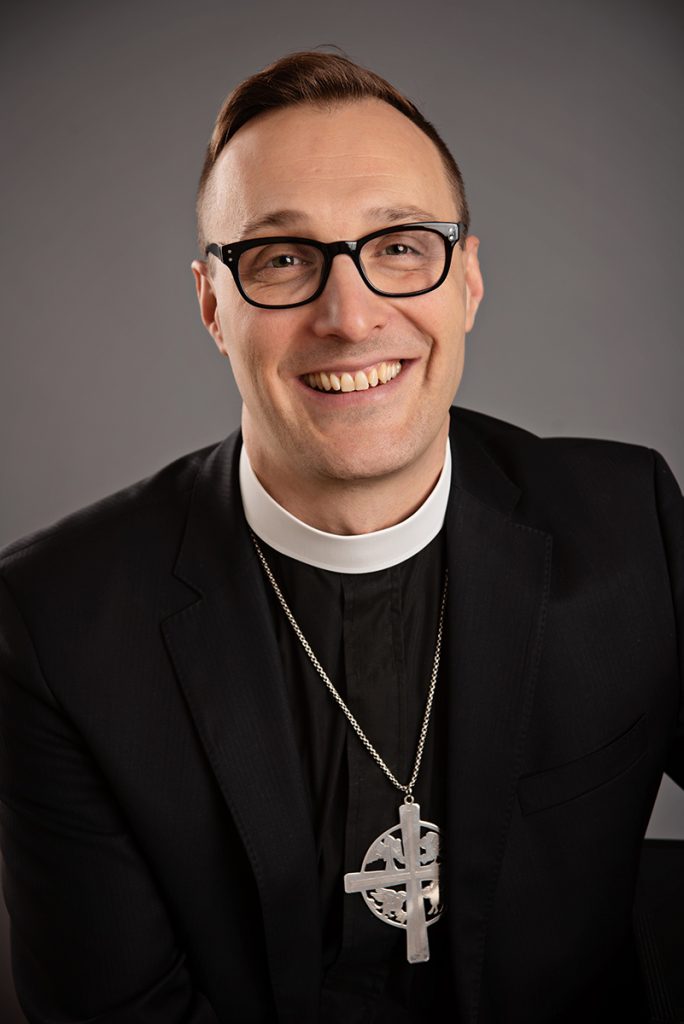
LCC President Elect David Haberstock. (Photo: LCC, Thomas Winger).

CANADA – From June 12-15, Lutheran Church–Canada (LCC) held its quadrennial synodical convention, during which time the church elected a new president: Rev. David Haberstock. The convention theme was “Together One: One Lord, One Faith, One Body,” drawing on Ephesians 4:4-6.

At the time of his election as president, Rev. Haberstock was serving as LCC’s Central Regional Pastor, a position to which he was first elected in 2018. He was elected to a second term in that role in 2018. He had earlier served on the Board of Directors for the former Central District (2006-2015), and as a pastor in Regina, Saskatchewan (2015-2018) and Thunder Bay, Ontario (2004-2015).

Rev. Haberstock will continue to serve as Central Regional Pastor until his election as president later this fall.

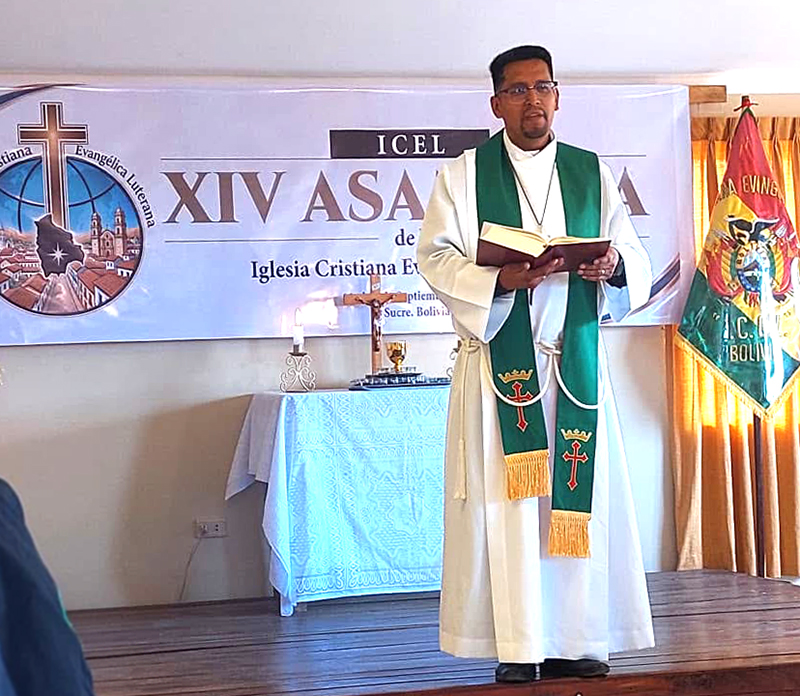
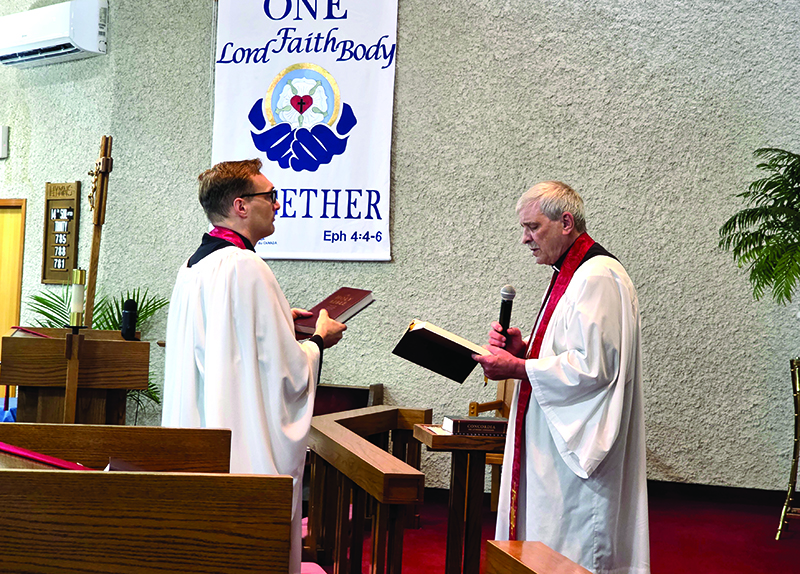
LCC President Teuscher preaches during the opening Divine Service of the Canadian church’s 2026 synodical convention. (Photo: LCC, Thomas Winger).

President Elect Haberstock succeeds President Timothy Teuscher, who had announced in 2025 that he would not be standing for reelection. President Teuscher was first elected as LCC’s president during the 2017 synodical convention. He was reelected unopposed to a second term in 2022.

Following his election as LCC President, Rev. Dr. Teuscher would go on to serve global Lutheranism as Vice Chairman of the International Lutheran Council (ILC) in his role as North American regional representative.

Also elected at LCC’s synodical convention were Rev. Ted Giese (Vice President), Rev. Aaron Gust (Central Regional Pastor), Marvin Bublitz (East Regional Pastor), and Rev. Michael Schutz (West Regional Pastor), among other positions.

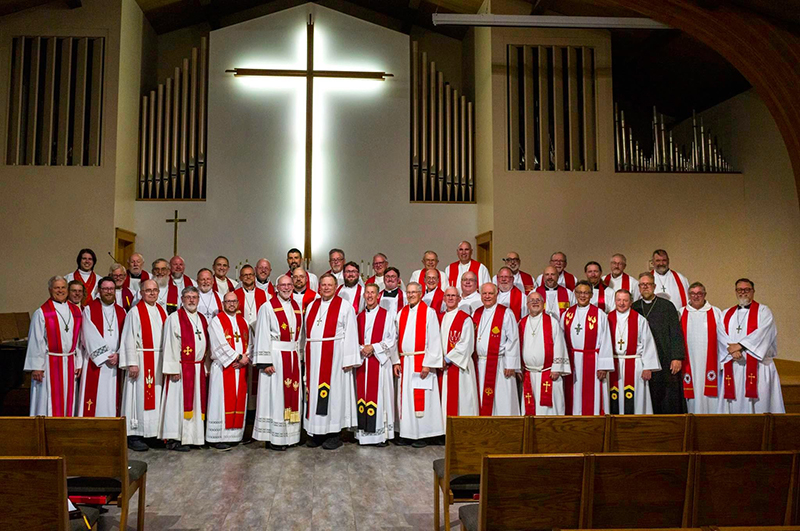
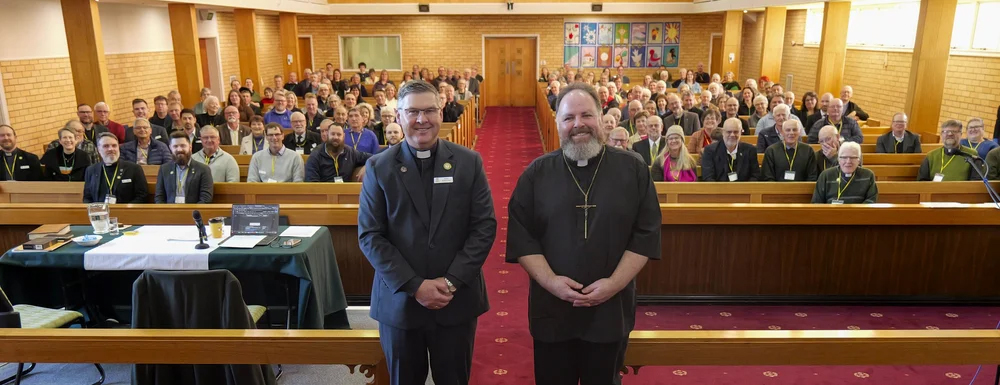
Delegates at LCC’s 2026 synodical convention. (Photo: LCC, Thomas Winger).

The convention also saw LCC recognize fellowship with the Lutheran Church in the Philippines (LCP) and Lutheran Mission – Australia (LM-A), fellow members with the Canadian church in the International Lutheran Council. Those churches will vote to recognize LCC during their own conventions later this year. LCC also formally acknowledged the loss of fellowship with the Lutheran Church in Australia and New Zealand (LCANZ), which in 2024 voted to ordain women.

The church also reaffirmed its rejection of “Medical Assistance in Dying”; resolved to initiate a study of the use of the term ‘bishop’; acknowledged the 50th anniversary of its seminary in St. Catharines, Ontario; and made plans for the 500th anniversary of the Augsburg Confession in 2030, among other business.

Lutheran Church–Canada is a member church of the the International Lutheran Council, a global association of confessional Lutheran church bodies dedicated to the proclamation of the Gospel of Jesus Christ, grounded in the authority of Scripture and the Lutheran Confessions.
———————

ILC Chairman responds to LWF

WORLD – The International Lutheran Council (ILC) rejects public accusations by the Lutheran World Federation (LWF) that it has directed members to leave the LWF.

“The International Lutheran Council was not involved in any way with the decision of the Evangelical Lutheran Church in Kenya to leave the LWF, though I personally consider their decision justified and consistent,” said ILC Chairman Juhana Pohjola, “Recent comments from the LWF reveal a deeply patronizing and condescending attitude towards the Kenyan church—as if they were incapable of evaluating for themselves the theological positions  of the LWF and their continued membership in it. This is, in my view, a kind of Western paternalism that should come to an end.”

“The ILC has repeatedly affirmed that member churches are responsible for determining their own church relationships, according to their ‘conscience on the basis of the revealed Word of God and our Confessions,’” Chairman Pohjola explained. “The ILC has never directed its members to leave the LWF, though I understand the concerns that have led some—including the Kenyan church—to do so.”

“From our perspective, the real source of tension seems to be that a growing number of Lutheran church bodies around the world, including LWF members, have expressed discomfort with the theological positions and direction of the LWF,” Chairman Pohjola continued. “At the same time, many of these churches have expressed a desire for a closer relationship with the ILC and its member churches, as they value our council’s strong commitment to the Gospel of Jesus Christ, grounded in the authority of Scripture and the Lutheran Confessions.”

In recent years, a number of LWF-associated churches and groups have contacted the ILC in hopes of developing closer relations. A 2018 report by former LWF General Secretary Martin Junge expressed disapproval of the ILC’s fielding of such requests, and the LWF unilaterally broke off relations with the ILC that same year.

The ILC responded to the LWF’s stated concerns, noting it was ready to resume contact with the LWF at any time “in a spirit of friendliness and mutual respect.” At its 2018 World Conference in Belgium, the ILC further adopted a resolution inviting renewed contact with the LWF. Despite this and other outreach, the LWF has never agreed to reopen relations. Attempts at renewed friendly contact by the ILC in the years since—following the appointment of Rev. Dr. Klaus Detlev Schulz as General Secretary in 2023, for example—have been ignored by the LWF.

By contrast, the LWF’s posture towards the ILC has been frequently hostile. One church which joined the ILC during its 2018 World Conference, for example, was subsequently visited by the LWF’s regional secretary and directed to break ties with the ILC. The church did so, explaining the pressure they were under from the LWF in a letter to ILC leadership.

“It is quite remarkable to see the LWF—which is far larger than the ILC and has far more resources, financial and otherwise—accuse the ILC of influencing churches to leave the LWF,” said Chairman Pohjola. “In reality, pressure has been exerted in the other direction. I commend those churches who take a stand against such pressure to follow their consciences in accordance with Scripture and the Lutheran Confessions.”

“It is clear that, for many years now, a realignment of global Christianity has been underway, with churches committed to classical biblical doctrine and ethics distancing themselves from churches pursuing progressive theology,” said Chairman Pohjola. “As far as world Lutheranism is concerned, the Evangelical Lutheran Church in Kenya has recently decided to leave the LWF. The Evangelical Lutheran Church of Ghana made the same decision somewhat earlier. I do not believe they will be the last churches to make this decision. But to suggest that the ILC must be directing such decisions is simply false, as well as deeply patronizing to the churches in question.”

“Despite recent comments by the LWF, the International Lutheran Council remains open to renewed contact with the LWF,” Chairman Pohjola concluded. “But such relations require a commitment to mutual respect.”

The International Lutheran Council is a global association of confessional Lutheran churches dedicated to the proclamation of the Gospel of Jesus Christ, grounded in the authority of Scripture and the Lutheran Confessions.
———————

Church and State: Papers from 2024 World Seminaries Conference released

ARGENTINA – Papers from the International Lutheran Council’s (ILC) 2024 World Seminaries Conference have now been released. The theme for the 2024 conference was “Church & State.”

The papers are available to read in three different languages: English, Spanish, and Portuguese.

Published papers include:

  1. Theological Perspectives on Church and State – Rev. Dr. Juhana Pohjola
  2. The Korean Situation and Christian Education – Rev. Dr. Jun Hyun Kim
  3. Historical Perspectives on Church and State and What It Means for Theological Education – Rev. Prof. Clécio Schadech
  4. Government Interference in Seminary Education – Rev. Dr. James A. Kellerman
  5. Crucifixion of Identity: Resurrection of + – Rev. Dr. Boris Grunjević
  6. ILC Accreditation – Rev. Dr. Klaus Detlev schul and Dcs. Dr. Cynthia Lumley
  7. Core Competencies for Theological Education Leading to Ordination/Deaconess Certification – Rev. Dr. Ron Mudge

The ILC’s 8th World Seminaries Conference took place June 11-14, 2024, in Buenos Aires, Argentina.

The next World Seminaries conference will take place in Pretoria, South Africa, from June 23-26. The theme for this year’s conference is “Being Human, Being Christian: Theological Anthropology in Church and Seminary.”

The International Lutheran Council is a global association of confessional Lutheran church bodies dedicated to the proclamation of the Gospel of Jesus Christ, grounded in the authority of Scripture and the Lutheran Confessions.
———————

Kenyan Lutherans hold biennial convention

Participants in the ELCK’s 2026 General Assembly in Kapenguria.

KENYA – The Evangelical Lutheran Church in Kenya (ELCK) held its biennial General Assembly from April 9-10 at the Kapenguria Bible Center in Kapenguria.

Among other business, this year the assembly amended its constitution to officially recognize nine dioceses (at the time of the constitution’s last amendment in 2008, the ELCK had just four dioceses); heard reports from the Archbishop, Church Council, and Treasurer; and made a major change in its church relations, voting to withdraw from the Lutheran World Federation (LWF).

The vote to leave the LWF saw two unanimous votes by the ELCK’s Church Council (April 9) and the General Assembly (April 10) approving the withdrawal. Archbishop Joseph Ochola Omolo officially communicated the decision the LWF in a letter on April 15. “In obedience to God’s Word and in faithfulness to our confessional subscription as stated in Article III of the ELCK Constitution, we cannot remain in a communion that promotes or normalizes teachings and practices that we confess to be unscriptural and unconfessional,” he wrote.

ELCK Archbishop Joseph Ochola Omolo reports during the church’s 2026 General Assembly.

Additional details on the ELCK’s decision to leave the LWF can be found in a news story from LCMS Reporter.

Archbishop Omolo with newly elected ELCK officials.

The General Assembly also held elections for several positions. Rev. Andrew Ngeiywa was elected as the ELCK’s General Secretary, after previously serving in the role as Acting General Secretary. The assembly also filled two vacant positions on the Church Council and one on the Board of Trustees.

The Evangelical Lutheran Church in Kenya is the largest Lutheran church body in Kenya, with approximately 100,000 members. The ELCK is a member of the International Lutheran Council (ILC), a global association of confessional Lutheran church bodies dedicated to the proclamation of the Gospel of Jesus Christ, grounded in the authority of Scripture and the Lutheran Confessions.
———————

Finnish MP and Bishop to appeal “Bible Trial” conviction

Dr. Päivi Räsänen and Bishop Juhana Pohjola. (Photo: ELMDF).

FINLAND – Finnish Member of Parliament Päivi Räsänen and Bishop Juhana Pohjola of the Evangelical Lutheran Mission Diocese of Finland (ELMDF) have announced they are appealing their conviction to the European Court of Human Rights.

“I know I am not alone in facing unjust persecution under ‘hate speech’ laws that make sharing Christian beliefs a criminal offense,” Dr. Räsänen said. “I make my appeal in the hope that the European Court of Human Rights will recognise that peacefully expressing one’s beliefs is never a crime, and ensure that this basic freedom is protected for all.”

This is just the latest chapter in Finland’s ongoing “Bible Trial” which has garnered widespread international media attention. On March 26, the Supreme Court of Finland narrowly convicted the two of hate speech in a 3-2 decision. The majority judges ruled illegal several of Dr. Räsänen’s statements in a 2004 theological booklet addressing human sexuality from a Christian perspective. Bishop Pohjola, as the publisher of that booklet, was also convicted.

Dr. Räsänen was cleared of one other charge related to tweeting an image of a Bible verse.

“The Supreme Court’s decision to convict myself and the Luther Foundation for publishing a booklet for our church was extremely disappointing,” Bishop Pohjola said. “As a bishop, I have a responsibility to guide those under my pastoral care, and I am deeply concerned by the state’s extensive efforts to censor our publications and decide what can and cannot be taught by religious leaders to members of their own group.”

The publication in question has been available online since 2007, long before same-sex marriage was legalized in Finland in 2017. The majority judges ruled that, by continuing to keep the offending language online, the ELMDF was breaking Finland’s hate-speech laws. It also ruled as illegal Dr. Räsänen’s decision to republish the document online in 2019 after news broke that the Prosecutor General had ordered a criminal investigation into Dr. Räsänen.

Two judges dissented from the ruling of the other three, agreeing with the court rapporteur that the two should be acquitted on all charges.

Two lower courts had unanimously ruled in favour of Bishop Pohjola and Dr. Räsänen.

In response to the decision of Finland’s Supreme Court, the Evangelical Lutheran Mission Diocese of Finland has updated the online text of the booklet in question with the statements ruled illegal removed. In place of those statements, black lines appear, along with a note explaining that these lines have been censored by the Supreme Court and a link back to the ruling in question.

The multi-year prosecution of a Finnish Member of Parliament and a Lutheran bishop for their articulation of historic Christian teaching on human sexuality has drawn international concern over the state of freedom of religion and freedom of speech in Finland, including from the International Lutheran Council (ILC). The ILC has repeatedly expressed its support for the pair, including by electing Bishop Pohjola to two consecutive terms as ILC Chairman, most recently in 2025.

———————

The International Lutheran Council is a global association of confessional Lutheran church bodies dedicated to the proclamation of the Gospel of Jesus Christ, grounded in the authority of Scripture and the Lutheran Confessions.

New leadership for Lutherans in Uruguay

Rev. Christian Hoffman of the ILU.

URUGUAY – Rev. Christian Hoffmann has taken on the responsibility of leadership in the Lutheran Church of Uruguay (Iglesia Luterana del Uruguay – ILU).

The ILU’s previous Principal Pastor, Rev. André Luiz Müller, has accepted a call to serve a congregation in the Evangelical Lutheran Church of Brazil (Igreja Evangélica Luterana do Brasil – IELB) as well as a position with Global Lutheran Outreach. With Rev. Muller’s departure, the ILU’s leadership and legal representation passes to the church’s sole remaining pastor, Rev. Hoffmann.

Rev. Hoffmann has served 28 years in Montevideo, first as pastor of St. Paul Lutheran Church and then as chaplain of the congregation’s associated school. In addition to Montevideo, the ILU has preaching centres in Chapicuy (with its own church building), Salto (a parsonage with worship space), and Costa de Oro (with services held in members’ homes). At present, Rev. Hoffmann is the sole pastor serving the entire Lutheran Church of Uruguay.

The ILU is currently seeking to call a pastor for the Montevideo congregation—which is marking 87 years since its founding— as well as selecting candidates for the church’s preaching centres. St. Paul School in Montevideo is also seeking missionary pastors and laypeople for evangelist work in such areas as music, bilingual education, and sports.

The Lutheran Church of Uruguay is a member of the International Lutheran Council (ILC), a global association of confessional Lutheran church bodies dedicated to the proclamation of the Gospel of Jesus Christ, grounded in the authority of Scripture and the Lutheran Confessions.
———————

ILC General Secretary visits Korea and Taiwan

ILC General Secretary Dr. Klaus Detlev Schulz meets with LCK President Jong Ho Won and other Korean church leaders.

ASIA – In February, Rev. Dr. Klaus Detlev Schulz, General Secretary of the International Lutheran Council (ILC), visited with church leadership in Korea and Taiwan to discuss regional issues.

Dr. Schulz poses with LCK pastors who attended his lecture on Theological Anthropology and Sin.

During meetings with the Lutheran Church in Korea (LCK), Dr. Schulz and LCK President Jong Ho Won discussed the need to strengthen theological education for Lutherans in Asia, among other issues. The LCK noted its plans to launch a new certificate program in early 2017 to offer pastors in the region further training in Lutheran theology. The LCK will pay for all of its own pastors to take part in the program, and is hopeful other churches in the region will also participate.

During his time in Korea, Dr. Schulz also lectured on Theological Anthropology and Sin, a topic he explored in depth in a 2023 book of the same name published as part of the Confessional Lutheran Dogmatics series.

Dr. Schulz meets with CELC President Andrew Miao and other representatives of the church in Taiwan.

Dr. Schulz also visited Taiwan in February, during which time he met with President Andrew Miao and other leaders of the China Evangelical Lutheran Church (CELC). While in Taiwan, Dr. Schulz visited the CELC’s seminary and the Asia Region office of The Lutheran Church—Missouri Synod to discuss regional needs.

The International Lutheran Council is a global association of confessional Lutheran church bodies dedicated to the proclamation of the Gospel of Jesus Christ, grounded in the authority of Scripture and the Lutheran Confessions.
———————

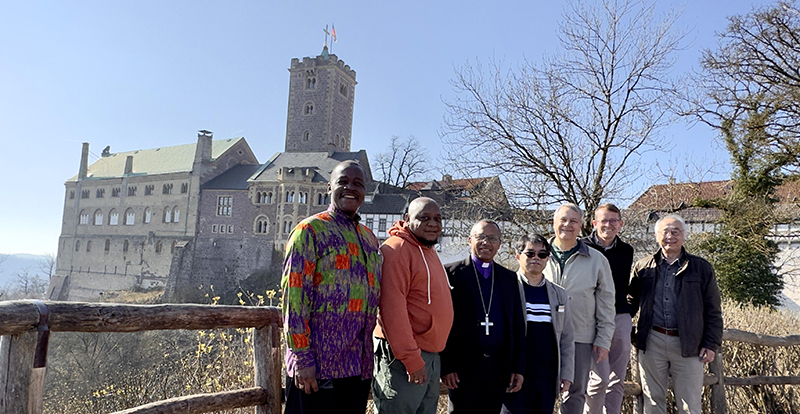
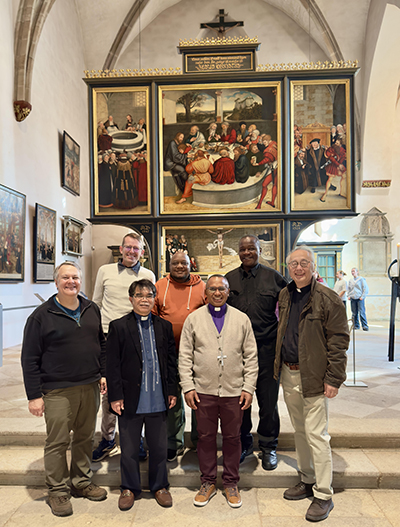
Meeting of the Augustana Working Group in Wittenberg

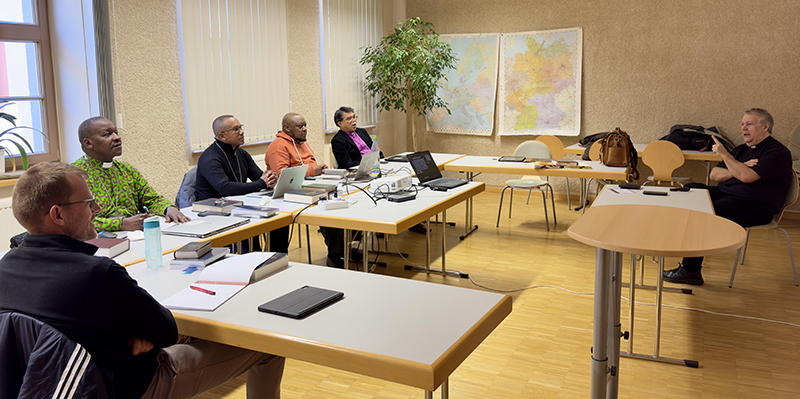
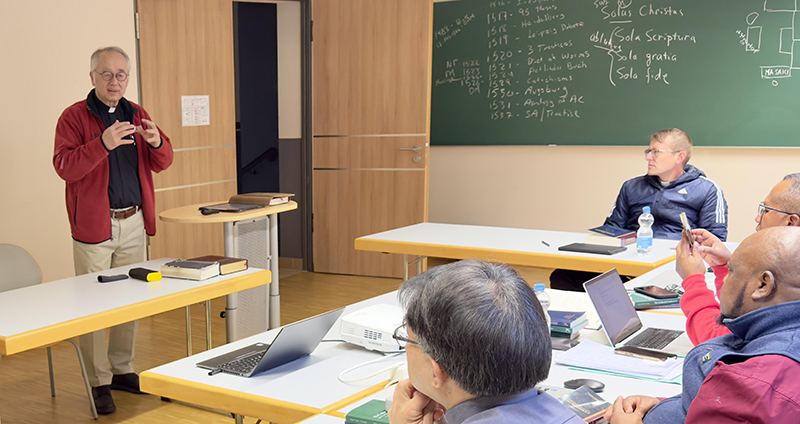
GERMANY – The fourth meeting of the Concordia Lutheran-Catholic Augustana Working Group (AWG) took place in Wittenberg, Germany, from March 24-26, 2026. Under the chairmanship of Bishop Dr. Juhana Pohjola, Chairman of the International Lutheran Council (ILC), and Auxiliary Bishop Dr. Peter Birkhofer, the participants discussed the statements of the Augsburg Confession and further relevant documents from the 16th century on ordination and episcopacy from a pre-confessional perspective and in the further confessional development and findings from the ecumenical discussions. In the meantime, the working group had exchanged progress reports via Zoom.

Augustana Working Group, March 2026 meeting in Wittenberg

The Augustana Working Group includes representatives of the International Lutheran Council and the Catholic Church. Following the conclusion of the theological discussions between the ILC, an association of Concordia Lutheran churches, and the Catholic Church (2014-2019), both sides suggested the establishment of a working group as a specific ecumenical-theological format. The working group is not an official dialogue commission. Father Dr. Augustinus Sander OSB takes part in the meetings as a permanent guest of the Dicastery for Promoting Christian Unity (DPCU). Rev. Dr. Sebastian Grünbaum was appointed as a minute writer for the group.

The next meeting is scheduled to take place in spring 2027.

Participants of the International Lutheran Council (ILC)

  • Bishop Dr. Juhana Pohjola, Helsinki, Finland, Bishop of the Evangelical Lutheran Missionary Diocese of Finland; Chairman of the International Lutheran Council (ILC)
  • Prof. Dr. Joel Elowsky, St. Louis, Mo., USA
  • Prof. em. Dr. Werner Klän, D.Litt., Lübeck, Germany
  • Associate Prof. Dr. Jonathan Mumme, Hillsdale, Mich., USA
  • Prof. Dr. Tom Winger, St. Catharines, Ont., Canada
  • Rev. Dr. Sebastian Grünbaum, Helsinki / Vatican (minute writer)

Catholic participants

  • Auxiliary Bishop Dr. Peter Birkhofer, Freiburg / Breisgau, Germany
  • Prof. Dr. Markus Lersch, Siegen, Germany
  • Dr. Tim Lindfeld, Aachen, Germany
  • Associate Professor Dr. James Prothro, St. Louis, Mo., USA
  • Father Dr. Augustinus Sander OSB, Vatican, permanent guest of the Dicastery for Promoting Christian Unity

———————

“… and he saw and believed.”

by Klaus Detlev Schulz

“…and he saw and believed.” – John 20: 1-10

This passage in the Gospel of John is truly a marvelous story of how the first witnesses processed the discovery of the empty tomb. They were not expecting the resurrection even if Jesus had clearly spoken about it on many occasions (v. 9). Mary Magdalene arrived at the tomb and when she saw that the stone to the entrance of the tomb had been moved, she hurried to Simon Peter and the disciples sharing with them her conclusion that Jesus’ body must have been taken away to an unknown place. Simon and the beloved disciple, John, then made their way to the tomb themselves. In fact, curiosity spurred them on; it became a race to the tomb between the two, where the beloved disciple arrived first but made way for Peter to enter and discover that the body was gone with only the cloths covering Christ’s body and face remaining behind. Peter must have remained puzzled. After that the disciple John entered also, and from what he saw he concluded that Christ must have risen: “He saw and he believed” it says. For him, the linen and face cloth is proof enough that the tomb is not only empty but that the Lord has risen from the dead.

Around the world, believers like John celebrate the resurrected Christ. They celebrate that God is at work in this event, having raised His Son from the dead. Easter is truly the feast of great celebration because He is alive and He is risen which means that the power of death has lost its sting (1 Corinthians 15:54-55). Sin and our condemnation do not have the last say; we will live by rising with Christ to be with him eternally.

That resurrection has already begun with our baptism but at Easter we are also looking ahead to our bodily resurrection. Now that Christ has risen, darkness gives way to light (John 8:12) and doubt is replaced with faith and joy. Celebrating Easter around the world has Christians attend their respective churches, parade the streets, and celebrate at home.

But that joy is not shared by everyone in this world. Many doubt its miraculous nature. Others simply reject it. The good news of Easter still finds doubters and meets unbelief.  As Christians, we pray for all of them that darkness in their life may give way to light and joy. We have a wonderful message to uphold and to share with others.

May God bless us all with the joy and hope of Easter. Christ has risen; He is risen indeed. Hallelujah.

We pray: Dear Lord Jesus Christ. We give you thanks for taking upon yourself the sins of the world and becoming a sacrifice on our behalf so that we may inherit eternal life. On this day we celebrate your victory over death, of breaking the curse of sin and eternal death. We praise and honor you and eagerly await your return in glory. Amen

———————

Rev. Dr. Klaus Detlev Schulz is General Secretary of the International Lutheran Council.

Image: “St. John and St. Peter at Christ’s Tomb,” Giovanni Francesco Romanelli, c. 1640.

Lutherans in the Philippines and Korea move towards fellowship

LCP President Antonio del Rio Reyes (front left) and LK Jong Ho Won (front right) pose with the new altar and pulpit fellowship declaration between their two churches.

PHILIPPINES – Representatives of the Lutheran Church in Korea (LCK) and the Lutheran Church in the Philippines (LCP) gathered from February 23-26 at the LCP’s Lutheran Center in Manila for a historic meeting that culminated in the signing of a Declaration of Altar and Pulpit Fellowship between the two churches. The gathering marked a significant step toward strengthening confessional Lutheran unity and deepening cooperation in mission and ministry in Asia.

The delegation from the Lutheran Church in Korea was led by its President, Rev. Jong Ho Won, while the delegation from the Lutheran Church in the Philippines was led by its President, Rev. Antonio del Rio Reyes. Over the course of the four-day meeting, representatives of both churches engaged in theological dialogue, prayer, and fraternal fellowship.

The meeting opened with Matins led by LCP President Antonio del Rio Reyes. Serving as interpreter and translator throughout the gathering was Rev. Dr. Jun Hyun Kim, Professor of Luther University of the Lutheran Church in Korea. The time of worship set a fitting tone for the discussions that followed, grounding the deliberations in prayer and in the Word of God.

Throughout the discussions, participants affirmed that the Holy Bible, the Old and New Testaments, is the inerrant and inspired Word of God and the only rule and norm of faith and life. The two church bodies likewise confessed their unity in the Lutheran Confessions, as contained in the Book of Concord, as a true and faithful exposition of the Word of God. This shared commitment to Scripture and the Lutheran Confessions formed the foundation for the declaration signed during the meeting.

The two church presidents celebrate the signing of the declaration.

The signing of the declaration represents a formal commitment by the LCK and the LCP to recognize each other as faithful Lutheran church bodies with whom full altar and pulpit fellowship may be established. The agreement must still be ratified by each church’s governing conventions. Both churches are scheduled to hold their next conventions in October 2026.

Upon ratification, the declaration will formally establish altar and pulpit fellowship between the two church bodies. Such fellowship affirms that pastors of one church may preach in the congregations of the other, and that members may commune together at the Lord’s Table, in keeping with their shared confession and ecclesiastical practice.

Leaders from both churches expressed gratitude for the spirit of unity and mutual trust that characterized the discussions. The meeting provided an opportunity not only to finalize the text of the declaration but also to strengthen relationships between the two church bodies, which share a commitment to faithful Lutheran witness in their respective contexts.

The agreement represents an important milestone in the relationship between the Lutheran Church in Korea and the Lutheran Church in the Philippines and will advance confessional Lutheran cooperation in Asia. Participants in the Manila meeting noted that the declaration reflects a shared desire to strengthen cooperation in theological education, pastoral formation, and missionary outreach throughout the region, and will enable the two churches to present a stronger and more unified witness to the Gospel.

The Lutheran Church in the Philippines and the Lutheran Church in Korea are both member churches of the International Lutheran Council (ILC), a global association of confessional Lutheran church bodies dedicated to the proclamation of the Gospel of Jesus Christ, grounded in the authority of Scripture and the Lutheran Confessions.
———————

President Antonio del Rio Reyes
Lutheran Church in the Philippines

Signup for ILC Updates