
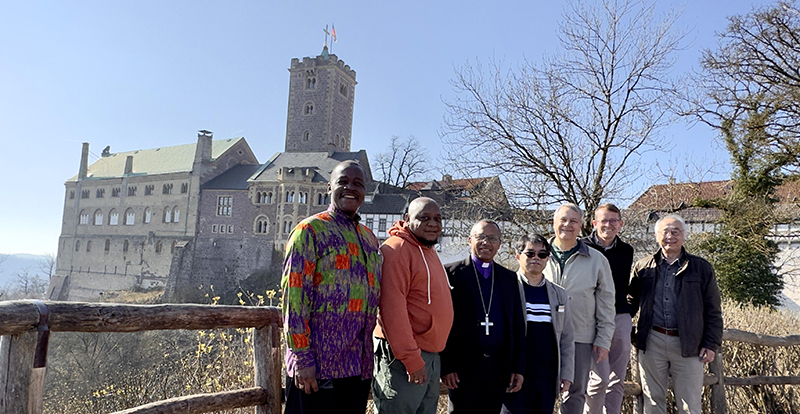
GERMANY – In the spring (late February and early March, the Lutheran Leadership Development Program (LLDP) held another session in Wittenberg, with church leaders in attendance from five countries in Africa and Asia. Rev. Dr. Lawrence Rast, President Emeritus of Concordia Theological Seminary (CTSFW), taught “History of the Lutheran Church,” while LLDP Director, Rev. Dr. Naomichi Masaki, taught “Theology of the Lutheran Confessions.”
Dr. Rast commented: “Our LLDP gathering in Wittenberg was a truly remarkable experience, bringing us together in a place so deeply rooted in the history of the Reformation. History literally surrounded us, adding depth and significance to our conversations and experiences. Studying the Reformation together in Wittenberg brought its history to life in a way books alone cannot, connecting the people, events, and theological convictions of the sixteenth century with the places where they took shape.”
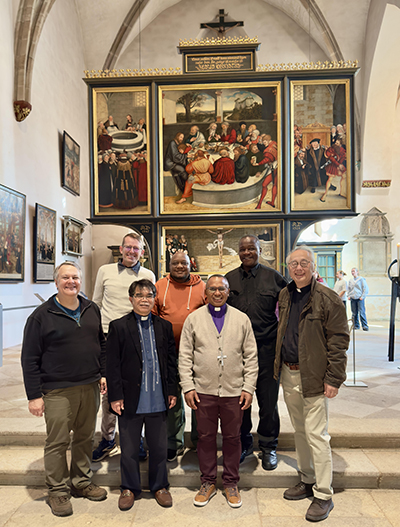
An integral part of this session was visiting significant historic places of the Reformation. In Wittenberg, participants explored Luther House, Melanchthon House, Luther’s Oak, Leucorea (University of Wittenberg), Town Church (St. Mary’s), Castle Church, and Luther’s and Melanchthon’s Monuments. At the Old Latin School, the managing director, Rev. Dr. Wilhelm Weber, welcomed LLDP to use its chapel for daily Matins.
Outside Wittenberg, the participants travelled to Eisleben to visit Luther’s birth and death houses; the Church of St. Andrew, where he preached his last sermon; the Church of Sts. Peter and Paul where he was baptized; and Luther’s parents’ house in nearby Mansfeld. The LLDP also visited Torgau Castle and its church; the house in which the Torgau Articles (which became the second part of the Augsburg Confession) were drafted; the Church of St. Mary’s where Katharina Luther is buried; and Georg Spalatin’s house. The group also journeyed to Wartburg Castle and the Augustinian Monastery in Erfurt. That Sunday, LLDP participants attended Divine Service at Trinity Lutheran Church (SELK) in Berlin. On the way back to Wittenberg, the group visited Sanssouci Palace in Potsdam to see the grave of Frederick the Great as well as Treuenbrietzen, the birthplace of Martin Chemnitz.
The visit to many historic sites had a strong impact on all those in attendance, with one student saying: “Having this session in Wittenberg was great, as both classes connected to events that happened in Wittenberg and other cities we visited. I will go back home with a renewed vision and determination to continue the work started by Luther and his colleagues.”
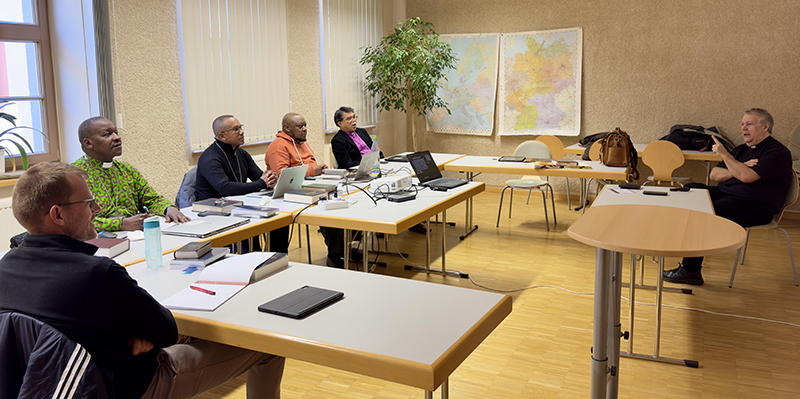
Of Dr. Rast’s teaching, one church leader commented: “For the first time in my life, I enjoyed church history. Dr. Rast made history come alive by showing how the past influences the present. I marveled at how important the faith of the people in Jesus was, throughout the history of the Lutheran Reformation and thereafter, and how committed our fathers in the faith were to preserve the Lutheran Confessions.” Another participant echoed: “I have learned that church history is not about the past, it is also about the present. It helps the church today to understand how to live, teach, and serve faithfully.”
The church leaders expressed their eagerness to share insights they gained with their fellow pastors: “I will return home with a renewed sense of purpose as a Lutheran church leader. I will teach my pastors and members that knowing our history gives us strength and direction for the future.”
Participants also found Dr. Masaki’s course formative for their understanding of the value of the Lutheran Confessions. One said: “While I know the Confessions quote many Bible verses, the Confessions were always taught in isolation (in my context), without the clear connection to Holy Scripture. I was impacted by the way Dr. Masaki showed us how the Confessions agree with Scripture. I learned what it means to say that Lutheran theology is biblical theology.” Another said: “Dr. Masaki’s class was a spiritual awakening to me. The Lutheran Confessions are not outdated documents but living testimonies of the faith that express how we confess Christ in every age. He helped me grasp how each article of doctrine is deeply interconnected and how theological precision serves pastoral care and shapes the way we preach, teach, and live as the church.” A third said: “Simply put, our pastors and leaders must know the Book of Concord well the same way as they must know the Bible. The Lutheran Confessions keep the church focused on the Gospel.”
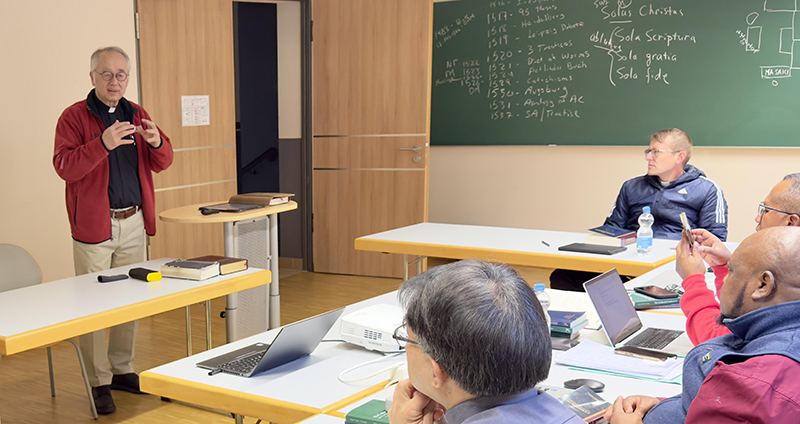
Participants agreed on the implications this course on the Book of Concord will have on their ministry at home: “When I go home, I will encourage our pastors and future leaders to remain grounded in Scripture and the Confessions while addressing contemporary
challenges.” Others stressed the need to encourage greater study of the Confessions in their seminaries. One summed up the general feeling this way: “The Confessions preserve doctrinal purity, promote unity, and provide a public testimony to the truth of the Gospel.”
Participants again expressed their gratitude for the Lutheran Leadership Development Program, stressing its impact on their home church bodies. “This LLDP session has been a transformative spiritual and academic journey,” one participant noted. “It strengthened my faith, deepened my commitment to my calling, and connected me with the confessional Lutheran community. I return home grateful and inspired to share this renewed vision of confessional faith and faithful ministry with my church.”
Dr. Rast was one of the four signatories who founded the LLDP back in 2017. “As I reflect on the LLDP experience, I am profoundly grateful for the investment that has been made in each of the students through a program that encourages us to learn from the past, grow together in the present, and think carefully about our service and leadership for the future,” he said. Dr. Masaki was thankful to have the privilege of having Dr. Rast serve an LLDP instructor during the spring session.
The LLDP and its director are grateful to the Lord for making this session possible and for those who support the program with their
precious gifts and resources.
Another LLDP session took place in Fort Wayne, Indiana, in August. A report on that session will be published soon.
You can support the work of the Lutheran Leadership Development Program by making a donation online. You can also mail a donation by cheque to:
International Lutheran Council
P.O. Box 10149
Fort Wayne, Indiana 46850 USA
———————
 RSS Feed