By Mathew Block

Lutherans in Australia and New Zealand decline women’s ordination but raise future possibility of “one church, two practices”

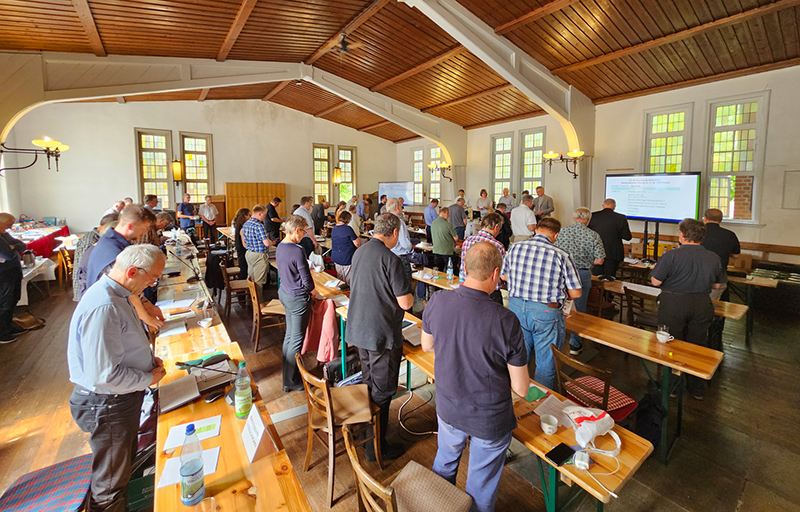
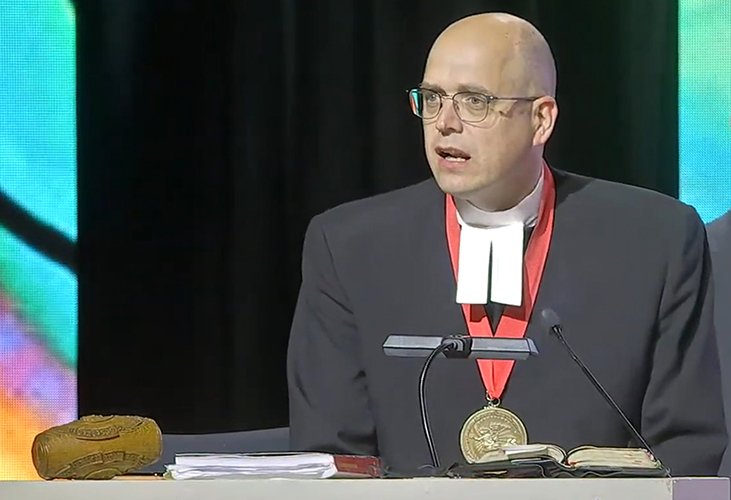
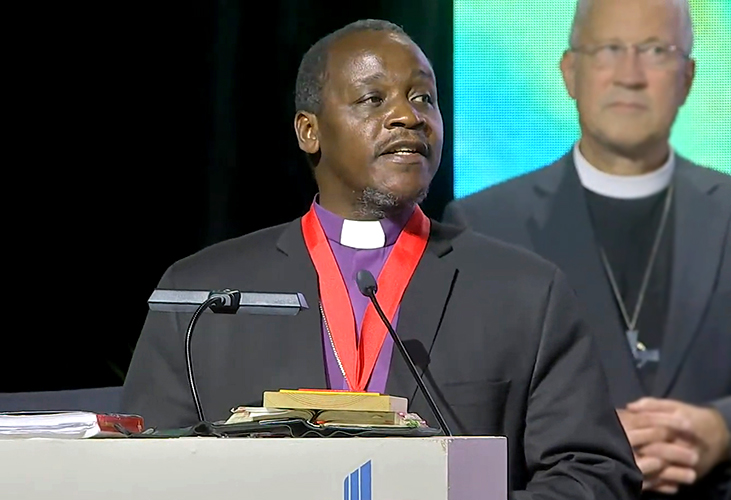
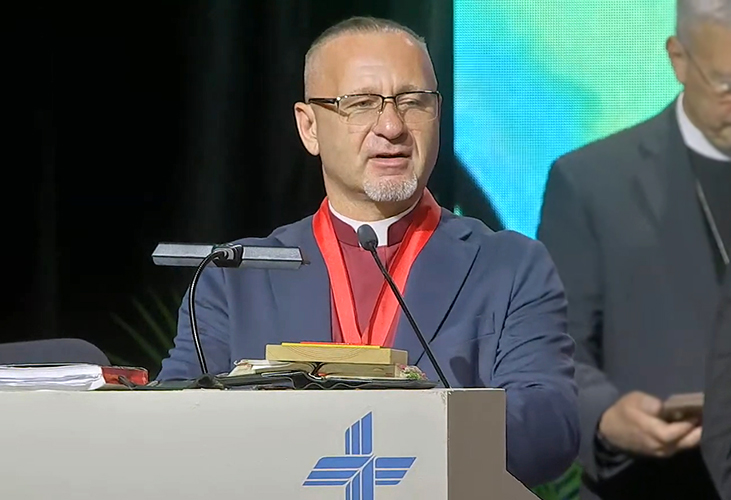
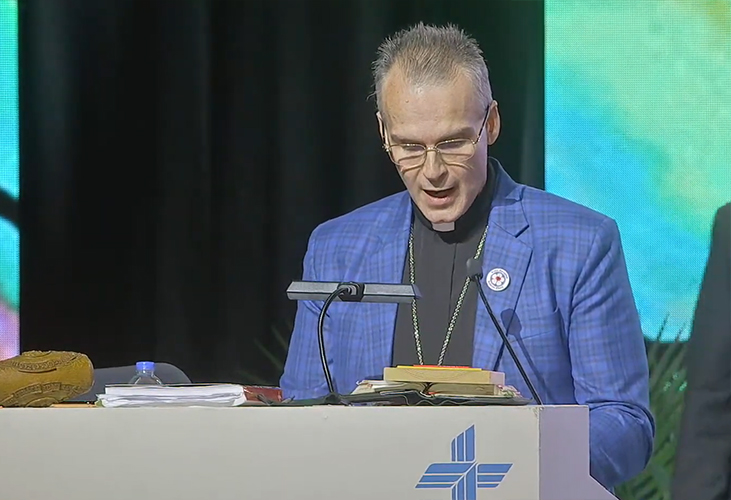
AUSTRALIA – From February 9-12, 2023, the Lutheran Church of Australia and New Zealand (LCANZ) gathered in Melbourne, Australia for in-person sessions of its General Synod, during which time the church again declined a resolution calling for the ordination of women. However, a day later the church accepted a separate proposal to study the possibility of creating “one church with two different practices of ordination.”

The gathering in Melbourne was the continuation of a General Synod which first began in October 2021, but in-person sessions were delayed until this year because of the pandemic.

The first resolution was debated on February 10, and saw the church vote on whether to alter church teaching to allow the ordination of women. The vote required a 2/3 majority, which it failed to achieve. In total, 59 percent of delegates voted in favour of the change (203 for; 136 against; 3 abstentions).

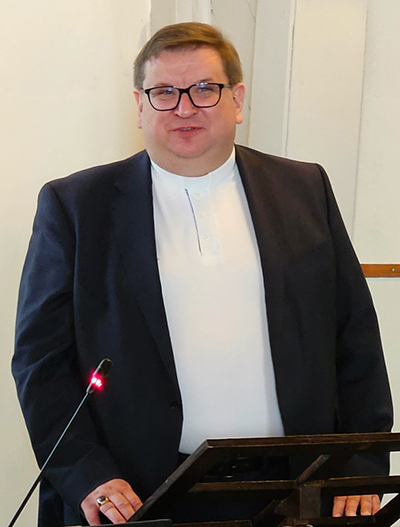
The LCANZ’s Bishop Paul Smith encouraged continued “prayer for the Lord’s guiding hand on His church” as it continues to wrestle with this subject.

This was the church’s fifth vote on women’s ordination since 2000, with all failing to receive the required 2/3 majority to change church teaching (votes took place in 2000, 2006, 2015, 2018, and now in 2023). In a release, the LCANZ notes that the practice of ordaining men only was included in the Theses of Agreement which the LCANZ’s two predecessor church bodies accepted in 1966 as part of their decision to unite.

Following the February 10 vote on women’s ordination, the LCANZ adopted a separate proposal on February 11, which calls on the synod to examine the possibility of creating “one church with two different practices of ordination.” Because this proposal was to examine the possibility, rather than to change church teaching at this time, it required only a simple majority, which it achieved (250 for; 89 against; 1 abstention).

“Synod directed that work be done to outline how one church with two ordination practices might function,” notes the LCANZ in another release, “such as one or more existing LCANZ districts becoming districts that teach and practice the ordination of both women and men to the office of the public ministry, or by establishing a non-geographical LCANZ ‘district’ that does so.” The results of that examination are to be presented for discussion at the church’s 2024 General Pastors Conference in the lead up to the next convention of General Synod.

“We are grateful that the LCANZ has again declined the practice of women’s ordination, which is contrary to Holy Scripture and historic Christian teaching,” said Rev. Dr. Timothy Quill, General Secretary of the International Lutheran Council (ILC). “However, the proposal to examine the possibility of creating ‘one church with two different practices of ordination’ is disconcerting and will sow the seed of confusion and discord. We pray that the church’s discussion will ultimately conclude in favour of one church with one practice of ordination—namely, the biblical position that ordination is only open to men.”

The Lutheran Church of Australia and New Zealand is an associate member of the International Lutheran Council, a global association of confessional Lutheran church bodies. In keeping with the teachings of Scripture, the ILC does not accept the ordination of women to the pastoral ministry, encouraging women to serve the church in other ways.

———————

Sri Lankan Lutherans consecrate first bishop, seek ILC membership

Participants at the consecration of CELC Bishop Arulchelvan.

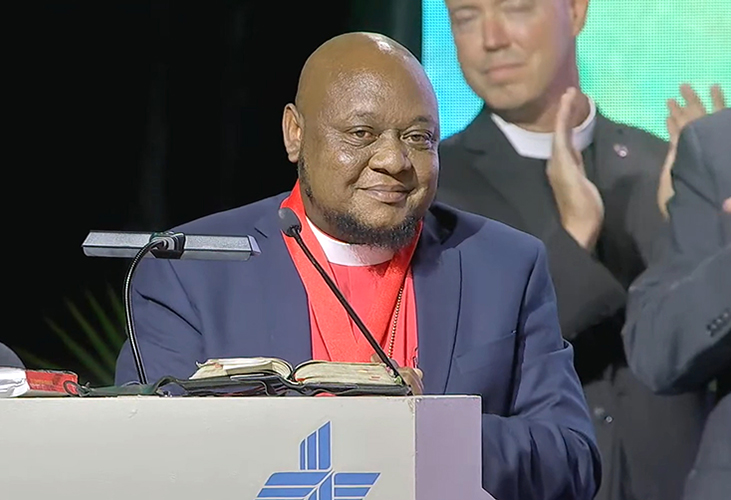
SRI LANKA – On October 9 2022, the Ceylon Evangelical Lutheran Church (CELC) consecrated its first Bishop, Rev. Arumanayagam Arulchelvan. Approximately 200 members from across the church were present for the event.

The consecration was conducted by Archbishop Joseph Omolo of the Evangelical Lutheran Church in Kenya (ELCK), joined also by ELCK Bishops Kispin and Titus. Archbishop Omolo, who also serves as the Africa Region Representative for the International Lutheran Council (ILC), expressed great satisfaction at being able to participate in the event, noting “it was a good opportunity for the Africa region to have fellowship with the Asia region in same-saying the faith and strengthening one another in the Lord.”

ECLK Archbishop Joseph Omolo consecrates CELC Bishop Arulchelvan.

Also present for the consecration were representatives of The Lutheran Church—Missouri Synod (LCMS), including the church’s Sri Lanka Mission Manager, Rev. Steven Mahlburg, and Regional Director for Asia, Rev. Charles Ferry.

The consecration was the culmination of a long process for the CELC. Plans for the election and consecration of a bishop were initially planned for May 2020, with the ELCK’s Archbishop planning to attend at that time. But the outbreak of civil unrest, in addition to the effects of the pandemic and an economic crisis, led the church to delay its Diocesan Assembly several times.

On September 27, 2022, the church was finally able to hold its Diocesan Assembly, gathering in Colombo. Representatives from every congregation in the church, along with CELC’s pastors and lay evangelists, formally ratified their new constitution and elected Rev. Arulchelvan to be their new bishop. They also elected a Diocesan Council.

CELC Bishop Arulchelvan (centre front) and LCMS Sri Lanka Mission Manager, Rev. Steven Mahlburg (front right), pose with the newly elected Sri Lankan church’s Diocesan Council in September 2022.

The CELC also voted to seek membership in the International Lutheran Council (ILC). The Sri Lankan church previously held membership in the ILC but its membership lapsed in recent years as it attempted to restructure itself. CELC also voted to seek altar and pulpit fellowship with the LCMS, with whom it has historic ties.

The history of Lutheran missions in Sri Lanka, go back more than 150 years but the CELC traces its particular history to 1958 when Rev. James Fergin, an LCMS missionary from India, arrived to minister to Tamil workers in Sri Lanka’s tea plantations. This eventually led to the formation of the Lanka Lutheran Church in 1978.

In 1983, civil war broke out Sri Lanka—war which would last for 26 years and put significant pressure on the church. The Lanka Lutheran Church’s government registration subsequently lapsed in the mid-2000s, though the church itself continued to function.

A few years after the civil war ended in 2009, the LCMS began to send resident missionaries to Sri Lanka again, helping the church to reconstitute itself. The church eventually obtained new government registration in 2017 under its new name: the Ceylon Evangelical Lutheran Church.

Today, the CELC has about 15 congregations and mission stations; four ordained pastors; five lay evangelists; and an approximate membership of 2,000 people. The vast majority of people in the country are Buddhist, with Christians making up just over seven percent of the population, meaning outreach can be difficult. Historic tensions between Tamil and Singalese people in the country also create challenges.

The LCMS’ Sri Lanka Mission Manager, Rev. Mahlburg, encourages Lutherans across the world to remember the Ceylon Evangelical Lutheran Church in prayer. “Though they’re small in numbers, there is a core group of Christians in Sri Lanka that are committed Lutherans,” he says. “They are proud of their heritage and are struggling to carry out the ministry there and reach out to people as they are able.”

———————

Education celebrations in Benin and Kenya

The Lutheran Church in Africa-Benin Synod celebrates the ordination of two new pastors. Photo:  Emmanuel Lekoto.

AFRICA – Two Lutheran church bodies in Kenya and Benin are celebrating recent events related to seminary education.

The ELA-SBe ordains two new pastors. Photo:  Emmanuel Lekoto.

On November 19, 2022, the Lutheran Church in Africa-Benin Synod (Église Luthérienne en Afrique—Synode du Bénin – ELA-SBe) celebrated the ordination of two new pastors—Revs. Aris D. Agbessi and Prudence T. Lekoto—during a service at Resurrection Lutheran Church in Abomey-Calavi. Both took their theological training at the Lutheran Centre for Theological Studies (Centre Luthérien d’Études Théologiques – CLET) in Dapaong, Togo. CLET is the seminary of the Lutheran Church of Togo (Église Luthérienne du Togo – ELT).

The ELA-SBe is a young church body in Benin, and the ordination of two new pastors brings the church’s total number of pastors to three. The church serves approximately 400 members in three congregations.

Meanwhile in Kenya, on January 28, 2023, the seminary relations committee of the Evangelical Lutheran Conference and Ministerium of Kenya (ELCMK) celebrated the receipt of several boxes of books for their library. The books will play an important role in ensuring a strong confessional education for Lutherans in the ELCMK.

The ELCMK’s seminary relations committee celebrates new books for their library.

The books were a gift from the Lutheran Heritage Foundation (LHF)—an American organization associated with The Lutheran Church—Missouri Synod (LCMS)—which has translated and provided Lutheran books for use in more than 145 languages in 90 countries across the world.

The Lutheran Church in Africa-Benin Synod is a full member of the International Lutheran Council, while the Evangelical Lutheran Conference and Ministerium of Kenya is an observer member. The ILC is a global association of confessional Lutheran church bodies dedicated to the authority of Scripture and the Lutheran Confessions.

———————

Lutherans in Turkey ask for prayer following devastating earthquake

A collapsed building in Diyarbakır, Turkey (VOA).

UPDATE (February 21, 2023): Another large earthquake hit Turkey on February 20, leading to additional death and destruction. As of this update, more than 47,000 people have been confirmed dead in Turkey and Syria following the first earthquakes on February 6. The ILC urges continued prayer for the people of Turkey and Syria, and invites readers to contact their local church body for additional information on ways to support victims.

TURKEY – The Istanbul Lutheran Church (İstanbul Luteryen Kilisesi – ILK) is requesting prayer following a catastrophic earthquake on February 6, 2023 which has left parts of Turkey and Syria devastated.

As of this publication, more than 6,000 people are confirmed dead and tens of thousands are injured, but officials warn that number will continue to rise. Thousands of buildings have collapsed, and rescuers are facing a race against time and freezing temperatures to save survivors. Countless people have been left homeless, and critical infrastructure has been destroyed. The World Health Organization estimates that upwards of 23 million people have been affected by the earthquake and subsequent aftershocks.

In response to the tragedy, the head of the Istanbul Lutheran Church, Rev. Bahadir Argönûl, is calling for urgent prayer. Some of his congregation have lost family members and many are among those affected by the disaster. “We thank the Lord that our brother, his wife, and their daughter, were saved from the earthquake,” he says. “We request prayers for them and for the tens of thousands of others who are in a similar situation, lacking shelter and daily necessities.”

“Pray for those who are working to help those who are still trapped under collapsed buildings that many might still be saved,” ILK Pastor Argönûl continued. “May the Lord have mercy on all those who suffer and provide comfort for those who have lost loved ones. And may all this strengthen our faith in Jesus Christ.”

The International Lutheran Council’s Chairman, Bishop Juhana Pohjola of the Evangelical Lutheran Mission Diocese of Finland (ELMDF), is also calling on the international Lutheran community to remember Syria and Turkey in prayer. The ELMDF has close ties to the Istanbul Lutheran Church. “We are witnessing enormous human suffering in Turkey and Syria,” Bishop Pohjola noted, “and we offer our deepest condolences to those who have lost loved ones.”

“We pray for those who have been injured and those who have seen their homes and livelihoods destroyed. Even when the television cameras have moved on to other places, we know that our Lord Jesus Christ and His words of mercy and hope will remain. We pray for the Istanbul Lutheran Church and her witness, that many will receive true comfort in Christ, through whom we find life and salvation. ‘God is our refuge and strength, a very present help in trouble. Therefore we will not fear though the earth gives way, though the mountains be moved into the heart of the sea’ (Psalm 46:1-2).”

Lutheran ministry in Turkey first began in 1709 but came to a hiatus in the late 19th century. In 1999, Lutherans living in Istanbul came together to form a congregation. Rev. Risto Soramies—who would go on to serve as the ELMDF’s first bishop—was eventually called to serve as the Istanbul congregation’s first pastor (he had previously served a Turkish-speaking congregation in Germany). Today the Istanbul Lutheran Church has congregations in Istanbul and Izmir, Turkey, as well as Turkish-speaking congregations in Peshtera and Krushevo, Bulgaria.

———————

Lutherans in Congo celebrate ILC membership, open theological training centre

The Church of the Faithful Confessing Lutherans in Congo holds a divine service in Kananga on January 8, 2023.

CONGO – The Church of the Faithful Confessing Lutherans in Congo (Église de Fidèles Confessants Lutheriens au Congo – EFCLCO) held special events on January 8, 2023 to celebrate the church’s recent acceptance into the International Lutheran Council (ILC) as well as the church’s official opening of a theological training centre.

The day began with a Divine Service marking Epiphany, with EFCLCO Bishop Ilunga Kendi Evariste preaching on Matthew 4:18-25. The bishop proclaimed that Christ, the Light of the World, had come to those in the city of Kananga, Congo, though they had long been in darkness and sin. Following the example of the people of Naphtali and Zebulon, the Kanangese have also been invited to praise God for the gift of His Son to the world, he said. That God had given His Son to the world is one thing, Bishop Ilunga noted, but that Kanangese people themselves should receive this gift in faith is another. Motivated by the Holy Spirit at work in the Word, the Kanangese can welcome the light, confessing that even their faith is not their own doing.

The service also saw the baptism of two children by Rev. Serge Bamba Kapita and the celebration of the Lord’s Supper, with Bishop Ilunga presiding.

Celebrating the baptism of a child.

On this day, the EFCLCO also announced to members its acceptance into the International Lutheran Council as an observer member. The announcement garnered great applause and celebration. Bishop Ilunga went on to explain to members and visiting church leaders what the ILC stands for and its mission to equip confessional Lutherans across the world to faithfully proclaim the Word of God and the Good News of Jesus Christ.

The day also saw the official opening of the church’s Lutheran Centre of Theological Education and Apprentice (CLET&A/Kananga) in Kananga—an event which reinforced the Gospel text for the day, which features Jesus calling the disciples Peter, Andrew, James, and John to be His followers and fishers of men.

The centre is now operational, providing a Theological Education by Extension program based on educational materials from The Lutheran Church—Missouri Synod (LCMS). The operating model is mobile in nature, allowing the program to move from one congregation to another.

At the same time, the EFCLCO’s work in translating Lutheran resources such as the Lutheran Confessions, the catechisms, a hymnal, and liturgies is continuing well. In this respect, the church expresses gratitude to the Lutheran Heritage Foundation for its support. The teaching of modern languages such as English as French to prepare students for further theological education is also planned.

“We pray and invite others to pray with us that  God will make it possible to grow this centre into  a formal Bible school,” said Bishop Ilunga, “and ultimately into a permanent theological seminary for the formal training of pastors in both EFCLCO and other churches in Congo. May God use it to empower leaders in various ways to fit and serve the needs of the church.”

———————

First graduates for Lutheran Leadership Development Program

Following the commencement service. The four graduates—President/Bishop John Donkoh, General Secretary Teshome Amenu, Deputy Bishop Helmut Paul, and Bishop Emmanuel Makala—pose in front, along with other participants in the LLDP, some of the LLDP’s teaching faculty (Dr. Collver, Dr. Masaki, Prof. Pless, Dr. Quill), and Dr. Carl Rockroah (Zion Lutheran in Ridgeville Corners, Ohio and former LCMS missionary to Ghana, South Africa, and Ethiopia).

USA – The Lutheran Leadership Development Program (LLDP) celebrated its first commencement ceremony following its most recent session November 8–19, 2022 in Troy, Illinois. The ceremony took place November 17 at St. Paul’s Lutheran Church in Troy.

Dr. Masaki speaks during the commencement ceremony.

“It is a great joy to recognize the accomplishment of the first graduates of the Lutheran Leadership Development Program,” said Rev. Dr. Naomichi Masaki, LLDP Director. “I commend them for their achievement of this Certificate of Theology in Lutheran Leadership, because, despite their demanding ministry context as church leaders back home, they have been diligent in their studies and have accomplished the goals for which the program was created. I pray the Lord of the church to continue to bless them as He uses the confessional Lutheran theology and practical skills that they have acquired in the LLDP in the service of ecclesial leadership in their home church bodies.”

Four graduates were awarded the Certificate of Theology in Lutheran Leadership on behalf of the International Lutheran Council (ILC). In addition to completing coursework on church leadership in various areas, each also wrote a graduation thesis as a culminating exercise. Each was provided a thesis advisor from the LLDP teaching faculty. Their theses were approved by the advisor as well as Dr. Masaki who served as a reader for all four theses. The graduates include:

  • President/Bishop John Donkoh (Evangelical Lutheran Church of Ghana – ELCG) – Thesis: “Why are Some Hermeneutical Approaches Problematic, Even When Using the Bible?: A Consideration of the Proper Principles of Biblical Interpretation.” (Advisor: Rev. Dr. Charles Gieschen, Provost of CTSFW)
  • Bishop Emmanuel Makala (South East of Lake Victoria Diocese, Evangelical Lutheran Church in Tanzania – SELVD-ELCT) – Thesis: “The Dodoma Statement: An Evaluation of the Position Statement of the Evangelical Lutheran Church in Tanzania Regarding Same-Sex Marriage.” (Advisor: Rev. Dr. Albert B. Collver III, former ILC General Secretary)
  • Deputy Bishop Helmut Paul (Free Evangelical Lutheran Synod in South Africa – FELSISA) – Thesis: “According to our Lutheran Confessions, Is Confession and Absolution—be it in a Corporate Service or Private Confession with the Pastor—a Prerequisite for Receiving the Lord’s Supper?” (Advisor: Rev. Prof. John T. Pless, CTSFW).
  • General Secretary Teshome Amenu (Ethiopian Evangelical Church Mekane Yesus – EECMY)– Thesis: “An Analysis of the 1969 Agreement on the Integration Policy between the Mission Partners and the EECMY in the Light of Augsburg Confession, Article VII.” (Advisor: Rev. Dr. Albert B. Collver III, former ILC General Secretary)

Participant Response

The four graduates. From left to right: President Donkoh (ELCG), Deputy Bishop Paul (FELSISA), General Secretary Amenu (EECMY), and Bishop Makala (SELVD-ELCT).

The graduates praised the knowledge and skills they had learned as a result of the program. “I’m privileged to be among the first batch of students who successfully completed the LLDP,” noted President/Bishop John Donkoh of the Evangelical Lutheran Church of Ghana. “This program has been an eye opener for me in many ways. Lutheran churches around the world, particularly in Africa, need assistance in leadership and theological education, particularly in leadership development for current and future leaders in the areas of Lutheran identity and confessions.”

“It is my prayer and hope that this program will continue and that more church leaders on the continent would have such opportunities to acquire leadership training,” said President Donkoh, who was also elected in 2022 to serve as secretary of the International Lutheran Council.

Deputy Bishop Helmut Paul of the Free Evangelical Lutheran Synod in South Africa said that the LLDP provided him time to reflect on concrete problems and challenges in his home church. “It was of an immense value to have had opportunities to discuss and collaborate with professors and esteemed colleagues about their solutions,” he noted.

Bishop Emmanuel Makala of the Evangelical Lutheran Church in Tanzania’s South East of Lake Victoria Diocese reflected that the LLDP was “an overwhelming experience.” “The quality and contents of the program were deep and practical,” he explained. “It exceeded my expectation. I enjoyed everything—except for cold weather, frequent cancellation of flights and jet lags, and deadline pressure for assignments!”

LLDP participants visit with President Tom Egger during a trip to Concordia Seminary in St. Louis, Missouri.

General Secretary Teshome Amenu of the Ethiopian Evangelical Church Mekane Yesus concurred with his colleagues on the benefits of the LLDP. He also remarked that another big benefit of the program was the connections made with leadership of other Lutheran church bodies. “Getting to know them and becoming friends can never happen by meetings,” he said. “We are not isolated. Together we are committed and pledged to exercise confessional leadership in our Lutheran churches in Africa. Particularly meaningful was the fact that selected individuals represented the largest Lutheran church bodies around the world.”

“For me, the LLDP was the best program I have ever attended for higher theological studies,” General Secretary Amenu continued. “The program has already started to impact my church body in a special way. We have now designed a leadership capacity development project in which we train leaders of our church at all levels: head office, synods, parishes, and congregations.”

Additional students from the first cohort of students in the LLDP are expected to complete their studies in 2023, when the LLDP will welcome a new group of students into the program.

During the commencement, letters of congratulations from ILC Chairman Juhana Pohjola (Bishop of the Evangelical Lutheran Mission Diocese of Finland), as well as from LLDP Council member, President Dr. Lawrence Rast of CTSFW, were also read.

Christ, Not Leaders, Sustains His Church

Rev. Dr. Albert B. Collver III gives the commencement address.

Serving as commencement speaker for the event was Rev. Dr. Albert B. Collver III, who helped to found the program during his tenure as General Secretary of the ILC. “As leaders of the church, the task in front of you can seem overwhelming,” he said to the graduates. “You may not feel up to the task. Politics within your church can seem daunting or even make you wonder if the church even exists in this place or if these people around me are Christians.”

“You have been placed where you are to serve your Lord and your church, to be His instruments to guide and lead His church in the way of the Gospel,” he continued. “Jesus has promised you that He will never leave you nor forsake you. But He also has not given you the task to save His church. Jesus is the Saviour of His people. Jesus is the Saviour of His Church.”

“We do not bear that burden,” Dr. Collver stressed. “He has not given us that burden to bear. Yet graciously our Lord Jesus still gives us the privilege to work and serve in His church where He uses us according to His own purpose. Yet the responsibility is His to protect and guard and preserve the church here on earth. He calls us to remain faithful to His confession, to study His Word, and to serve Him where He has called and placed us. There is great comfort in knowing that the Lord makes use of us though we are not responsible for the future of the church. The future of the church belongs solely to Jesus.”

As Dr. Masaki conducted the commencement, he also recounted the history of the program, discussed its Student Learning Outcomes, and expressed his gratitude to the LLDP Council, ILC, and other supporters of the program, especially Concordia Publishing House (CPH), Concordia Theological Seminary in Fort Wayne, Indiana (CTSFW), and The Lutheran Church—Missouri Synod (LCMS). The LLDP is a program of the ILC initiated in partnership with CPH, CTSFW, and the LCMS, and the ILC is grateful for the support of all its partners in this important endeavor.

Studies in the LLDP

Commencement Day at St. Paul’s Lutheran Church in Troy, Illinois, during a break from the thesis forum. Left to right: Dr. Bruce Kintz, former President and CEO of Concordia Publishing House; Dr. Timothy Quill, ILC General Secretary; Dr. Yohana Nzelu, Assistant Bishop (Bishop Elect) of South East of Lake Victoria Diocese, Evangelical Lutheran Church in Tanzania (SELVD-ELCT); Dr. Daniel Mono, District Pastor (Assistant Bishop Elect) of SELVD-ELCT; Dr. Emmanuel Makala, Bishop of SELVD-ELCT; Rev. Helmut Paul, Deputy Bishop of Free Evangelical Lutheran Synod in South Africa (FELSISA); Rev. Teshome Amenu, General Secretary of Ethiopian Evangelical Church Mekane Yesus (EECMY); Rev. John Donkoh, President/Bishop of Evangelical Lutheran Church of Ghana (ELCG); Rev. Modise Maragelo, Bishop of Lutheran Church in Southern Africa (LCSA); Dr. Bruk Ayele, President of Mekane Yesus Seminary (EECMY); Dr. Denis Rakotozafy, President of Malagasy Lutheran Church (FLM); Rev. Mandla Thwala, Deputy Bishop of LCSA; Tsegahun Assefa, Former Director of Children and Youth (EECMY); Dr. Albert Collver, Pastor of St. Paul’s Lutheran Church and School, former General Secretary of ILC; and Dr. Naomichi Masaki, Director of LLDP, Professor of Concordia Theological Seminary, Fort Wayne (CTSFW).

The LLDP is a graduate-level program of the ILC dedicated to equipping confessional Lutheran leaders around the world with the theological and practical knowledge necessary to effectively serve their church bodies.

The first cohort of students accepted into the program all hail from Africa, and began their studies in 2019. The program has seen participants gather for studies in Wittenberg, Germany; Fort Wayne, Indiana; and Troy, Illinois.

Courses and their instructors included:

Dr. Albert Collver and Dr. Naomichi Masaki led chapel and taught classes during the November 2022 sessions. Dr. Collver, with the members of St. Paul’s in Troy, were gracious hosts, as Dr. Masaki presided over the commencement ceremony.
  1. Theology of the Lutheran Confessions – Rev. Dr. Naomichi Masaki (LLDP Director, CTSFW)
  2. World Lutheranism and the Ecumenical Movement – Rev. Dr. Albert Collver (ILC General Secretary)
  3. History of the Lutheran Church – Rev. Dr. Lawrence Rast (CTSFW)
  4. Lutheran Hermeneutics – Rev. Dr. Charles Gieschen (CTSFW)
  5. Ecclesial and Organizational Leadership – Archbishop Dr. Christian Ekong (LCN)
  6. Responding to Contemporary Issues and Neo-Pentecostalism – Rev. Prof. John Pless (CTSFW)
  7. The Lord’s Supper – Rev. Dr. Naomichi Masaki (LLDP Director, CTSFW)
  8. Liturgy and Lutheran Hymnody – Rev. Dr. Timothy Quill (ILC General Secretary)
  9. Strategic Planning and Task Management – Rev. Dr. Jeffrey Skopak (Grace Lutheran Church and School, Jacksonville, Florida)
  10. Budgeting and Financial Accountability – President Dr. Roger Paavola (LCMS, Mid-South District)
  11. The Office of the Holy Ministry – Rev. Dr. Naomichi Masaki
  12. Lutheran Mission, Ecclesiology, and Ecumenism – Rev. Dr. Albert Collver

The program has also seen the publication of three books through Concordia Publishing House during the period of the first cohort:

  • Charles Schaum and Albert Collver, Breath of God, Yet Work of Man: Scripture, Philosophy, Dialogue, and Conflict.
  • Christian O. Ekong, Strengthening Integrity and Accountability in Church Leadership.
  • Victor C. Pfitzner, Led by the Spirit: How Charismatic is New Testament Christianity?

The LLDP plans to publish additional monographs on such topics as strategic planning and accountability in biblical stewardship.

LLDP Support

LLDP participants meet with Dr. Joel Lehenbauer, Executive Director of the LCMS Commission on Theology and Church Relations, and Dr. Rick Serina, Associate Executive Director, during a visit to The Lutheran Church—Missouri Synod’s International Center in St. Louis, Missouri.

You can support the work of the Lutheran Leadership Development Program by making a donation online. You can also mail a donation by cheque to:

International Lutheran Council
PO Box 10149
Fort Wayne, Indiana 46850 USA

———————

On the death of Benedict XVI

GERMANY – On December 31, 2022, Pope Emeritus Benedict XVI passed away. He was 95 years old.

Joseph Aloisius Ratzinger (b. April 16, 1927) became pope of the Catholic Church on April 19, 2005, and served in that role until his resignation on February 28, 2013. A profound theologian, he demonstrated a significant understanding of the Lutheran tradition and its witness to the Gospel.

The International Lutheran Council’s (ILC) former Chairman, Bishop Hans-Jörg Voigt of Germany’s Independent Evangelical Lutheran Church (Selbständige Evangelisch-Lutherische Kirche – SELK), provides the following reflections on the legacy of Benedict XVI.

Lutheran Reflections on Benedict XVI

Benedict XVI . Image: Wikimedia.

Jesus Christ was the spiritual theme of the life of Pope Benedict XVI. He will go down in the history books as one of the greatest theological thinkers of the 20th and 21st centuries: Joseph Ratzinger—Roman Catholic priest, professor of theology, Archbishop of Munich-Freising, Cardinal, and eventually Pope Benedict XVI. He died on New Year’s Eve, December 31, 2022, at his home in the Vatican at the age of 95. He was head of the Catholic Church from 2005-2013—the first German pope in 482 years.

In my opinion, Benedict’s three volume series on the life of Jesus—Jesus of Nazareth, which made it to bestseller lists around the globe—is among his most important work. Until their publication, the so-called “historical Jesus” and the “Christ of faith” had been increasingly driven further apart. Historical researchers held the opinion that only the “historical” Jesus could be researched. Statements of faith about Jesus Christ, however, were held to be only “congregational formations”—i.e., faith narratives of the first Christian congregations.

Ratzinger pointed out with the sharpness of his philosophically learned mind that this separation between historical research and faith must lead astray, since the divine Logos became flesh (John 1:14). “When we say these words, we acknowledge God’s actual entrance into real history,” says Ratzinger in the first volume of his Jesus trilogy. In this way, he shows both the limitations and importance of a purely historical method of interpreting Scripture: it attempts to reconstruct the historical contexts of a text and its original meaning in as much detail as possible. This is its value. When the divine Word has become flesh, however, it carries a surplus of meaning that must claim historicity and yet eludes historical comparability.

In this context, Ratzinger also reflects on the inspiration of the divine Word. A biblical author does not speak as a private subject, Ratzinger writes, but “he speaks in a living community… which is led forward by a greater power that is at work.” In his brief contribution to a survey by Christian philosopher Robert Spaemann on the topic, “Who is Jesus of Nazareth – for me?”, Joseph Ratzinger writes: “I trust the tradition in all its breadth. And the more reconstructions I see come and go, the more I feel strengthened in this trust. It becomes increasingly clear to me that the hermeneutic of Chalcedon is the only one that does not have to interpret anything away but can accept the whole.” (The Council of Chalcedon in 451 elaborated the doctrine of the divine and human natures of Jesus Christ as inseparable and unmixed.)

Joseph Ratzinger here comes remarkably close to the Lutheran theologian Hermann Sasse (1895-1976), who applied the two-natures doctrine of the Council of Chalcedon to the doctrine of Scripture: “The revelation in the Word becomes the incarnation. Therefore Jesus Christ, the Word (Logos) become flesh, is the revelation of God in this world. Only in Him, the eternal Word, does God step out of His hiddenness…. The man Jesus Christ is the visible Word (verbum visibile). Whoever sees Him sees God as much as God can be seen in this world” (“The Theology of the Cross,” 1951).

Benedict XVI has been criticized that ecumenism was not close to his heart. I believe that he has served the ecumenical movement in a much more lasting way than he could have done with any conceivable offer of compromise. By teaching a theology centered on Jesus Christ alone, Benedict XVI has rendered invaluable service to the unity of the Church. Thus, his distinction between Law and Gospel is also more Lutheran-comparable than ever before.

As Pope Emeritus, Benedict XVI faced accusations concerning the time of his episcopal ministry in Munich. At the center of the accusations was his handling of an Essen diocesan priest who was sent to Munich in 1980 after sexually offending minors. Ratzinger, then Munich’s Archbishop, had known about the situation and approved the priest’s admission. One can only begin to guess how the faith-filled academic theologian, which Ratzinger always remained, suffered regret over the low points of ecclesiastical personnel policy. Thus, he still had to participate in a fundamental crisis of credibility of the church worldwide, from which no denomination is exempt and whose extent and effects we can still hardly fathom.

May Benedict XVI’s spiritual legacy contribute to a future awakening in Europe and worldwide, something we request in prayer daily and fervently from the Lord of the Church, Jesus Christ. He has let His child, Joseph Ratzinger, sanctified by baptism to eternity, now see what he believed: Jesus Christ.

Bishop Hans-Jörg Voigt

———————

Celebrating Christmas in War-Torn Ukraine

Christmas worship in Odessa, Ukraine.

UKRAINE – The local Odessa congregation of the Synod of Evangelical Lutheran Churches of Ukraine (SELCU) welcomed many visitors to worship in its chapel for Christmas.

The festival day brought many people to “Christmas markets” in this southern Ukrainian metropolis on the Black Sea, and the congregation has been active in distributing gifts and aid to nearby people. “We’ve never seen this many worshippers crowded into our modest worship space,” said Rev. Oleg Schewtschenko, pastor of the congregation.

SELCU pastors and people have been busy providing groceries, clothing, and other forms of aid to communities in the eastern and southern parts of the war-torn country. Members of Lutheran Church–Canada (LCC), which has worked with SELCU in theological education for many years, have donated around $650,000 to support these efforts. Meanwhile, pastors and people in the Germany’s Independent Evangelical Lutheran Church (Selbständige Evangelisch Lutherische Kirche – SELK) have assisted SELCU members and other Ukrainian refugees to find housing as many were fleeing their homeland. 

Christmas worship in Odessa, Ukraine.

Though some of them would be eligible to leave Ukraine, SELCU’s pastors have chosen to remain in place to assist displaced persons whose communities and homes were destroyed in the Russian military onslaught. Many of them found temporary shelter and food at the SELCU seminary. Transportation was also offered, especially to women with children, to assist them in reaching border crossings so refugees could travel on to safer points farther west.

LCC and SELK are both members of the International Lutheran Council (ILC), a global association of confessional Lutheran churches. You can support continuing relief for Ukrainians through the ILC with a donation online (select “Mission in Mercy- UKRAINE”). You can also donate by mail:

International Lutheran Council
PO Box 10149
Fort Wayne, IN  46850

———————

Summer 2022 LLDP sessions focus on practical church leadership skills

LLDP participants pose at Concordia Theological Seminary in Fort Wayne, Indiana. Left to right: Rev. Dr. Naomichi Masaki (LLDP Director and CTSFW Professor); President Bruk Ayele of Mekane Yesus Seminary (EECMY); General Secretary Teshome Amenu of the Ethiopian Evangelical Church Mekane Yesus (EECMY); Deputy Bishop Mandla Thwala of the Lutheran Church in Southern Africa (LCSA); District Pastor Daniel Mono of the Evangelical Lutheran Church in Tanzania’s South East of Lake Victoria Diocese (SELVD-ELCT); President/Bishop John Donkoh of the Evangelical Lutheran Church of Ghana (ELCG); President Denis Rakotozafy of the Malagasy Lutheran Church (FLM); Bishop Modise Maragelo of the LCSA; Bishop Emmanuel Makala of SELVD-ELCT; Deputy Bishop Helmut Paul of the Free Evangelical Lutheran Synod in South Africa (FELSISA); and Rev. Dr. Jeffrey Skopak, pastor of Grace Lutheran Church and School, Jacksonville, Florida.

USA – At the International Lutheran Council’s World Conference in Kenya in September 2022, the LLDP Director was pleased to receive many inquiries about the Lutheran Leadership Development Program (LLDP). As the process of admitting students for the second cohort is underway at this moment, we report, belatedly, on the fifth sessions held at Concordia Theological Seminary in Fort Wayne from July 25-August 5, 2022.

LLDP participants joke with Dr. Skopak.

Nine of eleven LLDP participants were able to attend this session’s courses, which focused on the practical skills of ecclesial leadership. Rev. Dr. Jeffrey Skopak of Grace Lutheran Church and School of Jacksonville, Florida, taught “Strategic Planning and Task Management.” He explained the steps in creating, implementing, and measuring a strategic plan for ministry. This includes incorporating a regular and active prayer life for the plan and those tasked with carrying it forward.

“The LLDP was richly blessed through Dr. Skopak’s remarkably helpful guidance and instruction,” said Dr. Naomichi Masaki, LLDP Director. “We are very thankful to him for sharing his talent and experience with us.” Participants concurred: “This course helped me very much,” one said, “because as a church leader if you don’t know how to make and carry out your own strategic plan, people and the team will lose confidence and trust in you.” Another thanked the LLDP “for organizing this laudable program, as this course too was an excellent one that I would venture to recommend it for churches in Africa. I believe this course will revitalize our churches.”

A group photo during the second week. Back row from left to right: Bishop Modise Maragelo (LCSA), President Dr. Roger Paavola (Mid-South District, LCMS), Dr. Bruk Ayele (MYS-EECMY), Rev. Teshome Amenu (EECMY), President John Donkoh (ELCG), Rev. Matthew Clark (Ascension Lutheran Church, St. Louis). Bottom row from left to right: Tom McCain (CPA), Rev. Mandla Thwala (LCSA), President Denis Rakotozafy (FLM), Dr. Daniel Mono (SELVD-ELCT), Rev. Helmut Paul (FELSISA), Bishop Modise Maragelo (LCSA), Ed Holderle (JD), and Dr. Naomichi Masaki (LLDP/CTSFW).

The second week of the session focused on “Budgeting and Financial Accountability,” and was taught by Rev. Dr. Roger Paavola, District President of The Lutheran Church—Missouri Synod’s (LCMS) Mid-South District. President Paavola brought in a wonderful team of presenters to enrich his teaching, including Tom McCain (MBA/CPA), Ed Holderle, III (JD), Dr. James Sanft (President and CEO of Concordia Plans), Larry Crume (Senior VP of Lutheran Church Extension Fund), and Rev. Matthew Clark (pastor of Ascension Lutheran Church, St. Louis).

LLDP participants enjoy a moment of laughter together at a cookout hosted by ILC Treasurer, Alison Blodgett.

Like the course on strategic planning, this course “provided enormous resources to participating church leaders,” said Dr. Masaki. “President Paavola and his team taught on the biblical stewardship of God’s resources, basic budgeting concepts, and principles of comprehensive organizational accounting.” Participants commented: “I learned much about stewardship and accountability of what is entrusted by our Master. I would like to put what I have learned into practice.” Another noted that “what was presented was compelling and life-changing.” And: “I am very much impressed and challenged on how to do things rightly, selflessly, sacrificially, and with a sense of integrity and accountability before God and men.”

Material from these two sessions is anticipated to eventually be published in book form. “It is our hope and prayer that the LLDP may continue its relationship with Concordia Publishing House (CPH) to share Dr. Skopak and President Paavola’s excellent teaching with the wider church,” said Dr. Masaki. “CPH has already published three other monographs which have grown out of the Lutheran Leadership Development Program.”

You can support the work of the Lutheran Leadership Development Program too by making a donation online. You can also mail a donation by cheque to:

International Lutheran Council
PO Box 10149
Fort Wayne, Indiana 46850 USA

———————

Signup for ILC Updates