By Mathew Block

LCMS reelects Matthew Harrison

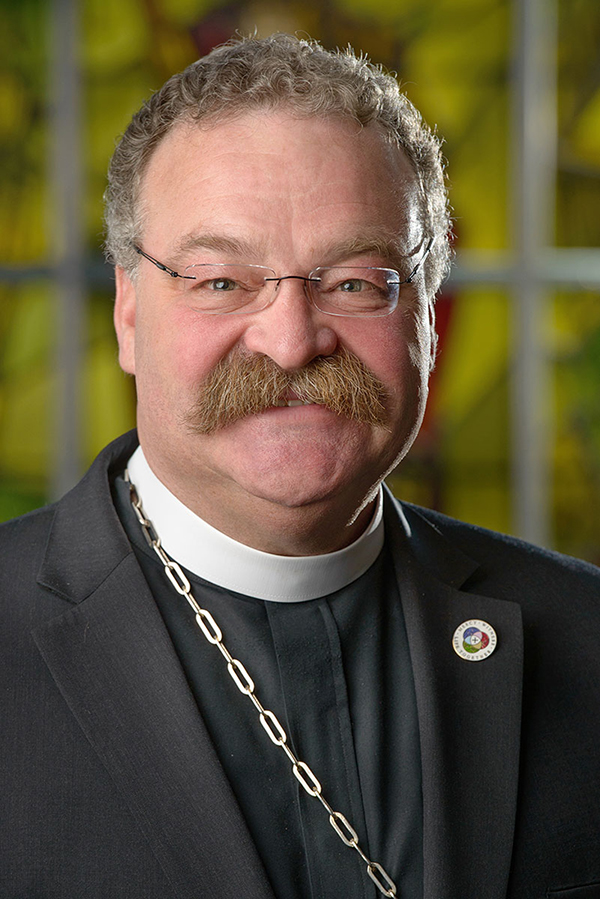
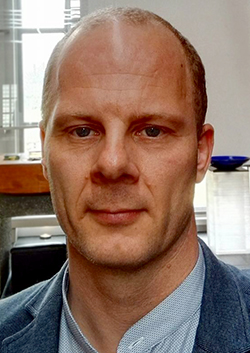
President Matthew C. Harrison (Photo: LCMS Communications).

President Matthew Harrison (Photo: LCMS Communications).

USA – The Lutheran Church—Missouri Synod (LCMS) has announced that Rev. Dr. Matthew C. Harrison has been reelected as President.

President Harrison was elected on the first ballot, receiving 56.96 percent of the votes cast. This is President Harrison’s third term, having first been elected to serve as president of the LCMS in 2010.

Also nominated were Rev. Dr. Dale A. Meyer and Rev. Dr. David P.E. Maier, who received 36.66 percent and 6.38 percent of the votes respectively.

News of President Harrison’s reelection comes several weeks before the LCMS holds its 2016 national convention. In the LCMS, presidential elections are held four weeks in advance of the national convention. Voting delegates from each congregation in the synod were invited to vote electronically from June 11-14, and the results of the election were made public June 15.

Delegates will gather in Milwaukee at the Wisconsin Center for the 66th convention of the LCMS from July 9-14, 2016. Elections for Vice-Presidents and other synodical officers will take place during the convention.

The LCMS, an American church body with more than two million members, is a member of the International Lutheran Council, a global association of confessional Lutheran churches.
———————

Nicaraguan Lutherans call for prayer following earthquake

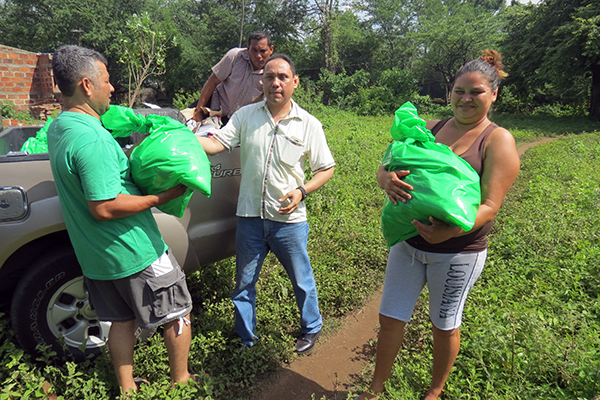
Distributing food and other supplies to those affected by the earthquake.

Distributing food and other supplies to those affected by the earthquake.

NICARAGUA – Late on June 9, a major earthquake struck Nicaragua near the community of Chinandega, damaging multiple buildings and homes.

The Lutheran Church—Synod of Nicaragua (Iglesia Luterana—Sínodo de Nicaragua – ILSN), has been hit particularly hard by the quake. “Our communities were severely affected by the earthquake,” ILSN President Marvin Donaire explains. “The people of La Joya, El Piloto, Rancheria, La Villa 15 de Julio, and Tonalas Morazan are sleeping on the street, because the earth continues shaking.”

The initial quake, which measured 6.1 on the Richter Scale, had its epicenter near Chinandega. The western coast of Nicaragua has suffered a series of aftershocks in the days following the earthquake, with magnitudes ranging from 4.4 to 5.1 so far. Aftershocks are expected to continue for weeks or even months.

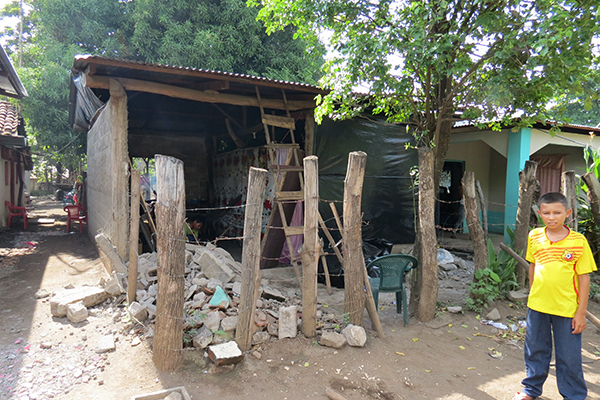
A building damaged in the earthquake.

A building damaged in the earthquake.

President Donaire has called on the international Lutheran community for prayers and support. “Brothers, we need your prayer,” he said. “We need help for our brethren through your prayers. The entire western region has been damaged: homes have been destroyed and our churches severely damaged. May God bless you for your prayers.”

The ILSN was founded through the missionary activity of Lutheran Church–Canada (LCC), which is working with the ILSN to determine appropriate relief efforts. LCC is still assessing the full extent of the situation and determining how best to assist the Nicaraguan church. In the meantime, it is sending $3,000 USD immediately from its Emergency Relief Fund to assist with primary level needs, including purchasing food, blankets, and clothing to distribute to people in the affected area.

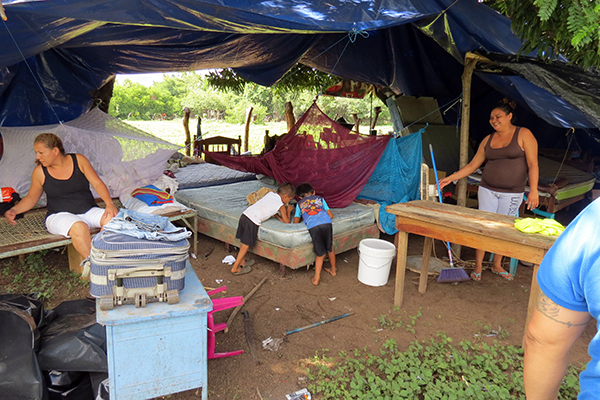
Families sleep in a make-shift shelter, following earthquakes and aftershocks.

Families sleep in a make-shift shelter, following earthquakes and aftershocks.

Roberto José, the administrator of LCC’s Mission Centre in Chinandega (which is near the epicenter of the quake), is conducting field visits in order to prepare estimates of additional needs. “We are waiting on additional details from the Mission Centre at this time,” explains Rev. Dr. Leonardo Neitzel, LCC’s Executive for Missions and Social Ministry. “We are ready to send additional funds to help with relief efforts as needs become better known.”

The ILSN and LCC are both member churches of the International Lutheran Council, a global association of confessional Lutheran church bodies.

———————

Latvian Lutherans reinstate male-only clergy

Text

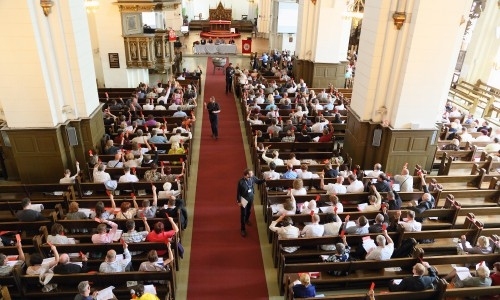
The 2016 Synod of the Evangelical Lutheran Church of Latvia meets in the Cathedral of Riga. Photo via the ELCL.

LATVIA – On June 3, 2016, the Evangelical Lutheran Church of Latvia (Latvijas Evaņģēliski luteriskā baznīca – ELCL) officially adopted a policy allowing only males to be ordained as clergy. The decision came during a meeting of the church’s Synod held in the Cathedral of Riga from June 3-4, with the vast majority—77.3%—of those present voting to amend the church’s constitution in favour of returning to the historic practice of the Christian church.

Questions over the ordination of women have been an issue of concern in the ELCL for several decades. Archbishop Janis Vanags and the ELCL’s bishops ceased ordaining women in 1993, but the change in practice was never made official church policy until the 2016 Synod.

“We are an apostolic church, as confessed in the Creed,” explained one lay participant, speaking in favour of the change prior to the vote. “The apostles are our teachers, not the spirit of our time. I will vote in favour of the amendment.”

The change is expected to have a significant impact on the Latvian church’s ecumenical relationships. In advance of the synod, the Evangelical Church in Germany (EKiD) had warned that a return to a male-only clergy would force a change in church relations between the EKiD and the ELCL. Delegates from the Lutheran World Federation (LWF) had likewise met with ELCL officials in advance of the Synod to discourage the church from changing its constitution. The LWF has since expressed its disapproval of the Latvian church’s decision. Questions about the ELCL’s relationship with the Latvian Evangelical Lutheran Church Abroad, which is led by a female archbishop, have also been raised.

Archbishop Vanags addressed the Synod about these concerns, noting that the decision brings the ELCL closer to a number of other Lutheran churches that do not ordain women. In particular, he noted the need for the ELCL to draw closer to the International Lutheran Council (ILC) and its member churches, including The Lutheran Church—Missouri Synod (LCMS). The ILC’s member churches do not ordain women. Archbishop Vanags and several other bishops indicated a desire to meet with LCMS in the near future to discuss areas where the two church bodies may continue to walk together and proclaim the Gospel as partner churches.

In other business, the Synod adopted a new strategy plan for the next four years and elected a new bishop, Hanss Jensons, for the Liepajas diocese. A provision to allow for the formation of monasteries and convents, at the approval of the College of Bishops, was also adopted.

With nearly 300 congregations, the Evangelical Lutheran Church of Latvia is the nation’s largest church. Approximately 700,000 Latvians identify as Lutheran, of which approximately 43,000 are active participants in the life of the church. The ELCL is a member church of the Lutheran World Federation. While not a member of the ILC, the ELCL is in fellowship with one of its member churches: the LCMS. It also holds close ties to the Independent Evangelical Lutheran Church (SELK) of Germany, another member church of the ILC.

———————

French Lutherans Elect New President

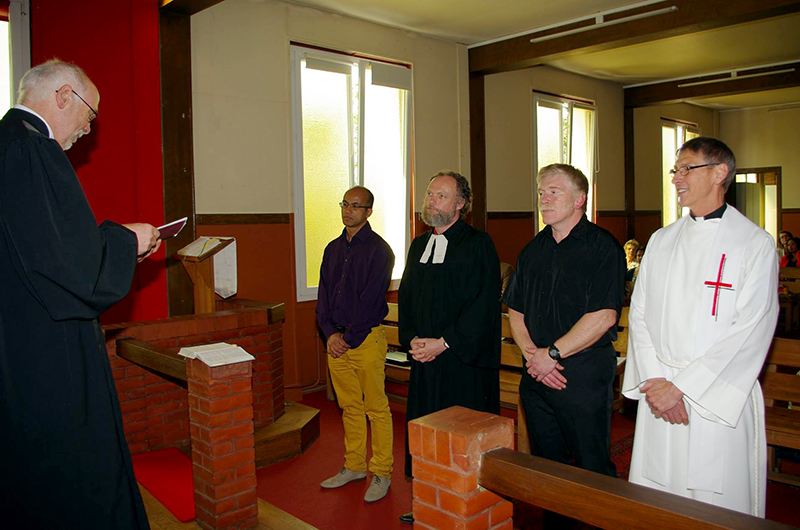
Officers of the synodical board are installed. (Photo: Eric Préaud).

Officers of the Evangelical Lutheran Church–Synod of France are installed. Officers from left to right are: Andrianhery Rakotoniaina (Treasurer), Rev. Philippe Volff (Vice-President), Rev. Martin Jautzy (President), and Rev. David Maffett (Secretary). (Photo: Eric Préaud).

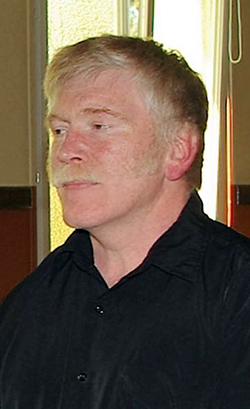
President Martin Jautzy. (Photo: Eric Préaud)

President Martin Jautzy. (Photo: Eric Préaud)

FRANCE – Representatives of the Evangelical Lutheran Church–Synod of France (Église Évangélique Luthérienne–Synode de France – EELSF) held their synodical convention May 6-8, 2016 in Châtenay-Malabry, during which the church elected Rev. Martin Jautzy as their new President.

President Elect Jautzy serves as pastor at Paroisse de Sion in Schilldersdor, Alsace. Prior to his election as synodical President, he served as a regional president.

“President Martin Jautzy was elected president with a clear majority,” noted outgoing President Roger Jones. “Our church will greatly benefit from his pastoral qualities.”

“It was a great privilege for me to serve our Church the last four years,” President Jones continued, noting his ability to work only part-time in recent years following a serious stroke in 2014. He expressed thanks for the prayers of the international Lutheran community during his recovery. “I thank you for your support and well-wishes which were a great encouragement. With God’s blessings, I am able to continue to serve.”

Also elected during the convention was Rev. David Maffett, who will serve the ELCSF as Secretary of the Synodical Board. Rev. Philippe Volff and Andrianhery Rakotoniaina were reelected to serve as Vice-President and Treasurer of the synod respectively.

———————

Nordic Lutheran Dioceses enter fellowship talks with German and English Lutherans

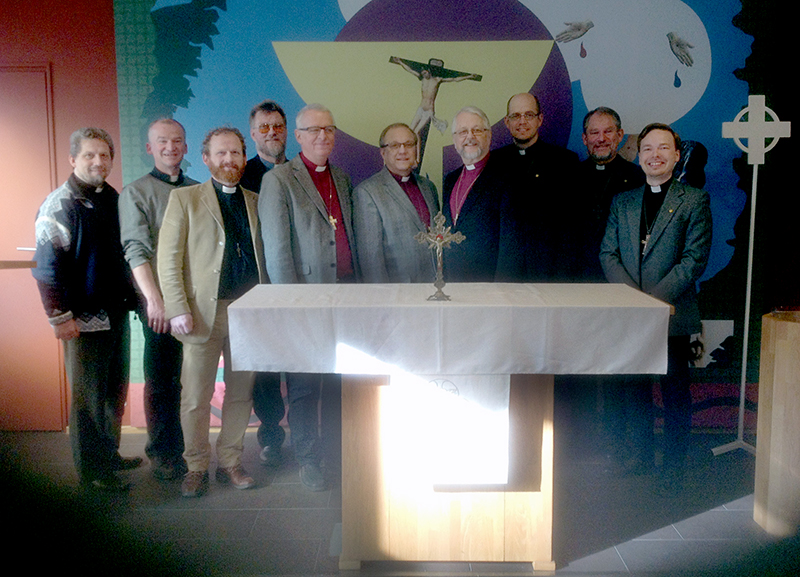
Representatives to the Church Fellowship talks in Finland.

Representatives to the Church Fellowship talks in Finland.

FINLAND – Representatives of the Communion of Nordic Lutheran Dioceses began church fellowship talks with the Independent Evangelical Lutheran Church (SELK) of Germany and the Evangelical Lutheran Church in England (ELCE) during meetings April 13-14, 2016 in Helsinki, Finland. The Nordic Lutheran Dioceses officially formed in 2015, and is composed of the Evangelical Lutheran Mission Diocese of Finland, the Mission Province of Sweden, and the Evangelical Lutheran Diocese of Norway.

These three churches have attempted to operate within the confines of their respective national church bodies, but have increasingly come into conflict with them as the national churches have become increasingly liberal. The bishops and almost all clergy associated with the Dioceses have been defrocked by their national church bodies for their confessional stance.

Planning for these talks has taken three years and was first only envisioned to include the ELCE and the Evangelical Lutheran Mission Diocese of Finland. But as discussions progressed, it was considered prudent to include the other two Nordic Dioceses as well as the SELK so that the scope and breadth of these talks could be increased.

The discussions were held at the Finnish Diocese’s Koinonia Centre in Helsinki.

Meetings began with worship and discussion soon followed on the nature and identity of the Church. Each church body presented their constitution and spoke about how the Lutheran Confessions shape their self-understanding and ecclesiastical identities. Despite the influence of national and historic influences on the wording and structures of their constitutions, it was agreed that a clear and common understanding, founded upon the Lutheran Confessions, existed between the Nordic Missions Dioceses, the SELK, and the ELCE. The definition of “free” and “independent” churches were discussed and clarified, and the Nordic Dioceses made it clear that they were independent of all national church structures, governance, and practices.

The two day conference discussed twelve other topics as well, including the doctrine of Holy Scripture, the Holy Trinity, the person and work of the Son of God, the person and work of the holy Spirit, justification and sanctification, the end times, and ecumenical relations with other churches, both inside and outside Lutheranism. It was agreed these discussions were very helpful and that there was substantial agreement on these doctrines among all five churches.

The area that garnered most discussion was on the subject of the church and church structure. The Nordic Mission Dioceses and the SELK are episcopal, meaning they have bishops and a more centralised church structure. The ELCE, meanwhile, is more congregational and does not have a bishop. Dialogue here led to further discussions on the Office of the Holy Ministry. All participants agreed that while the particular form and structure of a church is important, what is ultimately important is how that structure assists the church to proclaim the Gospel and administer the sacraments as she carries out Christ’s mission in the world.

The participants have agreed upon a joint statement summarising the discussions, which will be taken back to their churches for consideration and consultation.

The Evangelical Lutheran Church in England and the Independent Evangelical Lutheran Church in Germany are both member churches of the International Lutheran Council (ILC), a global association of confessional Lutheran church bodies. The churches of the Communion of Nordic Lutheran Dioceses recently began official discussions about becoming members of the ILC.
—————————————————–

Second Meeting of the ILC-PCPCU Dialogue Group

ILC-PCPCU-dialogue-May-2016-banner

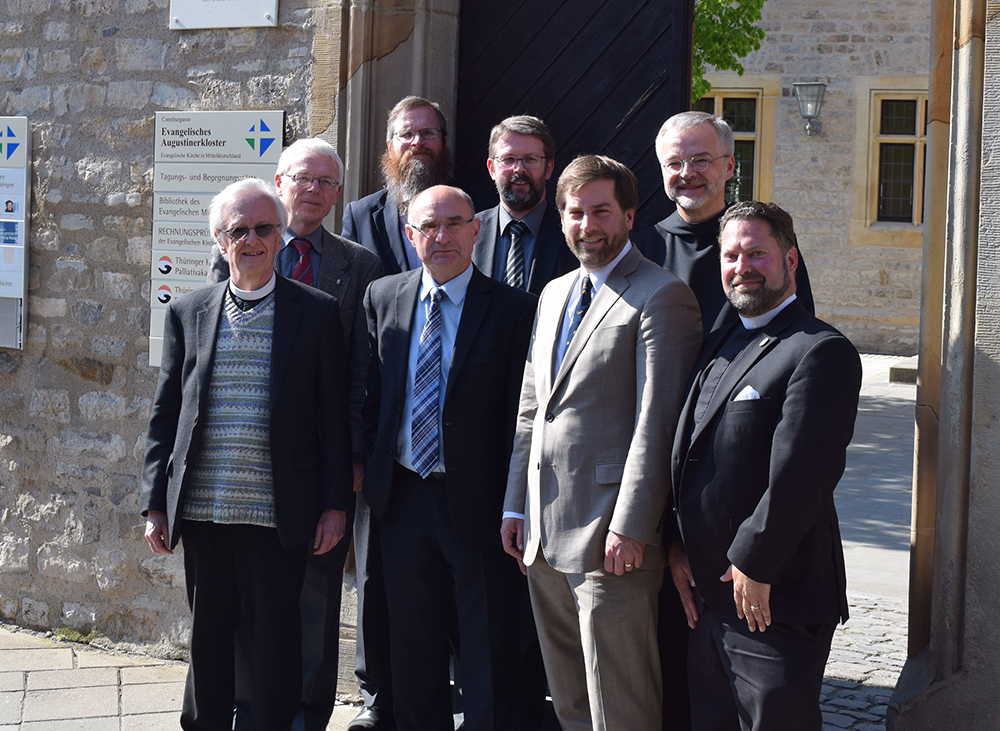
Roman Catholic and Lutheran delegates to the ILC-PCPCU meetings in May 2016.

GERMANY – On May 6-7, 2016 the Dialogue Group of the International Lutheran Council (ILC) and the Pontifical Council for Promoting Christian Unity (PCPCU) met for the second time. The venue was the Augustinian Monastery at Erfurt, Germany. Delegates on the Roman Catholic side were Dr. Josef Freitag (Erfurt, Germany) Dr. Grant Kaplan (Mainz, Germany/St. Louis, USA), Dr. Burkhard Neumann (Paderborn, Germany) and Fr. Dr. Augustinus Sander (Maria Laach, Germany). Delegates on the Lutheran side were Rev. Dr. Albert Collver III (St. Louis, USA), Dr. Werner Klän (Oberursel, Germany) Dr. John Stephenson (St. Catharines, Canada), Dr. Roland Ziegler (Ft. Wayne, USA). Unable to attend the meeting were Lutheran delegate Dr. Gerson Linden (Sao Leopoldo, Brasil) and Roman Catholic delegate Dr. Wolfgang Thoenissen (Paderborn, Germany).

As agreed upon at the first meeting, held in Oberursel, Germany in October 2015, the chief topic was the Sacrifice of the Mass. Presentations were given on Articles 24 of the Augsburg confession and its Apology by Dr. Neumann from a Roman-Catholic perspective, and by Rev. Dr. Collver from a Lutheran perspective. It was noted that the terminology on sacrifice was used in a complex manner already in the 16th century, and ambiguously at times as well. Additionally, changes in the understanding of what “sacrifice” means, occurred—especially in the Roman-Catholic camp—before the Second Vatican Council and beyond. The Dialogue Group also discussed issues like “opus operatum,” commemoration and representation of Christ’s sacrifice on the Cross, faith and the receiving of the sacramental gift, the Eucharistic Prayer, and the connection between the celebration of the Lord’s Supper with the whole of the liturgy.

For the next meeting, the Dialogue Group established working groups to address: a) how Lutheran liturgies addressed the concept of sacrifice and the sacrifice (of the Mass) from a Roman Catholic perspective,and how the concept has developed  in Roman Catholic liturgies since the 16th century  as seen from a Lutheran perspective, b) an evaluation of Lutheran-Roman Catholic dialogue on the theme of the Eucharist and the theology of the Lord’s Supper over the last half century, and c) a historical survey of developments and changes in the interpretation of the sacrificial dimension of the Lord’s Supper that affect how each side understands its own confession and that of its dialogue partner.

———————

Vote to introduce female ordination fails among Polish Lutherans

luteranie-plPOLAND – The Evangelical Church of the Augsburg Confession in Poland (ECACP – Kościół Ewangelicko-Augsburski w Rzeczypospolitej Polskiej) has rejected opening ordination to women, after a vote on the issue was defeated during the 2016 Spring Synod of the Church in Warsaw.
In total, 38 people voted in favour of the change and 26 voted against it, with four abstentions. According to the church’s bylaws, altering this aspect of church teaching in the Polish church would have required a 2/3 majority vote—a target missed by eight votes.

The Evangelical Church of the Augsburg Confession in Poland notes that the discussion of female ordination has a long history in their church, going back more than seven decades. In 2008, the ECACP’s Commission on Theology and Confession reported its opinion that there were no theological objections to introducing female ordination in the ECACP. Despite their finding, female ordination has not been adopted by the Polish church. Women have been able to serve in the office of deacon in the church since 1999.

The question of opening pastoral ordination to women had been raised in the Autumn 2015 Synod of the Church by Bishop Jerzy Samiec, head of the ECACP. He announced his intention to open discussion of the topic during a conference in Warsaw discussing the Lutheran World Federation’s (LWF) Gender Justice Policy.

With approximately 60,000 members, the ECACP is Poland’s largest Protestant church in a predominantly Roman Catholic country. Prior to Communist oppression following World War II, the church counted a membership of approximately one million members.

The Evangelical Church of the Augsburg Confession in Poland is a member church of the LWF, though it also has ties to The Lutheran Church—Missouri Synod, a member church of the International Lutheran Council. Churches in the ILC do not ordain women.

———————

Opposition as Church of Norway approves same-sex marriage

church-of-norway-samesex-marriage
NORWAY – On April 11, 2016, the Bishops’ Conference of the Church of Norway (CN) moved to approve the marriage of same-sex couples, creating a liturgy to allow such weddings to take place in the church. The decision came in a 88-32 vote, but there are still many expressing their objection to the change in the church’s teaching on marriage.

Earlier votes on the subject of same-sex marriage had been rejected, most recently in 2014. The Church of Norway is the state church of Norway, and is a member of the Lutheran World Federation. It has allowed the ordination of practicing homosexuals since 2007, further straining relations in the church.

Rev. Dag Øivind Østereng

Rev. Dag Øivind Østereng

“[The newly-adopted teaching on marriage] is contrary to the Bible and gathered ecclesiastical and ecumenical tradition,” wrote Rev. Dag Øivind Østereng following the vote. “To abolish man/woman as the basic unit in marriage is contrary to God’s revealed will and natural law that can be discerned in creation itself. The Church has bowed herself before a gender ideology which is in direct violation of the Bible’s word and to what I as a pastor am committed.” Rev. Østereng is a prominent figure in the CN’s confessional wing, having been a member of the group Carissimi.

The vote to approve a same-sex wedding liturgy included allowance for priests and other church workers to refuse to participate in gay marriages. But this is not enough, Rev. Østereng says. “The Norwegian Church as a community has now changed her understanding of utterly fundamental aspects of the Word of God,” he explained. “These are not merely points with which I personally disagree; I cannot belong to a church that teaches in this way.”

“It is with great sadness and deep anguish, and at the same with the peace that conviction gives, that I must announced that within the next few weeks I will submit my resignation,” he continued, “and after the resignation-notice period withdraw from service as a priest in the Church of Norway and as a member of the Church of Norway.”

It is unclear how many Norwegian clergy and laypeople may follow Rev. Østereng’s example. Just before the vote, 200 priests released a Declaration on the Ecclesial Situation expressing doubt about their continued participation in the Church of Norway if same-sex marriage were to be approved. An online poll taken by Norwegian news site Dagen revealed that 44% of respondents intended to leave the Church of Norway over the issue, and that an additional 34% are uncertain whether to continue their membership. As the poll was conducted online, it is unclear how accurately it represents the sentiments of Norwegians overall.

While the Church of Norway is the nation’s largest church, there are other Lutherans options in the country. The Lutheran Church in Norway (Den Lutherske Kirke i Norge – LKN), for example, is a small church body affiliated with the International Lutheran Council (ILC) since 2015. The LKN traces its origins to 2005, and its pastors are all former ministers of the Church of Norway. While small, the LKN has begun to receive greater media attention as more Norwegians seek alternatives to the Church of Norway.

Norway is also home to the Evangelical Lutheran Diocese of Norway (Det evangelisk-lutherske stift i Norge), which officially separated from the Church of Norway in 2013. It entered into communion with the Evangelical Lutheran Diocese of Finland and the Mission Province in Sweden in 2015, forming the Communion of Nordic Diocese. All three churches have recently met with the International Lutheran Council to begin discussions on becoming members of the ILC.

The International Lutheran Council is a global association of confessional Lutheran churches.

———————

SELK welcomes New Director to Wittenberg

SELK representatives welcome Director Kristin Lange to Wittenberg.

SELK representatives welcome Director Kristen Lange to Wittenberg.

WITTENBERG, Germany – On April 7, representatives of the Independent Evangelical Lutheran Church of Germany (SELK) met with the new Director of the International Lutheran Society of Wittenberg (ILSW), Kristen Lange, in Wittenberg’s Old Latin School.

Since the historic building in Wittenberg’s Old Town was restored and renovated as a study and welcome center, it began serving in its new role during the past year.  The comprehensive building phase was headed up by Rev. David Mahsman. Now, as things transition into the programming phase, Kristen Lange has assumed responsibilities as its director. The SELK works together in the ILSW with its U.S. partner, The Lutheran Church-Missouri Synod (LCMS). The LCMS’ mission department employs Director Lange as a missionary to Germany.

Director Lange, an academically-trained linguist (in German and English), had opportunity to visit with SELK Bishop Dr. Hans-Jörg Voigt, SELK District Presidents Peter Brückmann (of Berlin) and Thomas Junker (of Weissenfels), Rev. Markus Fischer (of Trinity Lutheran Church, Leipzig, which has responsibility for Wittenberg), Ulrich Schroeder (of Dresden) and Dr. Andrea Grünhagen (of Hannover, a theological resource executive). The SELK delegation took the opportunity to get acquainted and extend a sincere welcome to Germany. Rev. Mahsman also participated in the conversation, which, in addition to information about SELK church structures and procedures, considered upgrading a preaching presence in Wittenberg, as well as public relations, outreach, and preparations for the “World Reformation Exhibition,” planned for Wittenberg as part of the 2017 Reformation anniversary.

Bishop Voigt explained to SELK-News that he is filled with gratitude every time he visits the Old Latin School. “The strong LCMS engagement, which also involved the SELK, has brought results. I wish Kristen Lange a good adjustment to Germany and the Lord’s blessing for her work.”

Translation:  Robert Bugbee

Belgian Lutheran Church President Issues Call to Prayer Following Terrorist Attacks

ELKB President Gijsbertus van Hattem.

ELKB President Gijsbertus van Hattem.

BELGIUM – On the morning of March 22, Belgium suffered twin terror attacks on Brussels’ international airport and a city metro station. At least 34 people are confirmed dead with more than 230 injured as of this report. The Islamic State has claimed responsibility for the attack.

“We are devastated by this news,” said President Gijsbertus van Hattem of the Evangelical Lutheran Church in Belgium (ELKB – Evangelisch-Lutherse Kerk in België), who had been scheduled to fly from the airport later the same day. “But we take comfort in the peace of Christ—a peace which passes all understanding. Despite the raging of the world, we have the suffering and risen Lord with us.”

President van Hattem is encouraging Christians across the globe to lift up the situation in prayer. “We ask our friends around the world to keep Belgium in prayer in these days,” he said. “Pray especially for those who are mourning the loss of loved ones, those who are recovering from injuries, and those tasked with investigating this dreadful incident and protecting citizens.”

“And keep not only us in prayer,” he continued. “Pray for all those suffering in the midst of civil unrest and terrorism—in Europe, yes, but especially also in the Middle East and Africa. May God grant comfort to the sorrowing and peace to the persecuted. And may the Gospel of Jesus Christ be good news to a world in great conflict.”

The ELKB is a member church of the International Lutheran Council, a global association of confessional Lutheran church bodies.

——————–

Signup for ILC Updates