News

SELK welcomes New Director to Wittenberg

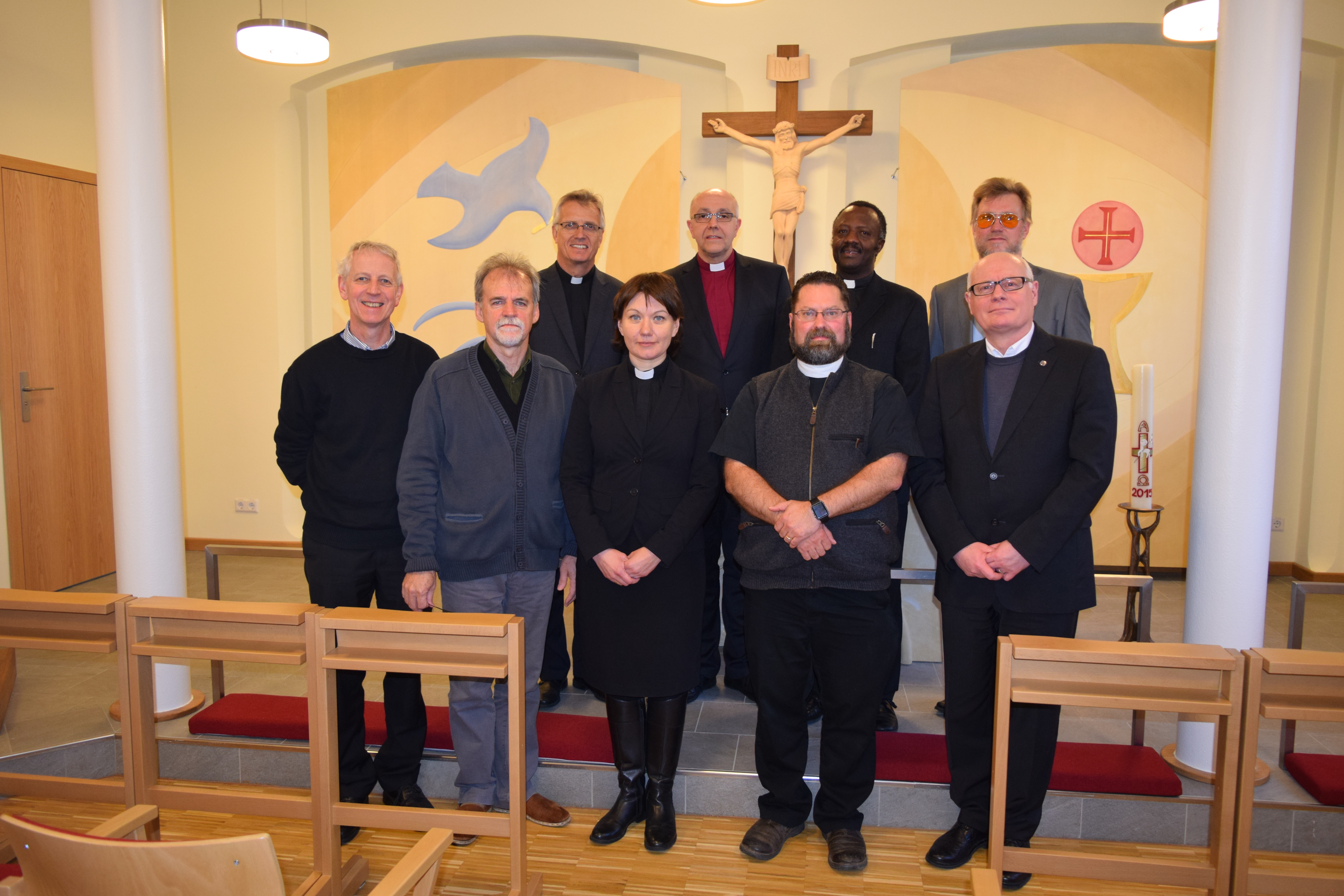
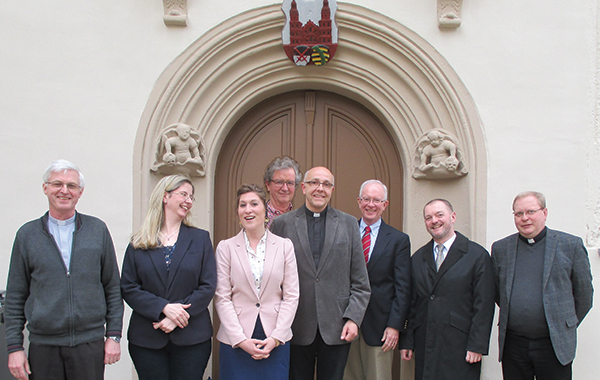
SELK representatives welcome Director Kristin Lange to Wittenberg.

SELK representatives welcome Director Kristen Lange to Wittenberg.

WITTENBERG, Germany – On April 7, representatives of the Independent Evangelical Lutheran Church of Germany (SELK) met with the new Director of the International Lutheran Society of Wittenberg (ILSW), Kristen Lange, in Wittenberg’s Old Latin School.

Since the historic building in Wittenberg’s Old Town was restored and renovated as a study and welcome center, it began serving in its new role during the past year.  The comprehensive building phase was headed up by Rev. David Mahsman. Now, as things transition into the programming phase, Kristen Lange has assumed responsibilities as its director. The SELK works together in the ILSW with its U.S. partner, The Lutheran Church-Missouri Synod (LCMS). The LCMS’ mission department employs Director Lange as a missionary to Germany.

Director Lange, an academically-trained linguist (in German and English), had opportunity to visit with SELK Bishop Dr. Hans-Jörg Voigt, SELK District Presidents Peter Brückmann (of Berlin) and Thomas Junker (of Weissenfels), Rev. Markus Fischer (of Trinity Lutheran Church, Leipzig, which has responsibility for Wittenberg), Ulrich Schroeder (of Dresden) and Dr. Andrea Grünhagen (of Hannover, a theological resource executive). The SELK delegation took the opportunity to get acquainted and extend a sincere welcome to Germany. Rev. Mahsman also participated in the conversation, which, in addition to information about SELK church structures and procedures, considered upgrading a preaching presence in Wittenberg, as well as public relations, outreach, and preparations for the “World Reformation Exhibition,” planned for Wittenberg as part of the 2017 Reformation anniversary.

Bishop Voigt explained to SELK-News that he is filled with gratitude every time he visits the Old Latin School. “The strong LCMS engagement, which also involved the SELK, has brought results. I wish Kristen Lange a good adjustment to Germany and the Lord’s blessing for her work.”

Translation:  Robert Bugbee
Belgian Lutheran Church President Issues Call to Prayer Following Terrorist Attacks

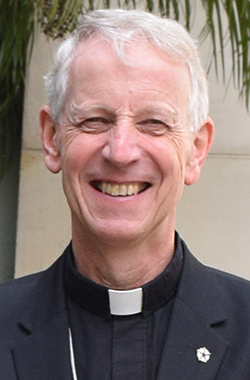
ELKB President Gijsbertus van Hattem.

ELKB President Gijsbertus van Hattem.

BELGIUM – On the morning of March 22, Belgium suffered twin terror attacks on Brussels’ international airport and a city metro station. At least 34 people are confirmed dead with more than 230 injured as of this report. The Islamic State has claimed responsibility for the attack.

“We are devastated by this news,” said President Gijsbertus van Hattem of the Evangelical Lutheran Church in Belgium (ELKB – Evangelisch-Lutherse Kerk in België), who had been scheduled to fly from the airport later the same day. “But we take comfort in the peace of Christ—a peace which passes all understanding. Despite the raging of the world, we have the suffering and risen Lord with us.”

President van Hattem is encouraging Christians across the globe to lift up the situation in prayer. “We ask our friends around the world to keep Belgium in prayer in these days,” he said. “Pray especially for those who are mourning the loss of loved ones, those who are recovering from injuries, and those tasked with investigating this dreadful incident and protecting citizens.”

“And keep not only us in prayer,” he continued. “Pray for all those suffering in the midst of civil unrest and terrorism—in Europe, yes, but especially also in the Middle East and Africa. May God grant comfort to the sorrowing and peace to the persecuted. And may the Gospel of Jesus Christ be good news to a world in great conflict.”

The ELKB is a member church of the International Lutheran Council, a global association of confessional Lutheran church bodies.

——————–

Seminaries of Siberian and Ingrian Evangelical Lutheran Churches to Cooperate in Laity Instruction

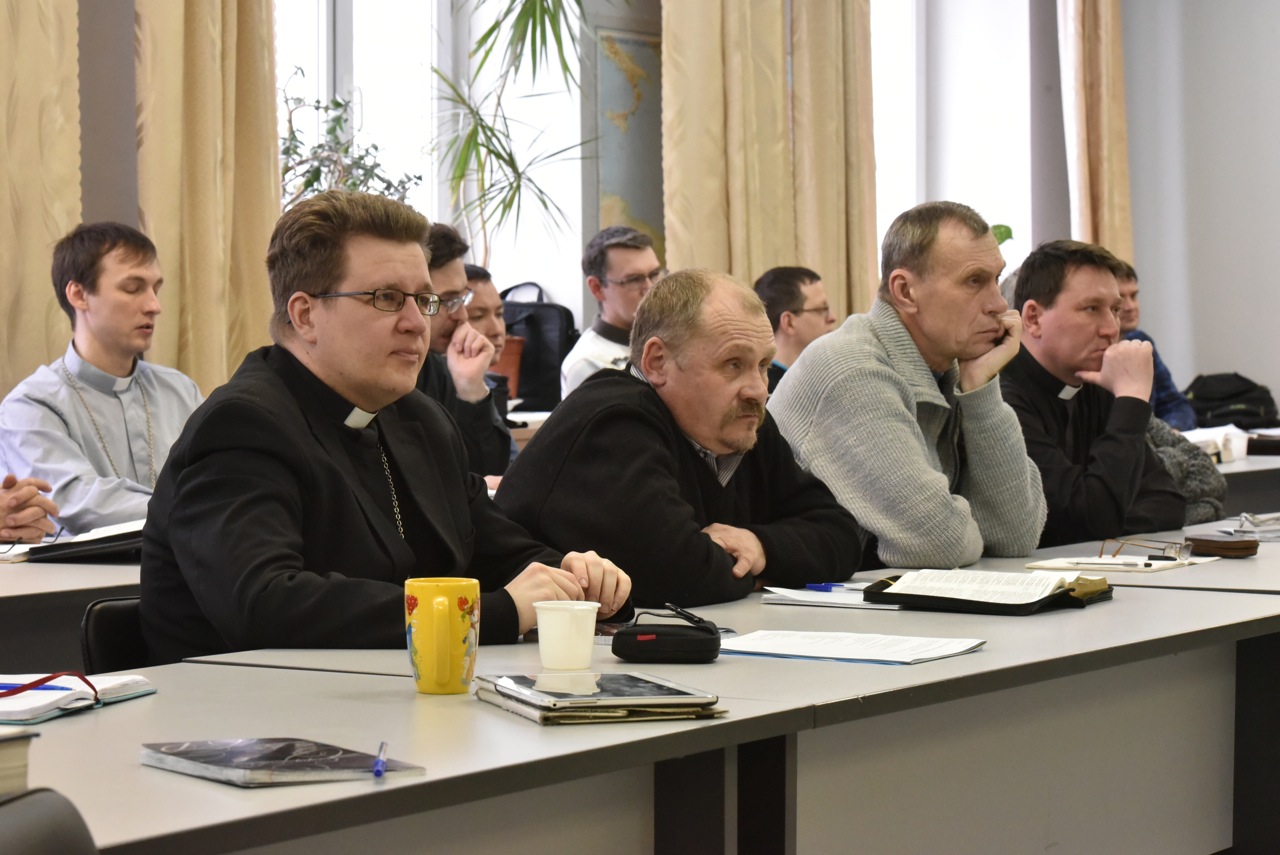
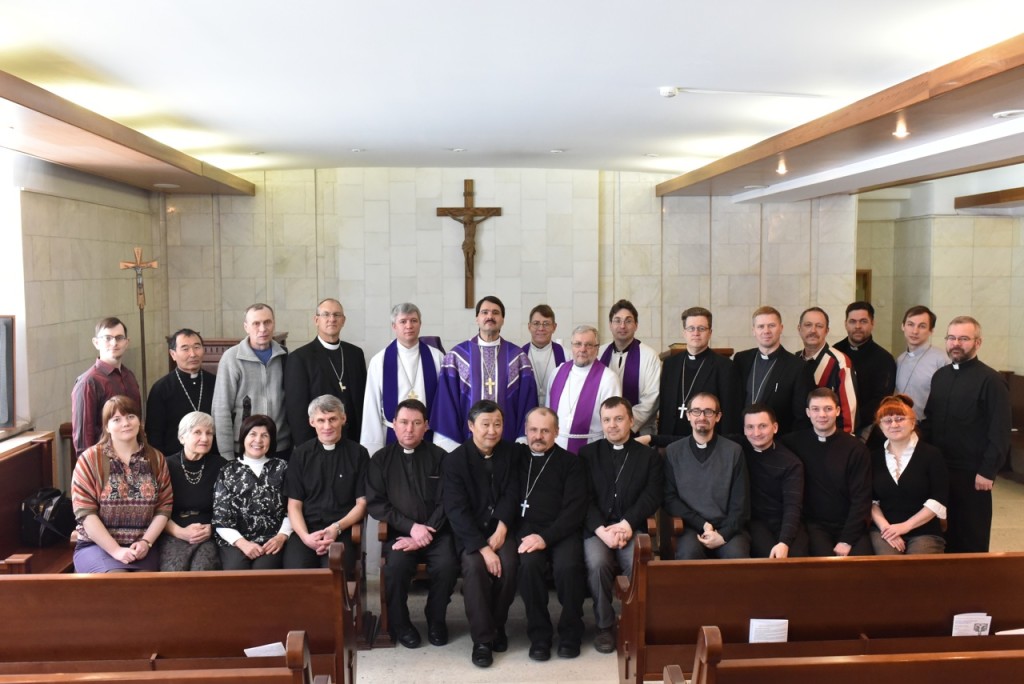
DSC_6915

Theological seminary of Siberian Evangelical Lutheran Church and Theological Institute of Evangelical Lutheran Church of Ingria in Russia (both members of the International Lutheran Council) have reached preliminary agreement to conduct a joint educational program serving the needs of the people in the parishes in the eastern part of Russia.

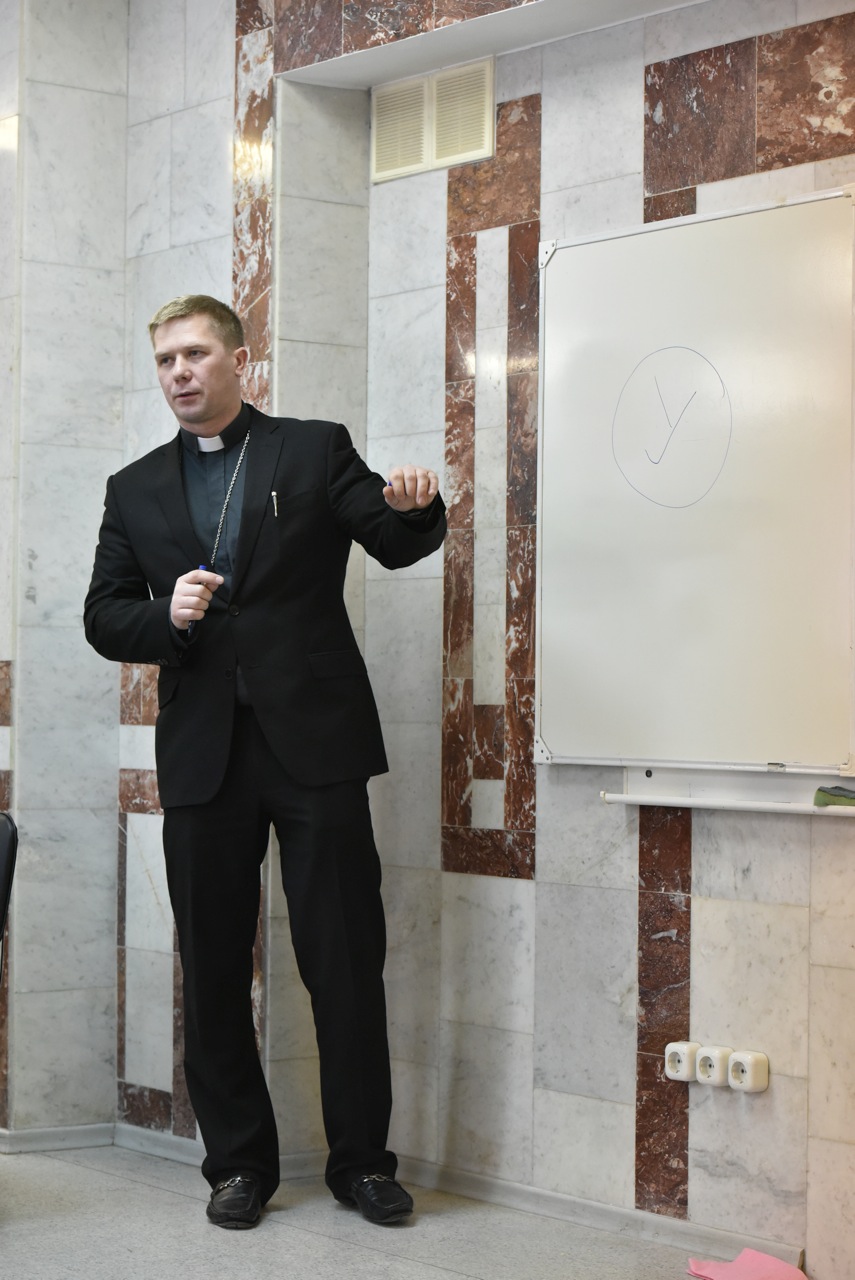
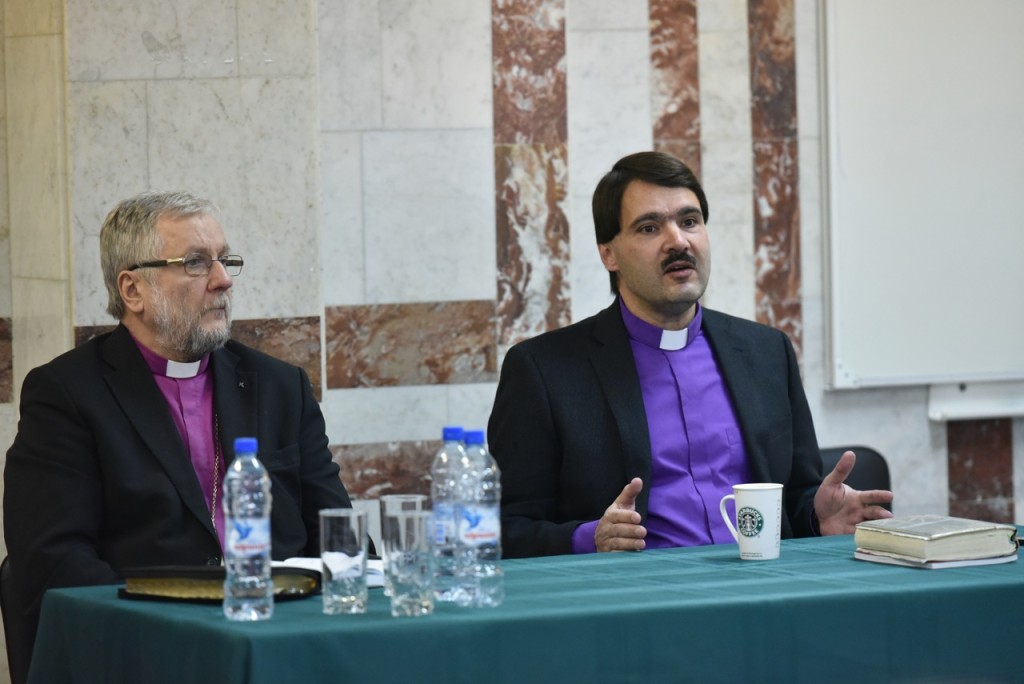
DSC_6912

This breakthrough came as a result of the meeting involving the rectors of respective institutions and staffs involved in the training of the laity. The program will be based on the standard used in the Ingrian Church. In many ways it is similar to the Biblical school program, which was implemented in the Siberian Church since 1999, so there would be relatively little adjustment for SELC representatives. Novosibirsk seminary of SELC will share resources such as its facility and teachers. Instructors may also come from other places as needed. Most participants will come from Siberian deanery of ELCI, though parishioners of the SELC parishes who had not had a chance to go through the Biblical school program in the previous years, will also join the ranks of the program’s students. Select sessions may take place in ELCI and SELC parishes across Siberia and the Ural region. According to the experience of the Ingrian Church representatives, having such movable element assists in building stronger ties between various congregations and their members, which is vital given the vast distances in Siberia.

DSC_6930

Both at the general meeting of the seminar participants and the focus group meeting there was emphasized a strong need to have the Lutheran church members instructed in the matters of the faith as much as possible given the current situation, in which the faithful traditional Churches find themselves in the Lutheran world.

Confessional Lutherans and Anglicans in North America draw closer together


ACNA-LCMS-LCC-2016-banner

NORTH AMERICA – Participants in the Anglican Church in North America (ACNA), The Lutheran Church—Missouri Synod (LCMS), and Lutheran Church–Canada’s (LCC) ongoing ecumenical dialogue have released an interim report on their work so far. Entitled “On Closer Acquaintance,” the document is the culmination of six years of regular discussions between the three church bodies, and highlights the discovery of significant doctrinal agreement between the Anglican and Lutheran participants.

The authors are clear that there is still much work to be done before altar and pulpit fellowship between the two sides would be possible. Nevertheless, they have found the discussions promising enough to publicly declare their prayer “that, in the time and manner of His choosing, our Lord would grant each side in our conversations to acknowledge our ‘first cousin’ to be in fact a true sister church, with the result that we would welcome each other wholeheartedly to our respective altars and enjoy the blessed situation in which our clergy and people would be interchangeable with each other as we stand under the grace of God and work for His kingdom.”

In the meantime, they encourage all three church bodies to “consider the ways in which we can cooperate and come together in ways that fall short of full communion but do allow the greatest measure of cooperation while maintaining full theological integrity.”

The report can be download here.

Church leaders react

The leaders of the three churches welcomed the report warmly, reflecting on the growing relationship between confessional Anglicans and Lutherans.

“In a time when so many churches are departing from the teachings of the Bible, it has been refreshing to see the stand for Scriptural Truth that is being made by The Lutheran Church—Missouri Synod and Lutheran Church–Canada,” said ACNA Archbishop Foley Beach. “We agree on the essentials of the Faith, and share a common desire to evangelize North America with the Gospel of Jesus Christ.”

The LCMS’ President Matthew Harrison had a similar perspective. “In these trying times for global Christianity, we were joyously surprised and deeply heartened to learn of ACNA and its struggle to be faithful to the New Testament and historic Christian faith,” he said. “By God’s grace we have found real friends who have encouraged us deeply. We have been inspired by the journey of these men and women out of a church body which had abandoned the New Testament. They have sacrificed greatly, virtually all of them losing the properties of their respective congregations due to the structure of the Episcopal Church. I pray that we would be so courageous facing such difficulties.”

LCC President Robert Bugbee praised the dialogue and the growing theological consensus between confessional Lutherans and Anglicans. “These discussions have been marked by great thoroughness and theological integrity,” he noted. “Nobody reached for easy compromises, nor did anyone paper over matters that needed to be fully worked through on the basis of God’s Word. Biblical Christians throughout North America face many pressures, not only with the secularization of our society, but also because of the doctrinal decay and revisionism in much of mainline Christianity. We thank the Lord for the commitment of our Anglican friends, and ask Him to use our witness to hold Christ the Saviour out to people all around us.”

All three leaders were present for the most recent round of dialogue between the LCMS, ACNA, and LCC, held February 8-9 in St. Louis, Missouri. A major focus of the meeting was finalizing the report on the six-year dialogue so far.

A Comparison of Doctrinal Positions

The report begins by recounting the close history of Anglicans and Lutherans, suggesting that while they are not as yet “sister churches” they are “the closest ecumenical cousins in Christendom.” Moreover, the current divisions in world Anglicanism mirror similar divisions in world Lutheranism. In these situations confessional Anglicans and confessional Lutherans find they have much in common. Each tradition also has much to offer the other: “We note that while Anglicans have been famous for their patterns of prayer and devotion, Lutherans have majored in more precise doctrinal definition and theological precision,” the report states. “While both sides acknowledge the essential quality of both lex credendi and lex orandi, it may be that Lutherans can assist Anglicans toward more careful attention to the first and that Anglicans can help Lutherans to deepen their practice of the second.”

The report continues by comparing the doctrinal positions of the two traditions at length. The churches have found strong agreement on a number of areas, including the subjects of the Trinity, the person of Jesus Christ, the authority of Scripture, the creeds, original sin, justification, and good works.

The talks have also identified areas that require further discussion. In particular, the report notes that “the ordering of the ministry is the area where we have found the most work, study, and discussion needs to be done to reach a common understanding of the connection between our practices.” To that end, the paper encourages Lutherans to “consider the ways in which the ministry of the bishop (as distinct from presbyter) is already at work among them” and encourages Anglicans to consider “how recognition of the office of bishop can go hand in hand with acknowledgement of the unicity of the office instituted by Christ.” Likewise, the report identifies the diaconate as another topic that would be beneficial to discuss.

The two sides also address the topic of female ordination in the report. The LCMS and LCC both understand the ordained ministry to preclude women. The report notes that a majority within ACNA also hold this position even as they are “engaged at the present time in a consensus-seeking discussion with the minority within its midst that takes the opposite view.”

Additional doctrinal stances compared in the report include the Church, Holy Baptism, Holy Communion, Holy Absolution, and the role of Christian rulers.

Moving Forward

“When our open-ended conversations began six years ago, some of the signatories to this report approached our task with a mixture of low expectations and a certain nervousness before the unknown,” the report admits in its conclusion. “All of us are somewhat surprised to have discovered the deep common bonds between us in the Body of Christ, and to have registered the large measure of consensus that we have documented above. We regard these things that we have discovered together as a gift of the Lord, and trust Him to use our findings to His glory and to the good of the universal Church. As we commend this report to the people and clergy of ACNA, LCMS, and LCC, we encourage Lutherans and Anglicans to remember each other in prayer, embrace one another in Christian love, to encourage each other to confess Christ boldly in our ever darkening times, and to support each other in mission and outreach in faithfulness to Him who has laid the same Great Commission on us all.”

Elsewhere in the report the authors write, “We earnestly hope that these pages may be read and pondered as widely as possible by the clergy and people of our respective church bodies, not only in private but also in the setting of Bible classes, clergy and theological conferences, and other appropriate forums of Christian education.”

Lutheran Church–Canada and The Lutheran Church—Missouri Synod are both members of the International Lutheran Council, a global association of confessional Lutheran church bodies.
———————

Joint Seminar in Novosibirsk, Russia

DSC_6968

By Rev. Alexey Streltsov

How good and how pleasant it is for brethren to dwell together in unity! (Ps 133:1)

A joint theological seminar took place in Novosibirsk on the premises of the Theological Seminary of Siberian Evangelical Lutheran Church. During the week of February 29 – March 4, more than 30 clergy and church workers from the Siberian deanery of the Evangelical Lutheran Church of Ingria and the Siberian Evangelical Lutheran Church heard lectures on Lutheran theology. Rev. Alan Ludwig presented series of lectures on theology of the Book of Concord (covered were the topics of Christology, Church, and Free Will). Rev. Daniel S. Johnson spoke on the rationale for use of Father Confessor by the clergy. Finally, Rev. Pavel Khramov addressed the question of the relevance of the Smalcald Articles for the church today.

Initiative for the joint meeting came from local Lutherans who increasingly realize that the common confessional voice of the Lutherans in Siberia and Russia in general would have greater impact both for the inner life of the local Lutheran congregations and on the public square. Dean Ville Melanen, of the ELCI’s Siberian deanery, was instrumental in making the event happen.

Lectures presented during the Conference were geared specifically toward the clergy who are actively involved in the parish work. They were thus of a very practical character emphasizing relevance of discussed theological points for the matter of preaching and pastoral care.

DSC_6989

Also special time was allotted for the bishops to address the pastors and deacons of the two sister churches and answer their questions. There was a very fruitful discussion on the practical aspects of the ministry in contemporary Russia. In particular, church workers wanted to know how to deal with people coming over from heterodox communities including those who externally professed to be Lutheran. The bishops answered that upon close examination in case of doubt, thorough catechesis must be provided for such people as it happens with any converts from non-Lutheran groups.

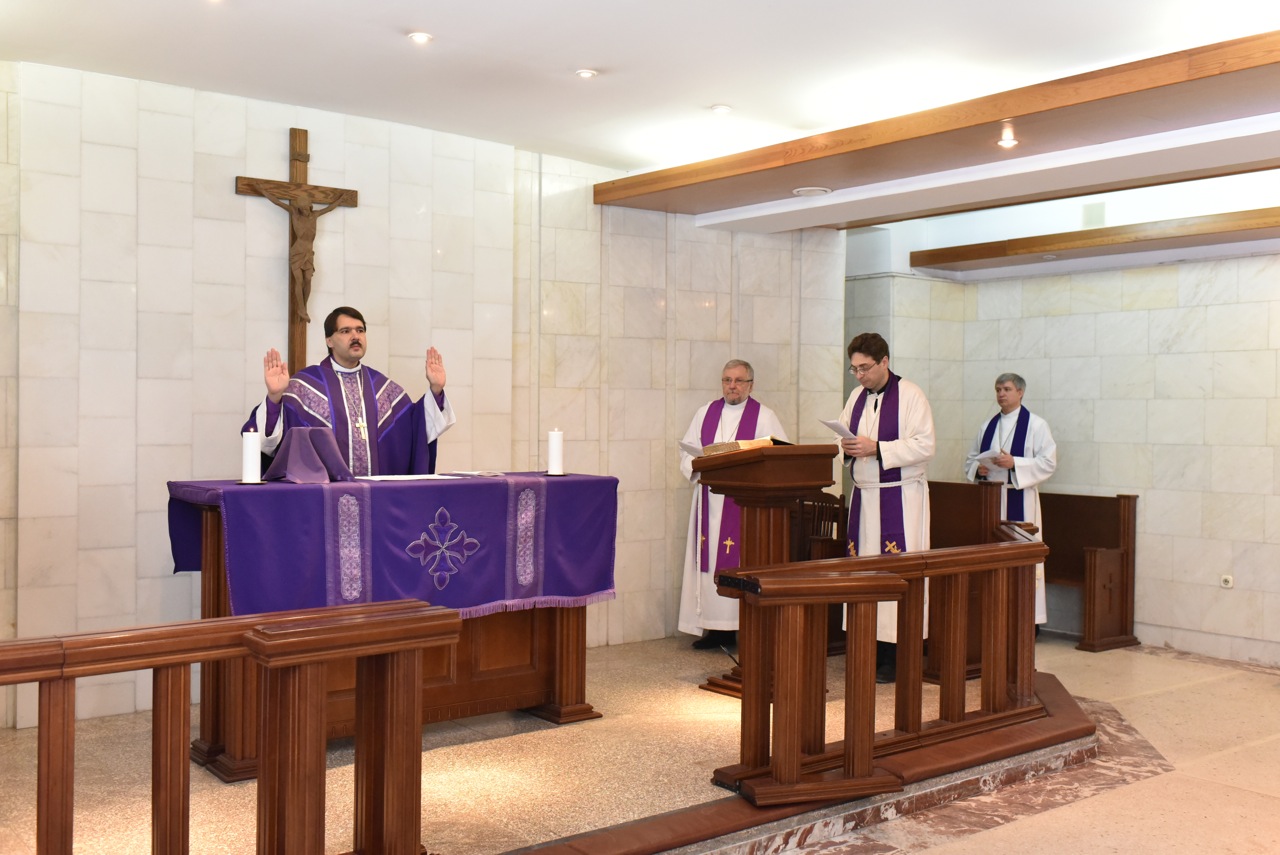
Being united in the doctrine of the Scripture and the Lutheran Confessional writings, Conference participants also rejoiced in the common celebration of the Lord’s Supper. It was a historic occasion, as for the first time Bishops Arri Kugappi and Vsevolod Lytkin of the two sister churches served together at the SELC altar. Celebration took place at the regular Wednesday service at St. Andrews parish in Novosibirsk.

The joint theological seminar is likely to become a regular event, which will further strengthen participating Lutheran clergy from both jurisdictions.  

———————

COMMUNIQUÉ Regarding LWF and ILC Meeting

DSC_0247

Pictured: (back row) — Rev. Dr. Martin Junge (LWF), Bishop Hans-Jörg Voigt (ILC), Rev. Dr. Fidon Mwombeki (LWF), Rev. Jon Ehlers (ILC)

(front row) — Rev. Gijsbertus van Hattem (ILC), Rev. Dr. Romeu Martini (LWF), Rev. Dr. Anne Burghardt (LWF), Rev. Dr. Albert B. Collver (ILC), Rev. Norbert Denecke

MEETING BETWEEN REPRESENTATIVES OF
THE INTERNATIONAL LUTHERAN COUNCIL (ILC) AND
THE LUTHERAN WORLD FEDERATION (LWF)
WITTENBERG, GERMANY, 24-25 February 2016

COMMUNIQUÉ

LWF PARTICIPANTS:

Rev. Dr. Martin Junge, General Secretary;

Rev. Dr. Fidon Mwombeki, Director of the Department for Mission and Development;

Rev. Dr. Anne Burghardt, LWF Department for Theology and Public Witness;

Rev. Norbert Denecke, Director of the LWF German National Committee;

Rev. Dr. Romeu Martini, Evangelical Church of Lutheran Confession in Brazil.

ILC PARTICIPANTS:

Bishop Hans-Jörg Voigt D.D., ILC Chairman;

Rev. Dr. Albert Collver, ILC Executive Secretary;

Rev. Jon Ehlers, Regional Representative of Europe;

Rev. Gijsbertus van Hattem, Secretary.

Both the LWF and ILC are honoring the commitment they made for the executive committees of each organization to meet with one another as agreed in the memorandum of understanding from 3 March 2005.

Agenda

  1. Completion of the Agenda | minutes – Communiqué
  2. LWF highlights an info sharing — Including identifying issues for further discussions
  3. ILC info sharing
  4. Discussion of identified issues
    1. LWF Items
    2. ILC Items
  5. From Conflict to Communion – ILC answer
  6. Date and venue for the next meeting, theme and topics.
  7. Drafting and Approval of Communiqué and unfinished Business.
  1. LWF Report

Discussion of past year’s events. Upcoming Reformation Celebration — Liberated by God’s Grace. (https://2017.lutheranworld.org)

June 2016 LWF will hold a council meeting in Wittenberg. It will have a very ecumenical theme for the pilgrimage – Roman Catholics, WCC and others invited.

May 2017 LWF Assembly is where the LWF will have its global Reformation celebration. October 2017 will be for the churches, no LWF global celebration. Theme of the LWF Reformation celebration and of the Assembly –  Liberated by God’s Grace: Salvation not for Sale, Human Beings not for Sale, Creation not for Sale.

The LWF shared the study documents for the 2017 Assembly, “Liberated by God’s Grace 2017 — 500 Years of the Reformation.”

The LWF presented the study report “Self-Understanding of Communion”. This is a significant document for the LWF. It also presented the process around hermeneutics and announced its conclusion with a document to be presented to the LWF Council in June 2016.

Reference was made to the humanitarian engagement of the LWF, which is currently serving 1.7 million refugees in the world, and 600.000 Internally Displaced People.

The LWF also shared “Mission in Context: Transformation, Reconciliation, Empowerment,” and “Diakonia in Context: Transformation, Reconciliation, Empowerment.” These topics have the potential for future conversation between the ILC and LWF.

  1. ILC Report

Rev. David Mahsman and Ms. Kristin Lange welcomed the ILC and the LWF to the Old Latin School. Rev. Mahsman, the outgoing managing director of the Old Latin School, introduced Ms. Kristin Lange as the new managing director of the Old Latin School in Wittenberg. Rev. Mahsman discussed the dedication of the building in May 2015, as well as the goals and purposes of the Old Latin School.

The ILC shared the website “The Wittenberg Capstone Experience.” (http://wittenbergexperience.com/prepare.html)

Discussed ILC’s past year’s events. Provided update regarding the International Conference on Confessional Leadership 2 (ICCL2), which was hosted primarily as a LCMS and SELK event, but also included the ILC. Discussed how invitations were issued, including invitations to LWF members. The ILC papers from this conference were published in the Journal of Lutheran Mission, September 2015 (http://blogs.lcms.org/2015/journal-of-lutheran-mission-september2015).

Provided Report about the ILC World Conference in Argentina held in September 2015. ILC admitted three new members: Lutheran Church of Norway, Siberian Evangelical Lutheran Church, and the Lutheran Church Synod of Nicaragua. The ILC papers from the world conference were published in the Journal of Lutheran Mission, December 2015 (http://blogs.lcms.org/2015/journal-of-lutheran-mission-december-2015)

Announced the ILC World Seminaries’ Conference scheduled for October 2016 in Wittenberg.

ILC in discussion with the three Nordic Dioceses—the Evangelical Lutheran Diocese of Finland, the Evangelical Lutheran Diocese in Norway, and the Mission Province in Sweden, for possible membership in the ILC.

  1. Identified Items for Discussion

Discussed letter dated 26 November 2015 from Dr. Martin Junge to Bishop Hans-Jörg Voigt following up on the question how the ILC and LWF will interact with each other locally and internationally, and seeking clarification about specific experiences and situations that have raised questions in the LWF. Also, discussed the “ILC (Draft) Policy Statement Regarding International Relations” (http://ilcouncil.org/2016/01/21/ilc-draft-policy-statement-regarding-international-relations/) which was prepared in part to address items raised. The LWF representatives asked questions about parts of the document. The ILC agreed that those sections could be expressed more clearly.

  1. The ILC’s Response to From Conflict to Communion

The ILC presented “Statement of the International Lutheran Council on the Document ‘From Conflict to Communion’ Lutheran—Catholic Common Commemoration of the Reformation 2017.” This document was prepared for the ILC’s informal dialog with the PCPCU and was presented at the ILC World Conference in September 2015 and published in the Journal of Lutheran Mission, December 2015. (https://issuu.com/thelcms/docs/jlm-no5-2015/23)

The question was asked what is the next step? Does the ILC desire to make an agreement with the LWF-PCPCU similar to how the Methodists joined the JDDJ by presenting their own statement, which offered their distinctive perspectives? The ILC was pleased by the offer of the LWF to consider this possibility. Next steps were agreed upon on how to approach this possibility.

The LWF, recognizing the fellowship understanding of the ILC member churches, asked if it would be possible for the ILC to participate or attend the “Joint Ecumenical Commemoration of the Reformation to be held in Lund.” (https://www.lutheranworld.org/content/event-joint-ecumenical-commemoration-reformation-be-held-lund). The event will be held on 31 October 2016. The ILC accepted the invitation.

  1. Date and venue for the next meeting, theme and topics

Date: February 7-8, 2017. Meeting will begin in the afternoon of February 7th and will continue all day February 8th. Travel planned for February 9th in the morning. Each organization is responsible for the cost of its own travel to the location and their own lodging. The hosting organization will cover the expenses of the meeting room and the dinners.

Location: Geneva, Switzerland.

Theme: Hermeneutics as it relates to the unity of the Church.

Two theologians: one from the LWF and one from the ILC will help us identify hermeneutical approaches to the Scriptures. What does it mean for the life of the churches and how does it affect unity?

The ILC and LWF will spend half a day in theological study to better understand each other’s perspective on the interpretation of the Scripture. Papers will be sent one month before the meeting so that the group can study them ahead of time. Two thirty minute presentations will lead the group through the topic.

Potential topics for 2018 also were discussed. The stage is being set for a discussion of pastoral accompaniment and pastoral realities as a practical result of the hermeneutics of the Scriptures in the future.

  1. Drafting and Approval of Communiqué

This communiqué shall serve as the official record for the meeting.

Wittenberg, Germany

25 February 2016

201602 COMMUNIQUE ILC-LWF Meeting 2016 FINAL.docx


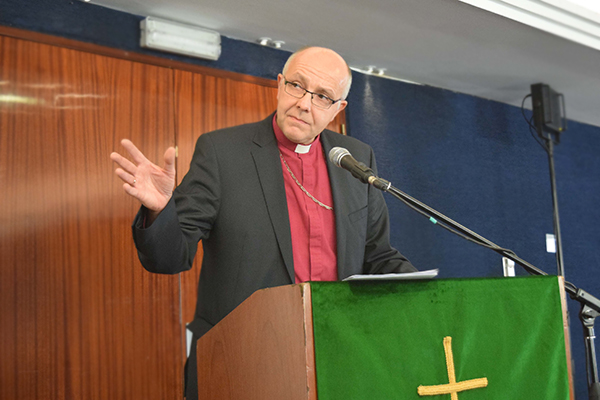
ILC Chairman calls on German authorities to protect Christians in refugee shelters

ILC Chairman Hans-Jörg Voigt.

ILC Chairman Hans-Jörg Voigt.

GERMANY – Minorities are repeatedly targeted by radical Muslims at refugee shelters in Germany. In addition to single mothers traveling with children, Christians are also being affected. Dr. Gottfried Martens, pastor of Trinity Lutheran Church—a congregation of the Independent Evangelical Lutheran Church (SELK) in Berlin-Steglitz—has furnished multiple reports of radical Muslim attacks on Christians and converts to Christianity. Members of his parish, composed primarily of refugees from Iran and Afghanistan, have appealed to Dr. Martens to rescue them from such shelters. Along with violent physical attacks, Christians are regularly insulted as “Kuffar” (unbelievers); necklaces adorned with baptismal crosses are wrenched from their necks, their Bibles torn up, and access blocked to kitchens in the shelters. As recently as this past Saturday such violent attacks took place in the refugee facility located at Tempelhof Airport in Berlin.

The SELK’s national bishop, Rev. Dr. Hans-Jörg Voigt, has responded by demanding separate accommodations for Christians as long as the state cannot ensure that all refugees may freely practice their faith in asylum facilities without disturbance. “Religious freedom is a constitutionally protected right, comparable to freedom of the press,” Bishop Voigt said. “The state has the obligation and duty to permit, ensure, and protect freedom of religion.” If this is only possible in the short term by providing separate accommodations for refugees according to religion, then this is the necessary solution for the time being. “It must not be permitted that Christians are oppressed in refugee shelters because of their faith.”

The spiritual leader of the SELK added that influential groups in society, various associations, and politicians are either downplaying this abuse or silencing it completely. The problem is that Christian churches in Germany represent a majority over against Muslims and, as a result, are legitimately concerned to protect a religious minority. In refugee shelters, however, the proportions are the other way around so that the Christians form the minority. Their need for protection is urgent. As a matter of principle, Bishop Voigt stressed that integration can only succeed when the faith of other people is respected and tolerated. Despite sharp differences in faith convictions it must be the goal of everyone to shape a peaceful life within the community.

Bishop Voigt, who also serves as Chairman of the International Lutheran Council, a global association of confessional Evangelical Lutheran churches, hailed statements on religious freedom contained in the February 12 declaration of Pope Francis and Patriarch Kirill I of Moscow and All Russia, signed at the close of their recent meeting in Cuba. Among other things, it states, “In our current context, religious leaders have the particular responsibility to educate their faithful in a spirit which is respectful of the convictions of those belonging to other religious traditions.” In response, Bishop Voigt commented: “We are committed to strengthening Christian refugees in this respectful spirit, but expect that Muslim spiritual leaders will stand up for religious freedom in the same way among their own adherents.”

———————

SELK News February 16, 2016
Translation: Robert Bugbee
Nigerian Lutherans meet in convention, raise funds for university project

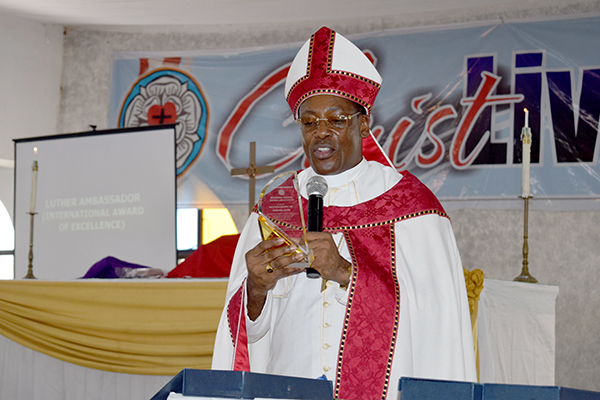
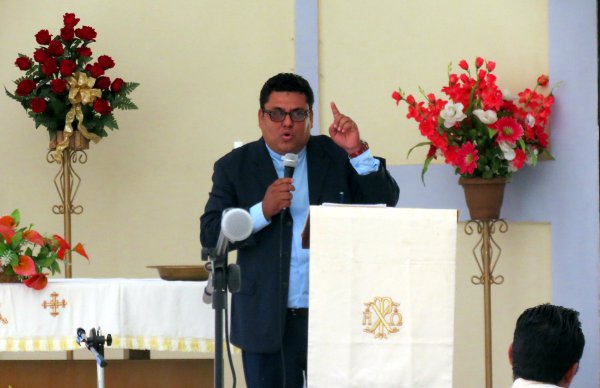
LCN Archbishop Christian Ekong gives the benediction during worship at the church's 2016 national convention.

LCN Archbishop Christian Ekong gives the benediction during worship at the church’s 2016 national convention.

NIGERIA – The Lutheran Church of Nigeria (LCN) held its Biennial Synod Convention in Obot Idim from January 6-10, 2015. Approximately 6,000 people attended the convention, which met under the theme “Christ Lives in Me, For Life Together,” based upon Colossians 1:27.

January 6 was a Choir Conference, and featured lectures on worship and liturgy. Dr. Isaac Udo of the University of Uyo presented on “Evangelical Church Music: Church Hymns and Anthems” in the morning while the Bishop S.O. Willie of the Rivers Zone presented on “Understanding Lutheran Liturgy and Presentation.”

The convention proper began January 7. Archbishop Christian Ekong took time to explicate the theme for the convention and lead prayer for a successful gathering. A major focus of the convention was the funding and development of the Lutheran University Nigeria Project. Nigerian Lutherans see great potential for the opening of a university, as education in the country is much sought after. The convention organized fundraising for the project and also broke ground near the LCN’s headquarters in Obot Idim.

Saturday evening saw Rev. Dr. Albert B. Collver give the convention’s keynote lecture on “Christ Lives in Me for Life Together.” Dr. Albert B. Collver is Executive Secretary for the International Lutheran Council and Director of Church Relations for The Lutheran Church—Missouri Synod (LCMS).

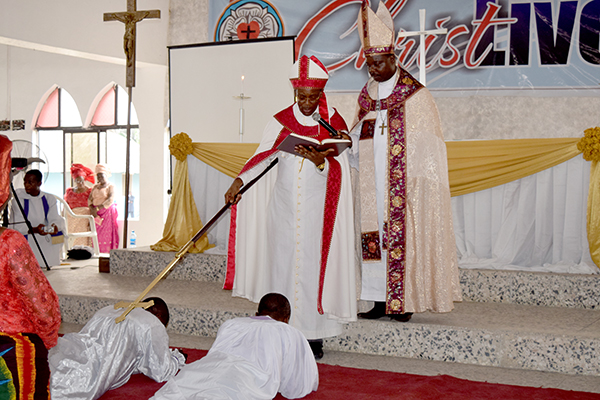
The event closed with a massive celebration of worship on Sunday. Approximately 6,000 people were in attendance for the eight-hour service. Dr. Collver preached on the Baptism of Christ for the event. The service saw LCN Archbishop Ekong consecrate two new bishops for service in the church, following which Holy Communion was celebrated for the thousands in attendance.

Archbishop Ekong consecrates two new bishops for the Lutheran Church of Nigeria.

Archbishop Ekong consecrates two new bishops for service in the Lutheran Church of Nigeria.

2016 marks the 80th anniversary of the Lutheran Church of Nigeria, which was founded in 1936 by missionaries from LCMS. Both the LCN and the LCMS are member churches of the International Lutheran Council.

———————

Sudanese Anglicans hold meetings with LCMS, consider becoming Lutheran

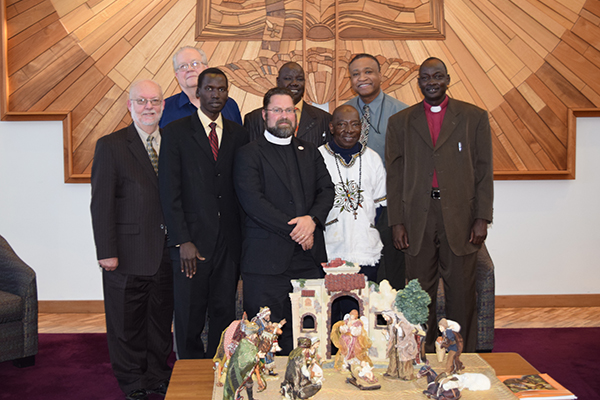
Back: Dr. Curtis Peters, John Ater Deng, Rev. Larry Vogel, Abraham, and Rev. Roosevelt Gray. Front: Dr. Albert Collver, Dr. John Loum, and Bishop Elijah Arok.

Back: Dr. Curtis Peters, John Ater Deng, Rev. Larry Vogel, Abraham, and Rev. Roosevelt Gray. Front: Dr. Albert Collver, Dr. John Loum, and Bishop Elijah Arok.

SOUTH SUDAN – In December 2015, officials from the Anglican Church of South Sudan (ACSS) led by Bishop Elijah Arok visited the headquarters of The Lutheran Church—Missouri Synod (LCMS) in St. Louis, Missouri to discuss the possibility of becoming a Lutheran church body.

The Anglican Church of South Sudan (formerly the Anglican Church of Sudan) formed in 2004 as a breakaway from the Episcopal Church of Sudan because of moves in that church body and the wider Anglican Communion to approve same-sex marriage and the ordination of homosexual clergy. A significant portion of bishops, clergy, and congregations—perhaps nearly 50 percent—left the Episcopal Church over these and other issues. Today the ACSS counts approximately one million members.

Since that time, the ACSS has discovered Martin Luther’s Small Catechism and expressed interest in becoming a Lutheran church body. To that end, members of the ACSS have sought out closer ties with the LCMS, desiring to gain a deeper understanding of Lutheran theology through the study of the Book of Concord.

“The next step for the LCMS is to visit Juba, South Sudan, and see the church in person,” explained Rev. Dr. Albert B. Collver (LCMS Director of Church Relations). “The goal would be to establish theological education in the Lutheran Confessions and Lutheran Doctrine. May the Lord grant guidance and blessing to this endeavor.”

The LCMS is a member church of the International Lutheran Council, a global association of confessional Lutheran church bodies.

———————

Nicaragua convention re-elects President, confirms ILC membership

President Donaire makes a forceful point during his convention report.

President Donaire makes a forceful point during his convention report.

CHINANDEGA, Nicaragua – The 5th Convention of the Lutheran Church Synod of Nicaragua (Iglesia Luterano Sínodo de Nicaragua – ILSN) met in Chinandega January 9-10, 2016. Rev. Marvin Donaire was elected to his second 4-year term as President on the first ballot of the convention’s opening day. In addition, the ILSN received three new member congregations, bringing the total to 25, and grappled with an unfulfilled resolution from the last convention to open a new mission in the national capital, Managua.

Delegates listen attentively during ILSN Convention sessions.

Delegates listen attentively during ILSN Convention sessions.

Delegates met under the theme of 1 Peter 2:2, “Like newborn babies, crave pure spiritual milk, to that by it you may grow up in your salvation.” Various reports from the Synod’s life in the past biennium showed gradual growth and maturing taking place. In addition to the reception of new local churches, the Synod’s treasurer reported that financial support to the ILSN by its congregations increased about 70% in 2015 in comparison to the previous year.

Among guests at the convention was Rev. Dr. Hans-Jörg Voigt, Bishop of the Independent Evangelical Lutheran Church of Germany and Chairman of the International Lutheran Council (ILC). The ILC voted in September 2014 to receive the Nicaraguans as a member church body, and delegates in Chinandega unanimously resolved to ratify this action. Bishop Voigt brought greetings to the assembly and emphasized how deeply impressed he was over the ILSN’s development since the late Rev. Sandor Argüello first arrived to begin missions there. Bishop Voigt was especially glad to see how ILSN President Marvin has already become involved in the ILC’s Latin America world region, and felt that the Nicaraguans have much to teach other churches, particularly in their intensive use of deaconesses as the “front line” teachers of children in local congregations.

Confessional Lutheran work in Nicaragua was sponsored by Lutheran Church-Canada (LCC), which called Rev. Argüello as a lone missionary in 1997. LCC pastors and seminary professors have provided pastoral and diaconal training since that time, with significant growth leading to ILSN’s founding convention in early 2008. Since then, the ILSN has also begun mission work in the neighbouring countries of Honduras and Costa Rica. LCC continues to support ILSN pastors active as new mission developers until their stations are received as full-fledged congregations.

Guests at the convention included (left to right): LCC President Bugbee, ILC Chairman Voigt, and The Lutheran Church—Missouri Synod Missionary Edmund Auger.

Guests at the convention included (left to right): LCC President Bugbee, ILC Chairman Voigt, and The Lutheran Church—Missouri Synod Missionary Edmund Auger.

LCC was represented at the recent convention by President Robert Bugbee, who also served as a Bible study leader on the convention’s chosen theme and preached at the closing service of Holy Communion on Sunday morning. “I am overjoyed at seeing the Nicaraguans take their place among the ILC’s member churches,” he said, “and am glad that their work is an encouragement to others, just as they are grateful for the support and encouragement they have received from Canada. To be sure, the growth of God’s church is never easy or without pain. We know that from the book of Acts and from Paul’s letters in the New Testament. But the Lord is doing His work in the real world, with all its challenges and weaknesses, and the story of our beloved Nicaraguans shows just how true that is!”

A number of Canadian partners attended Sunday worship at the convention, including a large team under the supervision of Mrs. Lisa Jackson of Redeemer Lutheran Church in Waterloo, Ontario. Team members began their work with children, largely in areas in and around the city of León, the day after the convention closed. Parishes like Redeemer and St. Paul’s (Elmira, Ontario) have sent people to help with teaching and practical projects like construction and agricultural support for many years.

———————

Signup for ILC Updates