News

ILC issues invitation to Scandinavian Mission Provinces; Chairman Voigt visits Finland

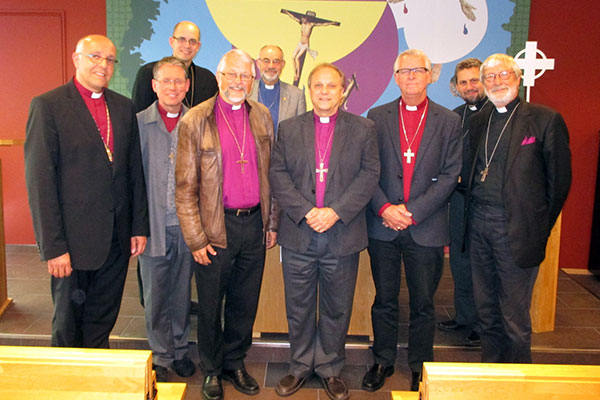
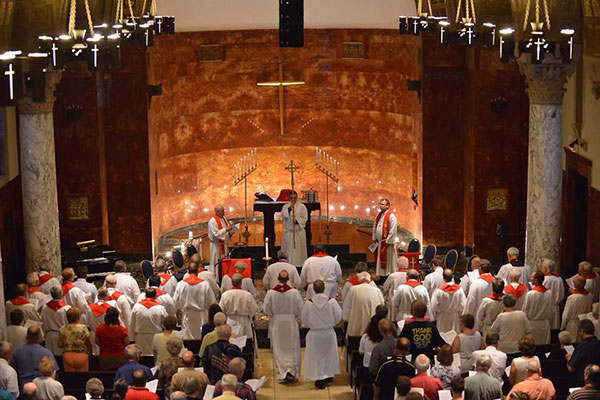
Participants in the 2014 meeting in Helsinki.

Participants in the 2014 meeting in Helsinki.

FINLAND – Following an invitation from the Bishops’ Conferences of the Mission Provinces of Sweden, Finland, and Norway, Bishop Hans-Jörg Voigt visited Helsinki as chairman of the International Lutheran Council (ILC) and as presiding bishop of the Independent Evangelical Lutheran Church (SELK) in Germany.

During the meeting, Bishop Voigt made two introductory presentations. In the morning he reported on the history and the purpose of the ILC. He pointed to the fact that many member churches of the ILC were founded as a result of the Lutheran confessional renewal in the 19th century; others resulted as a gathering of Lutheran refugees and settlers in the 19th and 20th century as Mission Churches.

In the course of the discussion, Bishop Voigt issued an invitation to the Scandinavian Mission Provinces to begin discussions with the Executive Committee of the ILC about the possibility and the modalities of membership in this global organization. At the same time, he expressed his understanding of the pastoral practice of the mission dioceses in not urging individual members of their parishes to leave their respective Lutheran state churches, but rather to bear those tensions that a struggle for the true unity of the church imposes.

In a further presentation during the afternoon session, Bishop Voigt spoke on developments and special challenges currently facing SELK. In the subsequent discussion he indicated his pleasant surprise to discover parallels between the Old Lutheran revival movements in Germany in the 19th century and the present-day developments in the Scandinavian mission provinces.

Bishop Risto Soramies of the hosting Evangelical Lutheran Mission Province of Finland thanked the participants for the meeting. He expressed his hope that contacts with the ILC and the member churches can be developed and intensified in the future.

———————

SELK-News Service
Mozambique’s Lutherans eager for first ordinations

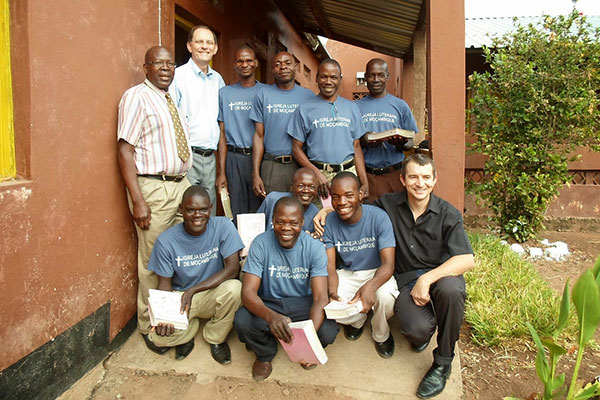
Mozambique’s TEE students (all in blue shirts) pose with Kapasseni Project founder Rev. Joseph Alfazema (back row, far left) as well as TEE instructors Rev. Carlos Walter Winterle (South Africa: back-row, second-from-left) and André Plamer (Brazil: front row, far right).

Mozambique’s TEE students (all in blue shirts) pose with Kapasseni Project founder Rev. Joseph Alfazema (back row, far left) as well as TEE instructors Rev. Carlos Walter Winterle (South Africa: back-row, second-from-left) and Rev. André Plamer (Brazil: front row, far right). (Photo: pastorwinterle.blogspot.ca)

MOZAMBIQUE – Thanks to the work of numerous partners, Lutheran missions in Mozambique continue to flourish. Three new congregations have been established in the past year, with more than 100 people attending the first service in each new village.

The Mozambique Lutheran Church has no pastors of its own, so ministry is overseen by eight local men preparing for ministry. These men are all students in the Theological Education by Extension (TEE) program, and recently received the certification as deacons after completing their most recent round of intensive studies in July. The TEE program is organized by the Evangelical Lutheran Church of Brazil (IELB), and brings instructors from other countries to offer theological education in Mozambique. The eight students will complete their studies in 2015 and be ordained to pastoral ministry the same year.

The day of their ordination cannot come soon enough: in 2012, one Brazilian pastor reported being called upon to perform nearly 300 baptisms while visiting Mozambique as a TEE instructor. The newly appointed deacons are now allowed to perform baptisms in addition their current duties (which include leading services, preaching, teaching, and counseling). But even as these students prepare for ordination, plans are underway for the beginning of a new TEE class of students. By July of this year, twenty students had already enrolled for the new class, set to begin in 2015. There are also plans for the construction of a new building, the Concordia Lutheran Center, to continue theological education in the future.

These developments in Mozambique will be guided through a new Memorandum of Understanding (Addendum) signed this past July by partners in the TEE program: the IELB, the current TEE students, the Kuwangisana Organization, the Kapasseni Project, the Free Evangelical Lutheran Synod in South Africa, and The Lutheran Church—Missouri Synod.

Lutheran missions in Mozambique grew out of the work of retired Lutheran Church–Canada (LCC) pastor Rev. Joseph Alfazema and his wife Perpetua. Their work resulted in the creation of the Kapasseni Project, an LCC listed service organization that continues to support missions in Mozambique.

The Evangelical Lutheran Church of Brazil, the Free Evangelical Lutheran Synod in South Africa, The Lutheran Church–Missouri Synod, and Lutheran Church–Canada are all members of the International Lutheran Council.

———————

LMS-USA holds annual convention

President Ralph Spears speaks at the LMS-USA's 2014 convention. (Photo: Facebook).

President Ralph Spears speaks at the LMS-USA’s 2014 convention. (Photo: Facebook).

USA – The Lutheran Ministerium and Synod – USA (LMS-USA) held its Annual Conference and Convention in Chetek, Wisconsin from June 20-22, 2014. This year’s conference gathered around the theme “Thinking, Celebrating, and Reflecting on our Beginnings.” The LMS-USA will celebrate its 20th anniversary in 2015.

Events began with a meeting of the Ministerium on Friday, June 20. Saturday was devoted to the convention and conference, while Sunday included a festival worship service. Rev. Donald Thorson served as preacher at Saturday’s opening communion service, while Rev. Tylan Dalrymple preached at Sunday’s closing service.

The focus of this year’s conference, reports the church’s national publication Table Talk, was a study of some of the LMS-USA’s “most historically significant presentations given by pastors of the LMS-USA in the 1990s, with a reassessment and reaffirmation of the ongoing relevance of these messages in the ongoing task of fidelity to God’s Word in the proclamation of the Gospel of the Lord Jesus Christ.” To that end, the conference studied previous presentations by Rev. Thorson, Rev. Dr. John Erickson, Rev. Mark Dankoff, and current LMS-USA President, Rev. Dr. Ralph Spears—all under the guidance of their original authors. In response to these papers, Rev. Richard Horn prepared a lecture entitled “What Brought Me to the LMS-USA as a Place of Fellowship and Service for the Past Nineteen Years.” Because Rev. Horn was suddenly unable to attend the conference, the paper was read by President Spears.

The LMS-USA is an American Lutheran church body which describes itself as “Biblical, Confessional, Evangelical, Liturgical, and Congregational.” Formed in 1995, it functions as a Forum in which there is an ongoing discussion of theological issues and concerns among clergy and lay alike. The LMS-USA became a member of the International Lutheran Council at 2012’s World Conference in Niagara Falls, Ontario.

The LMS-USA meets annually for its Theological Conference and Convention. Next year’s will take place June 19-21 in Chetek, Wisconsin.

———————


Ukrainian Lutherans band together in face of conflict

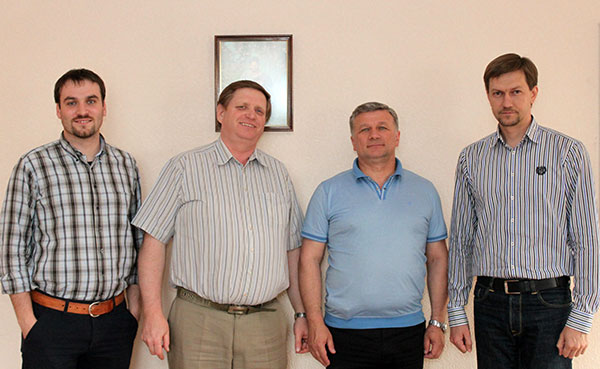
SELCU’s new Commission on Theology and Practice: Rev. Oleg Schewtschenko, Bishop Viktor Gräfenstein, Rev. Alexander Yurchenko, and Rev. Alexey Navrotskyy.

SELCU’s new Commission on Theology and Practice: Rev. Oleg Schewtschenko, Bishop Viktor Gräfenstein, Rev. Alexander Yurchenko, and Rev. Alexey Navrotskyy.

UKRAINE – While conflict continues to rock the eastern border of Ukraine, Lutherans are firm in their resolve to remain united, even as recent events have made that goal more difficult.

Earlier this year, Ukrainian citizens of the Crimean Peninsula participated in a disputed referendum to join Russia. While the vote passed and Russia officially accepted Crimea as a member of the Russian Federation, its legitimacy has been challenged by the international community, given the presence of suspected Russian military in the region during the vote.

The move has led to increased difficulties for the Synod of Evangelical Lutheran Churches of Ukraine (SELCU). SELCU is a young church body, with thirteen congregations throughout the region. Five of these congregations are in Crimea. Consequently, the emergence of a new federal border between these congregations and the rest of SELCU’s congregations (in Ukraine) has created significant difficulties for the church. Where the churches could formerly visit together easily, the new militarized border makes passing from one area to the other significantly more difficult. Moreover, as SELCU’s Bishop Viktor Gräfenstein is a German citizen (and thus a member of the European Union), he is unable to cross the border into Crimea without acquiring a visa.

Lutheran Church–Canada (LCC)—a member church of the International Lutheran Council—has long supported SELCU in its outreach work, its social ministries, and its theological education. LCC helped found Odessa Seminary in 1998, and provides visiting theological professors to instruct students at the school. In 2013, the seminary celebrated the graduation of six students who went on to begin two-year vicarages in SELCU congregations. Prior to the unrest in Ukraine, the seminary planned to welcome a new class of students to begin studies this September. The new border-crossing realities, the conscription of a number of SELCU members (including one pastor) into military service, and battles between the government and pro-Russian rebels in Eastern Ukraine has put those plans on hold.

Despite these difficulties, Rev. Alexey Navrotskyy— LCC’s missionary in the region—reports that SELCU congregations on both sides of the Crimean border continue to express their desire to remain one church body. And the church continues to operate as normally as possible given the situation. Acting on a directive from its 2013 Convention, the church recently appointed a Commission on Theology and Practice (CTP) in June to help the church better define and understand its work together. Members appointed to the commission include Bishop Viktor Gräfenstein, Rev. Alexander Yurchenko (missionary pastor), Rev. Alexey Navrotskyy, and Rev. Oleg Schewtschenko. Rev. Schewtschenko was selected to serve as the CTP’s Chairman.

The CTP is schedule to issue a report in advance of SELCU’s upcoming 2014 convention, set to take place in Odessa in November—assuming all congregations can attend. In the meantime, SELCU congregations continue to reach out to their communities with the Good News of the Gospel—a message sorely needed in these difficult times.

Lutheran Church–Canada is calling on members of the International Lutheran Concil to remember the Ukraine in their prayers—that God would allow SELCU churches on both sides of the Crimean border the ability to work together for the sake of the Gospel; that political leaders in Russia, Ukraine, and the West would all work earnestly for the re-establishment of peace; and that further bloodshed in disputed areas may be avoided.

———————

via The Canadian Lutheran.

Norwegian Bishop, Pro-life Leader passes away

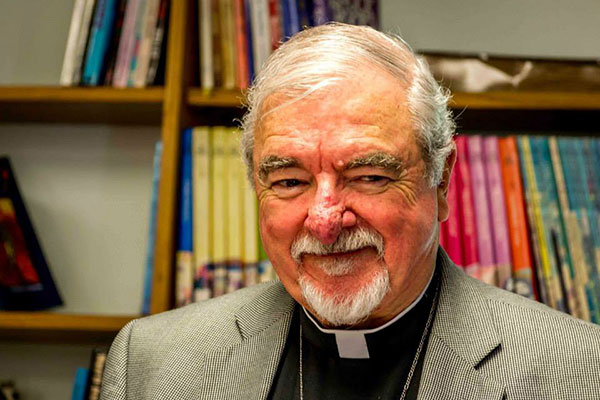
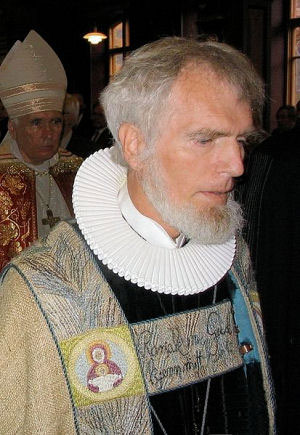
Bishop Børre Knudsen

Bishop Børre Knudsen

NORWAY – Norwegian Bishop Børre Knudsen died quietly in his home near Tromsø Sunday morning (August 17), surrounded by his family. Norway’s most prominent Pro-Life leader had suffered worsening Parkinson’s Disease in recent years. His passing sparked a wave of praise from Christian and even secular publications across Norway. An editorial in the Christian daily Dagen entitled “Heartfelt Thanks, Børre Knudsen” described him as “a unique person. His warm heart, his gentle zeal and his steadfastness stand as strong testimony to a life of selfless service for the Life that God created.”

“When the history of our times is written,” Dagen continues, “Børre Knudsen will be one future generations will hear about. Knudsen’s struggle is not driven by opposition to women’s rights or the preservation of traditional gender roles, but by a strong commitment to protect life itself.”

Vårt Land writes, “Børre Knudsen will go down in history as one of the most important churchly personalities of our time, but both he and his family had to pay a high price because he stood out front in the abortion battle.”

Bishop Knudsen was known throughout Norway and beyond for his gentle demeanor but uncompromising struggle against legalized abortion, beginning when the Norwegian law was adopted in 1978. Protesting the law, he refused to carry out government duties assigned to state church pastors, such as keeping official records, and refused his salary, but continued his pastoral service to his congregation.

This protest was modeled after the Church’s resistance against the World War II Nazi occupation of Norway. When the occupation government attempted to transform the Church along their lines and brainwash children as was then being done in Germany, the bishops wrote a Confession known as “The Church’s Foundation” (Kirkens Grunn). This confessed that the Church is bound to God’s Word, that Word and Sacrament cannot be reshaped by the government, and that parents must resist government efforts to pervert their children’s faith. On Easter Day 1942 this Confession was read from the pulpit in Lutheran churches all over Norway. Most pastors then resigned their state appointments, refusing to serve the government or to accept their government salaries, but continuing their pastoral services. The bishops and many pastors were imprisoned, but the Church remained free and faithful.

Following the Kirkens Grunn model, Knudsen continued to serve his parish despite government efforts to remove him, until the Norwegian Supreme Court ruled against him in 1983. He was not, however, defrocked at that time and continued his ministry in a valgmenighet, a Norwegian form of congregation nominally within the state church, but independent of its bishops. On Easter Day 1991, Knudsen and several other pastors formed the Strandebarm Deanery (Prosti), also called the “Norwegian Church in Exile.” The Deanery viewed itself as continuing the historic faith and practice of the Norwegian Church, but outside the control of the government and the government-appointed bishops. It held to confessional Lutheran positions, and thus opposed the state church, on such matters as abortion, homosexuality, and ordination of women.

Knudsen was consecrated bishop for the Deanery in 1997, and this led to his being defrocked in 2001. He continued serving in the Deanery until 2011, when he retired for health reasons. Bishop Thor Henrik With was consecrated in 2012 to replace Knudsen for the congregations in northern Norway. These congregations constituted themselves into what is now called The Evangelical-Lutheran Diocese in Norway. It cooperates closely with the Mission Province in Sweden and the Evangelical Lutheran Mission Diocese in Finland. Bishop Knudsen was one of the four Lutheran bishops who assisted Bishop Walter Obare of Kenya when he consecrated the first Mission Province bishop, Arne Olsson, in 2005.

Bishop Knudsen led an increasingly controversial series of protest actions in defense of the unborn as long as his health permitted. He was the object of much hatred and abuse by militant abortion supporters. He maintained a gentle but steadfast attitude in the face of much persecution. His family, especially his children, were also targeted for persecution.

Public attitudes toward Bishop Knudsen have mellowed considerably in light of his consistent and gentle witness. He is the subject of a book entitled A Priest and a Plague (En Prest og en Plage) and a full-length documentary film of the same title. The film was released in Norway earlier this year and shown all over that country. Norwegian television scheduled a nation-wide prime time broadcast on Tuesday (August 19). The film has been released on DVD in Scandinavia (in Region 2 format), and is expected to be released in North America in October.

Coverage (in Norwegian) of Børre Knudsen’s passing:
http://www.dagen.no/Meninger/17/08/2014/Hjertelig_takk_Børre_Knudsen-103915
http://www.aftenposten.no/nyheter/iriks/Borre-Knudsen-er-dod-7670953.html
http://www.vl.no/troogkirke/alle-vi-andre-har-v%C3%A6rt-svake-men-han-var-sterk-1.88597
http://www.vg.no/nyheter/innenriks/boerre-knudsen-er-doed/a/23276007/
Link to documentary film website [a DVD is available in Scandinavia, but has not yet been released in North America … it will have English subtitles]: http://fx.no/en-prest-og-en-plage/
Trailer: http://fx.no/en-prest-og-en-plage-trailer/

Christopher C. Barnekov, PhD
Scandinavia House Fort Wayne
1925 Saint Joe Center RD
Fort Wayne, IN 46825
http://scandhouse.org

Guardians of Pure Doctrine

by Egon Kopereck

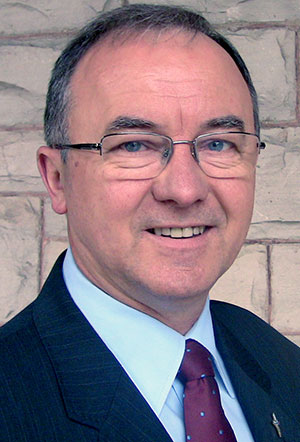
President Egon Kopereck.

President Egon Kopereck.

God gave us His Word, clear and pure, for our guidance—for our solace and comfort. The author of Psalm 119:105 writes, “Your Word is a lamp to my feet and a light to my path.” And in 2 Timothy 3:16, Paul says: “All Scripture is breathed out by God and profitable for teaching, for reproof, for correction, and for training in righteousness.” This is the Word which we know and upon which we base our confession of faith and life. It must be defended, proclaimed, and lived by us in word and deed.

We live in a secularized world. The Bible, God’s Word, is relativised. For many, this Word seems outdated and retrograde in its values, ethics, and moral concepts. The marriage of a man and a woman, as God commanded, is no longer seen as valid. And so it is also with abortion and euthanasia: zeal for life as God’s gift is no longer respected or taken seriously in many countries and cultures. We see the family and Christian principles founded in the Holy Scriptures being trampled upon and tossed aside.

Faced with this reality, we must ask ourselves: What can we do? Do we just shake our heads? Or do we instead express our concerns and fight back, by writing, publicly manifesting our beliefs even though they run counter to public relativism. Are we brave enough to disagree, to debate, and raise high the banner of our faith based and grounded in the Holy Bible? We must act. We need to speak out. We must defend what we believe without fear or shame, even if it brings us adversity and discomfort.

So, dear fellow pastors, brothers and sisters in Christ! To defend an idea we need to know it well. We must first have conviction about it before we go into battle. In this sense, I point to the example of Martin Luther. He fought back. He did not ignore error, but rather defended his positions, not on the basis of reason but rather on the Word of God. Grounded on that foundation, he was willing to give his life rather than deny God’s Word. To do this as he did, he studied hard, meditating, researching, and reflecting upon what the Scriptures offered and pointed to. Look what he said and the example he left us:

“For several years, I have read the entire Bible at least twice each year. And if the Bible were a huge and imposing tree and if its words were branches, then I can say that I have shaken each of these branches to really know what was hung on them. And again and again I found I could gather more apples or pears. I want to see what is in Scripture—what is most durable—and only after that to read other writings based on Scripture, accepting it or rejecting it without caring who its author is.”

Luther not only recommended reading Scripture, but he actually read. He practiced what he preached.

God is the Lord, and if we are with Him we have nothing to fear. Believe that. And then live your life in a manner consistent with that belief.

———————

Rev. Egon Kopereck is President of the Evangelical Lutheran Church of Brazil and sits on the International Lutheran Council’s Executive as representative for Latin America.

Belgian Lutherans celebrate 75th anniversary

belgian-anniversary-01

President Emeritus Jean Thiébaut Haessig preaches at the celebration service in Antwerp.

BELGIUM – The Evangelical Lutheran Church in Belgium (ELKB) celebrated its 75th anniversary in late June in conjunction with a 50th anniversary celebration of the Lutheran Church building in Antwerp.

On June 20, the church held a Jubilee Concert, featuring chorals and Bach’s Fantasia, with organ music provided by Masako Honda. These pieces were interspersed with the Aria Schlümmert Ein from Bach’s Cantata 82, sung by Simon Schmidt, and the Aria If God Be For Us from Handel’s Messiah, sung by Nicola Mills. A Minuet of Bach’s was also performed by Sofia van Hattem. The concert ended with the singing of “Dankt, dankt nu allen God” (Now thank we all our God). Halfway through the program, an album on the history of the Evangelical Lutheran Church in Belgium was presented. By means of many photographs, the book tells the story of the church in Belgium. The book has a retail price of 25 euros.

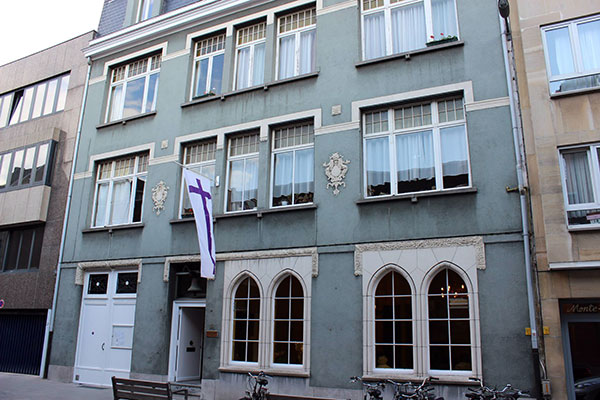
The church building in Antwerp.

The church building in Antwerp.

On June 22, an Anniversary Service was held at the church in Antwerp, which was full for the occasion. The liturgy was held by President Gijsbertus van Hattem of the ELKB, and the sermon was given by President Emeritus Jean Thiébaut Haessig of the Evangelical Lutheran Church — Synod of France. President Emeritus Haessig also served as President of the European Lutheran Council until stepping down earlier this year. President van Hattem also serves on the Executive Committee of the International Lutheran Council as Secretary.

The bible

The 1748 Bible given to the congregation in Antwerp by Dutch Lutherans in Zierikzee.

The worship service featured a choir as well as guest musicians from Alsace. A celebration banquet followed the service, with a full hall. But before the meal began, the Antwerp church was presented with a special gift from the Lutheran church in Zierikzee, the Netherlands: a 1748 edition of the Bible in the Dutch translation of Adolph Visscher. The Bible was originally used in the Lutheran Church of Middelburg in Zeeland, the Netherlands.

In addition to oral greetings from the Evangelical Lutheran Church — Synod of France, the celebration service received special greetings from churches in Germany, Denmark, England, the Netherlands, Portugal, Japan, South Africa, Canada, Brazil, and Paraguay. Festivities concluded with a service of Evening Prayer/Vespers.

———————

Church of Finland Defrocks Dean Juhana Pohjola


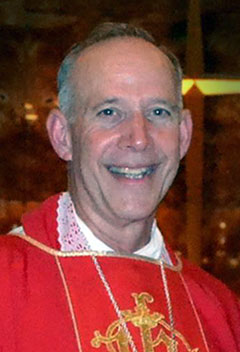
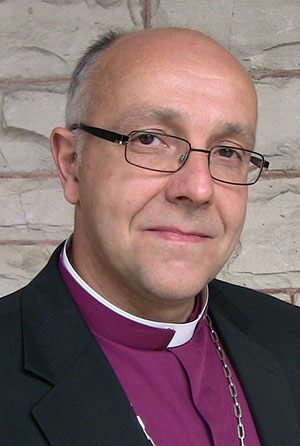
Mission-Diocese-FinlandThe Rev. Juhana Pohjola, Dean of the recently formed Evangelical Lutheran Mission Diocese of Finland, has been defrocked by the nominally Lutheran Church of Finland. His offence was participating as a founder and leader of the Mission Diocese, which the CoF considers to be “violating his ordination vows.” Dean Pohjola earned a STM at Concordia Theological Seminary, Fort Wayne, in 1999 and will defend his doctoral dissertation at the University of Helsinki on August 15.
The following report is written by Rev. Samuli Siikavirta, a doctoral candidate in New Testament at Cambridge University who was ordained in the Mission Diocese earlier this summer.

Dean of the Evangelical Lutheran Mission Diocese of Finland, Rev Juhana Pohjola, Defrocked by the National Church

On 5 August 2014, the Cathedral Chapter [Consistory] of the Diocese of Oulu ordered Rev Juhana Pohjola to forfeit his pastoral office in the Evangelical Lutheran Church of Finland, invoking ELCF legislation (ELCF Church Law 5:3.3). The decision came into effect immediately.

Rev. Pohjola was ordained by former Bishop of Oulu, Rt Rev Olavi Rimpiläinen, in 1999 to serve the newly founded Luther Foundation Finland within the Church of Finland. The intention of Rev Pohjola’s work in the Luther Foundation was to build up confessional Lutheran liturgical life within the ELCF and to insure that members holding to the apostolic view of the Office have places where they can receive the Sacraments and hear the Word.

In 2013, the congregations that were part of the Luther Foundation Finland and a handful of other independent ones formed the Evangelical Lutheran Mission Diocese of Finland. From 2005 until last year, the LFF was a supporting member of the Mission Province in Sweden. What began as the work of one part-time Pastor (Pohjola) and one congregation in the capital city in 1999 has today grown into a network of 30 congregations and missions nationwide. The Mission Diocese sees itself as an independent, confessional and non-geographical churchly structure in Finland that lives out the official confession of the ELCF that the ‘national church’ has largely abandoned.

The Cathedral Chapter of the ELCF Diocese of Oulu argued for its decision in the following manner:

“The Cathedral Chapter deemed it to be clear that Juhana Pohjola, who had been a member of the clergy of the Diocese of Oulu, has acted contrary to the duties of the pastoral office and transgressed the ordination promise [vow] that he had made on 18 Dec 1999, and turned out to be obviously unfit to be a pastor by becoming the Diocesan Dean of the Evangelical Lutheran Mission Diocese of Finland, by directing the head office of the Mission Diocese, by belonging to its College of Pastors, by acting as a member of its Consistory and under it, together with being under the pastoral oversight and acting as the aide of the Bishop of the Evangelical Lutheran Mission Diocese of Finland, Risto Soramies.”

“The Evangelical Lutheran Mission Diocese of Finland was founded in March 2013. The said community that is an unregistered association [a Finnish legal term] has organised itself resembling a Christian church by having its own congregations, diocese and bishop. The Bishops of the Evangelical Lutheran Church of Finland have stated together in March 2013 that the newly formed Mission Diocese has no organisational status in our church and neither is it attached to the structure of our church. According to the Bishops’ statement, a Pastor of the Evangelical Lutheran Church of Finland who acts in the Mission Diocese stands in obvious conflict with the loyalty expected of a pastor and with the ordination promise.”

The defrocking of a pastor is the most severe punishment that the ELCF can issue. Excommunication or the revoking of membership is no longer a possibility. The Diocesan Chapter appealed to paragraph 5:3.3 of the ELCF Church Law, stating,

“A pastor who acts against the duties of the pastoral office and the ordination promise, or neglects them or behaves in a way unfit for a pastor, may, according to the quality of the matter, be given a written warning or suspended from the pastoral office for a minimum of one and a maximum of six months by the Diocesan Chapter. If the pastor’s unseemly behaviour, neglect in the pastoral office or other behaviour indicates him/her to be obviously unfit to be a pastor, the Diocesan Chapter can order him to forfeit his pastoral office [i.e. be defrocked].”

In a blog post on the Mission Diocese website, Rev Pohjola acknowledges that the decision to be defrocked pains him deeply but that it was also to be expected in the current church-political situation.

“The words ‘obviously unfit’ leave no room for interpretation. They are rough especially when talking about the office in which one is to act constantly with the great Day of Judgment in view. Being defrocked also contains shameful dimensions. Hardly anyone wants to be unfit and dismissed.”

The defrocking of those Mission Diocese pastors and bishops who were ordained in the ELCF before the Luther Foundation or Mission Diocese were formed may also have wider consequences on the identity formation of the Mission Diocese.

“The message, ‘you are obviously unfit for the Evangelical Lutheran Church of Finland’, has been sent to thousands of people attending Mass in the Mission Diocese”, Rev Pohjola writes.

He maintains that the decision shows the theological decline that is going on in the ELCF.

“This decision of the Diocesan Chapter is yet another step within the reformation [in Finnish: ‘purge of the faith’] that is going on in the Evangelical Lutheran Church of Finland. Instead of the Church being purged with God’s Word, she is being purged from God’s Word.”

Despite being now defrocked by the national church, Rev Pohjola will continue preaching the Word and administering the Sacraments, now as a pastor only of the Mission Diocese.

“What now after this? One friend reminded me of a liberating Bible verse: ‘set apart for the Gospel of God’ (Rom. 1:1). That gives me, too, enough to do in the Apostolic Office until the end of my life!”

An interesting church historical quirk is that Rev Pohjola will be defending his doctoral dissertation at the University of Helsinki on 15 August on the topic of ordination rites in the ELCF between 1963 and 2003 and their understanding of ordination and the pastoral office. His Opponent at the defence will be Rt Rev Jari Jolkkonen, ELCF Bishop of Kuopio.

Samuli Siikavirta

Link to Dean Pohjola’s statement (in Finnish): http://www.lhpk.fi/blogi/erotettu/

Links to reports on the confessional Evangelical Lutheran Mission Diocese of Finland:
http://simonpotamos.org.uk/new-confessional-lutheran-diocese-in-finland/
http://www.ielchurch.org/bishop-risto-soramies-consecration-ceremony/

Christopher C. Barnekov, PhD
Scandinavia House Fort Wayne
1925 Saint Joe Center RD
Fort Wayne, IN 46825
Ph. (260) 399-6565

http://scandhouse.org

———————

TAALC elects new Presiding Pastor

Worship at the 2014 General Convention of The American Association of Lutheran Churches.

Worship at the 2014 General Convention of The American Association of Lutheran Churches (via Facebook).

USA – The 24th General Convention of The American Association of Lutheran Churches (TAALC) convened June 24-27 at the University of Northwestern in St. Paul, Minnesota, during which time they elected Rev. Dr. Curtis Leins as their new Presiding Pastor. The convention gathered under the theme “Equipping the Saints”.

Rev. Dr. Dean Nadasdy, District President of the Minnesota South District of The Lutheran Church—Missouri Synod, served as Keynote Speaker. He also brought greetings on behalf of President Matthew C. Harrison and the LCMS. In addition to Dr. Nadasdy’s keynote address on equipping the saints, he also preached at the Thursday evening service of installation for the newly elected Presiding Pastor of The AALC, the Rev. Dr. Curtis E. Leins. Also elected at the convention were Rev. Roger Twito as Assistant Presiding Pastor and Rev. Irv Stapf as Secretary of TAALC.

Presiding Pastor Curtis Leins (via Facebook).

Presiding Pastor Curtis Leins (via Facebook).

Dr. Leins served previously as Assistant Presiding Pastor of TAALC. He had also served the national office full-time as National Home Mission Developer. Dr. Leins was ordained into the Office of Holy Ministry in 1978. He received his Master of Divinity from Lutheran Theological Southern Seminary (Columbia, South Carolina). He also holds a Master of Theology from Duke University, a Master of Arts from Temple University, and a Ph.D. from Temple University.

Among other business at convention, The AALC passed a resolution calling the Evangelical Lutheran Church in America (ELCA) to repentance and back to Scripture. The resolution reads “that for the sake of the truth of the gospel and the greater welfare of the body of Christ, The AALC urges the ELCA, on the basis of scripture to repent of their false doctrine, renounce the spirit of the age, and seek forgiveness for their blasphemies through the shed blood of Jesus Christ.” The resolution also directs the Presiding Pastor of The AALC to personally communicate their position to the Presiding Bishop of the ELCA.

The convention opened the evening of June 24 with Divine Service. Dr. Leins preached from Matthew 9 under the theme, “Calling All Sinners.” Worship was at the center of the gathering, with services of Holy Communion every evening and worship every morning. The closing worship service also included a graduation ceremony for students of the American Lutheran Theological Seminary. Two men, Dean Stoner and Jordan Cooper, graduated from the pastoral program, while Brigitte Gassman became the first to graduate from the deaconess studies route.

The AALC formed in 1987 during the lead up to the formation of the ELCA. It emerged mostly from churches of The American Lutheran Church and the Lutheran Church in America. It centers itself in the inerrancy of Scripture, the veracity of the Lutheran Confessions (according to a quia subscription), the primacy of world missions and evangelism, and the authority of the local congregation. Currently, The AALC has 65 congregations across the United States, and is seeking to expand nationally and internationally.

At its 2007 convention, the AALC voted to join the International Lutheran Council. The same year it entered into altar and pulpit fellowship with the LCMS. Residential students of the American Lutheran Theological Seminary have been attending Concordia Theological Seminary—a seminary of the LCMS—in Fort Wayne, Indiana since 2005. The AALC seeks to strengthen its partnership with Lutherans around the world through their partnerships with the LCMS and the ILC.

———————

Commemorating the Outbreak of World War I and the 70th Anniversary of the Assassination Attempt on Adolf Hitler

by Hans-Jörg Voigt

Chairman-Voigt

Bishop Hans-Jörg Voigt

On July 28, 1914, the Austro-Hungarian Empire declared war on the Kingdom of Serbia, just one month after the Austrian heir-apparent, Archduke Franz Ferdinand, was murdered by members of the revolutionary underground organization Mlada Bosna in the City of Sarajevo. The major catastrophe of the 20th century ran its course, and it bears the seeds of the beginnings of World War II.

At the end of the European Lutheran Conference (ELC) on May 25, 2014, I and some of the other attendees visited the site of the concentration camp Bergen–Belsen. The camp is in close proximity to Bleckmar, where we had held the conference at SELK’s church mission centre, spending days of very intensive discussions with one another. I had been at the concentration camp several times before, visiting with vicars of our church, but never was it a visit that hit so close to home emotionally in the company of these international guests. On several occasions I was moved to tears in view of the documented heaps of corpses, while a brother from Great Britain and one from Denmark stood next to me. All of this had its beginnings in the events 100 years ago.

As we passed through the site’s remains and remnants of the prisoners’ barracks we engaged in some intensive discussions. Some of the points were the following:

1. To consider your guilt and to confess it is not a sign of weakness but of strength

The Australian historian Christopher Clark has published a book entitled The Sleepwalkers – How Europe Went to War in 1914. It is by now a bestseller in Germany—probably, because in it someone finally says that Germany was not the only country that bears fault for the outbreak of World War I. But I consider this question irrelevant, because from the viewpoint of the Christian faith it is not a weakness but a strength to confess one’s guilt.

My brother works as a master craftsman. His whole life consists of repeated measurements and correcting mistakes previously made; no one has ever accused him of a negative view of life because he corrects his errors. Every day our own life is to be measured by the will of God. Asking for forgiveness through Jesus Christ leads us on the right path. And if that is true for the life of each individual Christian, then it is also true for society as a whole, including in politics. The fact that Germany, at first reluctantly but then increasingly in the open, dealt with the topic of and admitted the horrendous injustice perpetrated by the nation, is a sign of strength and not of weakness, however incomplete that process may still be.

2. Admitting guilt is quite different from accepting responsibility

For Lutheran Christians it is important to speak of guilt in as precise a meaning of the term as possible. Particularly in considering historical complexities we should not use the term

flippantly. I personally am not at fault for the outbreak and consequences of two world wars and the incomprehensible destruction of the Jewish people. I bear no guilt because I did not live at that time. I have to confess enough of my own faults, and Jesus Christ is at work daily to deal with my sins.

But at the same time we Germans bear an ongoing responsibility for the consequences of German history in the 20th century. That responsibility implies that we help relieve whatever sufferings resulted from that history and wherever we face any other sufferings. And we need to remind others of this responsibility. There has been little research to date about what our originally German-speaking sister churches in Canada, the United States, Brazil, Argentina, and Australia had to contend with during those wars. The mistrust they faced from their fellow countrymen in the new homes and the resulting loss of the German language as well as expressions of enmity are part of that.

3. Nationalism is still a problem today

The French Revolution and the subsequent Napoleonic wars mark the advance of various forms of nationalism. Now the concept of the nation supplants the concept of the Christian religion. Nationalism is one of the main causes for the outbreak of World War I. It was nationalism that blinded churches of various denominations. For example, Roman-Catholic bishops of French and German dioceses both engaged in war-mongering against one another, even though they belonged to the same church. And the Protestant churches were no better. But the soldiers on the battlefields were completely surprised when they found a Bible or a crucifix in the pockets of their fallen opponents.

Nationalism and national egotisms are still quite prevalent in Europe and the rest of the world. Nationalism has not been eradicated and must still be considered to be competing with the Christian faith.

4. The danger of pseudo-scientific convictions

Pseudo-scientific convictions are dangerous. We see that in the Nazi ideology of National Socialism and its devastating consequences. This ideology attempted to use the theory of evolution to establish, by a process of natural selection and the law of survival of the fittest, a racial theory of social Darwinism. But pseudo-scientific notions can still be encountered today, in certain economic and sociological theories. They are in crass opposition to the Christian faith where love of the neighbor is a major tenet. Christ says: “What you have done to one of the least of these my brethren, that you have done to me” (Matthew 25:40).

5. Majorities can be wrong

These days when I see pictures of cheering crowds and soldiers like those that were sent to face a cruel death in 1914, then I often try to convince my children of the following: “Majorities can be wrong.” Those men and women who tried on July 20, 1944, to end the trauma of the Nazi dictatorship by their attempt on Hitler’s life, were courageous enough to stand against majority opinion. 70 years ago they paid for it with their lives. Christian conscience—because of original sin, often an erring conscience—must always be sharpened by attending to God’s word.

Our democratic societies stand in danger of always accepting a majority opinion as truth. German history teaches that the outbreak of the World War I was a mass supported event, and that the election to the German Reichstag in 1933 took place under generally democratic conditions. The result was the Nazi dictatorship. Majorities can be wrong—to know this is today more important than ever, particularly when the majority opinions in today’s society stand more and more in opposition to the Christian faith.

———————

Rev. Dr. Hans-Jörg Voigt is Bishop of the Independent Evangelical Lutheran Church (SELK) in Germany and Chairman of the International Lutheran Council (ILC).

Signup for ILC Updates