News

Posts tagged:

ILC

ILC and LWF leaders meet in Switzerland

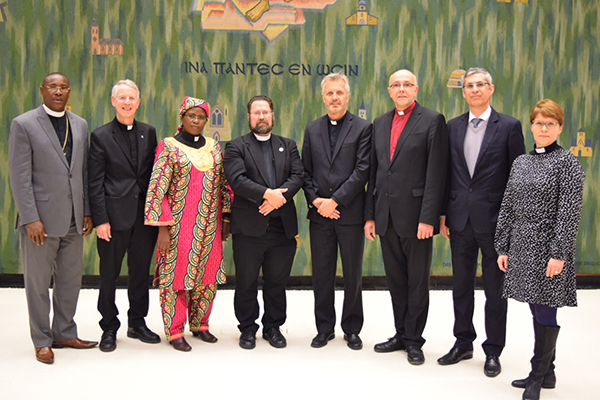
Representatives of the ILC and LWF meet in Geneva, Switzerland in January 2015.

Representatives of the ILC and LWF meet in Geneva, Switzerland in January 2015.

SWITZERLAND – On January 14, representatives of the International Lutheran Council (ILC) met with representatives of the Lutheran World Federation (LWF) in Geneva for regular meetings.

As is customary with these meetings, the ILC and LWF took time to highlight important work taking place in each of their organizations. How each intends to commemorate the 500th Anniversary of the Reformation was a key topic for discussion, given that the anniversary will take place in 2017. The ILC noted its appreciation for the document From Conflict to Communion (prepared by the LWF and the Pontifical Council for Promoting Christian Unity), indicating that the ILC intends to engage in further study of the document.

The meeting also addressed areas that continue to be challenges between the two groups. In particular, differing understandings of the theology of mission and disagreements over the concept of the unity of the church were frankly addressed, with plans to follow up on these topics in the future.

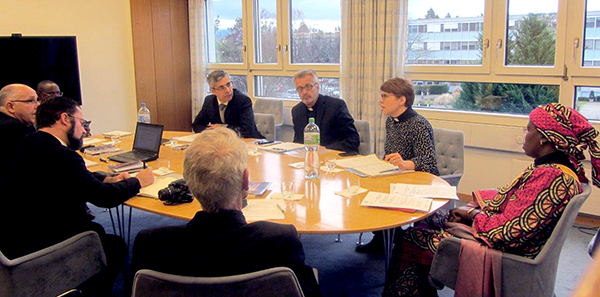
Meetings between the ILC and LWF.

Meetings between the ILC and LWF.

Representing the ILC were Chairman Hans-Jörg Voigt, Bishop of the Independent Evangelical Lutheran Church in Germany); ILC Secretary, Rev. Dr. Albert Collver; ILC Representative for Africa, Archbishop Christian Ekong of Nigeria; and ILC Secretary Gijsbertus van Hattem, President of the Evangelical Lutheran Church in Belgium. Representing the LWF were General Secretary, Rev. Martin Junge; Assistant General Secretary for Ecumenical Relations/Director for the Department for Theology and Public Witness, Rev. Dr. Kaisamari Hintikka; Director for the Department for Mission and Development, Dr. Carlos Gilberto Bock; and Area Secretary for Africa, Rev. Dr. Elieshi Mungure.

The LWF and ILC signed a memorandum of understanding in 2005 which has led to regular meetings between the two bodies since then. This was the fourth regular meeting since 2011. The ILC and LWF agreed at their most recent meeting to continue holding annual meetings in the future.

The next meeting will be hosted by the ILC and will be held February 25-26, 2016.

Download the communiqué from the meeting here.

———————

ILC Executive meets in England, plans for 2015 World Conference

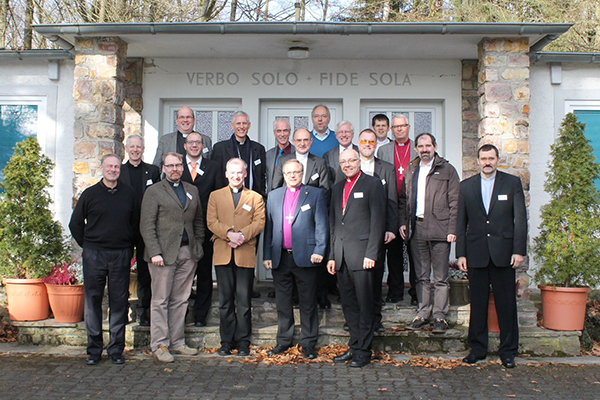
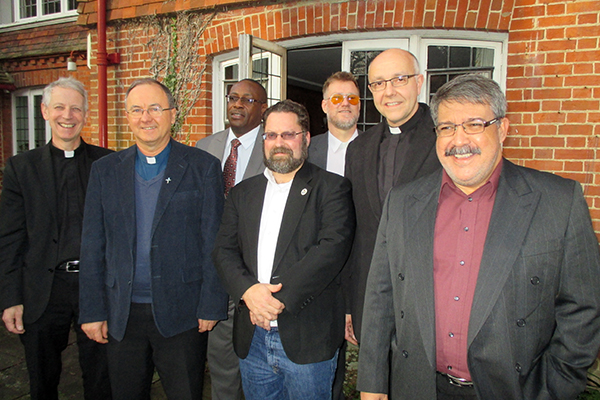
Pictured, from left: President Gijsbertus van Hattem (Belgium); President Egon Kopereck (Brazil); Archbishop Christian Ekong (Nigeria); ILC Executive Secretary Dr. Albert Collver (USA); Chairman Jon Ehlers (Great Britain); Bishop Hans-Jörg Voigt (Germany); President Antonio Reyes (Philippines).

Pictured, from left: President Gijsbertus van Hattem (Belgium); President Egon Kopereck (Brazil); Archbishop Christian Ekong (Nigeria); ILC Executive Secretary Dr. Albert Collver (USA); Chairman Jon Ehlers (Great Britain); Bishop Hans-Jörg Voigt (Germany); President Antonio Reyes (Philippines).

ENGLAND – The Executive Committee of the International Lutheran Council (ILC) met January 15-16, 2015 at the St. Cuthman’s Retreat Centre in Coolham, West Sussex, just south of London, England. ILC Chairman Hans-Jörg Voigt, Bishop of the Independent Evangelical Lutheran Church in Germany, presided over the sessions.

The committee’s primary task was to make preparations for the ILC’s 25th World Conference, set for September 2015, in Buenos Aires, Argentina. Bishops and presidents of all 34 full and associate member churches are being invited. The chosen overarching theological theme for the gathering is Bringing the Reformation to the World. In addition, delegates to the conference will choose a chairman and other executive officers for the coming three-year term.

Chairman Voigt expressed his joy over the fact that five Lutheran church bodies from various continents have made inquiries about taking up membership in the ILC. The Executive Committee also spent time examining the financial status of this global organization, which needs to be further developed.

Rev. Dr. Lawrence Rast, President of Concordia Theological Seminary in Fort Wayne, Indiana (USA), facilitated intensive planning sessions for the Executive Committee as they strategized for the future and analyzed both strengths and weaknesses of the Council’s existing form and function.

Summing up at the close of the meetings, Chairman Voigt commented, “At various times in history, the Church has been especially strong when in the midst of its limitations it focused on the primary thing—that is, the proclamation of the Gospel.” Bringing the Gospel to people is the Church’s main responsibility, he added.

———————

Additional news from the ILC’s 2015 World Conference can be found here.

The Joy of All the Earth: Christmas Greetings from the ILC

christmas-ilc-web-2014

Dear friends,

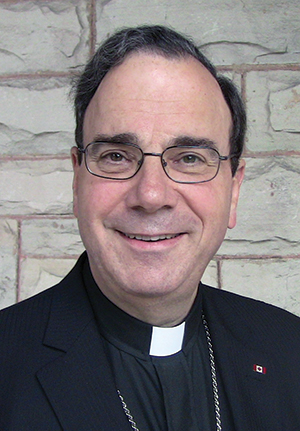
ILC Vice-Chairman Robert Bugbee

ILC Vice-Chairman Robert Bugbee

Luther’s old Christmas carol, “Vom Himmel hoch” (“From Heaven Above”), is bright and cheerful when you come to verse 2:

“To you this night is born a Child of Mary, chosen virgin mild; This little Child of lowly birth shall be the joy of all the earth.”
(
Lutheran Service Book 358:2)

The holy Christ Child comes to be the joy of all the earth. That is so very true. But it wasn’t really Luther’s idea. He got it from God Himself, Who commissioned the Christmas angels to sing, “Glory to God in the highest, and on earth peace, goodwill toward men” (St. Luke 2:14).

God is sending Bethlehem’s Good News out across the world once again this Christmas. His Christ is coming into all sorts of lands and situations. He is there where people are terrified over the spread of Ebola, because they have witnessed loved ones and friends cut down in the prime of life and cannot see the end of the outbreak. He wants to enter into homes and families in eastern Europe, worried that they won’t get enough natural gas to heat their dwellings as the days grow colder, and sore at heart over the shooting and bombing which have killed their neighbours and blown up large sections of their towns and cities.

He wants to come close to the comfortable and often very self-satisfied inhabitants of prosperous nations, who imagine they are doing quite fine on their own and don’t need a god to help them with much of anything. The little Christ is seeking admittance to hospital units, prison cells, and lonely bedrooms where somebody lost a life’s partner this year and now faces the first holiday season alone.

“This little Child of lowly birth… shall be the Joy of all the earth.” Yes, He has come to be the joy for all those various situations, and a hundred others you cannot even imagine. He has come to be the Rescuer Who lived and died to win God’s pardon for the needy and often rebellious human race. He has come to make clear that the Lord of heaven and earth wants you badly, is on your side, and stands with you in your troubles. This includes the troubles you caused and the ones that overtook you like a hurricane you couldn’t stop. He has come to bring you and God together again. In so doing He also works to plant into you the kind of heart that comes together with other people from whom you are distant, for whatever reason.

He isn’t offering you magic or quick fixes. He never tells you that the political strife, the ravaging diseases, the economic wreckage, and your personal struggles will all dissolve and blow away immediately when you open your heart to Him. But He comes with love and mercy for your wrongs. He promises to hear your cries. He helps you hold up under your burdens so they become more bearable.

He’s not bringing you a fairy-tale world to live in. But He offers you Himself, all the kindness and help He came to bring. He presses it all into your hand, not because you earned it or have a right to demand it, but because He, your Saviour, wants you to have it. There is no life, no home, no town, no country, no person in any situation whom He does not want to have. It does you and me good to remember that as He comes toward us again this Christmas. Luther had it right: “This little Child of lowly birth… shall be the joy of all the earth.”

Whatever situation you find yourself in and wherever you are located as you read these lines: I wish you this joy very strongly and personally as God’s Christ once again makes His way to you.

Rev. Dr. Robert Bugbee, President of Lutheran Church–Canada and Vice-Chairman of the International Lutheran Council.

———————

‘A rather unusual church’: IDEA interviews ILC Chairman

Chairman-Voigt

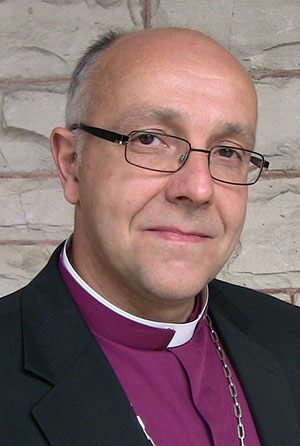
Bishop Hans-Jörg Voigt.

GERMANY – In the lead-up to 2014 Reformation Day observances, the journal IDEA (a prominent evangelical German publication) featured an interview with Bishop Hans-Jörg Voigt of the Independent Evangelical Lutheran Church (SELK) in Germany. In addition to leading SELK, Bishop Voigt serves as Chairman of the International Lutheran Council.

The interview was conducted by Karsten Huhn and attempts to answer the question: “What is the significance of the Reformation today?” Throughout the discussion, Bishop Voigt ends up speaking on a number of topics, including liturgy, confessional Lutheran witness, the nature of ordination, and the Reformation in 2017.

IDEA: Bishop, you lead a rather unusual church. Liturgically the SELK is almost catholic; its organizational form is that of a free church; and spiritually you try to be more Lutheran than the [State Church] Lutherans.

Voigt: I do not consider ourselves to be unusual. But I can understand that people are somewhat astonished. Yes, our worship services are quite liturgical. But we also use some newer forms of worship; but that is more a case of normality and exception. Financially we are organized as a free church: We do not participate in the church tax system; rather we depend on free-will offerings. Our synodical and episcopal structure is not typical for a free church. And whether we are more Lutheran than other churches? We attempt to organize our spiritual life in accordance with the Lutheran Confessions. We respect them as fully adequate expositions of the Holy Scriptures.

The interview continues from there. Members of the International Lutheran Council will find it an insightful look at the position of confessional Lutheranism in Germany. Read the interview in German here and in English here.

In addition to leading SELK, Bishop Voigt serves as Chairman of the International Lutheran Council.

———————

Reflections on the ILC Latin America regional conference

by Egon Kopereck

“The LORD has done great things for us, and we are filled with joy” (Psalm 126:3).

President Egon Kopereck.

President Egon Kopereck.

It was with these words—first uttered by the people of Israel when, in an unexpected, wonderful, and surprising way they received the right, the permission of God to leave their captivity and to return to their own country—it was with these words, that the Latin-American Lutheran churches returned to their homes, having participated in the International Lutheran Council’s Regional Conference (held earlier this month in Caracas, Venezuala).

They were four wonderful days of fellowship, study, reflection, debate, reports, exchange of experiences, and mutual strengthening. Participants highlighted in this conference the importance of reading, meditating, and deepening ever more our study of the word of God. They also stressed the importance of Lutheran Hour ministry outreach, which opens doors for the Church’s mission.

Conference participants stressed the need to provide theological support to smaller Lutheran churches in the region, especially through the theological seminaries of Brazil and Argentina. By helping each other and looking for more opportunities to cooperate, they hope to take Christ’s message, the Gospel of salvation to all people, races, peoples and nations of Latin America and, where possible, to cross the seas with this challenge to go to the “ends of the Earth”—something Brazil is already doing in Africa with Mozambique and Angola.

In Latin America we have many challenges, many opportunities, and much work to do. People are thirsty for the water of life; if we don’t offer it, as Jesus asks us to, then people will turn to contaminated water—waters of death and not life.

People are thirsty for the water of life; if we don’t offer it, as Jesus asks us to, then people will turn to contaminated water—waters of death and not life.

Many of us today cannot imagine living in a house where you don’t have water: water to drink, water for washing, water for cooking, well-water. So too we cannot imagine a Christian home without the Bible, God’s Word, the water of life. Christian homes, satiated in their own spiritual thirst for truth, cannot look to others without extending to them the same blessing, without offering them that treasure of eternal life. They share it with their compatriots of all peoples, races, and nations. They share it with them who are dying of thirst and starvation.

With cheerful and grateful hearts, therefore, we also say: “The LORD has done great things for us” (Psalm 126:3). But on the other hand we also say with Nehemiah, “the work is great and widely spread” (Nehemiah 4:19). As the Israelites did then, so too we also “prayed to our God” (Nehemiah 4:9), that He would bless our lives and attitudes as people of God, and our testimony of what we believe and confess. May God bless the mission of the Christian Church throughout the world.

———————

Rev. Egon Kopereck is President of the Evangelical Lutheran Church of Brazil and sits on the International Lutheran Council’s Executive as representative for Latin America.

———————

LMS-USA holds annual convention

President Ralph Spears speaks at the LMS-USA's 2014 convention. (Photo: Facebook).

President Ralph Spears speaks at the LMS-USA’s 2014 convention. (Photo: Facebook).

USA – The Lutheran Ministerium and Synod – USA (LMS-USA) held its Annual Conference and Convention in Chetek, Wisconsin from June 20-22, 2014. This year’s conference gathered around the theme “Thinking, Celebrating, and Reflecting on our Beginnings.” The LMS-USA will celebrate its 20th anniversary in 2015.

Events began with a meeting of the Ministerium on Friday, June 20. Saturday was devoted to the convention and conference, while Sunday included a festival worship service. Rev. Donald Thorson served as preacher at Saturday’s opening communion service, while Rev. Tylan Dalrymple preached at Sunday’s closing service.

The focus of this year’s conference, reports the church’s national publication Table Talk, was a study of some of the LMS-USA’s “most historically significant presentations given by pastors of the LMS-USA in the 1990s, with a reassessment and reaffirmation of the ongoing relevance of these messages in the ongoing task of fidelity to God’s Word in the proclamation of the Gospel of the Lord Jesus Christ.” To that end, the conference studied previous presentations by Rev. Thorson, Rev. Dr. John Erickson, Rev. Mark Dankoff, and current LMS-USA President, Rev. Dr. Ralph Spears—all under the guidance of their original authors. In response to these papers, Rev. Richard Horn prepared a lecture entitled “What Brought Me to the LMS-USA as a Place of Fellowship and Service for the Past Nineteen Years.” Because Rev. Horn was suddenly unable to attend the conference, the paper was read by President Spears.

The LMS-USA is an American Lutheran church body which describes itself as “Biblical, Confessional, Evangelical, Liturgical, and Congregational.” Formed in 1995, it functions as a Forum in which there is an ongoing discussion of theological issues and concerns among clergy and lay alike. The LMS-USA became a member of the International Lutheran Council at 2012’s World Conference in Niagara Falls, Ontario.

The LMS-USA meets annually for its Theological Conference and Convention. Next year’s will take place June 19-21 in Chetek, Wisconsin.

———————


Ukrainian Lutherans band together in face of conflict

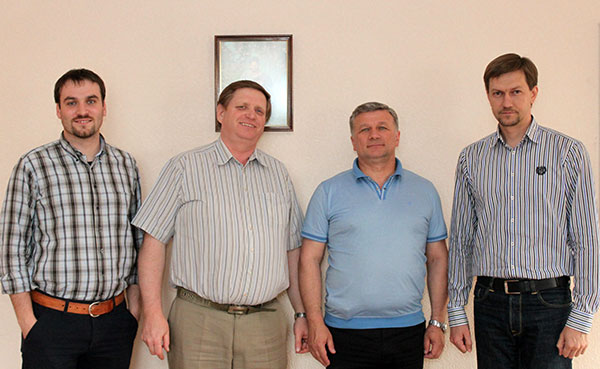
SELCU’s new Commission on Theology and Practice: Rev. Oleg Schewtschenko, Bishop Viktor Gräfenstein, Rev. Alexander Yurchenko, and Rev. Alexey Navrotskyy.

SELCU’s new Commission on Theology and Practice: Rev. Oleg Schewtschenko, Bishop Viktor Gräfenstein, Rev. Alexander Yurchenko, and Rev. Alexey Navrotskyy.

UKRAINE – While conflict continues to rock the eastern border of Ukraine, Lutherans are firm in their resolve to remain united, even as recent events have made that goal more difficult.

Earlier this year, Ukrainian citizens of the Crimean Peninsula participated in a disputed referendum to join Russia. While the vote passed and Russia officially accepted Crimea as a member of the Russian Federation, its legitimacy has been challenged by the international community, given the presence of suspected Russian military in the region during the vote.

The move has led to increased difficulties for the Synod of Evangelical Lutheran Churches of Ukraine (SELCU). SELCU is a young church body, with thirteen congregations throughout the region. Five of these congregations are in Crimea. Consequently, the emergence of a new federal border between these congregations and the rest of SELCU’s congregations (in Ukraine) has created significant difficulties for the church. Where the churches could formerly visit together easily, the new militarized border makes passing from one area to the other significantly more difficult. Moreover, as SELCU’s Bishop Viktor Gräfenstein is a German citizen (and thus a member of the European Union), he is unable to cross the border into Crimea without acquiring a visa.

Lutheran Church–Canada (LCC)—a member church of the International Lutheran Council—has long supported SELCU in its outreach work, its social ministries, and its theological education. LCC helped found Odessa Seminary in 1998, and provides visiting theological professors to instruct students at the school. In 2013, the seminary celebrated the graduation of six students who went on to begin two-year vicarages in SELCU congregations. Prior to the unrest in Ukraine, the seminary planned to welcome a new class of students to begin studies this September. The new border-crossing realities, the conscription of a number of SELCU members (including one pastor) into military service, and battles between the government and pro-Russian rebels in Eastern Ukraine has put those plans on hold.

Despite these difficulties, Rev. Alexey Navrotskyy— LCC’s missionary in the region—reports that SELCU congregations on both sides of the Crimean border continue to express their desire to remain one church body. And the church continues to operate as normally as possible given the situation. Acting on a directive from its 2013 Convention, the church recently appointed a Commission on Theology and Practice (CTP) in June to help the church better define and understand its work together. Members appointed to the commission include Bishop Viktor Gräfenstein, Rev. Alexander Yurchenko (missionary pastor), Rev. Alexey Navrotskyy, and Rev. Oleg Schewtschenko. Rev. Schewtschenko was selected to serve as the CTP’s Chairman.

The CTP is schedule to issue a report in advance of SELCU’s upcoming 2014 convention, set to take place in Odessa in November—assuming all congregations can attend. In the meantime, SELCU congregations continue to reach out to their communities with the Good News of the Gospel—a message sorely needed in these difficult times.

Lutheran Church–Canada is calling on members of the International Lutheran Concil to remember the Ukraine in their prayers—that God would allow SELCU churches on both sides of the Crimean border the ability to work together for the sake of the Gospel; that political leaders in Russia, Ukraine, and the West would all work earnestly for the re-establishment of peace; and that further bloodshed in disputed areas may be avoided.

———————

via The Canadian Lutheran.

Commemorating the Outbreak of World War I and the 70th Anniversary of the Assassination Attempt on Adolf Hitler

by Hans-Jörg Voigt

Chairman-Voigt

Bishop Hans-Jörg Voigt

On July 28, 1914, the Austro-Hungarian Empire declared war on the Kingdom of Serbia, just one month after the Austrian heir-apparent, Archduke Franz Ferdinand, was murdered by members of the revolutionary underground organization Mlada Bosna in the City of Sarajevo. The major catastrophe of the 20th century ran its course, and it bears the seeds of the beginnings of World War II.

At the end of the European Lutheran Conference (ELC) on May 25, 2014, I and some of the other attendees visited the site of the concentration camp Bergen–Belsen. The camp is in close proximity to Bleckmar, where we had held the conference at SELK’s church mission centre, spending days of very intensive discussions with one another. I had been at the concentration camp several times before, visiting with vicars of our church, but never was it a visit that hit so close to home emotionally in the company of these international guests. On several occasions I was moved to tears in view of the documented heaps of corpses, while a brother from Great Britain and one from Denmark stood next to me. All of this had its beginnings in the events 100 years ago.

As we passed through the site’s remains and remnants of the prisoners’ barracks we engaged in some intensive discussions. Some of the points were the following:

1. To consider your guilt and to confess it is not a sign of weakness but of strength

The Australian historian Christopher Clark has published a book entitled The Sleepwalkers – How Europe Went to War in 1914. It is by now a bestseller in Germany—probably, because in it someone finally says that Germany was not the only country that bears fault for the outbreak of World War I. But I consider this question irrelevant, because from the viewpoint of the Christian faith it is not a weakness but a strength to confess one’s guilt.

My brother works as a master craftsman. His whole life consists of repeated measurements and correcting mistakes previously made; no one has ever accused him of a negative view of life because he corrects his errors. Every day our own life is to be measured by the will of God. Asking for forgiveness through Jesus Christ leads us on the right path. And if that is true for the life of each individual Christian, then it is also true for society as a whole, including in politics. The fact that Germany, at first reluctantly but then increasingly in the open, dealt with the topic of and admitted the horrendous injustice perpetrated by the nation, is a sign of strength and not of weakness, however incomplete that process may still be.

2. Admitting guilt is quite different from accepting responsibility

For Lutheran Christians it is important to speak of guilt in as precise a meaning of the term as possible. Particularly in considering historical complexities we should not use the term

flippantly. I personally am not at fault for the outbreak and consequences of two world wars and the incomprehensible destruction of the Jewish people. I bear no guilt because I did not live at that time. I have to confess enough of my own faults, and Jesus Christ is at work daily to deal with my sins.

But at the same time we Germans bear an ongoing responsibility for the consequences of German history in the 20th century. That responsibility implies that we help relieve whatever sufferings resulted from that history and wherever we face any other sufferings. And we need to remind others of this responsibility. There has been little research to date about what our originally German-speaking sister churches in Canada, the United States, Brazil, Argentina, and Australia had to contend with during those wars. The mistrust they faced from their fellow countrymen in the new homes and the resulting loss of the German language as well as expressions of enmity are part of that.

3. Nationalism is still a problem today

The French Revolution and the subsequent Napoleonic wars mark the advance of various forms of nationalism. Now the concept of the nation supplants the concept of the Christian religion. Nationalism is one of the main causes for the outbreak of World War I. It was nationalism that blinded churches of various denominations. For example, Roman-Catholic bishops of French and German dioceses both engaged in war-mongering against one another, even though they belonged to the same church. And the Protestant churches were no better. But the soldiers on the battlefields were completely surprised when they found a Bible or a crucifix in the pockets of their fallen opponents.

Nationalism and national egotisms are still quite prevalent in Europe and the rest of the world. Nationalism has not been eradicated and must still be considered to be competing with the Christian faith.

4. The danger of pseudo-scientific convictions

Pseudo-scientific convictions are dangerous. We see that in the Nazi ideology of National Socialism and its devastating consequences. This ideology attempted to use the theory of evolution to establish, by a process of natural selection and the law of survival of the fittest, a racial theory of social Darwinism. But pseudo-scientific notions can still be encountered today, in certain economic and sociological theories. They are in crass opposition to the Christian faith where love of the neighbor is a major tenet. Christ says: “What you have done to one of the least of these my brethren, that you have done to me” (Matthew 25:40).

5. Majorities can be wrong

These days when I see pictures of cheering crowds and soldiers like those that were sent to face a cruel death in 1914, then I often try to convince my children of the following: “Majorities can be wrong.” Those men and women who tried on July 20, 1944, to end the trauma of the Nazi dictatorship by their attempt on Hitler’s life, were courageous enough to stand against majority opinion. 70 years ago they paid for it with their lives. Christian conscience—because of original sin, often an erring conscience—must always be sharpened by attending to God’s word.

Our democratic societies stand in danger of always accepting a majority opinion as truth. German history teaches that the outbreak of the World War I was a mass supported event, and that the election to the German Reichstag in 1933 took place under generally democratic conditions. The result was the Nazi dictatorship. Majorities can be wrong—to know this is today more important than ever, particularly when the majority opinions in today’s society stand more and more in opposition to the Christian faith.

———————

Rev. Dr. Hans-Jörg Voigt is Bishop of the Independent Evangelical Lutheran Church (SELK) in Germany and Chairman of the International Lutheran Council (ILC).

Coming Through Disaster: An update on Philippines relief

Photo courtesy of LCMS Communications/Erik M. Lunsford.

The scene of the disaster. (Photo courtesy of LCMS Communications/Erik M. Lunsford.)

PHILIPPINES – On November 8, 2013, a devastating typhoon rocked the Philippines. Destruction was widespread throughout the country. More than 6,000 people were killed and 4 million people were displaced. Members of the Lutheran Church in the Philippines (LCP) did not escape unscathed. Three LCP churches were severely damaged—“one totally flattened,” noted the LCP’s President James Cerdeñola at the time—and countless people were left homeless, both members of the church and their neighbours.

Following the typhoon, the Lutheran Church in the Philippines reacted quickly, sending their emergency response teams to help those in some of the hardest hit areas. Relief focused on immediate needs—like food provision and temporary shelter—as well as long-term needs, like rebuilding homes and livelihood projects. And the work continues.

It’s work that has been noticed by people in wider society as well. “When I went to these areas and talked to the people—not only among our members but also the people in the community—they were saying so many good things,” President Cerdeñola explained, “things like: ‘When the Lutherans give, they give not only to their members but also to the people in the community.’”

“It gives us an opportunity to be known as a church—as a church that cares, a church that loves” President Cerdeñola continued. “And as those great gifts were given, the Word was preached.”

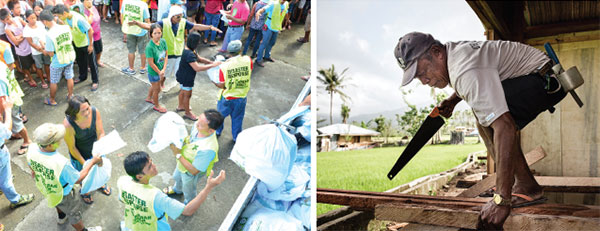
Left photo courtresy of Lutheran Church in the Philippines. Right photo courtesy of LCMS Communications/Erik M. Lunsford..

Distributing goods and rebuilding homes. (Left photo courtesy of Lutheran Church in the Philippines. Right photo courtesy of LCMS Communications/Erik M. Lunsford).

The LCP was aided in its relief work through the support of a number of International Lutheran Council churches. The Lutheran Church—Missouri Synod (LCMS) offered $100,000 USD in immediate aid, though its contributions have since risen to more than $528,400 USD in aid for the Philippines. That number includes grants the LCMS pledged to make to match donations from ILC members and other partner churches that were directed through LCMS World Relief. The American Association of Lutheran Churches, the Confessional Lutheran Church of Chile, Japan Lutheran Church, the Silesian Evangelical Lutheran Church of the Augsburg Confession, and the Evangelical Lutheran Free Church in Denmark all responded, and together raised more than $20,200 USD for relief work in the Philippines.

Because of legal restrictions in their countries, a number of other churches sent contributions directly to the Philippines. The Evangelical Lutheran Church of England raised more than $4,750 USD in relief, while the Independent Evangelical Lutheran Church in Germany raised more than $130,300 USD in relief. In total, then, ILC members and partner churches have contributed more than $683,650 USD for relief work in the Philippines to date, in addition to the money and man-power the Lutheran Church in the Philippines has itself offered.

———————

ILC: Confessional Unity in Service to the Mission

Chairman Jon Ehlers

Chairman Jon Ehlers

by Jon Ehlers

As part of a new initiative, the International Lutheran Council’s (ILC) website will feature regular articles from members of the ILC’s Executive Council (composed of church leaders from around the world). These articles—devotions or commentaries on world events—are designed to nurture and foster our faith in Jesus Christ. This is the inaugural article in that series.

The International Lutheran Council is composed of 35 Lutheran Churches from around the world which proclaim the Gospel of Jesus Christ on the basis of an unconditional commitment to the Holy Scriptures as the inspired and infallible Word of God, and the Lutheran Confessions contained in the Book of Concord as the true and faithful exposition of the Word of God.

To assist us in accomplishing these goals, the Executive Council of the ILC recently met in Brazil to continue long range planning. We also had the great pleasure of attending the Convention of the Evangelical Lutheran Church of Brazil (Igreja Evangelica Luterana do Brasil—IELB), whose convention theme was “Our Confessional Unity in Service to the Mission.” This theme, I think, summarizes the purpose of the ILC marvelously—for ILC churches are firmly founded on the confession of Jesus Christ as our Saviour from sin.

This confession of salvation in Christ alone is revealed to us in the Bible, which is God’s inspired Word. We confess what God has revealed to us. We also hold to the Lutheran Confessions as a clear and accurate exposition of the Holy Scriptures. Being anchored solidly in the Bible and the Lutheran Confessions, our confession of faith is centred on Jesus Christ alone. ILC churches are churches which believe, teach and confess that we are saved by grace alone, through faith alone, in Jesus Christ alone. For in Christ we know and understand that God is for us and that God really does love and forgive us.

This confession then serves as the basis for the mission of the ILC churches. We do not keep this wonderful Good News to ourselves, but we desire to share this message of salvation with all people. We take Jesus’ mandate seriously to go into all nations making disciples by baptising and teaching everyone about what Jesus has done for them. This mission to all people is based on the confession of faith revealed in the Bible and the Lutheran Confessions. We understand Confession and Mission as things that go hand in hand, in response to God’s love which has come to us through the Word made flesh in Jesus Christ.

It is our prayer that over the coming years, you will be able to find many items on this website which clearly and unashamedly confess Jesus Christ, as well as items which rejoice in and inform us of how God’s Word is reaching people around the world through the mission activities of ILC churches. Together we seek to keep these two important aspects of the Christian faith in their proper balance. So come along and join us as we share our “Confessional Unity in Service to the Mission.”

———————

Rev. Jon Ehlers is Chairman of the Evangelical Lutheran Church of England. He serves on the Executive Council of the International Lutheran Council as the representative for the European world region.

Signup for ILC Updates