
An Unexpected Visit
75 years ago the most terrible of all world wars ended in Europe…
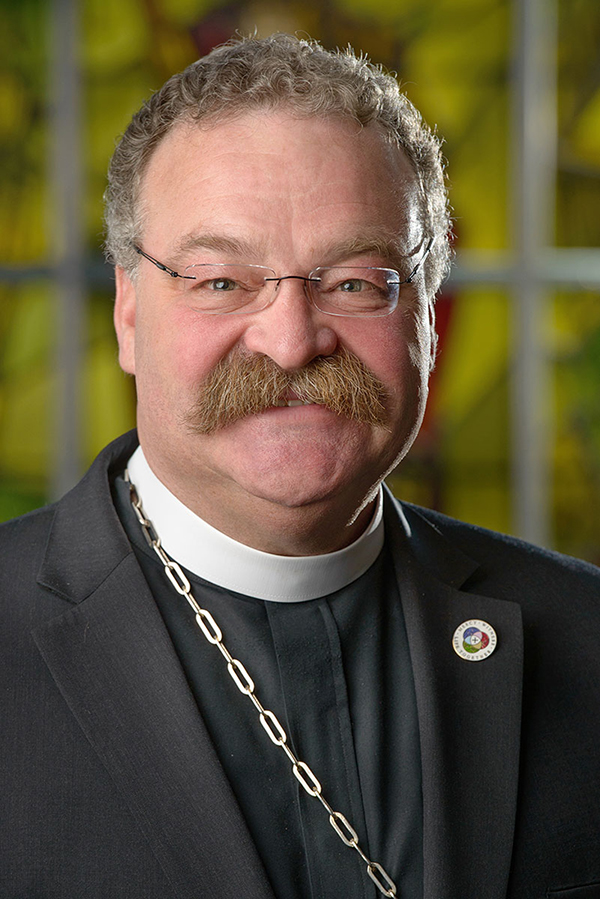
A personal reflection by the The Rev. Dr. Hans-Jörg Voigt, Bishop of the Independent Evangelical Lutheran Church (SELK) in Germany and Chairman of the International Lutheran Council
———————
It was at Immanuel Lutheran Church in Gross Oesingen, one of our congregations in the Lüneburg Heath region of northern Germany. A few months after the unconditional surrender of the German army some pastors of the then Evangelical Lutheran Free Church had assembled. It was November 1 of the year 1945. Among them was the local Pastor Martin Hein, as well as the Pastor from Hannover, Hans Kirsten. The worst war that ever emanated from German territory had ended with a resounding defeat and the signing of the instruments of capitulation just a few months earlier.
Perplexity and a sense of helplessness was keenly felt by all the pastors. All around them there were refugees on the farms and in emergency housing in the cities. There were still some food supplies, especially from the reserves of the military, but hunger and the first post-war winter were approaching.
Suddenly there was a knock on the door of Farmer Käppel’s house next to the church. Pastor Hein got up to open the door. A tall, lanky man appeared, dressed in suit and hat, accompanied by a GI in uniform, who had driven the American military limousine; they were obviously US-Americans. The visitor introduced himself, speaking German with a Texan accent, as the President of The Lutheran Church—Missouri Synod (LCMS). “How can we help you?” John William Behnken (1884-1968) asked. “What can we do for you and your congregations?” He was LCMS President from 1935 to 1962. President Behnken was the first American church representative who was allowed to visit Germany. After his trip he personally reported to the President of the United States, Harry S. Truman.
Even today we can still feel the emotions of that moment. Not much earlier American troops and their allies had paid a bloody toll as they invaded Normandy in France in order to end the ravages of war by force. And just a few weeks later the question: “How can we help you?” The German pastors had not expected that.
It is a fact that The Lutheran Church – Missouri Synod provided considerable help in the reconstruction and re-organization of the independent Lutheran confessional churches in Germany. The foundation of our Lutheran Seminary (now in Oberursel) was made possible in large part by the LCMS. Many congregations of the LCMS participated massively by sending Care Packages very soon after the war. The 75th Anniversary of Germany’s liberation provides opportunity to remember in gratitude the help offered so soon after the war
A change of scenery: In 2018 I visited one of the Lutheran congregations in London, England. My friend, the Rev. John Ehlers, had invited me to preach in the service. After worship Pastor Ehlers introduced me to an elderly lady and informed me that during World War II she had served as a nurse, and she frequently she had to take care of the victims caused by the German air raids. The lady said to me: “You’re the first German to preach in this church. It is good that our peoples are now so close to one another.” I have never forgotten this.
Without doubt May 8, 1945 was a day of liberation. All the horror which German refugees, the victim of the bombings, and the soldiers had to endure had its origin in that ideological dictatorship that caused this war and not the final outcome. In 1945 the full extent of the horror and the utter monstrosity of the mass murder of the Jews was not yet fully revealed, but almost everyone knew what was going on.
An American philosopher of Spanish descent, George Santayana (1863 – 1952), said: “He who learns nothing from history is condemned to repeat its mistakes.” I do not know know whether this is true in all cases. But it is one of the strengths of Germany’s policy of remembrance not to suppress the shameful crimes of the past but to keep them in our collective memory. President Behnken’s visit and the readiness to forgive on the part of that nurse in London I regard as more than just a sign for the power of Christian reconciliation. That reconciliation is based on Christ’s sacrificial death on the cross.
———————
Hans-Jörg Voigt
 USA – The end of 2019 saw two regular interchurch meetings between North American Lutheran church bodies.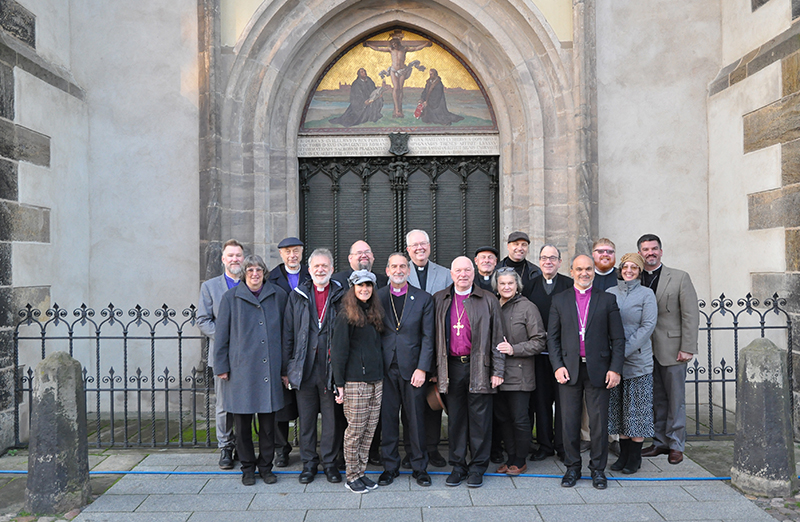
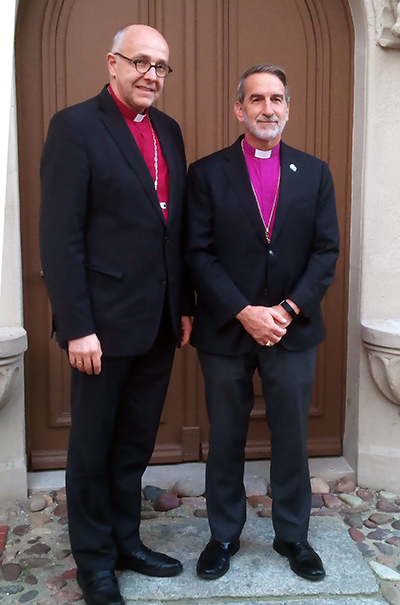

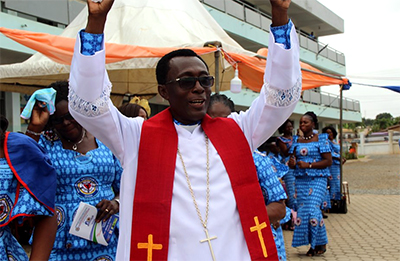
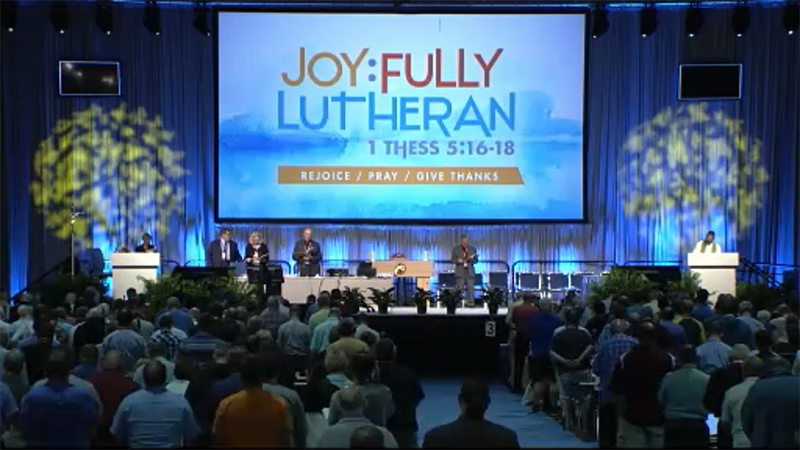
 USA – The Lutheran Church—Missouri Synod (LCMS) has commended the work of the International Lutheran Council (ILC), pledging its continued support as the ILC expands its operations in service of confessional Lutheranism worldwide. The LCMS’ resolution came during the church’s 67th regular synodical convention, taking place in Tampa, Florida.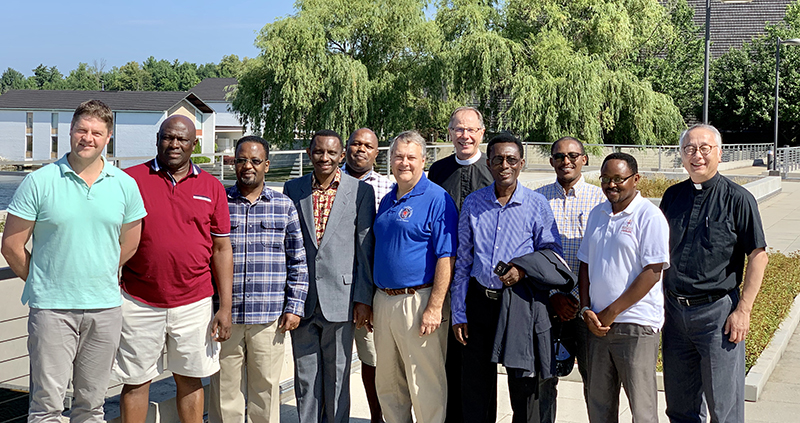
 Rev. Alfazema returned to Canada for health reasons following his retirement, but the work they began continued. In 2018, the church which grew out of his mission work was officially recognized by the Mozambican government as the Concordia Christian Church in Mozambique (Igreja Cristã da Concórdia em Moçambique – ICCM). While the church was officially registered by the government in 2018, it had previously operated unofficially for several years under the name Concordia Lutheran Church in Mozambique (Igreja Luterana da Concórdia em Moçambique —federal requirements in Mozambique prevented the young church from registering with the word “Lutheran” in its legal name).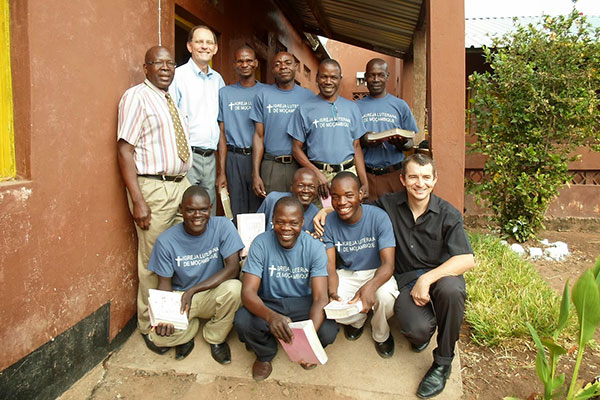
 RSS Feed