News

Posts tagged:

Rev. Dr. Thomas Winger

2025 World Conference: The Old Temple and the New

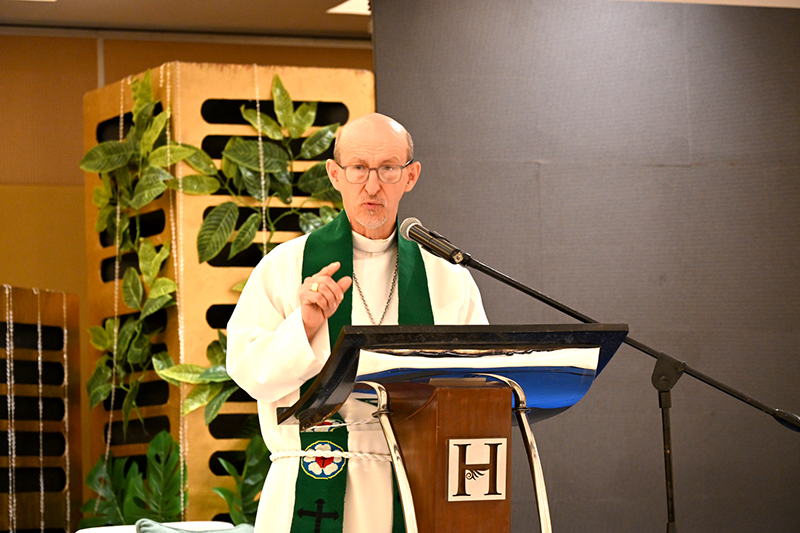
IELPA President Alton Alceu Figur preaches during the ILC’s 2025 World Conference. (Photo: T. Winger).

PHILIPPINES – The second day of the International Lutheran Council’s (ILC) 2025 World Conference began with a service of Matins, with Rev. Michael Blodgett serving as liturgist and President Alton Alceu Figur of the Evangelical Lutheran Church of Paraguay (IELPA) serving as preacher.

President Figur’s text was John 19:25-27, reflecting on Mary’s sorrow as she looked upon the death of her Son on a cross. In this account, President Figur said, “we are given the scene—the portrait—of the human misery that sin has brought into the world.” And sin continues to bring misery to our world today.

But Jesus’ death brings us hope, President Figur continued, because He assumed our flesh “and all the guilt it carries.” His suffering for the sins of humanity brings hope for this fallen world. “We are sent into this sin-broken world to cooperate in its restoration—restoration that is possible only by looking to the cross of the Saviour,” he said. “And there we see Christ as Mary saw Him—suffering out of love—teaching us that we too, in love for others, must take up our cross and follow Him as we “testify to this great and wonderful gift: salvation in Christ.”

Keynote address: The Old Temple and the New

The conference continued with the second of Rev. Dr. Thomas M. Winger’s keynote lectures, this time on “The Old Temple and the New,” drawing on Ephesians 2:22. Dr. Winger highlighted the connections between the worship of the Old Testament and that of the New Testament, in contrast to that of the “Pagan Temple” he had discussed in his first lecture.

Dr. Winger began by detailing the various rites which were part of the daily service in the Old Testament. “We have a tendency to think of Old Testament worship as a man-made attempt to appease God,” he noted, “but this is not a correct way to think of it.”

“These acts were not something that the Israelites were doing for the benefit of God,” he continued. “On the contrary, God served His people through all of the rites of the liturgy that He instituted for their benefit.”
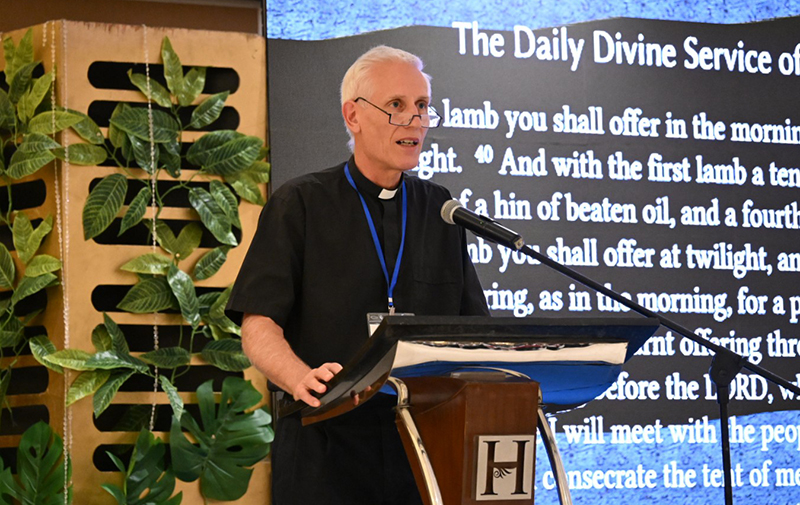
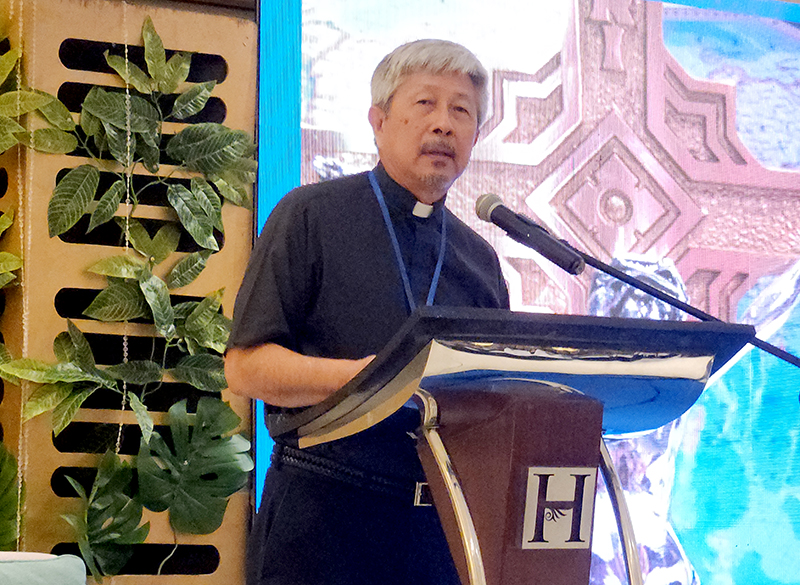
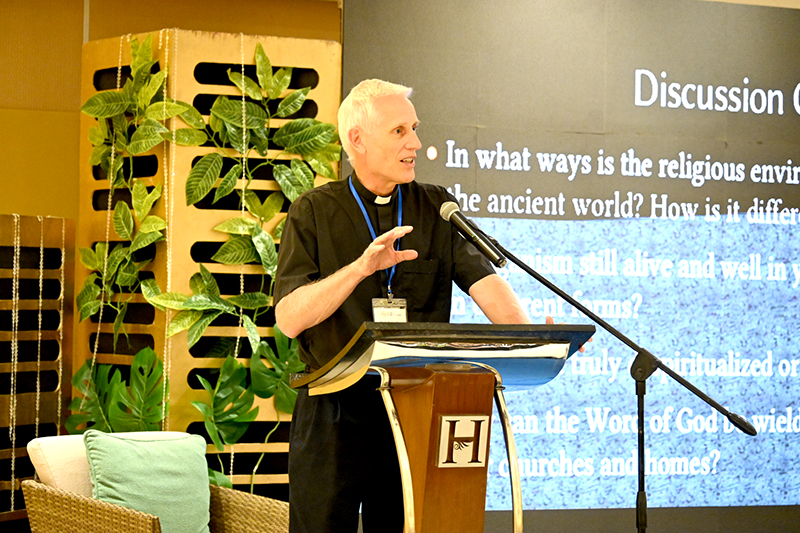
Rev. Dr. Thomas M. Winger presents on “The Old Temple and the New Temple.”

Dr. Winger explained that the Old Testament rites ultimately point to Christ and to the new worship of the Christian Church. Such rites had several purposes, including “to teach God’s people the serious consequences of sin… to provide cleansing sanctification and forgiveness… to separate God’s people from the pagan world… to foretell the coming Messiah (the most important purpose)…  to prefigure the pattern of New Testament worship… [and] to prepare for the fellowship of heaven.”

Old Testament worship points, then, to New Testament worship—that period when the Gentiles would be incorporated into the worship life of God’s people. “In the history of Israel, the Gentiles had become isolated from this divine gift by their exclusion from Temple worship,” Dr. Winger noted. Later tradition had developed barriers to keep Gentiles from entering into the Temple. But “the Old Testament prophesied that in the Messianic age the Gentiles would again be brought close to God and into the precincts of His Temple” and that “the Lord’s presence [would] no longer be confined to Jerusalem, but [would] be wherever the Lord’s name is proclaimed.”

“Thus, we ought to understand Paul’s proclamation of a new spiritual Temple in Christ as more than just a figurative description of the unity of God’s people,” Dr. Winger suggested. “It is a picture of God’s people gathered in worship. The Church is a new Temple, but spiritually constructed.” This new Temple of Christian worship is marked by the “equal inclusion of all people… Trinitarian in pattern… spiritual sacrifices… where Christ is found with His Name and Word… and Word and Sacraments.”

ILC Membership and and a Presentation by CPH
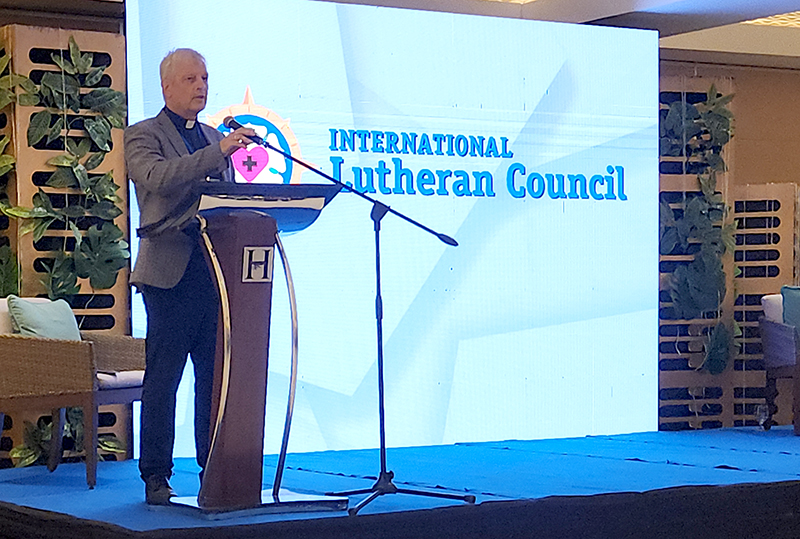
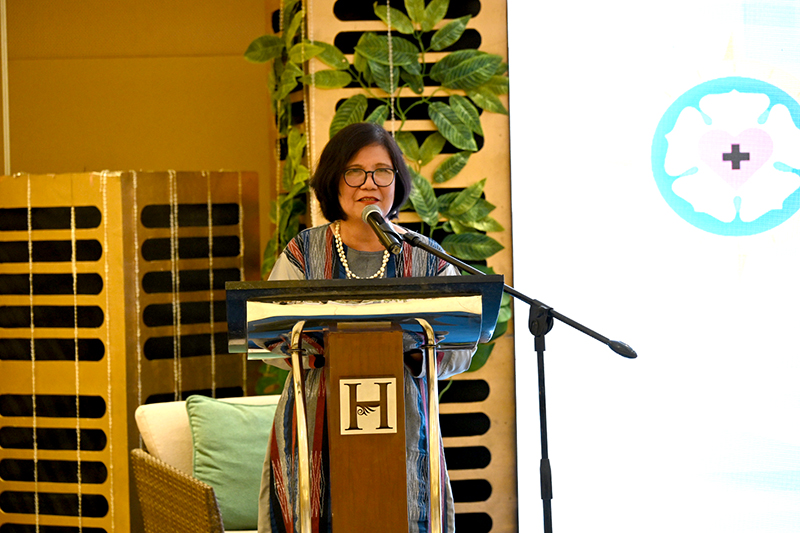
General Secretary Klaus Detlev Schulz presents on the ILC.

The morning continued with a presentation by the ILC’s General Secretary, Rev. Dr. Klaus Detlev Schulz. Dr. Schulz highlighted the nature of the International Lutheran Council and its work. He further discussed what it means to be a member of the ILC, as well as how the membership application works.

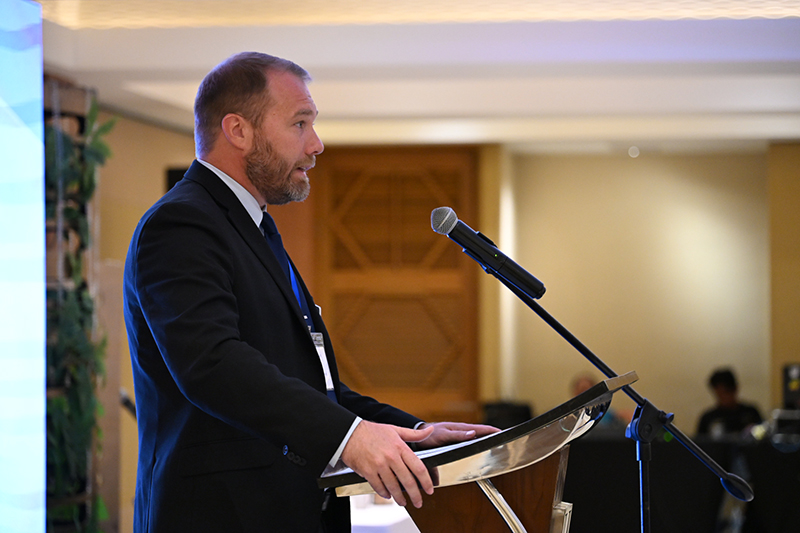
The morning ended with a presentation by Concordia Publishing House (CPH) President/CEO Jonathan D. Schultz and Vice President of Publishing, Rev. Dr. Jacob Corzine. The two highlighted the history of CPH as well as its present work today, ranging from major publications like The Lutheran Study Bible, Lutheran Service Book, and The Book of Concord to major series like Luther’s Works and the Concordia Commentary series to new resources for children and new digital apps.
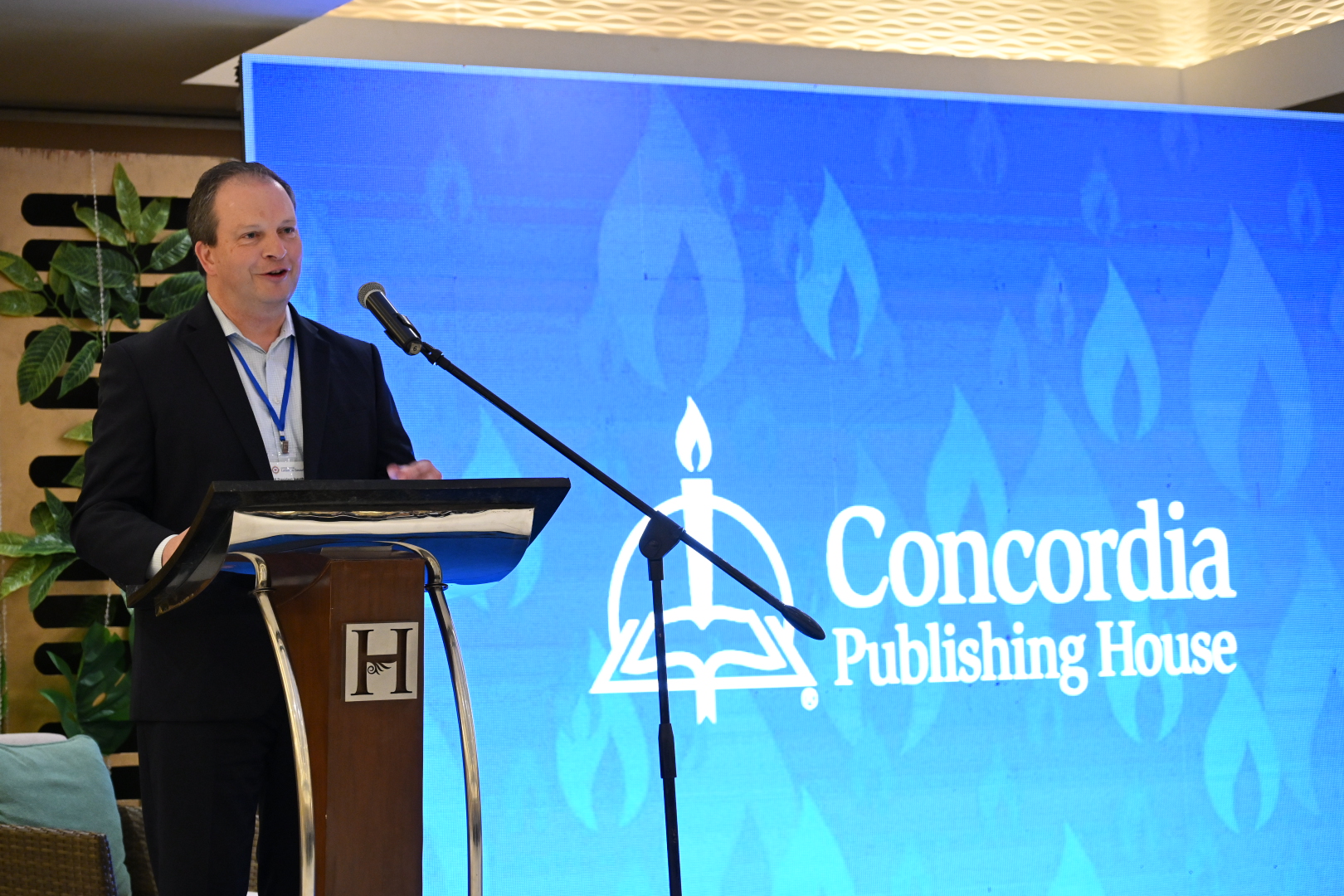
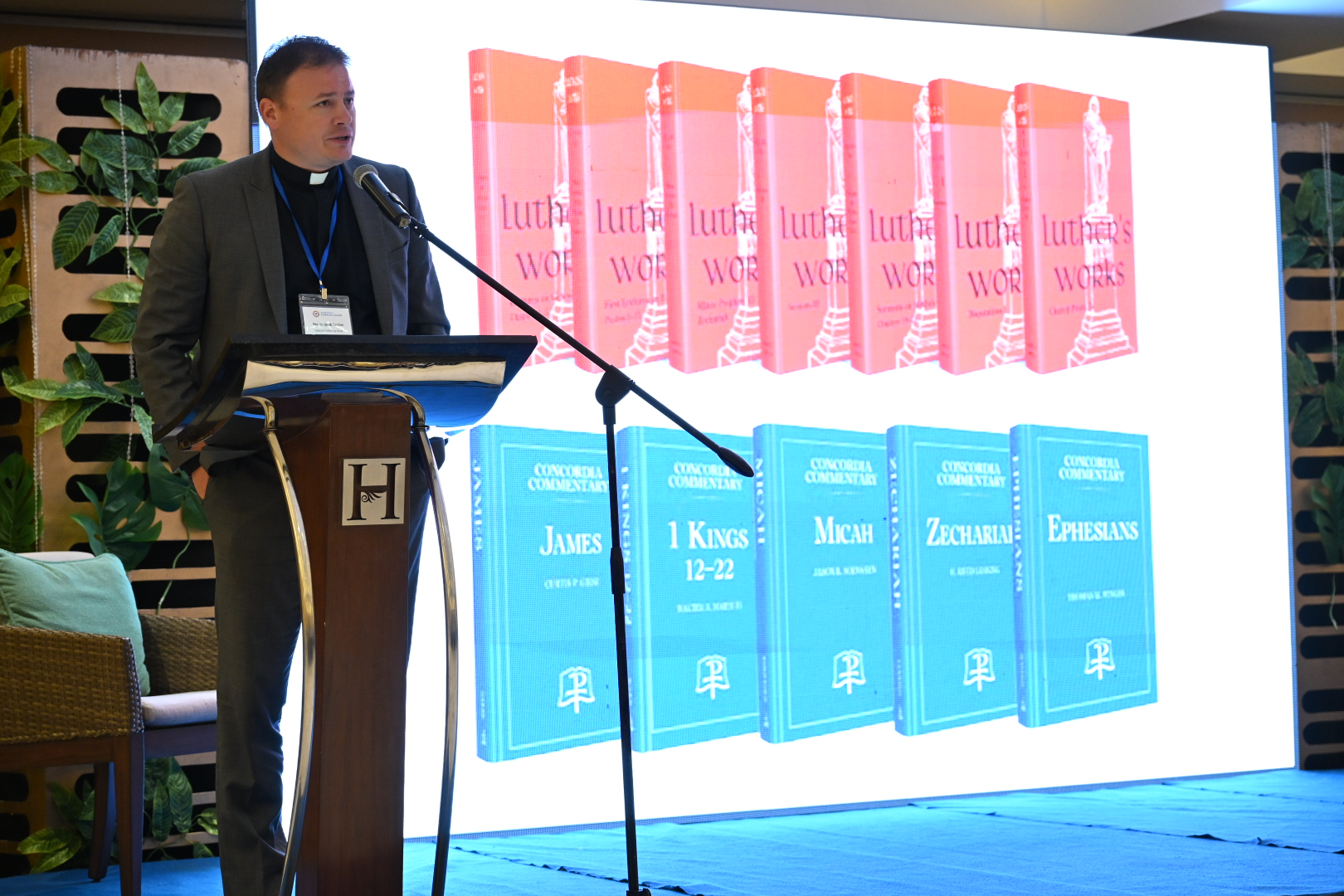
The representatives of CPH invited participants in the conference to connect with CPH and discuss possibilities in which their church bodies might be able to benefit from CPH’s extensive Lutheran resources.

An example of that support was shared by Alison Blodgett, the ILC’s Business Manager and Treasurer. She noted that CPH had recently provided grants to assist the ILC in building up pastors’ libraries around the world through the Lutheran Leadership Development Program (LLDP). To date, CPH has worked with the ILC to distribute books in Ghana, the Philippines, South Africa, South Sudan, and Tanzania.

———————

For more news from the ILC’s 2025 World Conference, click here.
2025 World Conference: Dr. Winger begins keynote address

Rev. Dr. Thomas Winger speaks during the 2025 World Conference.

PHILIPPINES –The opening day of the ILC’s 2025 World Conference continued with the first session of this year’s three-part Keynote Address by Rev. Dr. Thomas M. Winger. Dr. Winger, who is President of Concordia Lutheran Theological Seminary (St. Catharines, Ontario, Canada) and author of the Concordia Commentary volume on Ephesians, is speaking on Ephesians 2:11-22 in a series of talks entitled “The Spiritual Temple.”

Dr. Winger’s first presentation focused on “The Pagan Temple,” drawing on Ephesians 2:2. He began by discussing the pagan religious context which prevailed in Ephesus at the time of St. Paul’s letter to the Ephesians, focusing especially on the religious observances which centered on the Temple of the Lady of Ephesus (Artemis).

The relationship between ancient pagans and their gods were very different than the Christian’s relationship with the true God, Dr. Winger noted. “Ancient pagans had no personal and loving relationship with their gods,” he explained. “The gods described by Homer in the Iliad and Odyssey are not holy, good, and merciful, but rather self-centered, cruel, vengeful, easily angered, and possessing all the character flaws found in fallen human beings.”

Consequently, Paul’s characterization of Gentiles as “people without hope,” makes sense, Dr. Winger explained, as human beings could not count on the pagan gods to have their best interest at heart—and this was especially true when it came to the issue of death. “The Pagan gods offer no solution to death,” Dr. Winger said. In this sense, then, “even though the pagans had many gods, they were truly ‘godless,’ because those gods were not there to help them.”

Indeed, these ‘gods’ were not really gods at all; they were actually “masks or disguises worn by the devil and his host of demons,” Dr. Winger said. But “Paul’s comforting message is that Christ has triumphed over the demons,” he continued. Paul wanted his audience to understand that spiritual enemies are real but Christians need not be afraid of them.

“Our goal in the battle is not to attack or defeat the enemy,” Dr. Winger explained, “but to stand in the victory Christ has already won…. We are to hold onto the gifts, cling to the Gospel. We don’t run outside the churchly fortress to engage the enemy on his turf, but we stand within the protection Christ has given us. We keep the good confession and thereby fight the good fight.”

What does that look today? Dr. Winger encouraged attendees to ground themselves in the victory of Christ by invoking “the name of God in private prayer and public worship.” This can be done in many ways, he noted: through the invocation and marking oneself with the sign of the cross, as per the Small Catechism, for example. We can also adorn our homes with the crucifix and Christian art. It includes speaking the Creed and the Our Father, “which are expositions of God’s name,” he noted. It can include praying Luther’s morning and evening prayers “that the evil foe may have no power over me.” It includes singing hymns; participating in the historic liturgy of the Divine Service; receiving God’s gifts in Word and Sacrament; forgiving one another; and consecrating the world and every aspect of daily life “with the Word of God and prayer.” In all these things, we invoke the name of God and “defeat the devil with God’s Word.”

Following a break, participants took part in small group discussions, discussing what issues of spiritual conflict look like in their own national contexts, and then sharing those conversations with the wider assembly in plenary discussion.

Greetings from LCEF and LHF

The first day of the conference also saw participants receive greetings and presentations by Lutheran parachurch organizations. Assistant Vice President Blake Brown of Lutheran Church Extension Fund (LCEF) highlighted the mission of the LCEF, explaining how it supports the work of The Lutheran Church—Missouri Synod, and further noting their work partnering with international partners.

Greetings were also received from Lutheran Heritage Foundation (LHF). First to speak was Arlene Reyes, who coordinates LHF work in the Philippines. Reyes noted the recent translation of A Child’s Garden of Bible Stories into Tagalog. Rev. Dr. Ted NaThalang—President of the Thailand Concordia Lutheran Church and LHF’s Coordinator for Southeast Asia—spoke next, highlighting the history and ongoing work of LHF in translating Lutheran resources into other languages. Since its inception in 1992, he noted, LHF has operated in more than 100 countries and worked on projects in more than 180 languages.

The first session of the conference ended with a service of Responsive Prayer (Suffrages) led by Rev. Michael Blodgett, who is serving as a conference chaplain.

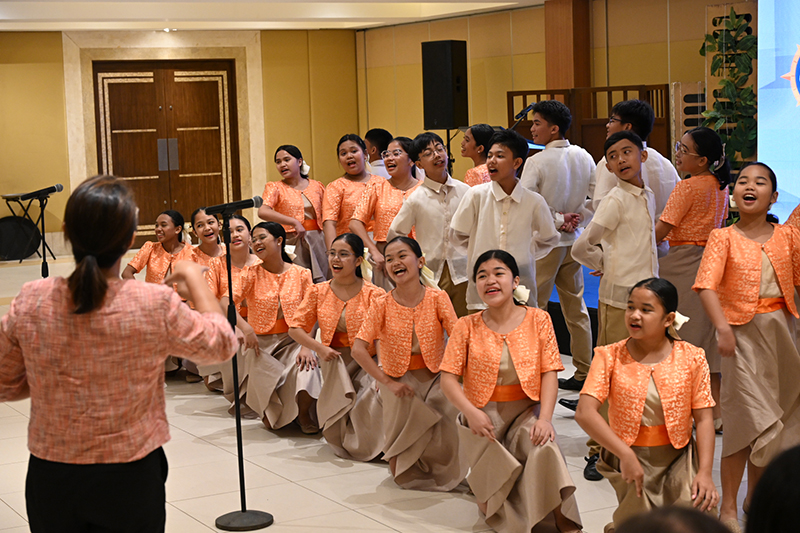
The Loboc Children’s Choir performs at the ILC’s 2025 World Conference.

Dinner that night featured a Welcome Reception graciously sponsored by Lutheran Church Extension Fund. Participants received greetings from local dignitaries, including from the Mayor of Panglao and from the Governor of Bohol’s office, and enjoyed a concert by the world-famous Loboc Children’s Choir.

———————

For more news from the ILC’s 2025 World Conference, click here.
Signup for ILC Updates