
SOUTH AFRICA – The third day of the International Lutheran Council’s (ILC) 2026 World Seminary Conference continued in the afternoon with a working session devoted to a discussion of pedagogy.
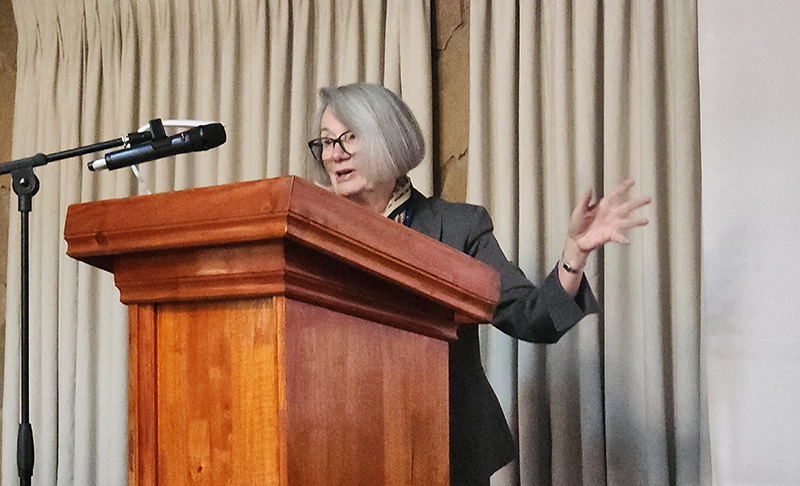
Dr. Cynthia Lumley, Principal of Westfield House (United Kingdom), led the session, presenting on education as formation. By using terms like “formation,” she explained, we are acknowledging that seminary education is about more than just the acquisition of knowledge; it involves rather the shaping of the whole person. As Dr. Lumley writes in her paper: “The transmission and acquisition of knowledge is of course a key focus of education. But perhaps more important than what students should know is the question of who students should become.”
That “becoming” or formation involves enculturation in a specific context, self-formation, and support from theological educators as students encounter the Word of God—an encounter which often involves tentatio, Dr. Lumley noted.
As the conference broke into small groups, Dr. Lumley left them with a number of questions to inform their discussions:
- What is the mission of a seminary?”
- Who does the forming?
- How can a seminary create an environment that promotes formation?
- How can we encourage students to value formation and recognize it as a life-long process?
- Do seminary faculty understand their role in encouraging formation?
- How can we know forming is taking place?
- How can seminaries move away from an instrumental approach to theological education?
After small group discussion, the whole conference continued the conversation in plenary discussion.
The afternoon continued with a choice of two parallel presentations, one addressing sin in societal structures and the other addressing the roles of men and women in the church.
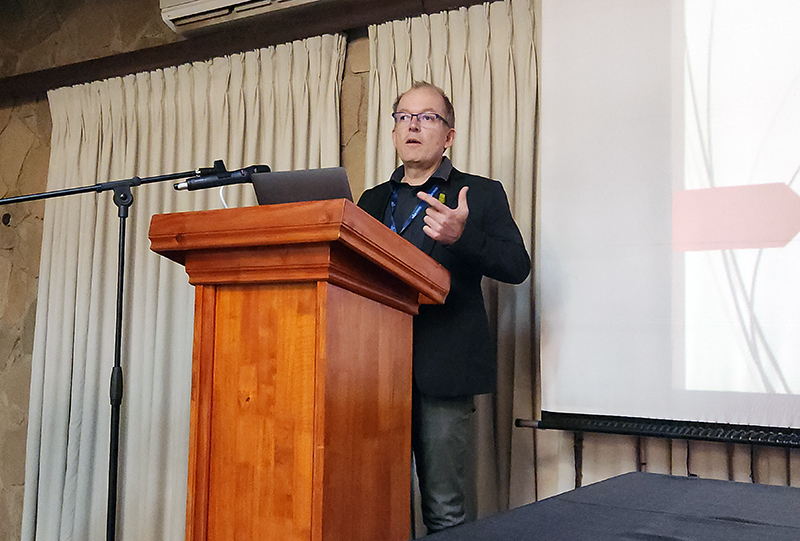
Rev. Dr. Christoph Weber (Free Evangelical Lutheran Synod in South Africa) addressed “Lutheran Anthropology and Sin in Societal Structures.” In his lecture, which was drawn from his doctoral thesis, Dr. Weber discussed apartheid and the differing historic responses by three Lutheran theologians: Karl Meister, Hermann Sasse, and Friederich W. Hopf. Meister had approved of apartheid. Theological principles developed by Sasse, meanwhile, lay a foundation for the rejection of apartheid (and Sasses did so explicitly in a letter to Hopf, saying no Lutheran could support apartheid). Finally, Hopf openly rejected segregation and apartheid. Dr. Weber’s lecture would prove a valuable introduction to a subject attendees would continue to learn about on the next day during a visit to the Apartheid Museum and other historic sites.
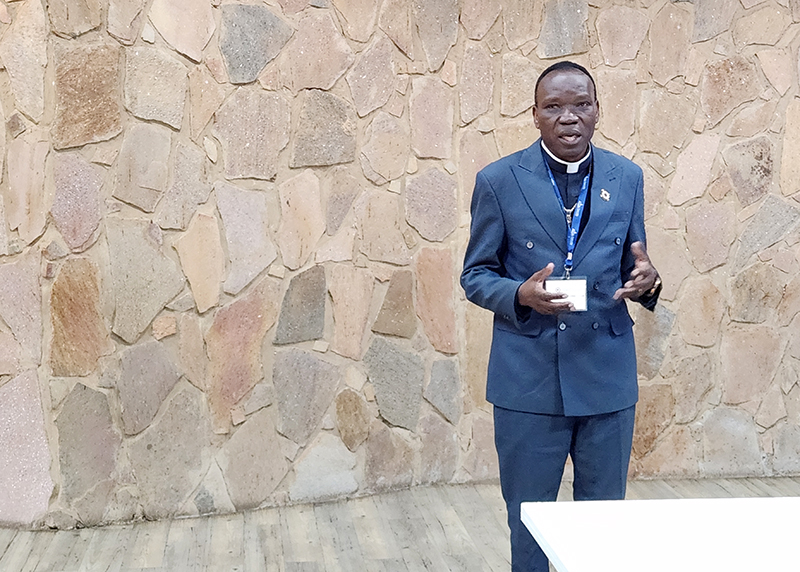
The other parallel presentation was offered by Rev. Nicholas Kumbo Louis of Concordia Lutheran Institute for Holy Ministry (South Sudan and Sudan), who spoke on “Male and Female Relationships in the Church.” Drawing on biblical concepts like the order of creation and headship, Rev. Louis explained that men and women are fully equal before God while still having unique vocations. In the family, this manifests in the different vocations of father and mother, Rev. Louis noted, while in the church, it manifests in the vocation of pastor being restricted to men.
———————
For more news from the ILC’s 2026 World Seminaries Conference, click here.
 RSS Feed