News

Posts tagged:

2026 World Seminaries Conference

2026 World Seminaries Conference: Male/Female Relations and Sexuality

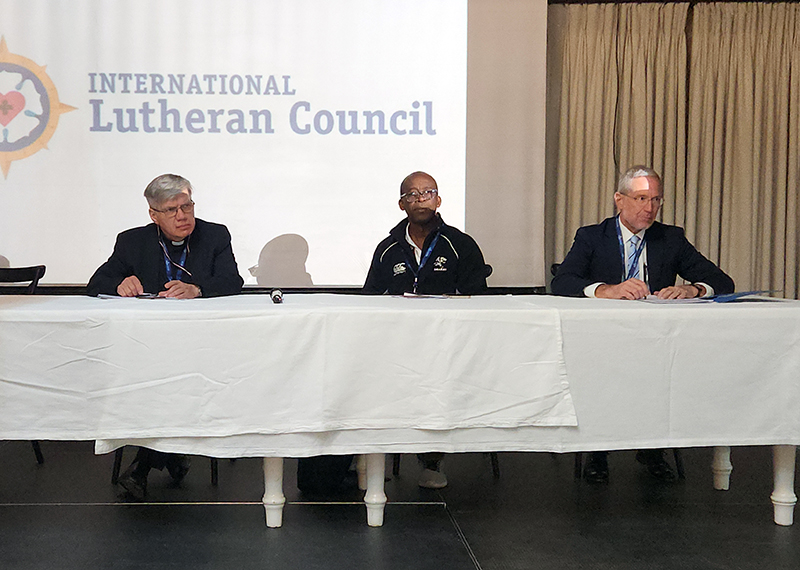
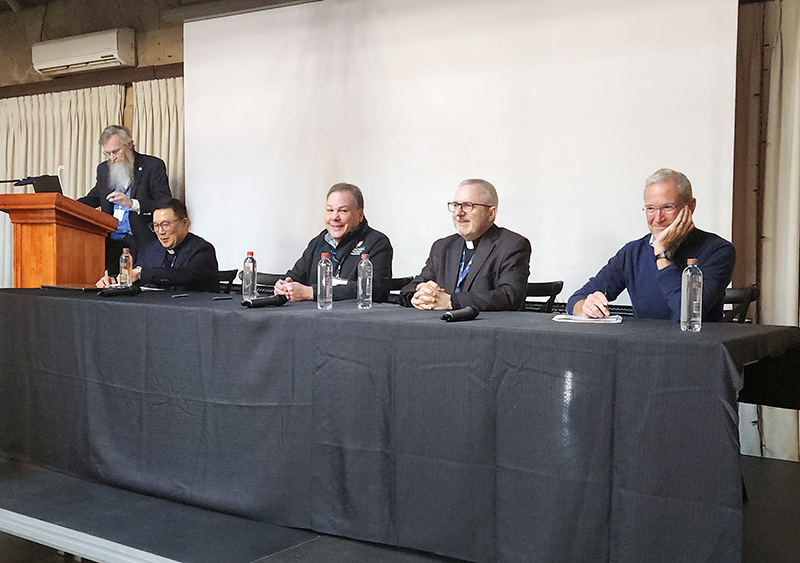
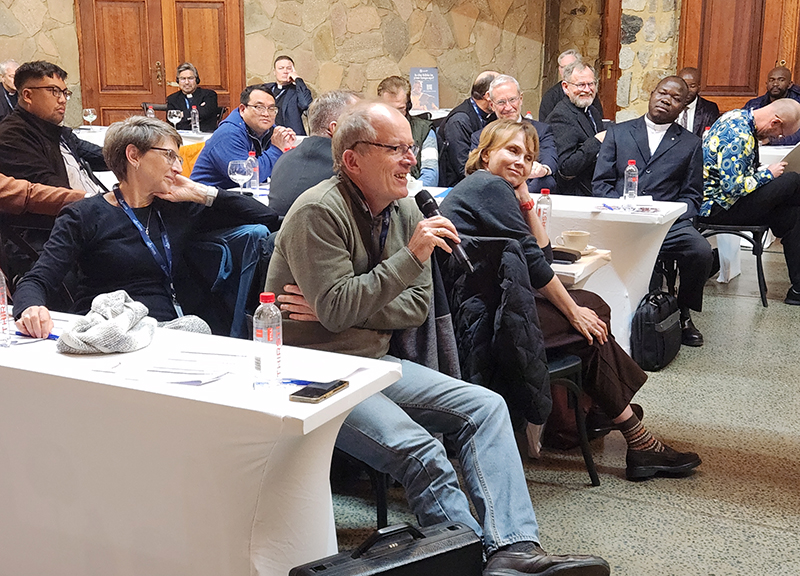
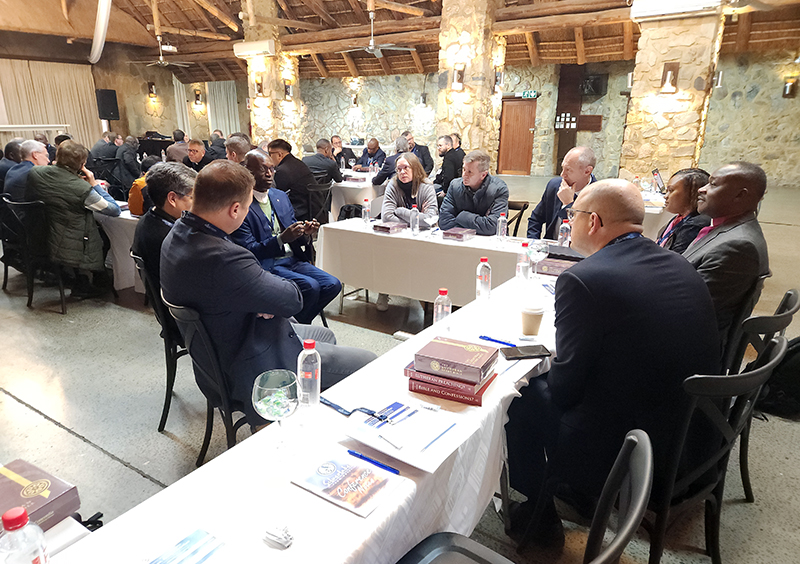
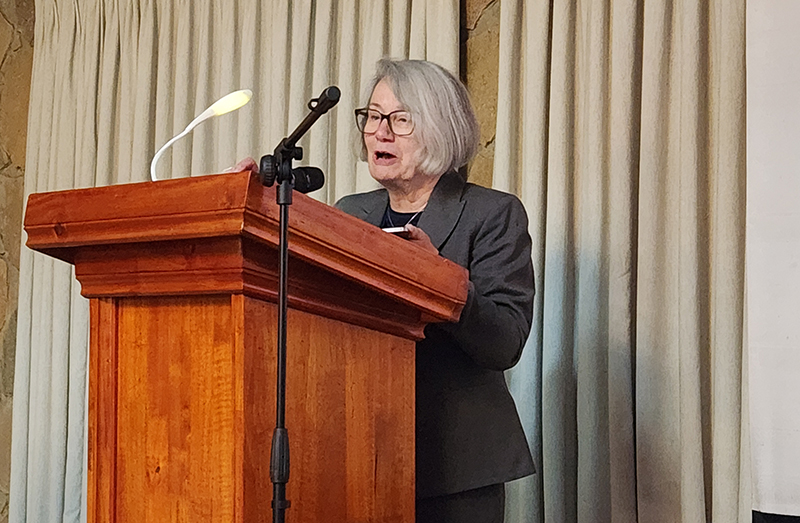
Discussion from the floor during the ILC’s 2026 World Seminaries Conference.

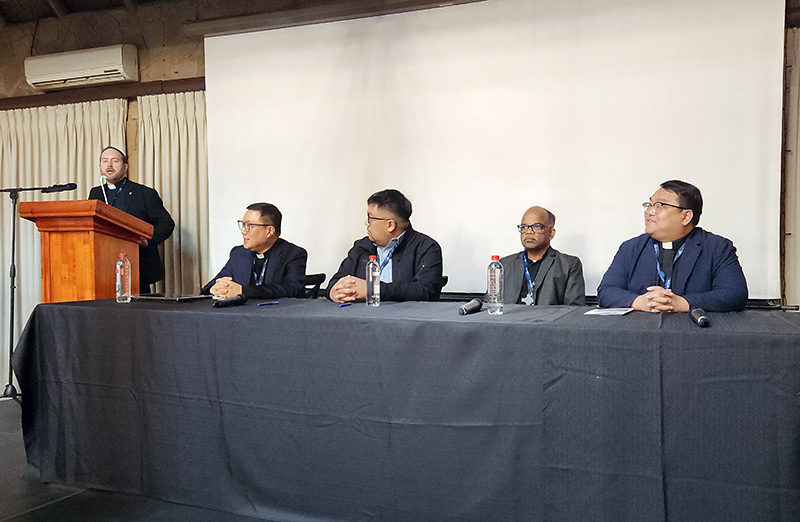
SOUTH AFRICA – The afternoon session of the second day of the International Lutheran Council’s (ILC) 2026 World Conference saw two presentations, with one speaker addressing male and female relations and the other discussing human sexuality.

Rev. Dr. Samuel Furhmann, Professor of Systematic Theology, Homiletics, and Missiology at Seminário Concórdia (São Leopoldo, Brazil) spoke first, presenting a paper entitled “Towards a Lutheran Theological Response to Secular Egalitarianism.” Rev. Dr. Daniel Johansson, Academic Dean and Lecturer in New Testament at the Lutheran School of Theology (Gothenburg, Sweden) spoke second, presenting his essay “Unsuccessful Sanctification as an Argument Against the Biblical View of Sexuality and a Lutheran Response.”

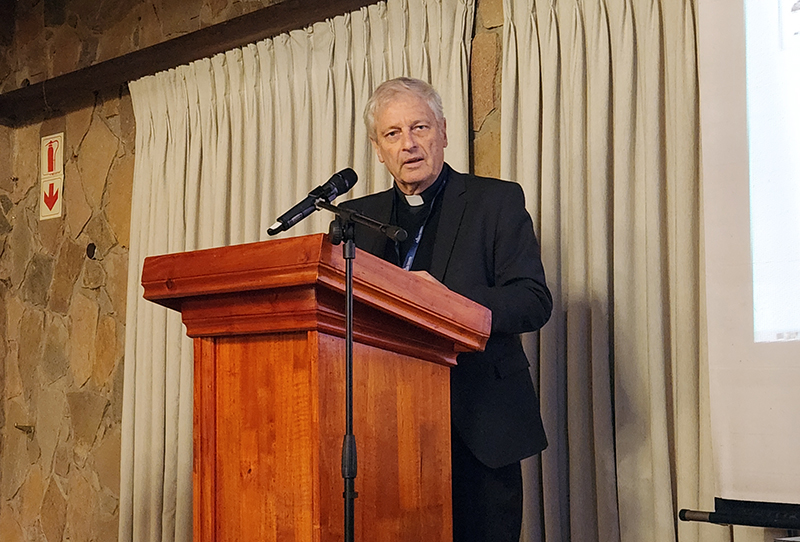
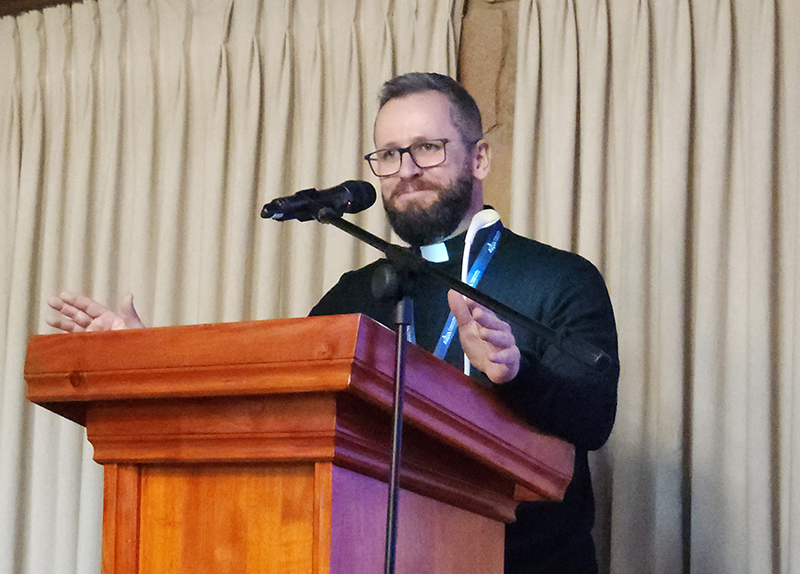
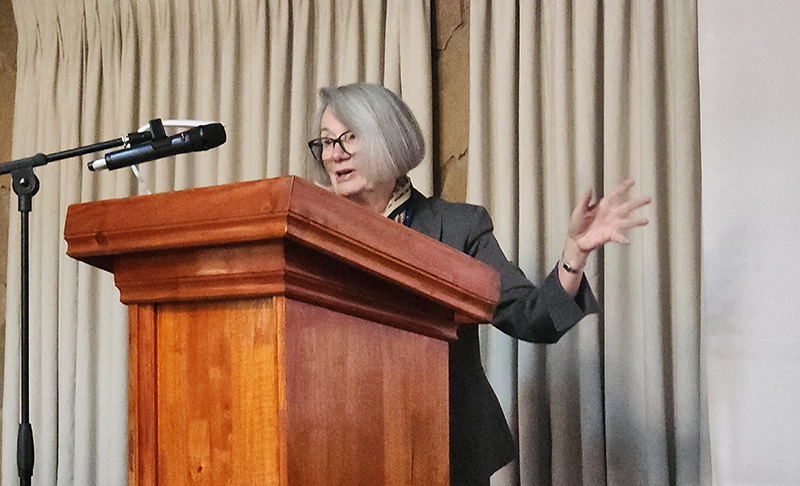
Dr. Samuel Furhmann.

Dr. Furhmann described the Brazilian experience with secular egalitarianism and feminism, in which not only the distinction between the roles of men and women are denied but even “the very identity of man and women.” This has led to a “vocational crisis,” in which “women who sometimes want to stay home to raise the kids are criticized by their friends and family” while husbands for their part are “afraid of leading the family, in order to avoid being called oppressor or patriarchalism keeper or machista.”

As a reaction to this diminishing of male and female differences, there has arisen in Brazil a hypermasculinity characterized by the promotion of “male superiority and a strong disregard for the dignity of women,” Dr. Furhmann explained. In these groups, “women are seen as objects of men’s pleasure and as a means for men to acquire a certain social status.”

Neither of these approaches is healthy—not one that denies the existence of differences between men and women, and not one that raises up men by tearing women down. The appropriate response, Dr. Furhmann said, is a “complementarian view based on creation theology”—a Lutheran understanding of “complementarianism,” he explains, which should not be confused with the term’s use in American Evangelicalism, especially American Evangelical Trinitarian theology.

With Luther, we must recognize that “man and woman are not their own creator,” Dr. Furhmann said. While secular egalitarianism “denied the distinctions between man and woman, the Lutheran theology of creation embraces such differences with gratitude,” he explained. “While equal before God,” the differences between male and female “are what enables man and woman to play their God-given roles.”

This double recognition—that male and female are created by God and each given unique vocational callings—stands in “stark contrast to both the denial of distinctions between man and woman in feminism and to the diminishing of women promoted by the Machosfera movement,” Dr. Furhmann concluded. Men and women should both be encouraged to serve in ways suited to their various gifts and abilities, but not at the expense of man’s “vocational duties as a father” and husband (including his duties in homelife) nor at the expense of woman’s “biological and innate vocations as woman and mother.”

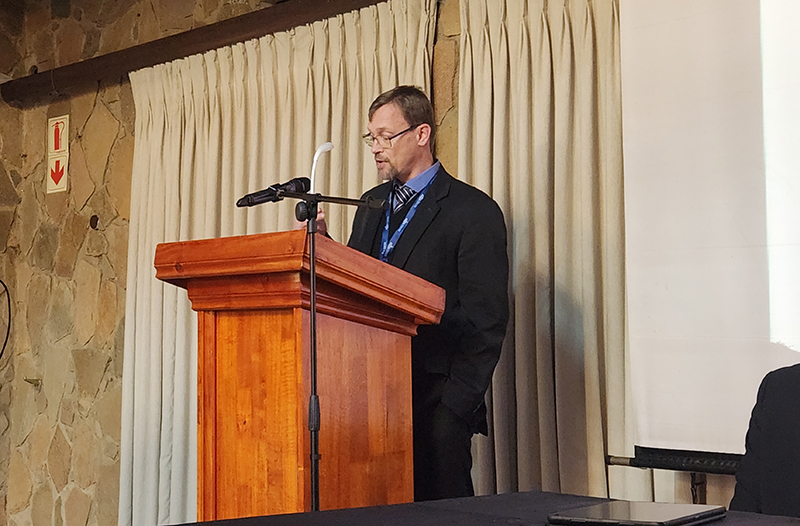
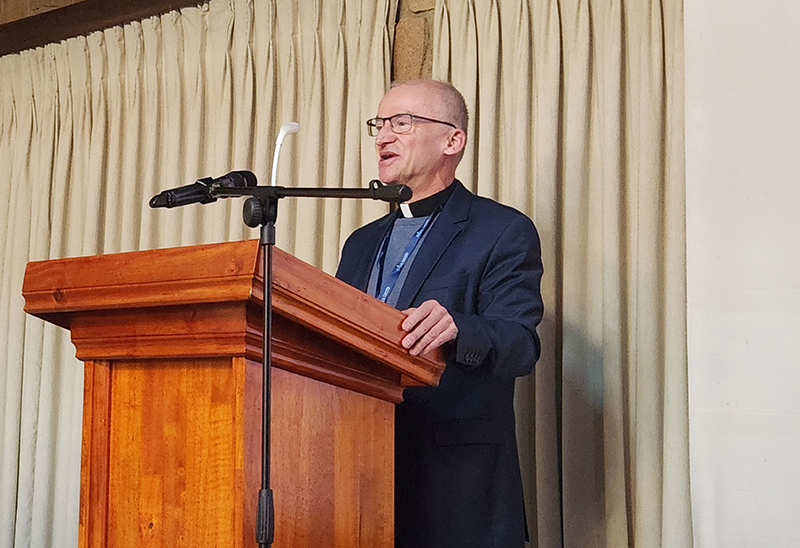
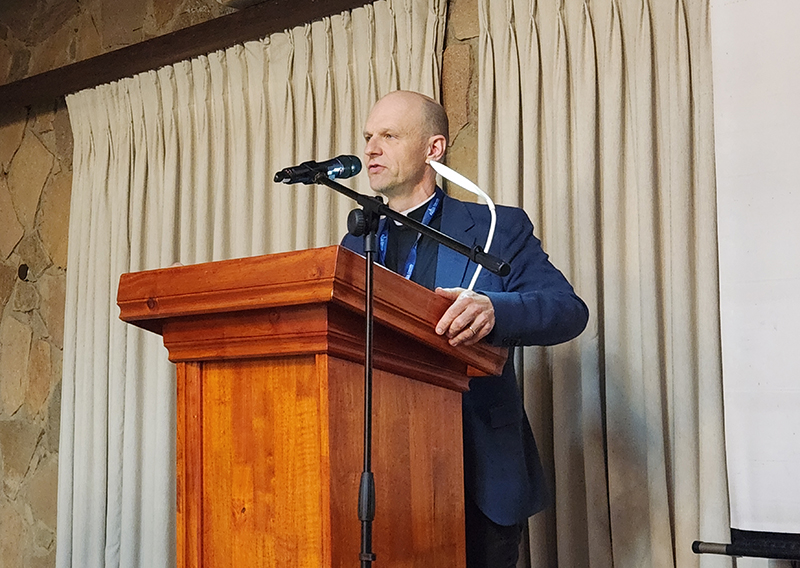
Dr. Daniel Johansson.

Dr. Johansson began his talk by tracing the history of the embrace of same-sex marriage in Sweden and outlining current debate on the subject in Swedish independent Evangelical churches. “Because they are traditional, biblically-conservative denominations, discussions like [these] were until recently completely absent,” Dr. Johansson noted. “However, in the past ten years, voices have been raised advocating for full acceptance of those attracted to the same sex, and some churches are currently debating whether to allow their pastors to perform same-sex weddings.”

A prominent Pentecostal in Sweden set off a “shock wave” a few years ago when he expressed support for same-sex marriage. Acknowledging that the Bible speaks only negatively of same-sex relationships, this leader nevertheless asks whether it is appropriate to apply these texts to Christian homosexuals today, arguing that they were directed at non-Christian hedonists in their original context (not homosexual people in the church). This leader asks: if same-sex attraction were truly a sin, wouldn’t we see it diminish among Christian homosexuals as they continue to grow in sanctification?

Dr. Johansson critiqued as wrong the assumption that “the lack of sanctification in the area of sexuality shows that we have misunderstood the message of the Bible.” This argument relies on the incorrect assumption that that “God has promised unlimited sanctification” to Christians, Dr. Johansson said. It assumes falsely that, if we continue to experience temptation to act in a particular way even after a long period in the church, then that act must not be sinful after all. In reality, “this life remains a struggle,” Dr. Johansson said. “The most pious Christians do indeed struggle with temptations and spiritual weaknesses throughout their lives.”

God uses this struggle over sin to teach us to “completely despair over [our] own abilities” and turn instead to Christ alone for mercy. “Being raised in a Christian family does not mean that you are on the straight path to ever-increasing sanctification,” Dr. Johansson noted. “God works with the desires of the sinful nature—whether the individual is struggling with the first, third, sixth, or ninth commandment—to teach the sinner to completely despair of himself and rely entirely on Christ alone. Struggles with same-sex attraction can be used by God to teach the sinner about the narrow gate, just as struggles with opposite-sex attraction can be used.”

Small group discussion followed the presentations, with plenary discussion taking place thereafter.

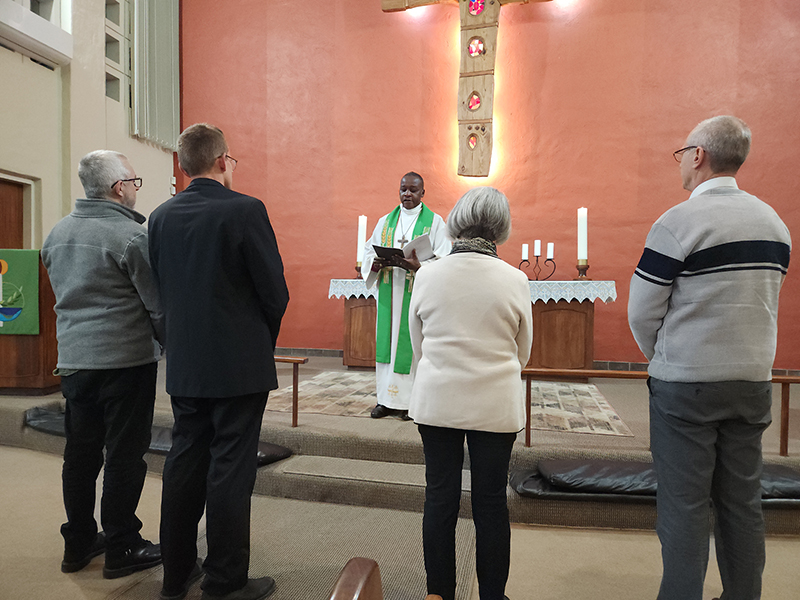
The day ended with a service of responsive prayer.

———————

For more news from the ILC’s 2026 World Seminaries Conference, click here.

2026 World Seminaries Conference: Addressing Transhumanism

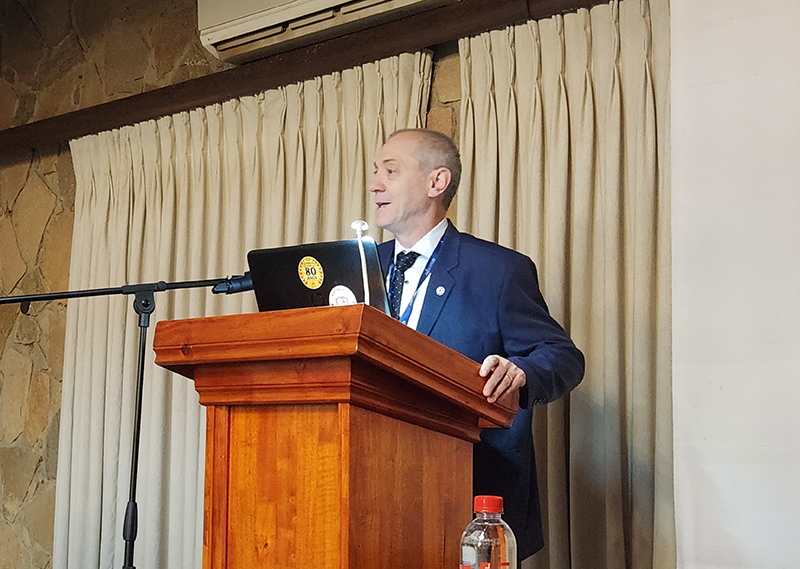
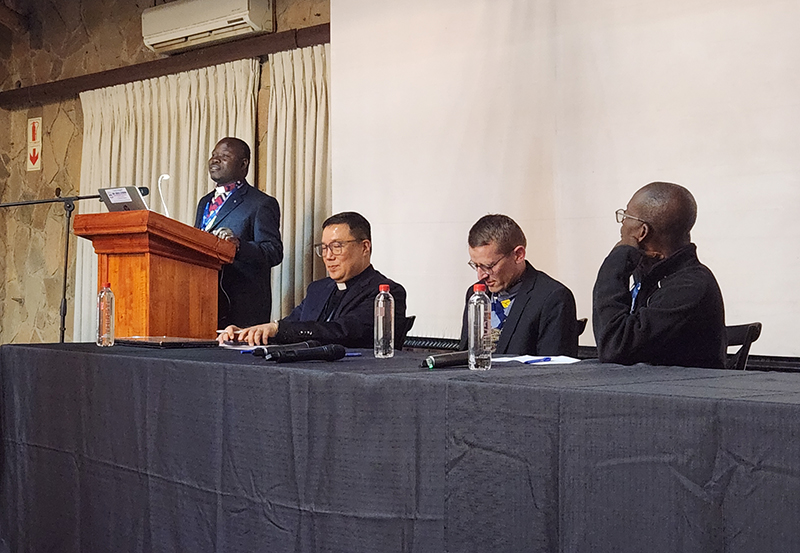
SOUTH AFRICA – The International Lutheran Council’s (ILC) 2026 World Seminaries continued on June 24, with the conference turning to a discussion of transhumanism.

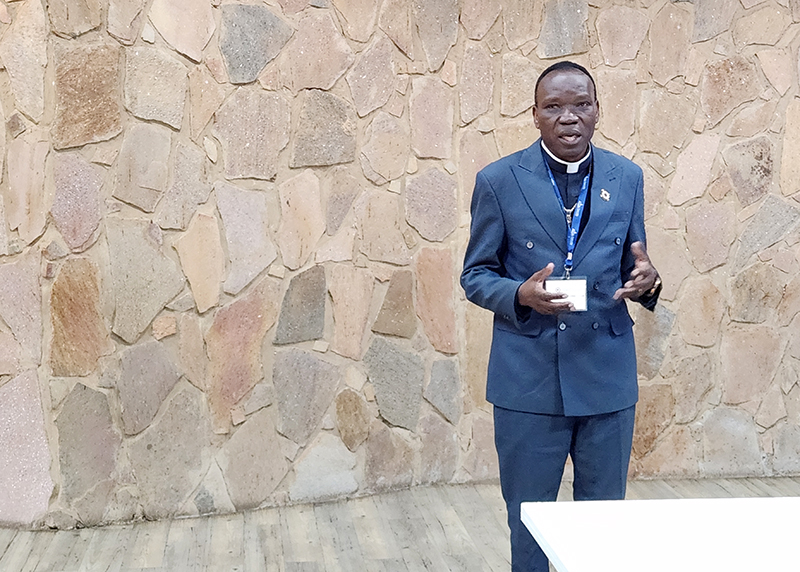
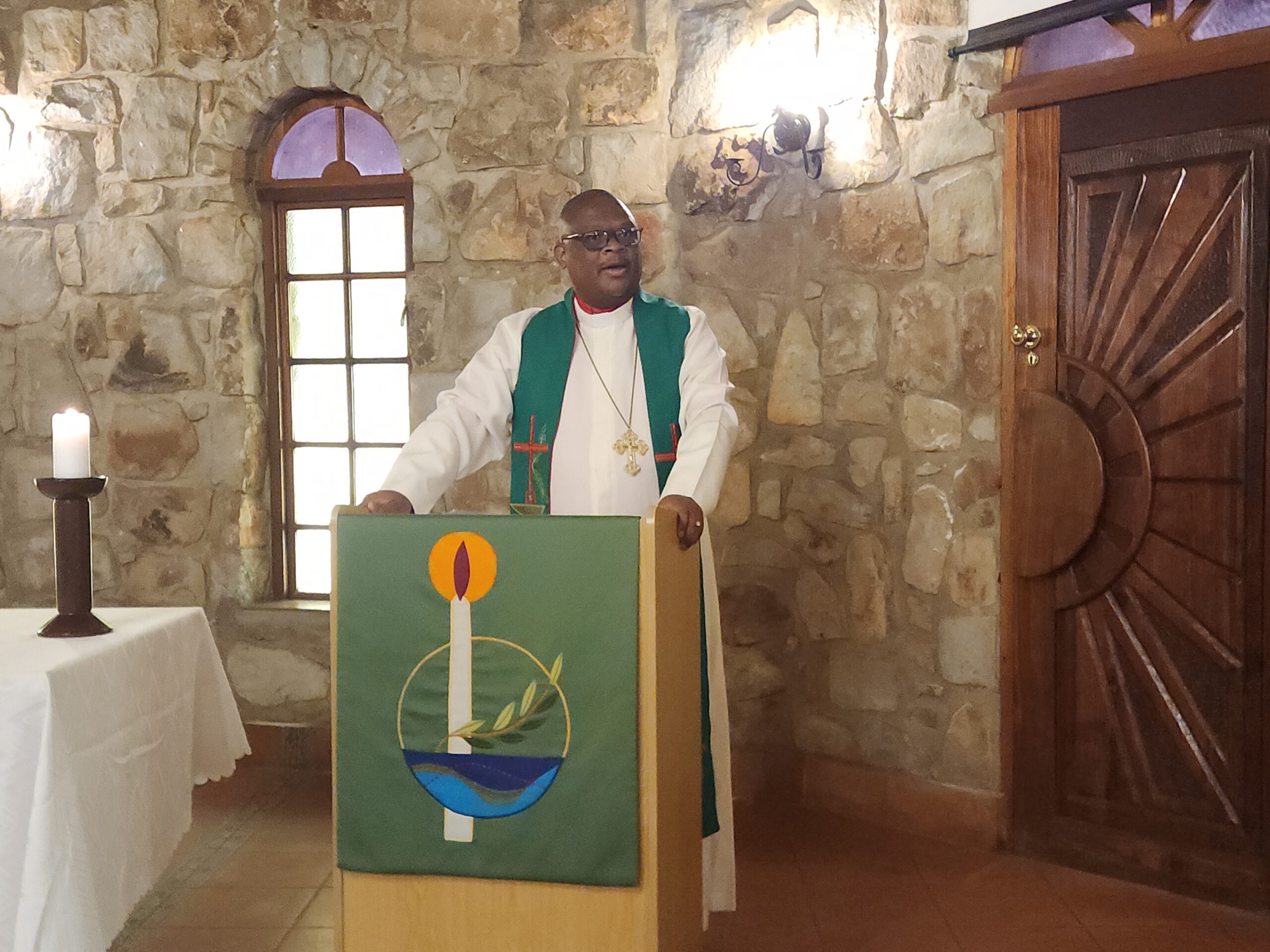
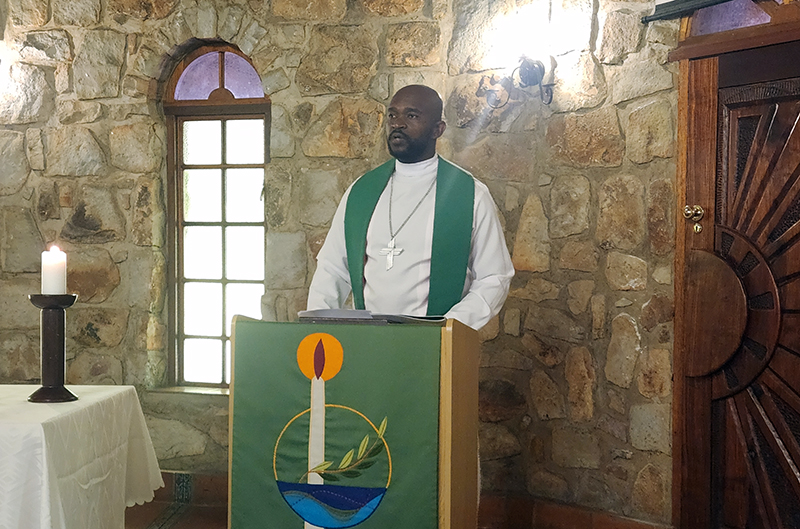
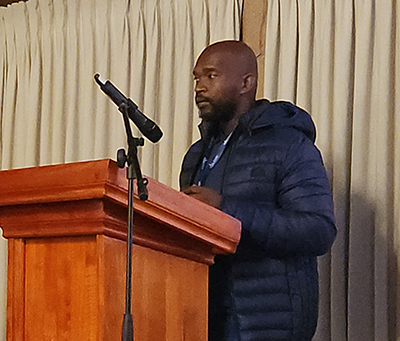
CLCSA Lead Pastor Given Masemola.

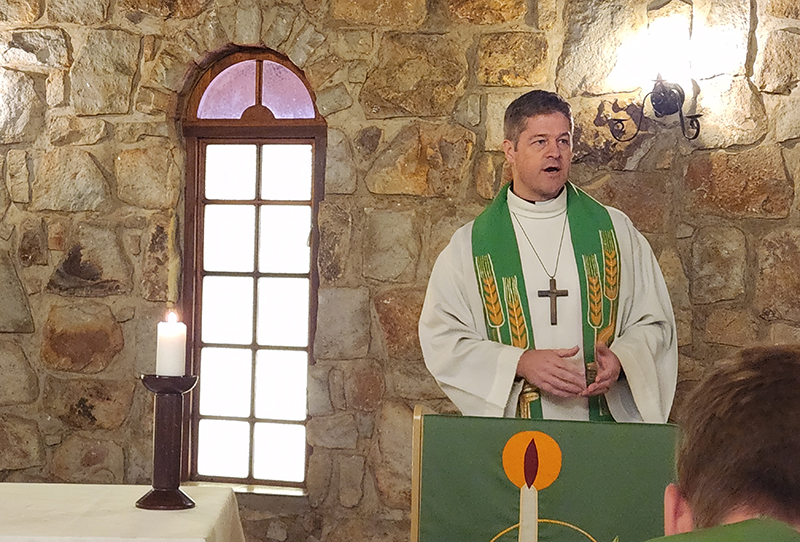
The morning began with a service of Matins, with Lead Pastor Given Masemola of the Confessional Lutheran Church of South Africa (CLCSA) preaching.

The day continued with the conference’s second series of three presenters. Rev. Konstantin Subbotin, Rector of the Theological Institute of the Church of Ingria (Koltushi, Russia), spoke on “Homo Deus: Anthropotheism as a New Religion of the Modern Age.” Rev. Prof. Clécio Leocir Schadech of Seminario Concordia (Buenos Aires, Argentina) gave a paper entitled: “Proclaiming the Death of the Lord in the Age of Transhumanism.” And Prof. Dr. Armin Wenz of the Lutherische Theologische Hochschule (Oberursel, Germany) presented “The Challenge of Transhumanism for Lutheran Dogmatics and Ethics.”

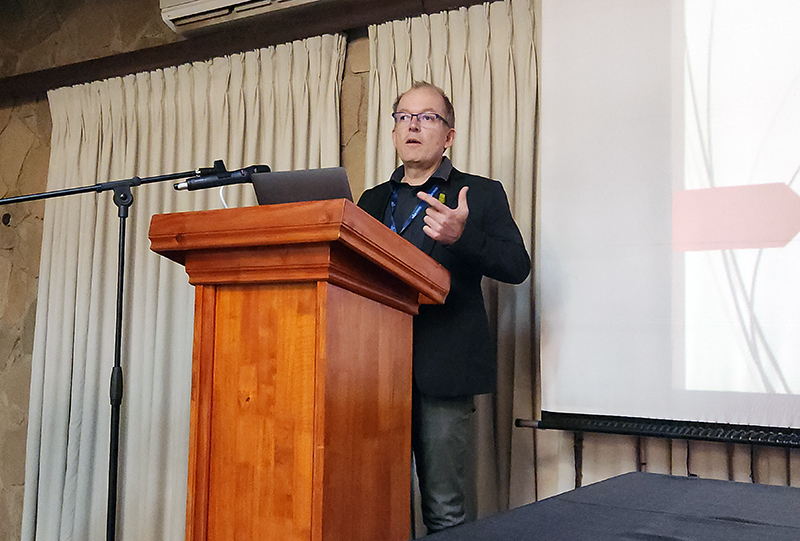
Rev. Subbotin outlined the historical figures and movements which laid the philosophical foundation for modern transhumanism, anthropotheism, and what is now being called anthropotechnotheism.

Rev. Konstantin Subbotin.

In many ways, Rev. Subbotin explained, modern anthropotheism functions as a kind of religion, but in a “non-institutional and unorganized” manner, Rev. Subbotin explained. “This is a religion without a church.”

Key features of this ideology, which can be understood as a sort of “religious application of scientism,” is that it “admits the ongoing evolution of mankind and further developments of the human species” through the application of new technology. “The ultimate goal,” he explained, “is prolonging life and eventually eliminating death”—to “achieve immortality” through technology.

In addition to immortality, humanity also seeks to achieve “omnipresence with the help of the infosphere,” “omnipotence with the help of cutting-edge technology,” and “omniscience with the help of AI.” This is, Rev. Subbotin said, a sort of deification of humanity—a temptation similar to that of Genesis: “You will be like gods.” And while this modern religion may not be institutional in nature, its pervasiveness in contemporary culture makes it an issue that “we need to consider in missionary work and theological studies.”

Prof. Schadech prefaced his talk by noting he was focused on analyzing the practical implications of transhumanism rather than its philosophical underpinnings. He noted the optimism of transhumanists in their goal of conquering death. “But is it realistic?” he asked. “They remain incapable of dealing with the deepest reality of death, whose true significance is revealed only in the death and resurrection of our Lord Jesus Christ.”

Prof. Clécio Leocir Schadech.

Transhumanists believe they will find a way to cheat death, be it through “biological immortality,” “bionic immortality,” or “virtual immortality.” But even if these projects were possible, they would not truly defeat death. “In the end, the ‘dragon’ is still alive,” Prof. Schadech said. After all, “the risk of an accident is always present.”

The problem with transhumanism is that it fails to take seriously the reality of human sin. “Sin came into the world and entered into the entirety of human flesh,” he noted, “corrupting [man’s] decisions, understanding, knowledge, beliefs” in addition to his body. And sin brought with it the dragon death, and this dragon is merciless: “ It will find a way to destroy the future cybernetic world.” The answer to the problem of sin and death is found only in the death and resurrection of Jesus, who has conquered the dragon. “Every human being needs to be saved because all are under the same condition of sin and death,” Prof. Schadech said.

In the face of transhumanist ideology, theological educators should emphasize the teaching of correct theological anthropology, focus on pastoral care for those afraid of death, and embrace a theology of mission that addresses the transhumanist worldview, encouraging people to faith in the death and resurrection of Christ—for God “only can give life everlasting.”

Dr. Wenz began by discussing the ideology of transhumanism, suggesting that “its overall promise and goal can be summarized with the term ‘enhancement.’” But transhumanism’s pursuit of such enhancement can cause significant “collateral damages… on its path to a supposedly brighter future”—including for example, the use of pressure or even law to enforce a transhumanist agenda.

Dr. Armin Wenz.

In addition, we must note “the immense difference” which exists “between the Christian faith based on Scripture and expressed in our confessions and the transhumanist belief system,” Dr. Wenz said. “Transhumanism must be perceived both as a mimicry and as a fundamental reversal of God’s work in creation, salvation, and consummation as revealed in the Scriptures.”

Dr. Wenz noted three ways in which transhumanism challenges Christian teaching. First, he noted its goal of the deification of humanity not through “salvation from sin and the curse that determines the relationship between God and man,” but instead through “salvation from the bodily limitations of a human life.” Secondly, he said transhumanism teaches a “gospel of enhancement which overcomes pain and suffering with all means available”—something akin to “the ancient theology of glory” and a “gospel of prosperity.” Thirdly, it teaches a constructive postmodernism in which “man is not passively receiving divine gifts in creation, salvation, and eschatological consummation, but is the active agent of his own self-realization.”

“Most of these errors have not entered the world with transhumanism, but with the fall of mankind,” Dr. Wenz noted. “Therefore, the criteria to counter the transhumanist errors will ever again be the same criteria and means by which God Himself treats this human defection through Law and Gospel.”

And we must not only pursue a dogmatic response to transhumanism, Dr. Wenz said; we must also pursue a pastoral approach. He concluded: The church’s task even now is to witness to the one and true God who for the sake of eternally being in relationship with us human creatures was incarnate, born of the virgin, suffered death on the cross, defeated sin and death, and bodily rose again in order to share with us, His ever-dying, suffering, but also richly gifted fellow humans this very victory and all the salutary benefits that flow from it.”

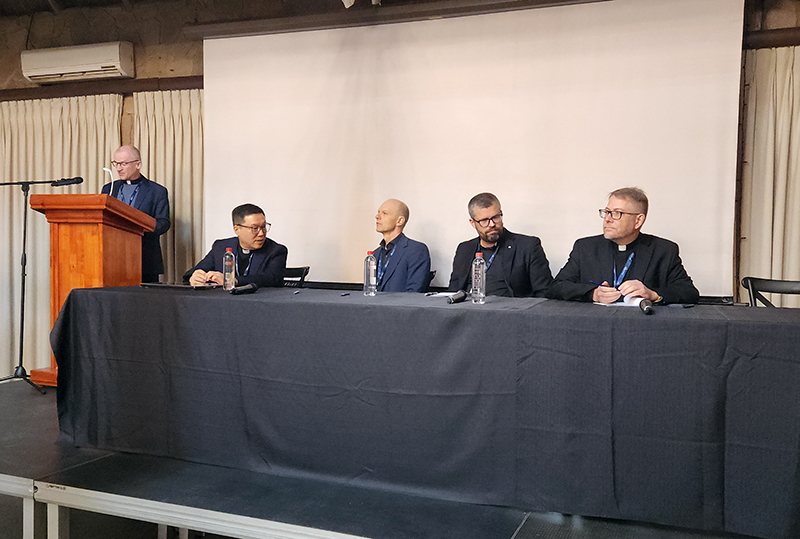
Round table discussion followed the presentations, followed by plenary discussion.

Greetings from LBT

Lutheran Bible Translators presents at the ILC’s 2026 World Seminaries Conference.

A presentation from Lutheran Bible Translators (LBT) closed out the morning session. Attendees learned about the work of LBT and the need to make the Word of God available in the heart languages of people groups who do not yet have access to Scripture in their own language. This need can also impact theological education as well. For example, students who study Scripture and theology only in a second language (and not their heart language) may not gain a clear understanding of Scripture. Alternately, they may end up able to do theology in their language of study but never develop the ability to do so in their heart language, thus hampering their ability to minister.

The presentation invited all of the seminaries and institutions represented at this conference to check whether any of their students have a heart language in which Scripture is not yet available and, if so, to contact LBT. LBT also encouraged the institutions in attendance to teach translation principles so that students would be prepared to translate important resources into the languages of their parishioners.

LBT is a recognized organization member in the International Lutheran Council. As a gift from LBT, all attendees at the World Seminaries Conference received a thumb drive.

———————

For more news from the ILC’s 2026 World Seminaries Conference, click here.

2026 World Seminaries Conference: Views on Personhood

Rev. Dr. Guntis Kalme, Rev. Dr. Ebenezer Boafo, and Rev. Dr. Joel Biermann presented papers exploring a Christian understanding of personhood.

SOUTH AFRICA – The first day of the ILC’s 2026 World Seminaries Conference continued in the afternoon with a session focused on “Views on Personhood.”

Three speakers addressed different aspects of the topic. Rev. Dr. Joel Biermann, Professor of Systematic Theology at Concordia Seminary (St. Louis, Missouri), gave a lecture entitled “Personhood in Christ.” Rev. Dr. Ebenezer Boafo, Principal of the Lutheran Theological Seminary (Ghana), presented a paper entitled “The Incarnated Christ as a Basis for Gospel Communication.” And Rev. Dr. Guntis Kalme, Associate Professor at Luther Academy (Riga, Latvia), spoke on “The Nicene Pro Nobis: A Lutheran Anthropology for the Digital Age.”
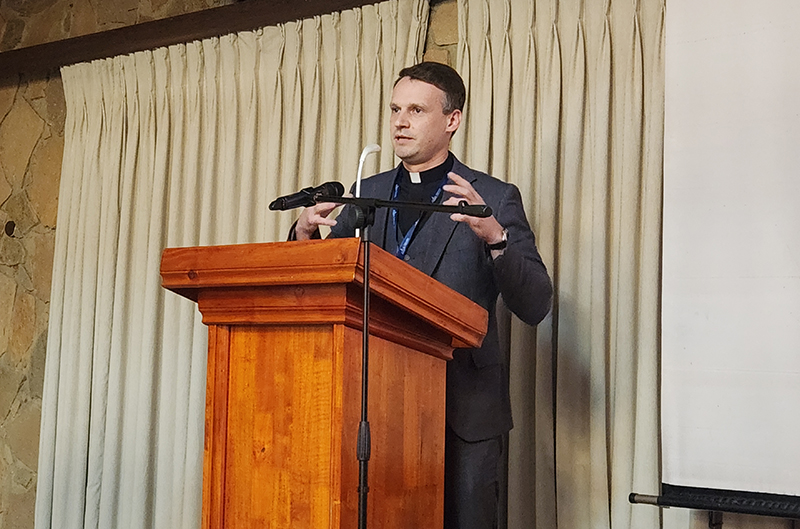
Dr. Biermann sought to “offer a clear, unambiguous answer to the question of what it means to be human” grounded in a “humble reception of the revelation of the world’s Maker.” Drawing on Aristotle’s framework of the four causes, Dr. Biermann explored what Scripture says about the nature of humanity.

In discussing the material cause (ie, what man is made of), he stressed the corporeality of human beings. “Christians… should embrace and celebrate the materiality of their human nature,” he said. “The reality of our material bodies has been forever transformed and elevated by the incarnation of God in Jesus Christ.” The Imago Dei, he said, is the formal cause of humanity, and this “image of God” includes multiple aspects, including rationality, relationality, and royalty (or being “entrusted by God with responsibility to reign or rule over the creation”).

The instrumental cause of humanity—while it may have have numerous aspects, including “physiological, astronomical, familial, or cultural”—nevertheless has a fundamentally deeper instrumental cause standing behind them all: God’s will and action. “Ultimately, and obviously,” Dr. Bierman said, “God is the efficient cause of man.” As for man’s telos or final cause, Dr. Biermann suggested that “man was created to care for creation”—which is to say, to work. But while this is true in a horizontal, earthly way, “on the spiritual, vertical plane, man is created to live rightly related to His Creator, delighting in the fellowship instated and extended by His Maker.” Man then has a “twofold telos of vocational work and sabbath delight” which “aims and animates man as he makes his way through life.”

Small group discussions during the first day of the ILC’s 2026 World Seminaries Conference.

Dr. Boafo meanwhile attempted to address the question of what humanity is “from a theological and missiological perspective.” He argued that being made “in the image of God” is another way of saying that we are children or offspring of God. And “even though humanity sinned against God, they still reflect God’s image and… God did not abandon His offspring.”

While that image was corrupted in the Fall, its remnants lead us to seek “relationship with God again” and a solution to sin. Using the Akan people as an example, Dr. Boafo explored how different cultures have sought to understand the loss of relationship with God and the struggle with sin and death.

It is only in the Incarnation that the aspirations of human beings for a renewed relationship with God becomes possible, Dr. Boafo explained. “The incarnation makes it possible for Christ to communicate to and with the world,” he said, “and for the world to have fellowship with Christ.” Nevertheless, knowledge of cultural and symbolic understandings of the world—as with Akan culture—can be helpful in communicating the Gospel. “We sometimes fail to realize that Christianity can be translated into cultural symbols,” he argued. “One of the primary tasks of missionary endeavors is to understand various worldviews and their related categories of thought in order to be able to work effectively in mission contexts.”

In his paper, Dr. Kalme contrasted a Lutheran understanding of humanity (as pro nobis) with that of the digital age (ex nobis). “Human identity is received,” he argued, “rather than self-generated.” And yet, the digital age encourages an understanding of humanity which focuses on our self-creation rather than in the reality of God’s action “for us.”

“The Nicene Creed grounds human identity not in autonomous self-construction, but in God’s saving action in Christ,” he emphasized. We cannot understand humanity apart from Christ, then, for it is Christ himself who “reveals humanity’s true nature, vocation, dignity, and destiny.”

“What is the Lutheran response to all this?” he asked. “First of all, we may say that humanity is received, not manufactured; that identity is given, not engineered; that Christ remains the measure of authentic humanity; and that technology is a tool, not a saviour.”

Small group discussion followed the presentations, followed by plenary feedback.

The day ended with a service of responsive prayer led by Rev. Dr. Tobias R. Schütze of the Lutheran Theological Seminary (Tshwane, South Africa). Dr. Schütze is serving as liturgist for all services during the conference. Dietrich Johannes is serving as pianist.

Dinner and regional meetings closed off the evening.

———————

For more news from the ILC’s 2026 World Seminaries Conference, click here.
2026 World Seminaries Conference begins in South Africa

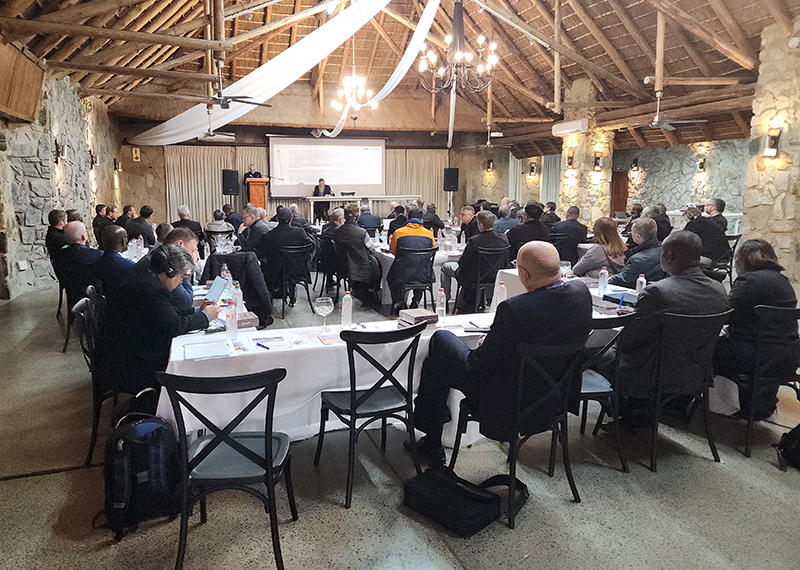
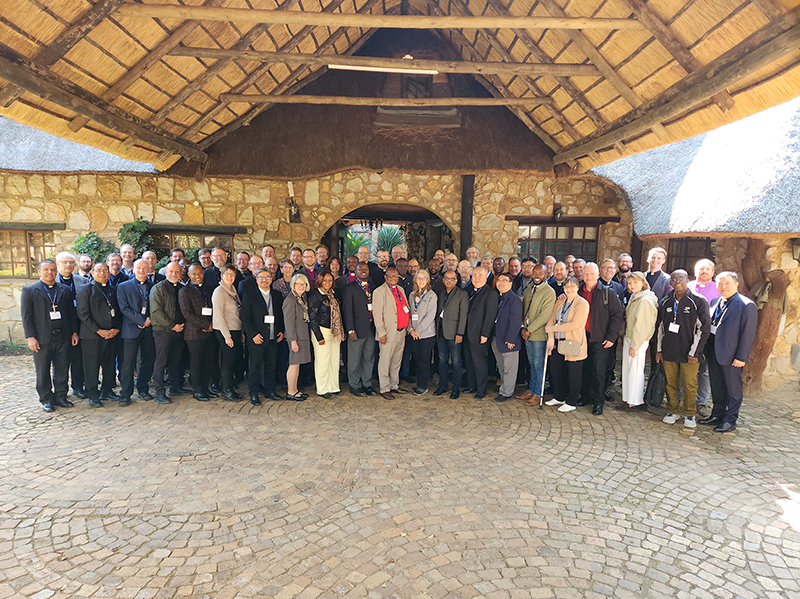
Participants in the ILC’s 2026 World Seminaries Conference.

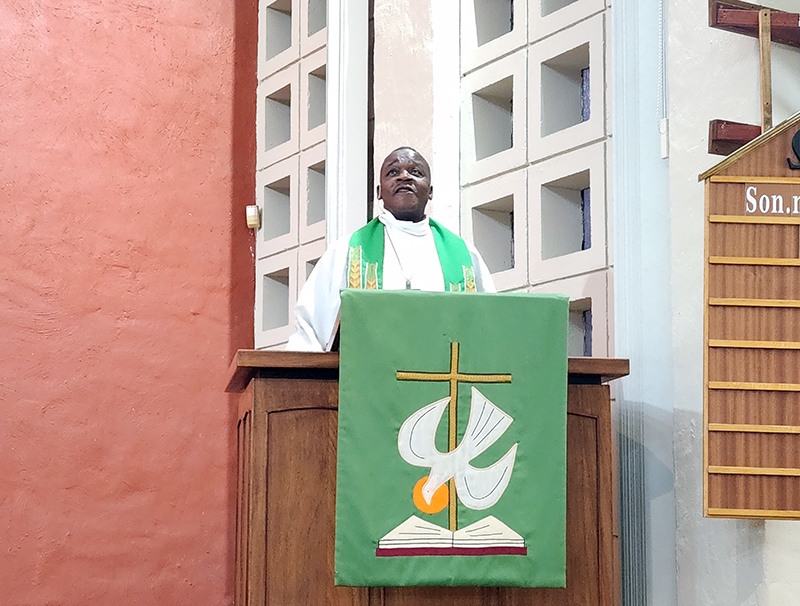
SOUTH AFRICA – The International Lutheran Council’s (ILC) 9th World Seminaries Conference opened on June 23 in Pretoria, South Africa. The theme for this year’s conference is “Being Human, Being Christian: Theological Anthropology in Church and Seminary.”

FELSISA Bishop Helmut Paul preaches during the opening service.

The conference began with a service of Matins, with Bishop Helmut Paul of the Free Evangelical Lutheran Synod in South Africa (FELSISA) preaching.

Following the service, the conference received greetings from Rev. Dr. Klaus Detlev Schulz, General Secretary of the ILC. The conference also received greetings from the ILC’s three member churches in South Africa: FELSISA, the Lutheran Church in Southern Africa (LCSA), and the Confessional Lutheran Church in South Africa (CLCSA).

We are delighted that you are here as delegates, as professors, as seminary leaders, church representatives, and guests. May God give you a pleasurable time here in South Africa,” Bishop Paul of FELSISA said. “It is a joy that this conference can be co-hosted with the sister churches of the LCSA, FELSISA, and Confessional Lutheran Church in South Africa.”

Deputy Bishop Seeblo Boss of the LCSA also greeted participants. “May our time together be productive, enriching, and inspiring,” he said, “as you seek to equip future generations of pastors, theologians, and church leaders, for faithful, effective and Christ-centered service.”

Lead Pastor Given Ntokozo Masemola of the CLCSA also brought greetings: “We are grateful for the opportunity to be present at this gathering and to share in the fellowship of the International Lutheran Council,” he said. “We thank God for bringing us together around His Word and for the unity we share in the confession of the Gospel.”

Between Atoms and Illusion

ILC General Secretary Klaus Detlev Schulz presents on theological anthropology.

Dr. Schulz then presented the first paper of this year’s conference: “Between Atoms and Illusion: Theological Anthropology Framed by False Epistemologies.” Dr. Schulz is ana authority on the conference topic, having authored the book Theological Anthropology and Sin.

In his talk, Dr. Schulz discussed two epistemological approaches to anthropology: scientific empiricism and subjective idealism. The former “focuses on what is real and scientifically observable,” he noted, while the latter “posits reality as a mental construct.”

Scientific empiricism is ultimately a “reductionist view,” Dr. Schulz said, in which “everything, including consciousness and the mind, can be explained by scientific laws and principles, and the universe is entirely describable in terms of physics, chemistry, and biology.” In this view there is no separately existing soul outside the body and no such thing as free will. Instead, “humans are seen as mere machines.”

Such a position naively assumes that reason “can know” reality “exactly, exhaustively and without bias,” Dr. Schulz noted.  It further reduces humanity to mere “matter or atoms,” thus diminishing “the value of human life,” he said, by limiting humanity to a mere description of what we are made of without also considering what we are capable of.

Subjective idealism, social constructionism, and self-expression on the other hand present a different view of anthropology. Social constructionism “holds that characteristics such as social orders, gender, race, class, ability, and sexuality are products of human definition and interpretation,” he explained. While “it is important and true to affirm that the world around us interacts with us, so that the reality of that world and its structures are shaped by our perception,” he said, it is nevertheless also true that we “do not fundamentally construct… reality in the sense of bringing it into being.”

For Lutherans, then, “anthropology must begin with reality itself and understand it as something that corresponds to—and even corrects—human perception and subjectivism,” Dr. Schulz explained. “Thus, we affirm ontology (reality) first, then epistemology, the mental interpretation of reality.”

Lutherans must recognize the shortcomings of both scientific empiricism and subjective idealism, Dr. Schulz concluded, noting that theological anthropology “offers the most comprehensive account of what it means to be human.”

Accreditation

The morning continued with a discussion of accreditation introduced by Dr. Cynthia Lumley of Westfield House and Dr. Schulz. Dr. Schulz noted the value of seeking accreditation, and the importance of this being spearheaded by members of individual seminaries themselves.

Principal Cynthia Lumley of Westfield House presents on accreditation.

Dr. Lumley presented a report on the current status of ILC seminaries and theological institutions, detailing the different situations facing institutions which are currently accredited, those actively seeking accreditation, and those which are currently non-accredited. She went on to outline general steps towards achieving and maintaining accreditation.

The conference then broke into smaller discussion groups to discuss the value and challenges of accreditation, with each small group composed of representatives from both accredited and non-accredited institutions. The groups then presented back to the larger assembly.

Greetings from CPH

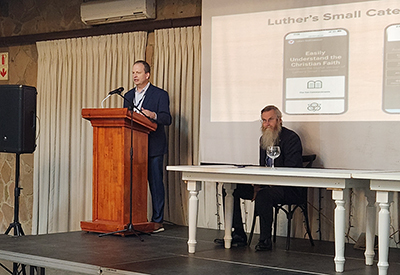
CPH President Jonathan Schultz presents.

The morning concluded with a presentation from Concordia Publishing House (CPH) on how it can assist Lutheran seminaries around the world. CPH President Jonathan Schultz and Vice President Jacob Corzine each spoke, highlighting the resources published by CPH (such as the Concordia Commentary series and new volumes of Luther’s Works) and inviting members to talk with them about opportunities for closer cooperation.

Each participant at the conference was presented with a physical copy of The Lutheran Study Bible. The Lutheran Theological Seminary in Tshwane—the joint seminary of FELSISA and the LCSA, and the host of this year’s World Seminaries Conference—was also presented with a collection of recent books from CPH as a gift for their library.

Concordia Publishing House partners with the International Lutheran Council on a number of projects, including the Lutheran Leadership Development Program, as well as in providing faithful Lutheran resources for pastors in ILC churches around the world.

———————

For more news from the ILC’s 2026 World Seminaries Conference, click here.
ILC prepares for 2026 World Seminaries Conference

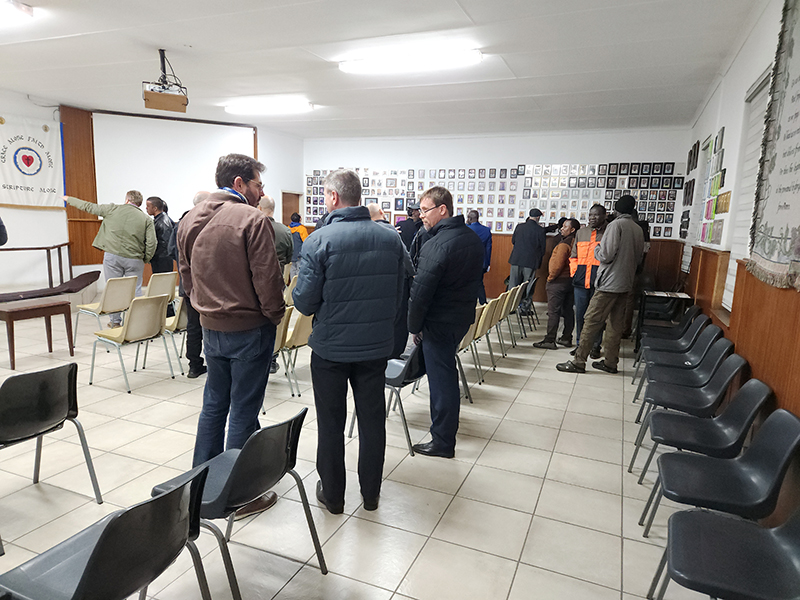
SOUTH AFRICA – The International Lutheran Council (ILC) will hold its 2026 World Seminaries Conference in Pretoria, South Africa, from June 23-26.

The theme for this year’s conference is “Being Human, Being Christian: Theological Anthropology in Church and Seminary.” In an era of transhumanism, gender ideology, and post-modern anthropology, this conference will equip seminary leaders and faculty to faithfully teach a biblical and confessional Lutheran understanding of what it means to be human.

The International Lutheran Council is a global association of confessional Lutheran church bodies dedicated to the proclamation of the Gospel of Jesus Christ, grounded in the authority of Scripture and the Lutheran Confessions.

———————

Signup for ILC Updates