News

Posts tagged:

International Lutheran Council

2025 World Conference: Unity in the Spiritual Temple

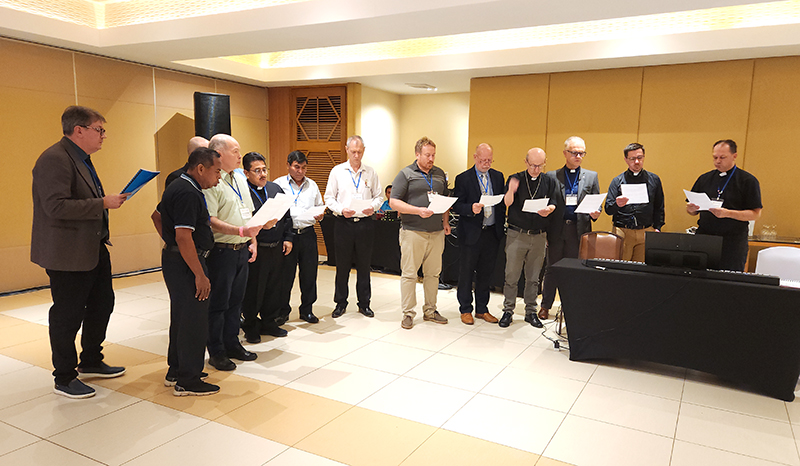
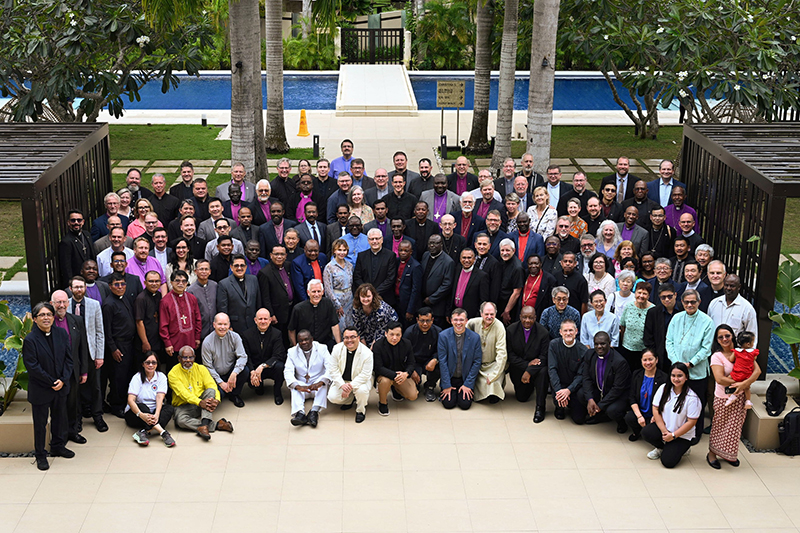
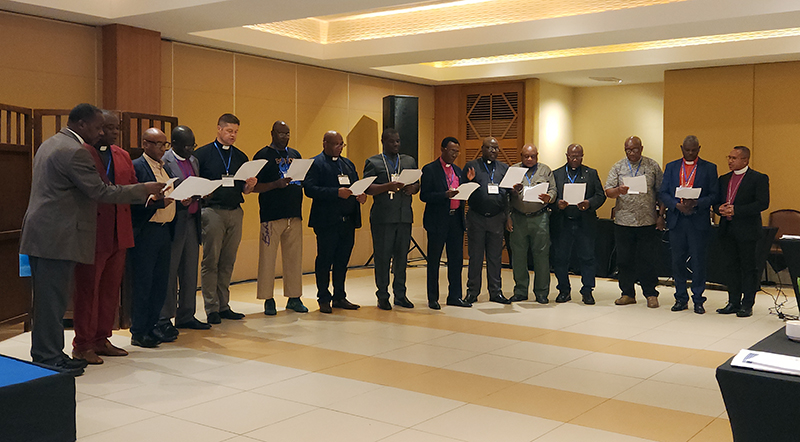
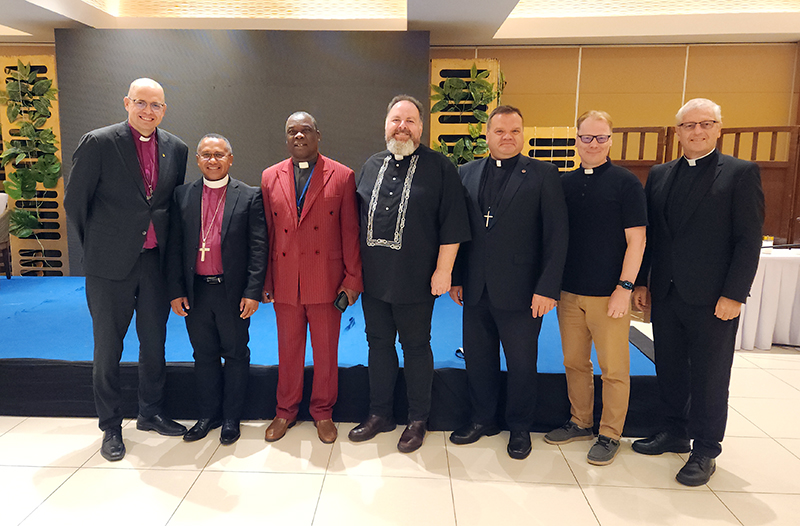
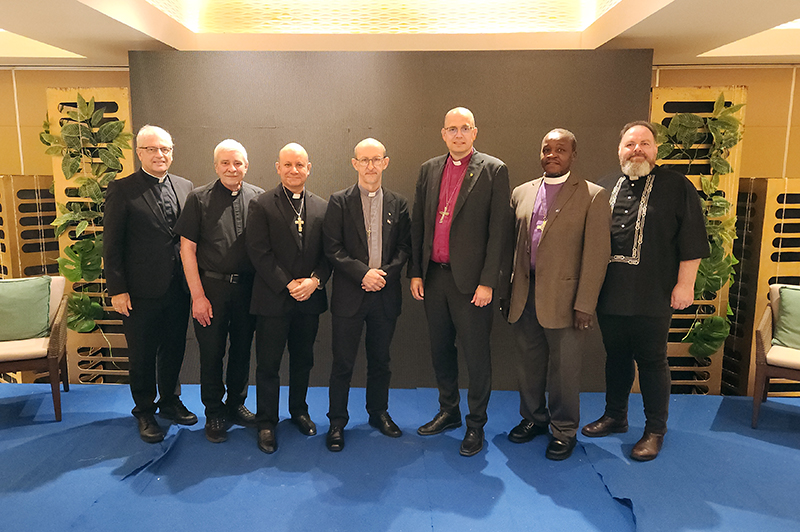
Participants in the International Lutheran Council’s 2025 World Conference in the Philippines. (Photo: T. Winger).

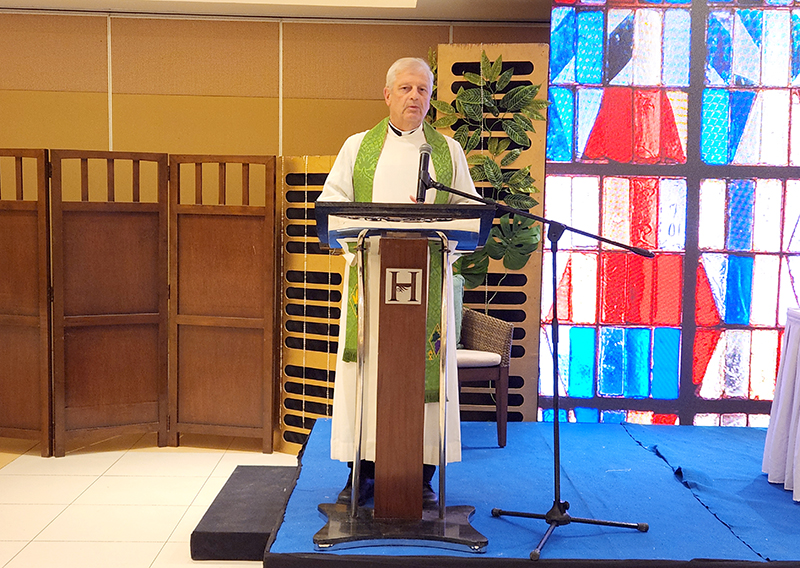
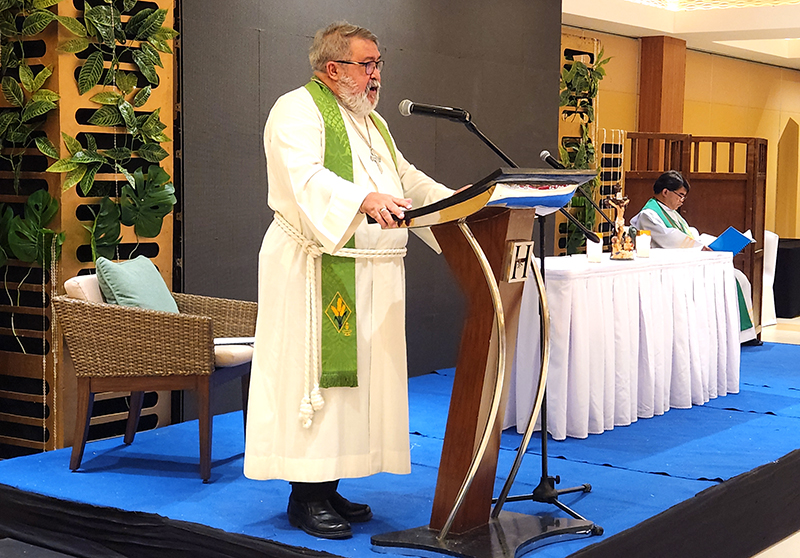
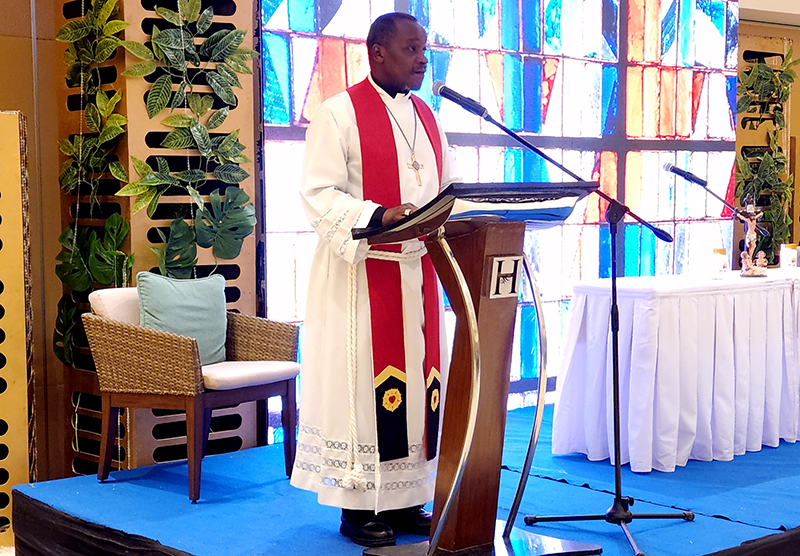
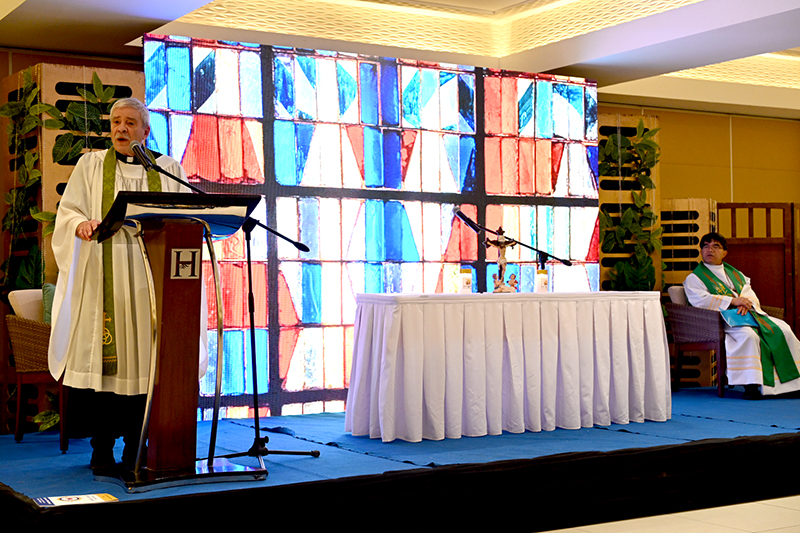
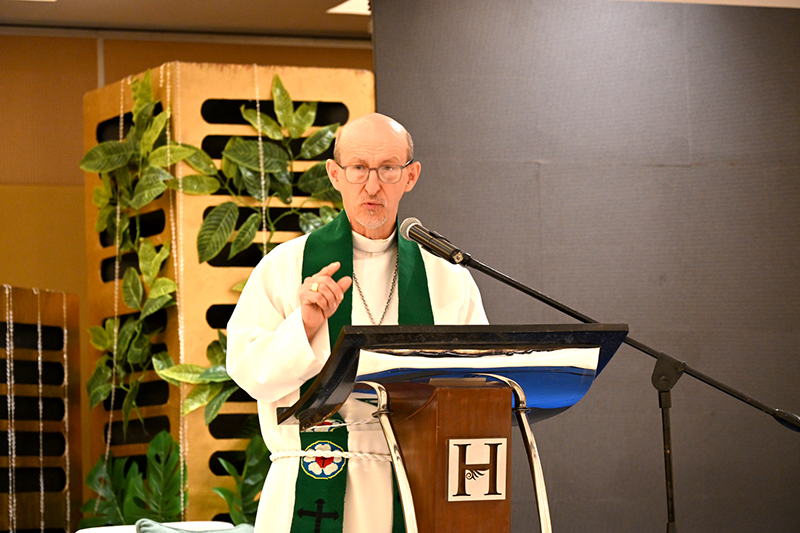
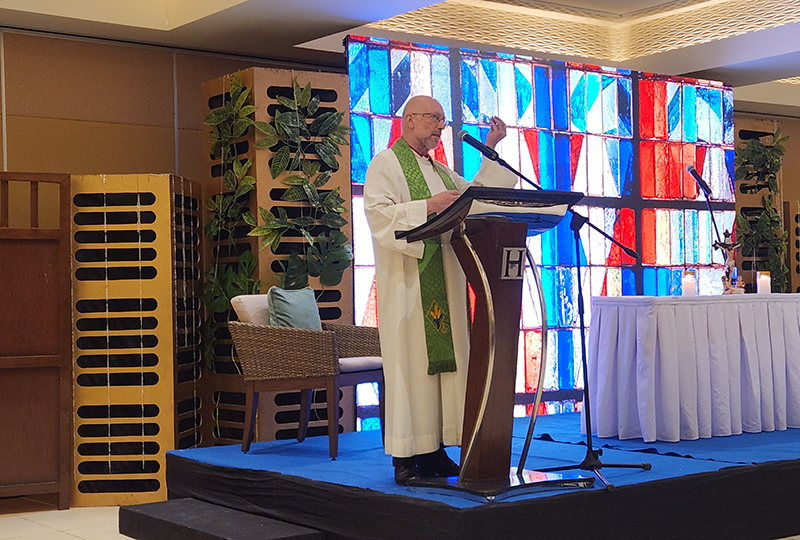
PHILIPPINES – The third day of the International Lutheran Council’s (ILC) 2025 World Conference began with a service of Matins, with Lutheran Church in the Philippines (LCP) Vice President Felipe Ehican serving as liturgist and Lutheran Church–Canada (LCC) President Timothy Teuscher serving as preacher.

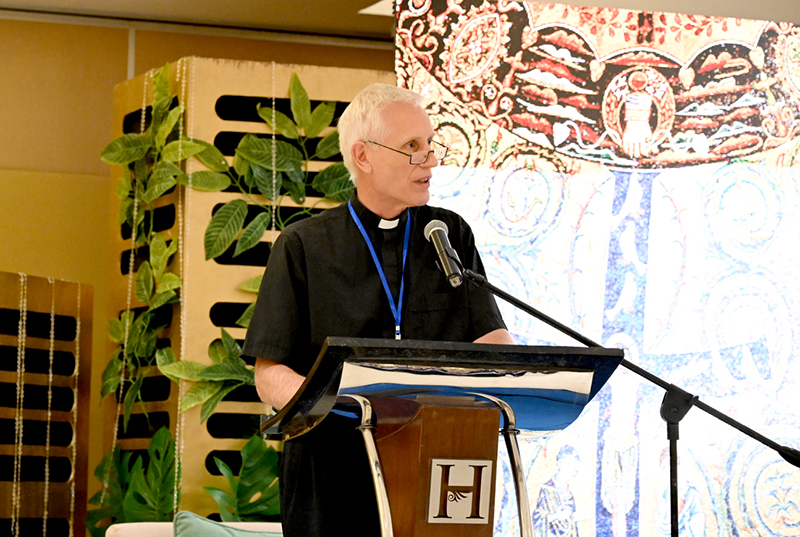
LCP Vice President Ehican looks on as LCC President Teuscher preaches during the 2025 World Conference. (Photo: T. Winger).

In his sermon, President Teuscher reflected on the “noble task” of the office of the holy ministry (1 Timothy 3:1) in light of the day’s Gospel reading: Luke 7:11-17. In this story of Christ raising the widow of Nain’s dead son to life again, President Teuscher said, “we are given a wonderful picture of what He has done for the entire world of unclean, dying people—what He has done for each and every one of us who by nature are dead in our trespasses and sins.”

“But do you know what?” he continued. “Even here and now Jesus this very thing for people who by nature are dead in their trespasses and sins…. And how does He do this? Why, through those who have been placed into the office of the holy ministry—the ministry of reconciliation.” And just as the people who saw Jesus’ miracle spread the report throughout Judea, so too “overseers, pastors, bishops” are called “to spread this report about Jesus who are still walking in that procession of death.”

The Spiritual Temple

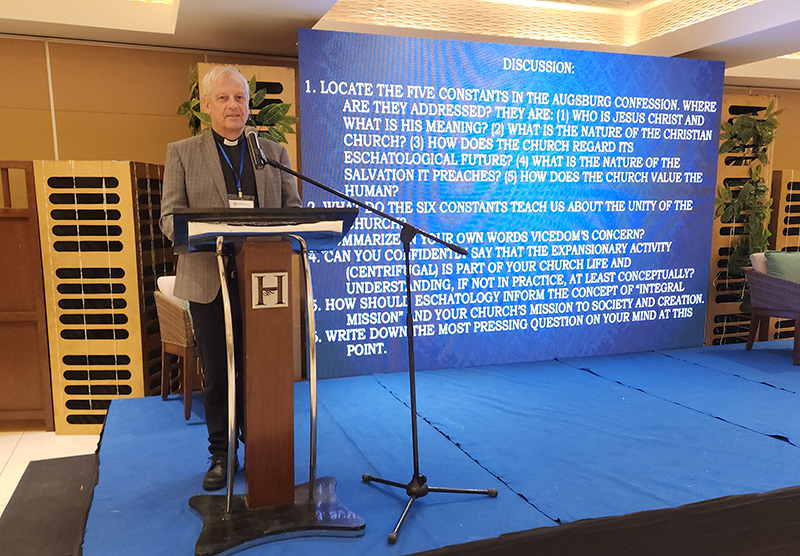
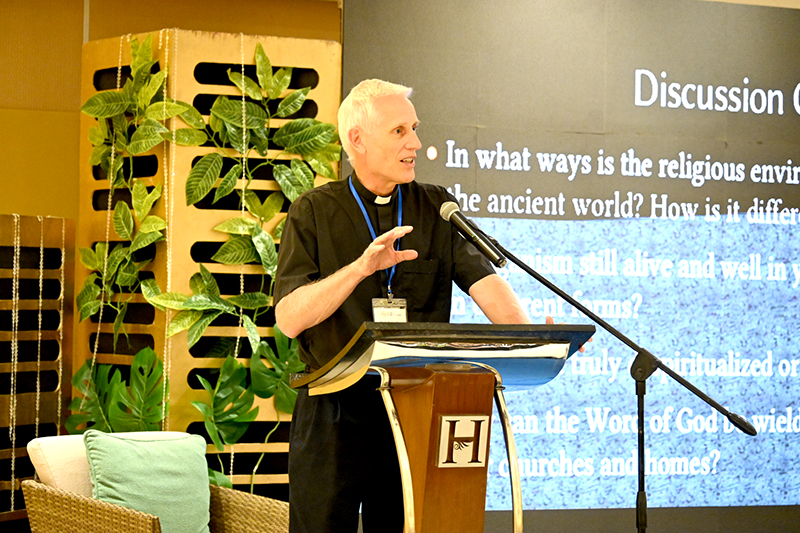
The morning continued with the third and final presentation on the “Spiritual Temple” by keynote speaker, Rev. Dr. Thomas M. Winger. On the first day, Dr. Winger spoke about the “Pagan Temple.” On the second day, he compared the Spiritual Temple to the Old Testament Temple. This final day he devoted to an exploration of the Spiritual Temple itself and the unity we enjoy through it as Christians, focusing especially on Ephesians 2:14.

In Ephesians, Dr. Winger said, Paul is “deeply concerned with the relationship between God’s chosen people, Israel, and the rest of the world, that is the Gentiles.” And “Paul’s chief response to this disunity”—which has been exacerbated by the news that Paul had been arrested for his mission to the Gentiles—“is to point them to their common Baptism.”

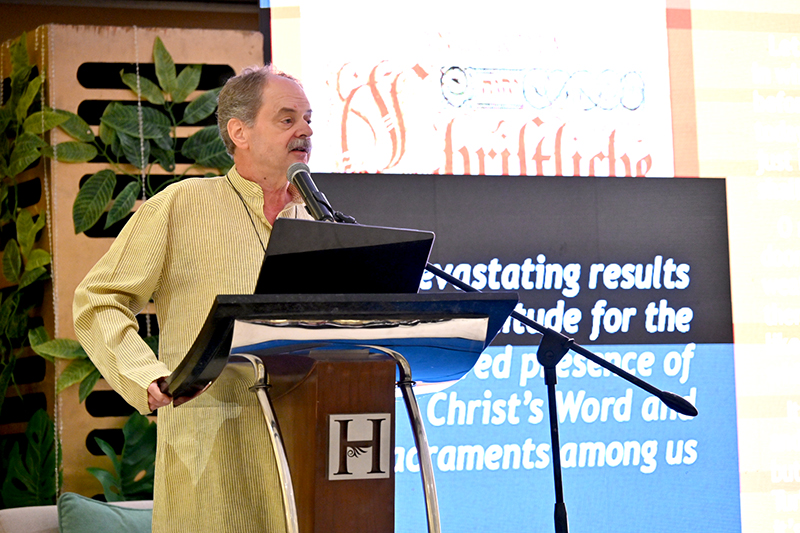
Rev. Dr. Thomas M. Winger presents the final section of his keynote address.

“One might distil the letter’s major theme,” Dr. Winger said, in this way: “all those who have been joined to Christ by Baptism into His death and resurrection have not only been reconciled to God the Father, but have also been united with one another in His Body, the Church.” This leads ultimately to “the heart of the letter” and its “urgent appeal to Christian unity.”

“This imperative—to maintain the unity of the Spirit—is an appeal to what later Lutheran dogmaticians will call the concordia of the church, the outward harmony towards which we strive,” Dr. Winger continued. “But the foundation of that appeal, in Paul’s thinking, is the unitas, the true essential unity, that the church already possesses on the basis of a common Baptism and a sharing of the same spiritual gift of grace.” The true unity of the church, then, is the work of God, not something we create.

Paul points “to the cross itself as the location of reconciliation between Jews and Gentiles,” Dr. Winger explained. “He ‘has made both one.’ He has ‘created the two into one man’ because in His flesh Christ includes both all Israel and all the Gentiles…. Because Christ took both parts of the human race to the cross, both are equally redeemed. He carried both peoples in His own body on the cross, killing the hostility between them by reconciling them both to God and drawing them both into Gods presence.”

“They have been built into a new Temple,” Dr. Winger said, “and incorporated as members of Christ’s own body. They are one Church.”

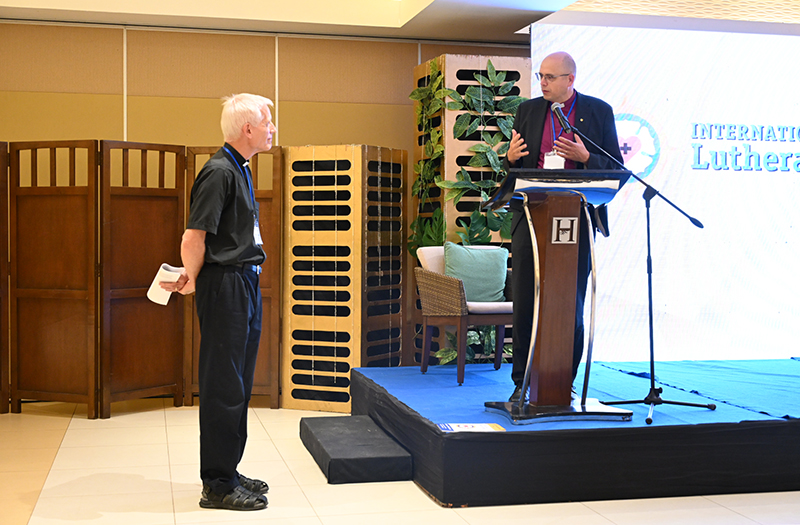
ILC Chairman Juhana Pohjola thanks Dr. Winger for his presentations at the ILC 2025 World Conference.

Paul’s decision to describe the Church as a new Spiritual Temple has implications for us today, Dr. Winger said, and our demonstration of the unity we enjoy through Christ. This is particularly true of worship in the church. Dr. Winger noted that, while Martin Luther encouraged “freedom from the legalistic use of worship practices in the mediaeval church,” he also encouraged uniformity in worship practice among churches within the same territory. Today, however, “territories are no longer the limit of travel for modern people,” Dr. Winger noted, “who easily and often move from end of the country to another, or even to another country.” In a world like this, he continued, “can the commonality of our liturgy foster a unity, a concordia, among churches with a common confession?”

Dr. Winger further asked the conference “to consider how Paul’s appeal to a common Baptism and a common worship to unite Jews and Gentiles throughout the ancient world might be instructive for our Lutheran church scattered across lands and languages.” “Is the Christian faith anchored to culture,” he asked, “or does it transcend it?” And how then can the “divine service reflect the heavenly nature of the Christian Church?”

The Treasure of History

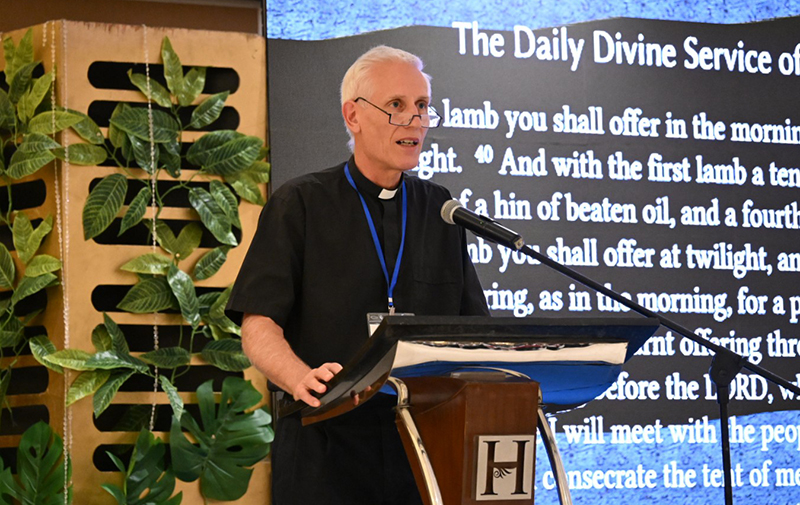
The morning continued with two presentations on the value of history. Rev. Dr. Jonathan E. Shaw, the Director of Church Relationsfor The Lutheran Church—Missouri Synod, presented on “The Purpose and Meaning of History.”

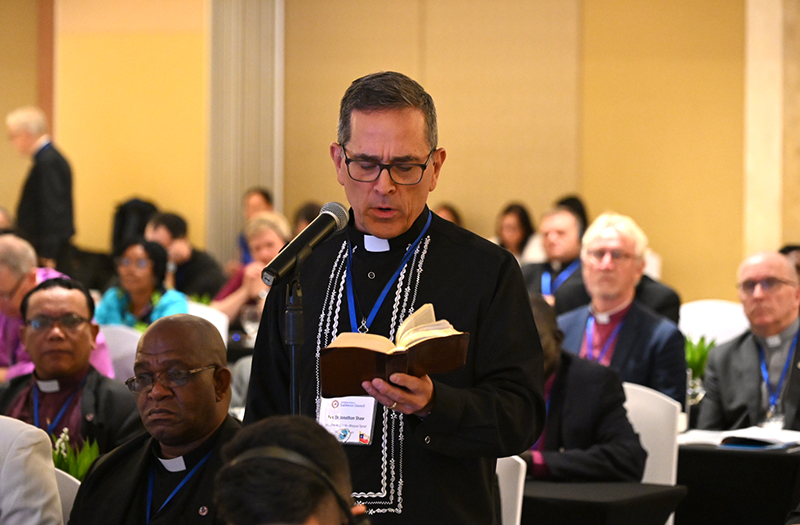
Rev. Dr. Jonathan E. Shaw speaks during plenary discussion at the ILC’s 2025 World Conference.

“Understanding the purpose and meaning of history is essential for us as Christians,” Dr. Shaw said. “We must honour history, remember history, and understand its purpose and meaning in the incarnation and atonement of the Son of God. But up front, we have to realize that this view of history runs against western, liberal culture.”

Dr. Shaw went on to trace changing views of history through the ages of Rationalism and Modernism into our present age of Post-Modernism and its “eroded” understanding of history. But “the true importance of history can only be realized in Christ,” Dr. Shaw said. “He is the eternal Son of God, the Lord of history, the purpose and meaning of history. All history is from Him, points to Him, and is fulfilled in Him.”

“Christianity is true not because it has a coherent theology—you can create coherent ideologies—but because the eternal Son of God has created history, poured Himself into history, and reconciled sinners to the Father in history,” Dr. Shaw continued. “This means that history matters. Christ is the Lord of history—yesterday, today, and forever.”

Following Dr. Shaw’s presentation, Rev. Dr. Daniel N. Harmelink presented on the importance of “being faithful keepers of the Lord’s redeeming work among us.” Dr. Harmelink is Executive Director of Concordia Historical Institute (CHI).

The church today faces “the constant temptation to forget our redeemed history,” Dr. Harmelink said. “Our old, unbelieving nature can do nothing but neglect and forget and discount the unexpected, abundant blessings of redemption God showers on his pitiful, hopeless people.” But if we neglect God’s blessings, if we neglect His Word and Sacraments, then—as Luther says—the rain-shower of God’s grace will pass to other lands.

Rev. Dr. Daniel N. Harmelink speaks during the 2025 World Conference. (Photo: T. Winger).

For this reason, Dr. Harmelink said, the Scriptures tell us that “blessed are those who hear the Word of God and keep it.” And ‘keep’ does not mean ‘obey,’ he continued. It means to “to honour and treasure it.” Dr. Harmelink traced the chronicling work of people like Adam, Moses, Joshua, and others as they were called to keep God’s Word “before the eyes and in the ears of both young and the elderly… so that true faith would be strengthened, and hope and joy and thanksgiving would flourish.”

“In gratitude and thanksgiving” then for God’s great mercies, “we cannot but set up our own” memorials “as witnesses to the coming generations of Christ’s unmerited deliverance among us,” Dr. Harmelink said. To that end, he noted, CHI works to “preserve and proclaim Christ’s redeeming work among ‘Book of Concord’ Lutherans.”

“We would love to partner with you in responsibly retrieving, preserving, organizing, and sharing the redeemed history of which we have been made stewards,” he told the convention. CHI can share resources to help churches establish archival guidelines; handbooks for the preservation and digitization of historical resources; and give access to CHI’s own holdings from around the world.

———————

For more news from the ILC’s 2025 World Conference, click here.
2025 World Conference: Asia Regional Focus on Shamanism and Syncretism

Presenters in the Regional Focus on Syncretism in Asia: Rev. Dr. Jun-Hyun Kim, Rev. Henry Paul D. Roa, and Rev. Michael Hauser. (Photo: T. Winger).

PHILIPPINES – The afternoon of the second day of the International Lutheran Council’s (ILC) 2025 World Conference saw attendees turn to regional issues, with a panel of presentations from Asia.

The theme for the Asia Regional Focus was “Syncretistic Blends Affecting Lutheran Churches in Asia: The Examples of Shamanism, Sorcery, and Albularyo.” The presenters included Rev. Michael Hauser, an Australian missionary to Papua New Guinea; Rev. Dr. Jun-Hyun Kim, Interim President of Luther Theological University in South Korea; and Rev. Henry Paul D. Roa, President of the Lutheran Church in the Philippines’ South Luzon District.

After defining shamanism and sorcery, Rev. Hauser provided insight into the situation in Papua New Guinea, with special focus on the issue of “Sanguma.” “False accusations of ‘sanguma’ or sorcery for selfish reasons” have become a serious problem within Papua New Guinea, he noted, leading to horrific violence: in the past 20 years, according to a study by the ANU College of Asia and the Pacific, more than 600 people have been reported killed and another 340 wounded in mob-violence. But the real numbers are expected to be much higher, with “attacks often involving whole communities and involving gruesome torture and humiliation,” Rev. Hauser said.

“One wonders, quite rightly, how Christians could be involved in such attacks,” Rev. Hauser noted. The irony is that the attempt to rout out such alleged sorcerers is itself riddled with syncretistic tendencies. Christians rely on “self-professed seers who operate under the guise of ‘prayer warriors’” to identify these supposed sorcerers, Rev. Hauser said. While the government has attempted to criminalize this practice, more must be done by churches themselves, Rev. Hauser noted, to treat the root causes of the issue. Christians mission must be more willing to say, “This is idolatry, and is not Christian,” Rev. Hauser said, and bring to bear its own rites like excommunication—perhaps even of entire communities for a time—to lead those responsible to repentance.

Dr. Kim, meanwhile, spoke on the “enduring influence of Korean shamanism within the life and practice of Korean Christianity.” This has led Korean Christians to adopt several shamanistic attitudes, he noted. As a result of this syncretism, he said, “many believers treat worship as a ritual performance for receiving blessings rather than as an act of obedience and communion with God.” Everyday believers neglect “personal responsibility for faith,” entrusting their destiny instead to church leaders who are treated more like “quasi-magical figures,” replacing the shamans of old. This results in an “undue reliance” on external rituals or works like “church attendance, offerings, or revival meetings as an automatic means of receiving blessing.” Likewise, “shamanism’s emphasis on fate has influenced many Christians to view life events as predetermined, leading to passivity and resignation rather than active discipleship.” This focus on achieving blessings for oneself has led to reduced missionary zeal.

“While Christianity once opposed such folk beliefs, many believers have unconsciously absorbed shamanistic ideas into their faith,” Dr. Kim concluded. “This syncretism manifests in transactional prayer, dependence on church leaders, and fatalistic resignation. Today, “the challenge for Korea Christianity is to resist this distortion by preserving the Gospel’s purity—emphasizing salvation, covenantal blessing, and ethical discipleship”—and by “rooting itself firmly in the message of Jesus Christ.”

Rev. Roa then spoke on the situation in the Philippines. “Syncretism is common in the Philippines,” he noted, with the blending of Christianity and pagan practices becoming “a normal and acceptable spiritual practice” for many. He noted, for example, the common practice of seeking assistance from an “albularyo” or medicine man. Modern medical care can be expensive, he noted, so many—including Christians—seek out these traditional healers. But for the albularyo, “every disease is connected with sin” and “offending the spirits.”  The offered cure, then, “is all about appeasing an angry god/spirit.” Yet Christians are put at ease because the albularyo will often incorporate a Christian prayer as well.

There are numerous other instances of syncretism present in the Philippines, Rev. Roa noted, with many focused on seeking prosperity—for example, by superstitious customs at weddings like pinning money to the married couple while they dance and the placing of coins near doors and windows. Other rituals are secretly done to ward off death. For example, church members will sometimes secretly break a glass when the body of a dead person is removed from the church following a funeral. “The effect of this blended spirituality—Christianity and paganism—is a false sense of Christianity and a false faith,” Rev. Road concluded. “The church has the great responsibility to proclaim the Word of God in its purity, and to be clear and brutally honest that Christianity mixed with pagan practice is not Christianity.

Following the presentations, attendees participated in an open question and answer period with the panel, with members noting that while the specifics may differ, the issue of cultural and religious syncretism is one that many countries face.

Translating the Word of God

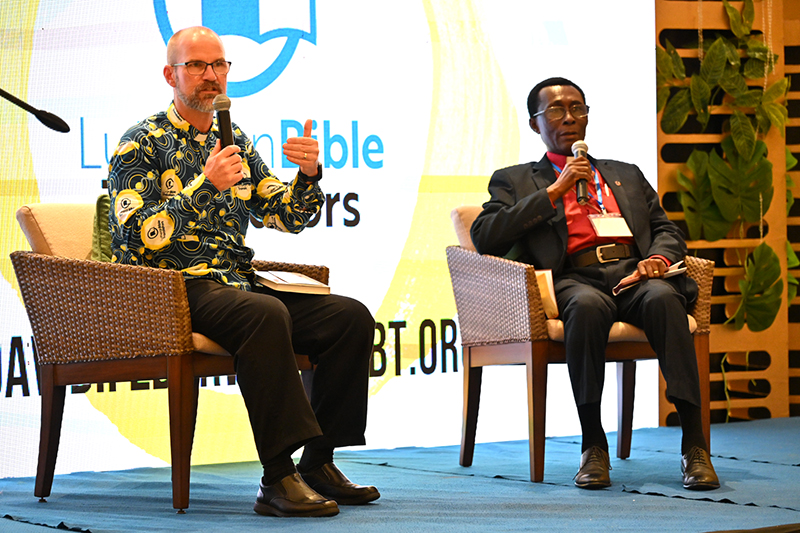
Lutheran Bible Translators presents during the ILC’s 2025 World Conference. (Photo: T. Winger).

The afternoon continued with a presentation by Lutheran Bible Translators (LBT), a Recognized Organization of the International Lutheran Council. LBT’s Director of Partnerships and Scripture Engagement highlighted how, over the history of LBT, the organization has work to make God’s Word accessible in 223 languages, including 135 currently—work which it accomplishes in partnership with local church leaders. That total includes 48 milestone projects (translations of the New Testament and full Bibles), as well as lectionaries, liturgies, Bible apps, audio Bibles, and more.

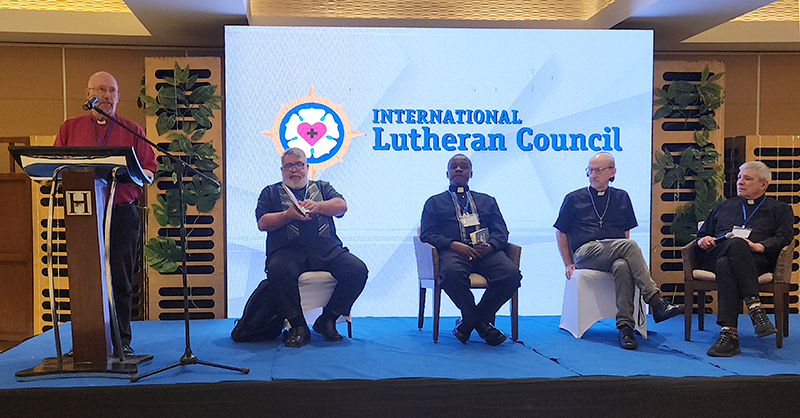
Bishop John Donkoh of the Evangelical Lutheran Church of Ghana (ELCG) then joined LBT’s representative for a discussion about the work of the organization. In the course of that discussion, Bishop Donkoh was presented with the first copy of the full Komba Bible—a project that the church in Ghana has been working with LBT on for 22 years. The two noted that a translation project like this one is a huge undertaking. The Komba language, for example, had never been written down before; before translation could begin, the language had to be studied, a writing system developed, and literacy taught so the Komba people could read and write their own language.

The day concluded with participants breaking into regional groups for continued conversation.

The ILC is grateful to Lutheran Bible Translators for providing today’s translation equipment.

——————-

For more news from the ILC’s 2025 World Conference, click here.
2025 World Conference: The Old Temple and the New

IELPA President Alton Alceu Figur preaches during the ILC’s 2025 World Conference. (Photo: T. Winger).

PHILIPPINES – The second day of the International Lutheran Council’s (ILC) 2025 World Conference began with a service of Matins, with Rev. Michael Blodgett serving as liturgist and President Alton Alceu Figur of the Evangelical Lutheran Church of Paraguay (IELPA) serving as preacher.

President Figur’s text was John 19:25-27, reflecting on Mary’s sorrow as she looked upon the death of her Son on a cross. In this account, President Figur said, “we are given the scene—the portrait—of the human misery that sin has brought into the world.” And sin continues to bring misery to our world today.

But Jesus’ death brings us hope, President Figur continued, because He assumed our flesh “and all the guilt it carries.” His suffering for the sins of humanity brings hope for this fallen world. “We are sent into this sin-broken world to cooperate in its restoration—restoration that is possible only by looking to the cross of the Saviour,” he said. “And there we see Christ as Mary saw Him—suffering out of love—teaching us that we too, in love for others, must take up our cross and follow Him as we “testify to this great and wonderful gift: salvation in Christ.”

Keynote address: The Old Temple and the New

The conference continued with the second of Rev. Dr. Thomas M. Winger’s keynote lectures, this time on “The Old Temple and the New,” drawing on Ephesians 2:22. Dr. Winger highlighted the connections between the worship of the Old Testament and that of the New Testament, in contrast to that of the “Pagan Temple” he had discussed in his first lecture.

Dr. Winger began by detailing the various rites which were part of the daily service in the Old Testament. “We have a tendency to think of Old Testament worship as a man-made attempt to appease God,” he noted, “but this is not a correct way to think of it.”

“These acts were not something that the Israelites were doing for the benefit of God,” he continued. “On the contrary, God served His people through all of the rites of the liturgy that He instituted for their benefit.”

Rev. Dr. Thomas M. Winger presents on “The Old Temple and the New Temple.”

Dr. Winger explained that the Old Testament rites ultimately point to Christ and to the new worship of the Christian Church. Such rites had several purposes, including “to teach God’s people the serious consequences of sin… to provide cleansing sanctification and forgiveness… to separate God’s people from the pagan world… to foretell the coming Messiah (the most important purpose)…  to prefigure the pattern of New Testament worship… [and] to prepare for the fellowship of heaven.”

Old Testament worship points, then, to New Testament worship—that period when the Gentiles would be incorporated into the worship life of God’s people. “In the history of Israel, the Gentiles had become isolated from this divine gift by their exclusion from Temple worship,” Dr. Winger noted. Later tradition had developed barriers to keep Gentiles from entering into the Temple. But “the Old Testament prophesied that in the Messianic age the Gentiles would again be brought close to God and into the precincts of His Temple” and that “the Lord’s presence [would] no longer be confined to Jerusalem, but [would] be wherever the Lord’s name is proclaimed.”

“Thus, we ought to understand Paul’s proclamation of a new spiritual Temple in Christ as more than just a figurative description of the unity of God’s people,” Dr. Winger suggested. “It is a picture of God’s people gathered in worship. The Church is a new Temple, but spiritually constructed.” This new Temple of Christian worship is marked by the “equal inclusion of all people… Trinitarian in pattern… spiritual sacrifices… where Christ is found with His Name and Word… and Word and Sacraments.”

ILC Membership and and a Presentation by CPH

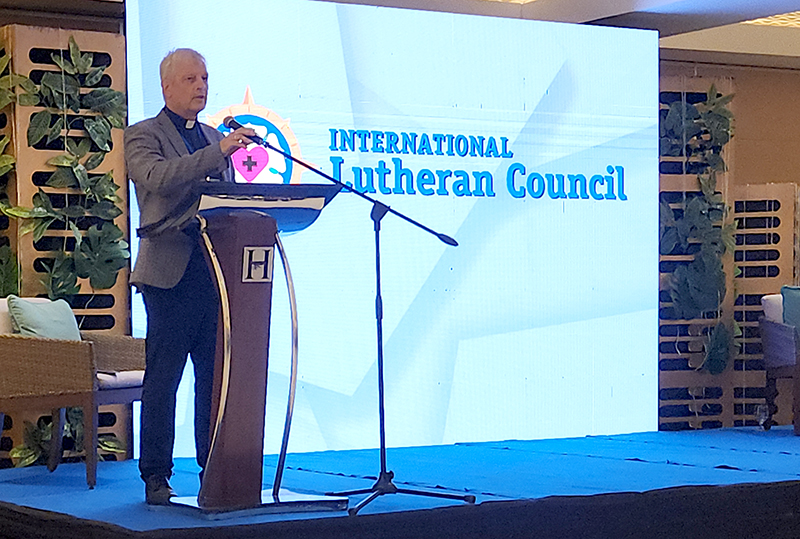
General Secretary Klaus Detlev Schulz presents on the ILC.

The morning continued with a presentation by the ILC’s General Secretary, Rev. Dr. Klaus Detlev Schulz. Dr. Schulz highlighted the nature of the International Lutheran Council and its work. He further discussed what it means to be a member of the ILC, as well as how the membership application works.

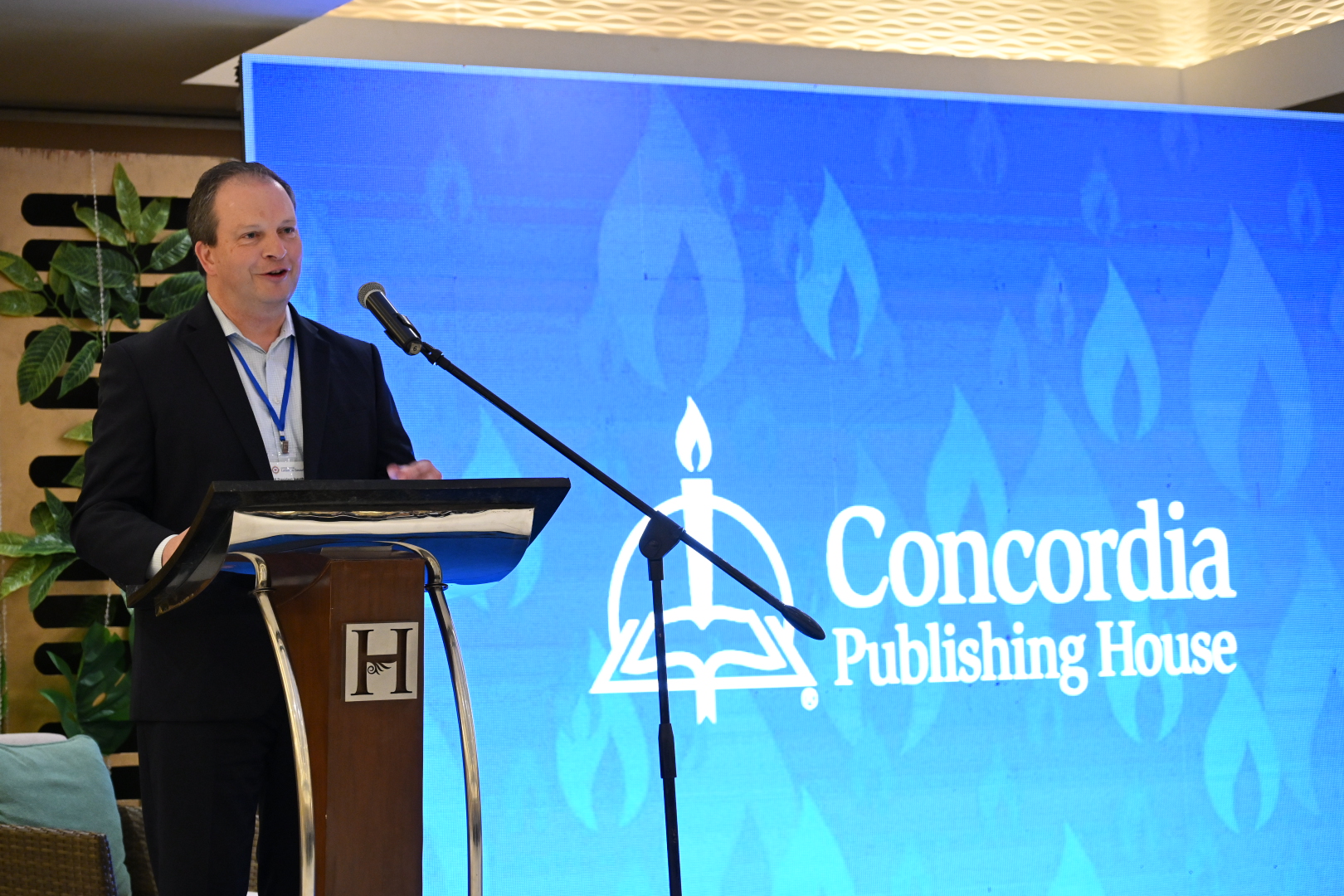
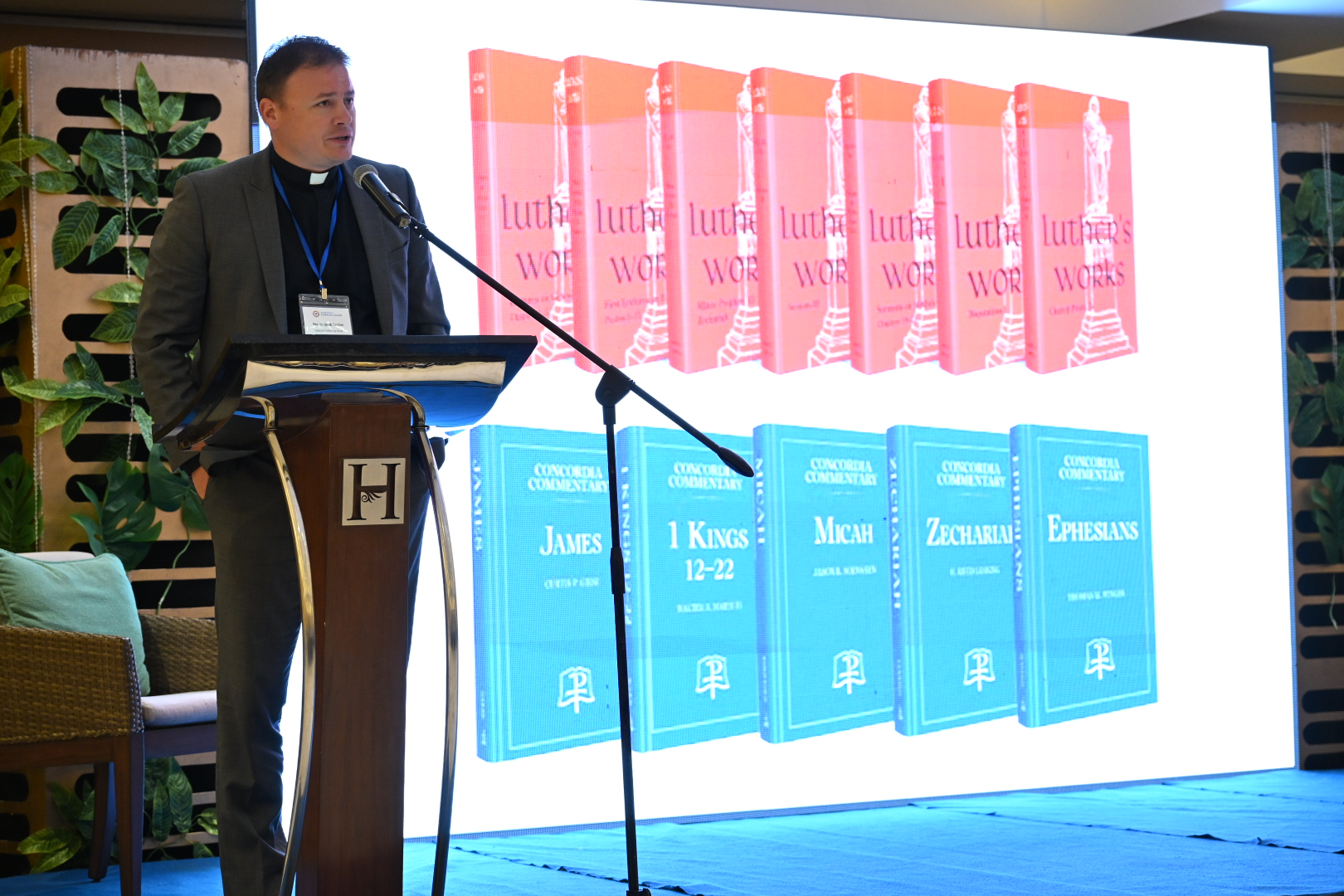
The morning ended with a presentation by Concordia Publishing House (CPH) President/CEO Jonathan D. Schultz and Vice President of Publishing, Rev. Dr. Jacob Corzine. The two highlighted the history of CPH as well as its present work today, ranging from major publications like The Lutheran Study Bible, Lutheran Service Book, and The Book of Concord to major series like Luther’s Works and the Concordia Commentary series to new resources for children and new digital apps.

The representatives of CPH invited participants in the conference to connect with CPH and discuss possibilities in which their church bodies might be able to benefit from CPH’s extensive Lutheran resources.

An example of that support was shared by Alison Blodgett, the ILC’s Business Manager and Treasurer. She noted that CPH had recently provided grants to assist the ILC in building up pastors’ libraries around the world through the Lutheran Leadership Development Program (LLDP). To date, CPH has worked with the ILC to distribute books in Ghana, the Philippines, South Africa, South Sudan, and Tanzania.

———————

For more news from the ILC’s 2025 World Conference, click here.
2025 World Conference: Dr. Winger begins keynote address

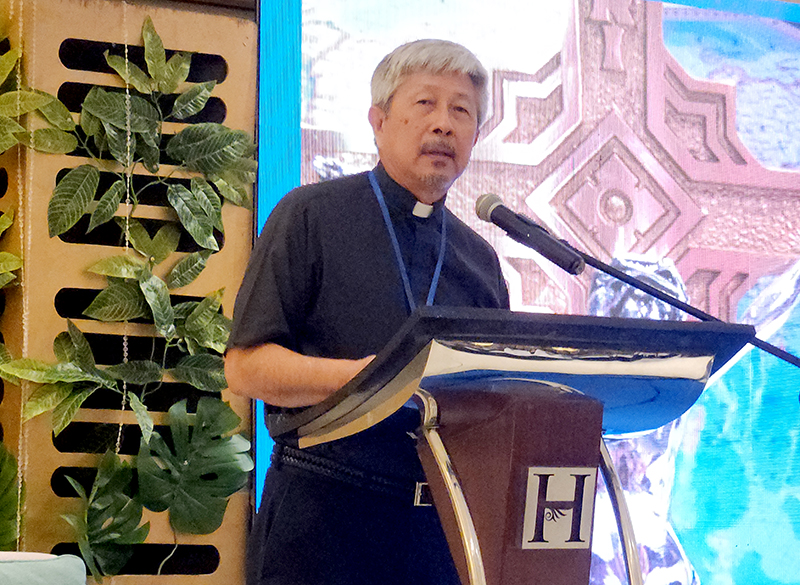
Rev. Dr. Thomas Winger speaks during the 2025 World Conference.

PHILIPPINES –The opening day of the ILC’s 2025 World Conference continued with the first session of this year’s three-part Keynote Address by Rev. Dr. Thomas M. Winger. Dr. Winger, who is President of Concordia Lutheran Theological Seminary (St. Catharines, Ontario, Canada) and author of the Concordia Commentary volume on Ephesians, is speaking on Ephesians 2:11-22 in a series of talks entitled “The Spiritual Temple.”

Dr. Winger’s first presentation focused on “The Pagan Temple,” drawing on Ephesians 2:2. He began by discussing the pagan religious context which prevailed in Ephesus at the time of St. Paul’s letter to the Ephesians, focusing especially on the religious observances which centered on the Temple of the Lady of Ephesus (Artemis).

The relationship between ancient pagans and their gods were very different than the Christian’s relationship with the true God, Dr. Winger noted. “Ancient pagans had no personal and loving relationship with their gods,” he explained. “The gods described by Homer in the Iliad and Odyssey are not holy, good, and merciful, but rather self-centered, cruel, vengeful, easily angered, and possessing all the character flaws found in fallen human beings.”

Consequently, Paul’s characterization of Gentiles as “people without hope,” makes sense, Dr. Winger explained, as human beings could not count on the pagan gods to have their best interest at heart—and this was especially true when it came to the issue of death. “The Pagan gods offer no solution to death,” Dr. Winger said. In this sense, then, “even though the pagans had many gods, they were truly ‘godless,’ because those gods were not there to help them.”

Indeed, these ‘gods’ were not really gods at all; they were actually “masks or disguises worn by the devil and his host of demons,” Dr. Winger said. But “Paul’s comforting message is that Christ has triumphed over the demons,” he continued. Paul wanted his audience to understand that spiritual enemies are real but Christians need not be afraid of them.

“Our goal in the battle is not to attack or defeat the enemy,” Dr. Winger explained, “but to stand in the victory Christ has already won…. We are to hold onto the gifts, cling to the Gospel. We don’t run outside the churchly fortress to engage the enemy on his turf, but we stand within the protection Christ has given us. We keep the good confession and thereby fight the good fight.”

What does that look today? Dr. Winger encouraged attendees to ground themselves in the victory of Christ by invoking “the name of God in private prayer and public worship.” This can be done in many ways, he noted: through the invocation and marking oneself with the sign of the cross, as per the Small Catechism, for example. We can also adorn our homes with the crucifix and Christian art. It includes speaking the Creed and the Our Father, “which are expositions of God’s name,” he noted. It can include praying Luther’s morning and evening prayers “that the evil foe may have no power over me.” It includes singing hymns; participating in the historic liturgy of the Divine Service; receiving God’s gifts in Word and Sacrament; forgiving one another; and consecrating the world and every aspect of daily life “with the Word of God and prayer.” In all these things, we invoke the name of God and “defeat the devil with God’s Word.”

Following a break, participants took part in small group discussions, discussing what issues of spiritual conflict look like in their own national contexts, and then sharing those conversations with the wider assembly in plenary discussion.

Greetings from LCEF and LHF

The first day of the conference also saw participants receive greetings and presentations by Lutheran parachurch organizations. Assistant Vice President Blake Brown of Lutheran Church Extension Fund (LCEF) highlighted the mission of the LCEF, explaining how it supports the work of The Lutheran Church—Missouri Synod, and further noting their work partnering with international partners.

Greetings were also received from Lutheran Heritage Foundation (LHF). First to speak was Arlene Reyes, who coordinates LHF work in the Philippines. Reyes noted the recent translation of A Child’s Garden of Bible Stories into Tagalog. Rev. Dr. Ted NaThalang—President of the Thailand Concordia Lutheran Church and LHF’s Coordinator for Southeast Asia—spoke next, highlighting the history and ongoing work of LHF in translating Lutheran resources into other languages. Since its inception in 1992, he noted, LHF has operated in more than 100 countries and worked on projects in more than 180 languages.

The first session of the conference ended with a service of Responsive Prayer (Suffrages) led by Rev. Michael Blodgett, who is serving as a conference chaplain.

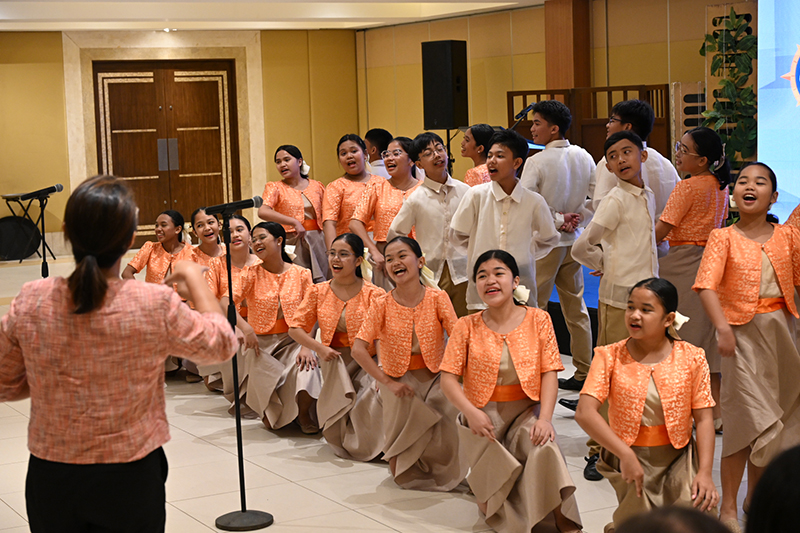
The Loboc Children’s Choir performs at the ILC’s 2025 World Conference.

Dinner that night featured a Welcome Reception graciously sponsored by Lutheran Church Extension Fund. Participants received greetings from local dignitaries, including from the Mayor of Panglao and from the Governor of Bohol’s office, and enjoyed a concert by the world-famous Loboc Children’s Choir.

———————

For more news from the ILC’s 2025 World Conference, click here.
ILC welcomes Lutheran Bible Translators as a Recognized Organization

USA – The International Lutheran Council (ILC) has welcomed Lutheran Bible Translators (LBT) into the ILC as a Recognized Organization.

The decision to accept Lutheran Bible Translators into membership was made by the ILC’s Board of Directors earlier this year. LBT is an independent American-based mission organization which focuses on Bible translation and engagement. Founded in 1964, LBT partners with local church leaders in Africa, the Middle East, Papua New Guinea, Southeast Asia, and the United States to increase access to God’s Word in peoples’ heart languages.

“For over 60 years, LBT has been dedicated to making God’s Word accessible to all people in the languages they understand best,” noted Rev. Dr. Richard C. Rudowske Jr., Executive Director/CEO of LBT, in LBT’s application to the ILC. “We believe that a formal partnership with the ILC would strengthen our shared mission of proclaiming the Gospel throughout the world.”

Lutheran Bible Translators highlighted several reasons for seeking membership in the ILC, including LBT’s and the ILC’s shared confessional commitment and the opportunity for global Lutheran collaboration, among others. “Our current and planned initiatives align closely with the ILC’s mission to ‘encourage, strengthen, and promote confessional Lutheran theology and practice around the world,’” Dr. Rudowske said. “By ensuring that God’s Word is accessible in the heart languages of people worldwide, we contribute to the spiritual growth of existing Lutheran communities and support the proclamation of the Gospel in unreached areas.”

The International Lutheran Council is a global association of confessional Lutheran church bodies and organizations which proclaim the Gospel of Jesus Christ on the basis of an unconditional commitment to Holy Scripture and to the Lutheran Confessions.

———————

Rev. Dr. Robert Bugbee, long-serving ILC board member, steps down

ILC General Secretary Klaus Detlev Schulz presents Rev. Dr. Robert Bugbee with a plaque in honour of his long service to the International Lutheran Council.

CANADA – Rev. Dr. Robert Bugbee has stepped down as a member of the board of directors of the International Lutheran Council (ILC). Dr. Bugbee informed the board of his plans to do so in early 2025. He intends to continue serving in pastoral ministry in Windsor, Ontario, Canada.

“Dr. Bugbee’s warm personality, long pastoral experience, and deep understanding of the life of the Church and our Lutheran Confessions have been an invaluable aid in the building of the International Lutheran Council over the years,” said ILC Chairman Juhana Pohjola. “We thank the triune God for Robert and for his long service, and we pray he will continue to find joy and strength in his pastoral ministry in the service of Christ’s Gospel.”

In announcing his decision to step down from leadership in the ILC, Dr. Bugbee thanked the board for the opportunity to serve with them over the years and assured them of his continued prayers. “I thank you all sincerely for your many kindnesses toward me,” he said, “and commend the vital work of our Council to the Lord.”

At the time of his resignation, Dr. Bugbee was the longest-serving member on the board. Dr. Bugbee first joined the executive leadership of the ILC following his 2008 election as President of Lutheran Church–Canada (LCC). He became Vice-Chairman of the ILC in 2010, and continued in that role until 2017 when he stepped down as President of LCC in order to return to parish ministry.

At that time, Past President Bugbee notes, he expected it also to be the end of his service with the ILC. But the board requested Dr. Bugbee continue serving on the board as a member at large. He also continued to serve the ILC as a member of the board’s Executive Leadership Group.

Dr. Bugbee’s service with the ILC’s board of directors officially came to a conclusion on June 1, 2025. In gratitude for his many years of leadership in the International Lutheran Council, the board presented Dr. Bugbee with a plaque on August 29, 2025.

The International Lutheran Council is a global association of confessional Lutheran churches which proclaim the Gospel of Jesus Christ on the basis of an unconditional commitment to Holy Scripture and to the Lutheran Confessions.

———————

Mexican Lutherans elect new president

Outgoing SLM President Isaac G. García Castillo (right) installs new President Omar Marín Garza Martínez (kneeling) and other officers of the Mexican church.

MEXICO – The Lutheran Synod of Mexico (Sínodo Luterano de México – SLM) held the closing service of its 54th General Assembly on June 1, during which time the church installed its newly-elected president: Rev. Omar Marín Garza Martínez.

Outgoing SLM President Castillo welcomes Rev. Martínez as the new president of the Mexican church.

Rev. Martínez is the pastor of Holy Trinity Lutheran Church in Matamoros, and was serving as treasurer of the SLM at the time of his election. President Martínez graduated in 2019 from Seminario Concordia El Reformador in the Dominican Republic. He also holds a Master of Arts from Concordia Seminary in St. Louis, Missouri, which he received in 2025.

SLM President Martínez succeeds Rev. Isaac G. García Castillo, who had served the Mexican church as president for more than eleven years. During his tenure, the SLM grew from three pastors to eleven today. The church also saw the establishment of three new congregations, the reopening of three previous congregations, and the creation of the Instituto Martin Lutero. President Emeritus Castillo will continue to serve as pastor of Bethany Lutheran Church in Mexico City.

SLM President Martínez blesses the congregation.

During its General Assembly, the church also elected other officers, including Rev. Isaac Neftalí García Castillo as Vice President, Rev. Job Jiménez Tejeda as Secretary, and Rev. Benjamín Quezada Guzmán as treasurer.

The Lutheran Synod of Mexico is a member church of the International Lutheran Council, a global association of confessional Lutheran churches which proclaim the Gospel of Jesus Christ, grounded in the authority of Scripture and the Lutheran Confessions.

———————

On the death of Pope Francis

by Werner Klän

Pope Francis. Photo: Jeon Han (Korean culture and Information Service) via Wikimedia.

On the morning of Easter Monday 2025, Pope Francis died after a thirteen-year pontificate. He had last exercised his office despite severe health difficulties. He gave the traditional blessing “Urbi et Orbi” on Easter Sunday, visibly exhausted.

The papal name that Jorge Mario Bergoglio chose after his election as head of the Roman Catholic Church was emblematic: Francis. Never before had a pope named himself after the 13th century saint from Assisi.

Pope Francis campaigned for the church to be a church of the poor. His multifaceted commitment to refugees and those on the margins of society was characterized by this role model. He wanted to follow Jesus’ example by washing the feet of prison inmates on Maundy Thursday—which he was unable to do this year. The fact that he addressed admonishing words to politicians on the issue of migration, particularly in Europe, is probably linked to his family history: his grandparents, who wanted to emigrate from Italy to Argentina, missed the first ship, which sank.

Francis was a “political” pope in many respects. He did not shy away from describing the prevailing global economic order as “deadly” (Evangelii Gaudium, 2013). He addressed environmental issues (Laudato si’, 2015) and saw the exploitation of the earth as a threat to people’s livelihoods, particularly in the “Third World”.

These and other statements by Pope Francis were not without controversy. The participation of lay people and women in the Synod of Bishops, the appointment of women to top positions in the Vatican and the approval of the blessing of homosexual couples earned him harsh criticism, even from within his own church. “Conservative” bishops and cardinals took a public stand against these measures. “Reform-minded” Catholics did not think his proposals went far enough. When dealing with the cases of abuse of children and wards by Catholic priests, he made an initial plea for forgiveness as early as 2014, but the processing of this injustice has so far fallen short of the expectations of those affected by abuse in particular.

Even though Francis repeatedly sent out reformist signals, there have been no changes to the teachings of the Catholic Church. For example, he consistently refused to open the way for the ordination of women to the priesthood. Pope Francis was also critical of the “Synodal Way” in the German Catholic Church, which sought far-reaching reforms. This shows in all clarity that the Roman Catholic Church is not as homogeneous as it may sometimes appear from the outside.

Francis also stands for an “ecumenism of religions”. He has set the tone in interreligious dialogue, especially with Islam. In 2019, for example, he signed a document on “Human Fraternity” with the Grand Imam of Cairo’s Al-Azhar University. In September 2024, he took part in a meeting in Asia’s largest mosque in Jakarta, where he spoke out in favor of continuing the dialogue between religions with the aim of “banishing rigidity, fundamentalism and extremism”. His objection to all forms of anti-Semitism remains remarkable.

In a vespers for the Week of Prayer for Christian Unity—during the 2025 Holy Year proclaimed by him—the Pope also recalled the 1700th anniversary of the Council of Nicaea (325) and called the celebration of Easter by Western and Eastern churches on the same date (April 20, 2025) “an opportunity for all Christians who speak the same creed and believe in the same God: let us rediscover the common roots of faith, let us preserve unity!” He then suggested finally setting a common Easter date for all Christians and churches as a sign of unity.

At the Lutheran World Federation’s celebrations to mark the 500th anniversary of the Reformation in Lund/Sweden in 2016, Pope Francis spoke out in favor of Lutherans and Catholics “overcoming controversies and misunderstandings that have often prevented us from understanding each other.” Representatives of both churches asked for forgiveness for the suffering caused by the division of the Western Church.

Certainly, Concordia Lutheran churches cannot agree with some of Pope Francis’ statements and initiatives. It also remains to be seen whether and which of them will be continued or withdrawn under a new pope. Nevertheless, the International Lutheran Council (ILC) is also committed to continuing the dialogue with the Roman Catholic Church, not least in view of the commemoration of the presentation of the Augsburg Confession in 2030.

This takes place under the chairmanship of Bishop Dr. Juhana Pohjola (Evangelical Lutheran Missionary Diocese, Finland, and Chairman of the ILC) and Auxiliary Bishop Dr. Peter Birkhofer (Archdiocese of Freiburg im Breisgau, Germany) in the “Concordia Lutheran-Catholic Augustana Working Group”, an ecumenical format of its own. Since 2024, the participants have been discussing the topics of “Catholicity and Apostolicity in the Augsburg Confession” from a pre-confessional and ecumenical perspective. In 1530, Western Christendom was not yet divided and the Augsburg Confession was a document intended to preserve the church’s unity.

It has to be maintained that the working group is not an official dialogue commission. The aim is not to produce a church consensus document. The publication of the joint research results should, however, indirectly enrich the ecumenical discussion. After all, the Lutheran confession makes a “catholic” claim—in the best sense of the word. This also represents an obligation for us in the ILC, to remain in dialogue with the Roman Catholic Church.

——————–

Rev. Dr. Werner Klän is a member of the Concordia Lutheran-Catholic Augustana Working Group. This article is also available in German here.

ILC prepares for 2025 World Conference

PHILIPPINES – The International Lutheran Council (ILC) will hold its 28th World Conference in Bohol, Philippines from September 14-19, 2025. The Lutheran Church in the Philippines (LCP) will serve as host for this year’s conference.

The theme for the 28th World Conference is “Unity in Christ: Confession and Cooperation in a Fragmented World,” inspired by 2 Corinthians 4:13. The theme “reminds us of the same spirit of faith that unites us in reaching out to a rapidly changing world,” said Rev. Dr. Klaus Detlev Schulz, General Secretary of the ILC. “Let us stand firm together as we bear witness to the Gospel in a fragmented world in need of Christ’s saving grace.”

The triennial World Conference sees the leaders of confessional Lutheran church bodies from across the globe gather together for worship, plenary sessions, and discussion, as well as to conduct the business of the ILC. Rev. Dr. Thomas M. Winger will serve as keynote speaker for the 2025 World Conference, leading a study of Ephesians 2:17-22. Dr. Winger is President of Concordia Lutheran Theological Seminary (CLTS) in St. Catharines, Ontario, Canada. He is also the author of the Concordia Commentary on Ephesians from Concordia Publishing House.

Other speakers during the conference will include Rev. Dr. Jun Hyun Kim (Philippines); Rev. Dr. Tom Omolo (Kenya) and Rev. John Donkoh (Ghana); Rev. Dr. Sergio Schelske (Argentina) and President Geraldo Walmir Schüler (Brazil); ILC General Secretary Klaus Detlev Schulz (USA); and Bishop Torkild Masvie (Norway).

During the conference, the ILC will also hold elections, hear reports, hold regional meetings , and conduct other business.

The International Lutheran Council is a global association of confessional Lutheran churches which proclaim the Gospel of Jesus Christ, grounded in the authority of Scripture and the Lutheran Confessions.

———————

LCANZ and JLC removed from membership in the ILC

WORLD – The International Lutheran Council (ILC) has removed the Lutheran Church of Australia and New Zealand (LCANZ) and the Japan Lutheran Church (JLC) from observer membership in the ILC. Both were removed for departing from the doctrinal positions required of all members in the ILC’s bylaws.

The decision to remove the two churches came during a meeting of the ILC’s Board of Directors on March 21, 2025, and followed a long period of outreach to the two churches in question. The churches were formally informed on March 30.

“The International Lutheran Council has previously expressed our dismay to both the LCANZ and the JLC over their decisions to depart from the clear teaching of Scripture and the doctrinal standards of the ILC by approving the ordination of women,” noted Rev. Dr. Klaus Detlev Schulz, General Secretary of the ILC. “Since then, we have several times expressed our desire for respectful dialogue on this matter and encouraged the churches in question to return to the teaching of Scripture on ordination. But the churches have made clear they have no intention of doing so.”

The Japan Lutheran Church voted in 2021 to open ordination to women, in contravention of Art. II.1.D.2.b of the ILC’s bylaws. That led to an automatic reduction in their status in the ILC from full membership to observer membership, in keeping with Art. II.3.a. In November 2021, the ILC began outreach to the JLC, informing them of their change in membership status, reaffirming the doctrinal requirements for ILC membership, and seeking an opportunity to discuss this serious issue in the hopes of finding a resolution.

The Lutheran Church in Australia and New Zealand voted to approve women’s ordination in 2024, and was likewise automatically reduced to observer membership from its former associate membership. The LCANZ had been advised multiple times over many years that a decision to adopt women’s ordination would jeopardize their continued participation in the ILC, and this was reaffirmed in a letter to the LCANZ in November 2024.

In both instances, the International Lutheran Council assured the LCANZ and the JLC that it remained open to discussing this issue in a spirit of love and mutual respect, and that our earnest desire was that they might return to the teachings of Scripture and be restored to their previous membership status in the ILC.

In January 2025, the ILC reached out again to the Japan Lutheran Church and the Lutheran Church of Australia and New Zealand, informing them that unless they demonstrated a willingness to discuss this issue and an openness to returning to the doctrinal position required for ILC membership, the board would have no choice but to remove them as observer members. Both wrote back to say they will carry forward with the ordination of women.

Consequently, the ILC board voted on March 21 to remove the LCANZ and the JLC from observer membership in the ILC, in accordance with the procedures required in Art. II.3.c.i of the ILC’s bylaws.

“We grieve this rupture in the long relationship the ILC has enjoyed with these two church bodies,” said Dr. Schulz. “And we continue to pray for repentance and a return to biblical doctrine and practice, so that we may welcome them back into the ILC.”

———————

The International Lutheran Council is a global association of confessional Lutheran church bodies and groups which proclaim the Gospel of Jesus Christ on the basis of an unconditional commitment to Holy Scripture and to the Lutheran Confessions.

Signup for ILC Updates