News

Posts tagged:

SLM

2025 World Conference: Focus on Latin America and Africa

PHILIPPINES – The afternoon of the third day of the International Lutheran Council’s (ILC) 2025 World Conference featured two panels of presenters speaking on issues arising in the Latin American and African contexts.

Migration in Latin America

Speakers for the Latin America Regional Focus included Rev. Dr. Sergio Schelske, Director of Seminario Concordia in Argentina; President Eduardo Flores of the Lutheran Church of Venezuela (ILV); President Omar Martinez Garza of the Lutheran Synod of Mexico (SLM); and President Gerardo Omar Kinas of the Confessional Lutheran Church of Chile (ILC-Chile).
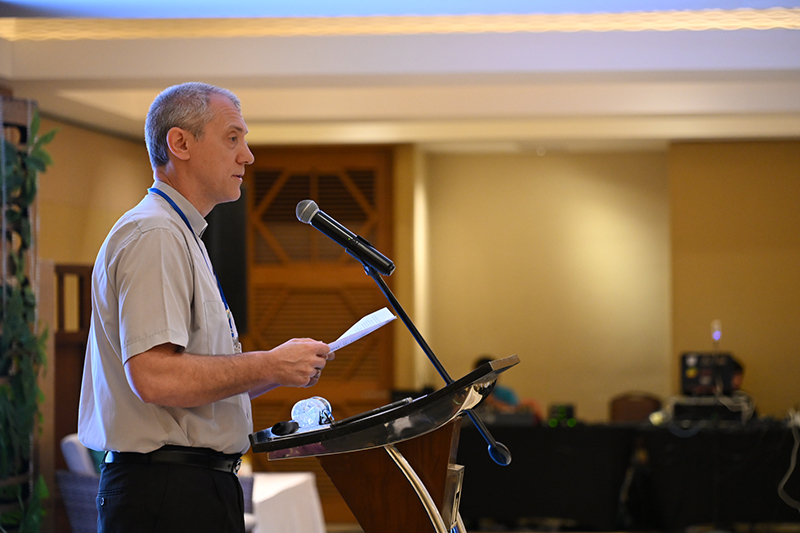
Rev. Dr. Sergio Schelske presents. (Photo: T. Winger).

Dr. Schelske introduced the region’s topic, which was immigration and migration in Latin America. He noted that the theme arose out of the ILC’s Latin America Regional Conference which was held in Bolivia in 2024. Migration is a major issue in Latin America, Dr. Schelske said, as the region “accounts for some 14.8 million migrants, both internally (between countries in the region) and externally (beyond the region)”—a situation that has created “a challenge for our churches in terms of pastoral care.”

Dr. Schelske explored the causes of migration in the region, the toll it takes on migrants themselves, the theme of migration in Scripture, and the image of the Church as “a community on the move.” This set the stage for a theological response to issues like xenophobia (“a negative and fearful reaction to the strange”) and oikophobia (“a rejection of social integration” by immigrants). “To both, the church has a message to share,” Dr. Schelske said: “Confront and forgive (Law and Gospel).” The church is called to minister to both extremes, he said, because “her message is one of reconciliation… because the Lord Jesus is mediator and reconciler.”

After Dr. Schelske established the scale of the challenge, the other three presenters described the effects of migration and immigration on their own countries and church bodies.
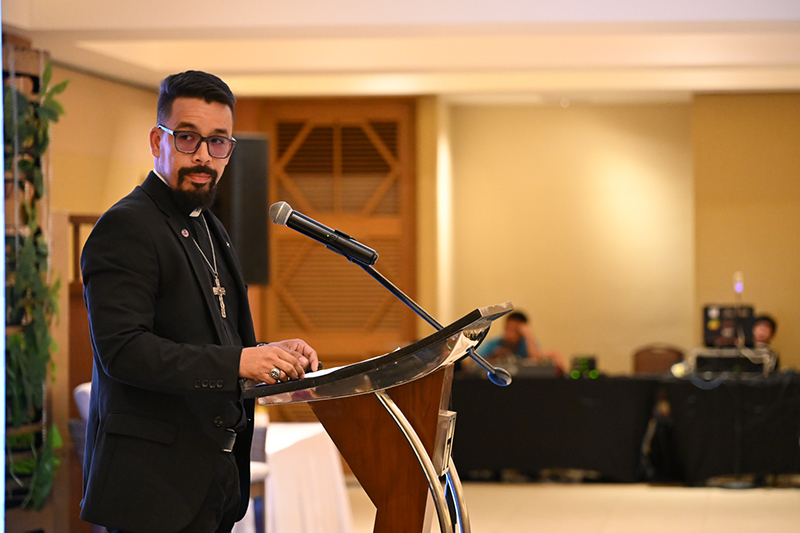
ILV President Eduardo Flores. (Photo: T. Winger).

President Flores outlined the serious problems facing the nation of Venezuela, including “shortages of food, medicine, and basic services, along with insecurity and political repression.” These issues have led millions of Venezuelans to leave the country, resulting in “profound social, economic, and cultural implications,” including for the Lutheran church. There has been a “significant decrease in the number of members in Lutheran congregations,” mostly among young people and their families, President Flores noted. This not only impacts the spiritual life of those who leave, but it also causes serious issues with paying pastors and the financial sustainability of congregations.

The migration of Venezuelans out of the country has created challenges for other Latin American countries as the Venezuelans arrive. “We thank God for the open arms of all the churches in our region and outside, because in these hard times they have been the Good Samaritan of our history,” President Flores said, “even though we know that the reception of Venezuelan migrants presents a change to the dynamics of the churches that receive them.”
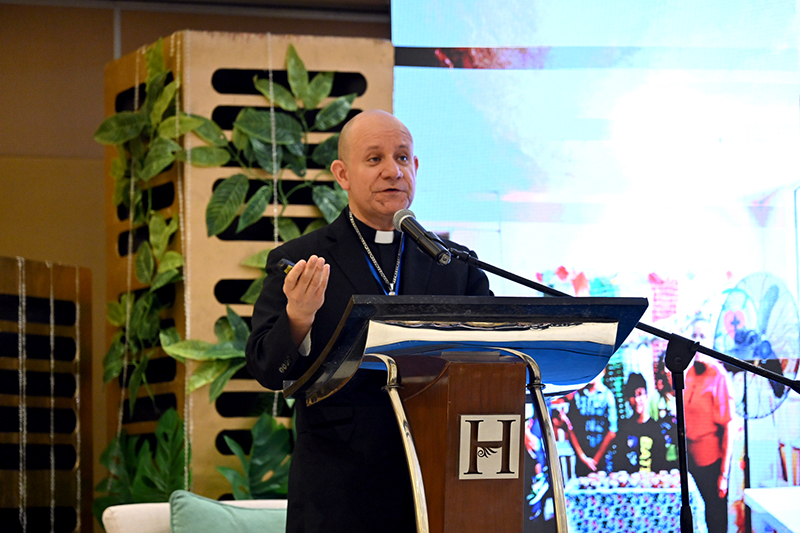
SLM President Omar Martinez Garza. (Photo: T. Winger).

President Garza addressed the situation in Mexico, noting that the country’s location makes it is both a source and transit point for migrants trying to enter to the United States. Many of those who wish to enter the United States never will, meaning they must either leave for elsewhere or stay in Mexico. “In the last six years alone, 16 million people have entered Mexico, of which only ten million have crossed into the United States,” President Garza noted, “while at least six million have remained in Mexico.”

The sheer number of migrants in Mexico means they face many hardships, including a lack of food, lack of shelter, lack of guidance, threats from organized crime, and discrimination. In the face of these needs, the church in Mexico tries to assist those who are suffering. In Matamoros, for example, the church has a community kitchen to feed the hungry, with some who attend being migrants. Once a week, the church shares food with those in need alongside prayer and God’s Word. The Mexican church might “not have the resources to make a great impact on everyone,” President Garza says. “But we can make a difference in the life of the migrant that God places in our path at the church.” Some of these migrants go on to other places, but while they are present, the church shares the love of Jesus Christ with them.
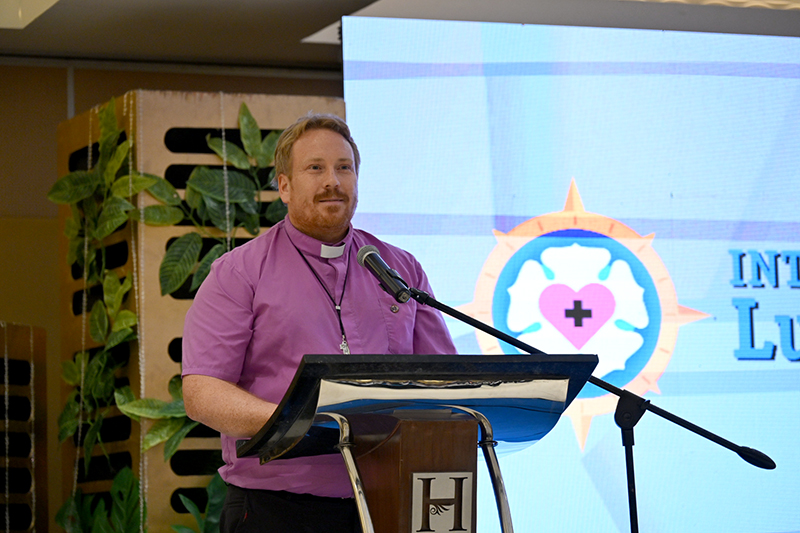
ILC-Chile President President Gerardo Omar Kinas. (Photo: T. Winger).

President Kinas discussed the situation in Chile, which has seen a great deal of immigration. This is because, he explained, Chile “does not consider any immigrant to be illegal,” instead just distinguishing between regular and irregular migration. As a result, “the country has been chosen as a focus for migration,” he said, especially from Haiti and Venezuela. The first waves of immigrants were welcomed, but as irregular migration continued “it created a crisis in the educational, health, judicial, and retirement systems.”

In this midst of these challenges, the Chilean church “has made different efforts to assist children and families involved in voluntary displacement from their home country.” This has included, for example, such activities as offering housing with onsite pastoral care; the provision of food to those in need; a migrant reception centre; and a legal clinic. The church has also provided assistance to people in Venezuela, where many migrants have come from. To date, the church has provided medicine for nearly 9,150 people in Venezuela.

As for the church in Chile, migration has resulted in a significant change in the makeup of its churches. “We estimate that 60 percent of our membership is Venezuelan,” President Kinas noted, and the church today has several Venezuelan pastors. “Currently we have programs that help migrants to be in the country regularly,” President Kinas said, “teaching obedience to the authorities and developing programs of mercy accompaniment.” The crisis is not yet abating, he noted, and the church does not have all the answers to the challenges of migration. “Yet God loves those who cannot give Him anything in return.”

Africa and the Challenge of Pentecostalism
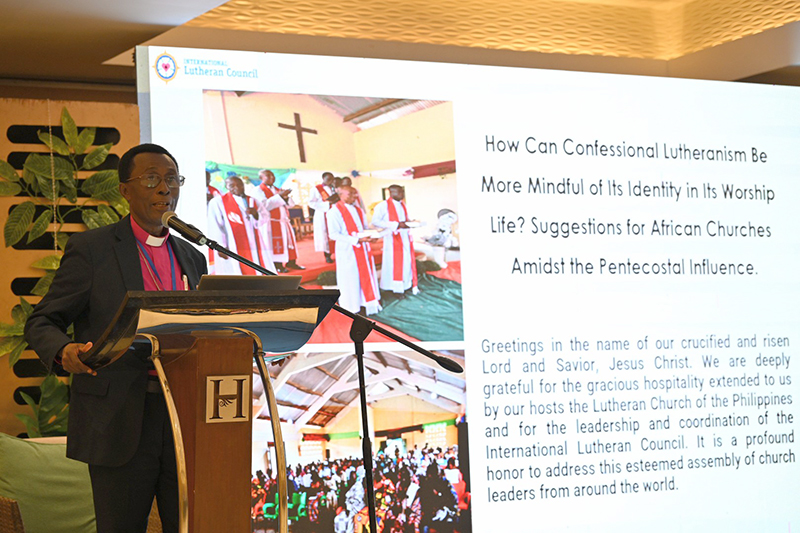
ELCG Bishop John Donkoh. (Photo: T. Winger).

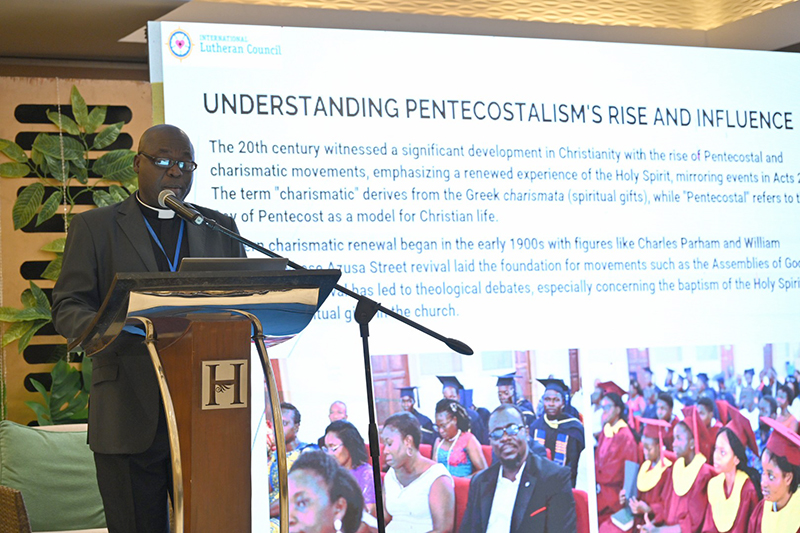
The afternoon continued with an Africa Regional Focus led by Bishop John Donkoh of the Evangelical Lutheran Church in Ghana (ELCG) and Rev. Dr. Joseph Tom Omolo, Principal of the Evangelical Lutheran Church in Kenya’s (ELCK) Neema Lutheran College.

Bishop Donkoh introduced the topic: “Pentecostalism’s Influence: What Can Be Done Liturgically?” Dr. Omolo then gave his presentation, outlining the history of the modern charismatic movement, before examining the movement’s spiritual forbears in Montanism and mysticism. Despite the incompatibility with Lutheran theology, Dr. Omolo noted, “many Lutherans—especially in Africa—unknowingly adopt Pentecostal worship styles.” The result is the replacement of “the external, objective means of grace with inward emotional experiences and charismatic gifts,” he noted. “This trend runs counter to biblical Christianity and Lutheran spirituality, which are rooted in the preached Word and the sacraments as the true means by which God nurtures faith.”
Rev. Dr. Joseph Tom Omolo. (Photo: T. Winger).

“To guard against these Pentecostal tendencies,” Dr. Omolo said, “it is crucial to reaffirm the true nature of Lutheran worship. Worship is not primarily about human action but God’s action: Gottesdienst—His service to us through Word and Sacrament.”

Bishop Donkoh carried the conversation forward, giving examples of specific challenges related to Pentecostal influence in the Ghanian context. In some congregations, he said, there is a temptation to copy the worship practices of charismatic churches. He noted, for example, a recent church building project where some members—without authorization—tried to convince the builders to incorporate a platform for drums in the front of the church.

The rise of such “liturgical inconsistencies” can lead to a “gradual dilution—and, in some cases, loss—of our distinctly Lutheran identity,” he argued. “But the true marks of the Church are the Word of God and the Sacraments,” he continued. “Anything short of that is not the Church.”
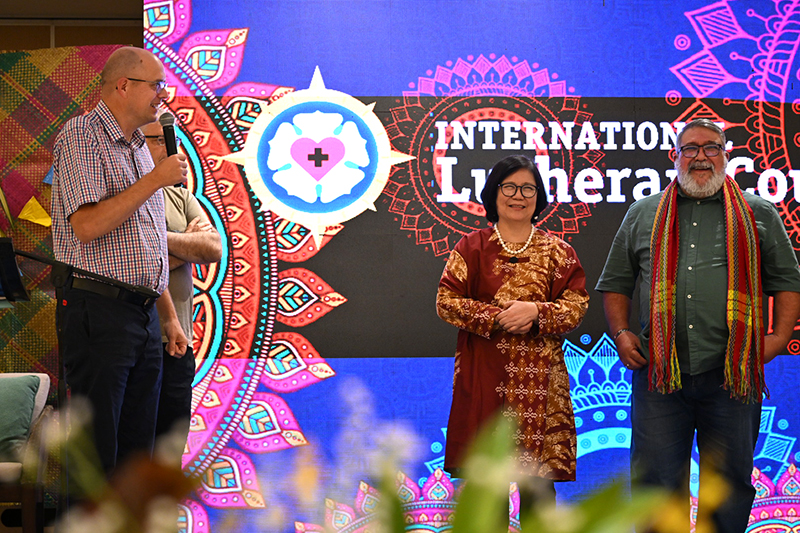
ILC Chairman Pohjola and General Secretary Schulz thank Arlene Reyes and LCP President Antonio del Rio Reyes. (Photo: T. Winger).

The afternoon closed with a service of Responsive Prayer, led by Concordia Publishing House’s (CPH) Rev. Dr. Jacob Corzine.

At supper, members enjoyed a “Filipino Fiesta Night Reception” by members of the Lutheran Church in the Philippines (LCP), complete with songs and dance. The LCP also presented delegates with a gift from the Philippines.

During the event, ILC Chairman Juhana Pohjola and General Secretary Klaus Detlev Schulz formally expressed the ILC’s thanks to President Antonio del Rio Reyes and Arlene Reyes for their work hosting the conference.

Delegates also received complementary access to the Lutheran Study Bible app as a gift from Concordia Publishing House.

———————

For more news from the ILC’s 2025 World Conference, click here.
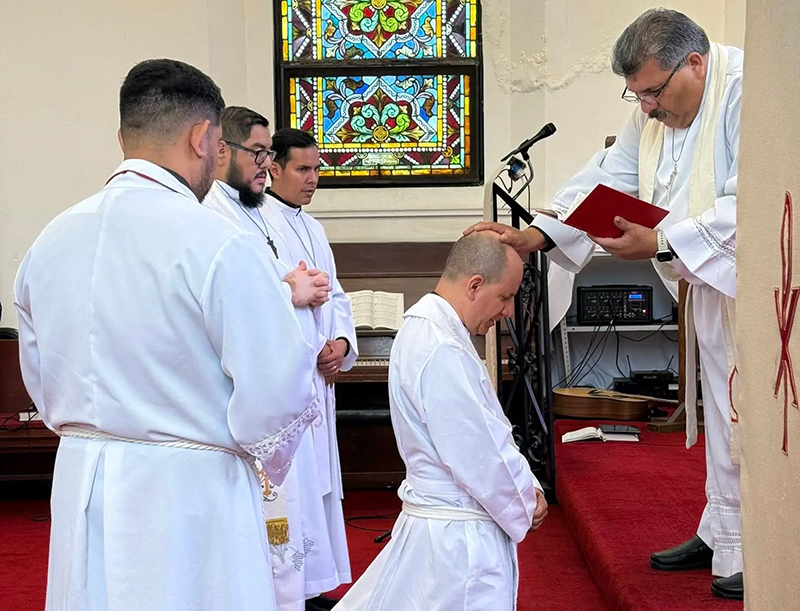
Mexican Lutherans elect new president

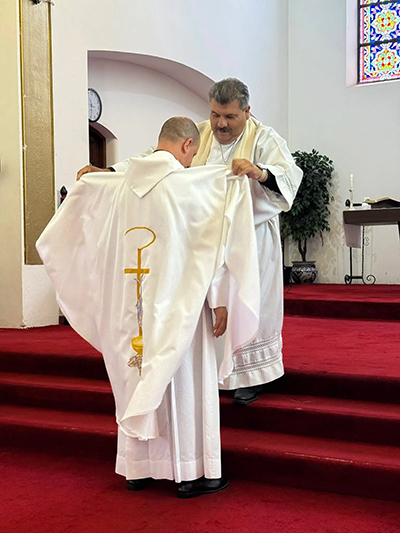
Outgoing SLM President Isaac G. García Castillo (right) installs new President Omar Marín Garza Martínez (kneeling) and other officers of the Mexican church.

MEXICO – The Lutheran Synod of Mexico (Sínodo Luterano de México – SLM) held the closing service of its 54th General Assembly on June 1, during which time the church installed its newly-elected president: Rev. Omar Marín Garza Martínez.

Outgoing SLM President Castillo welcomes Rev. Martínez as the new president of the Mexican church.

Rev. Martínez is the pastor of Holy Trinity Lutheran Church in Matamoros, and was serving as treasurer of the SLM at the time of his election. President Martínez graduated in 2019 from Seminario Concordia El Reformador in the Dominican Republic. He also holds a Master of Arts from Concordia Seminary in St. Louis, Missouri, which he received in 2025.

SLM President Martínez succeeds Rev. Isaac G. García Castillo, who had served the Mexican church as president for more than eleven years. During his tenure, the SLM grew from three pastors to eleven today. The church also saw the establishment of three new congregations, the reopening of three previous congregations, and the creation of the Instituto Martin Lutero. President Emeritus Castillo will continue to serve as pastor of Bethany Lutheran Church in Mexico City.

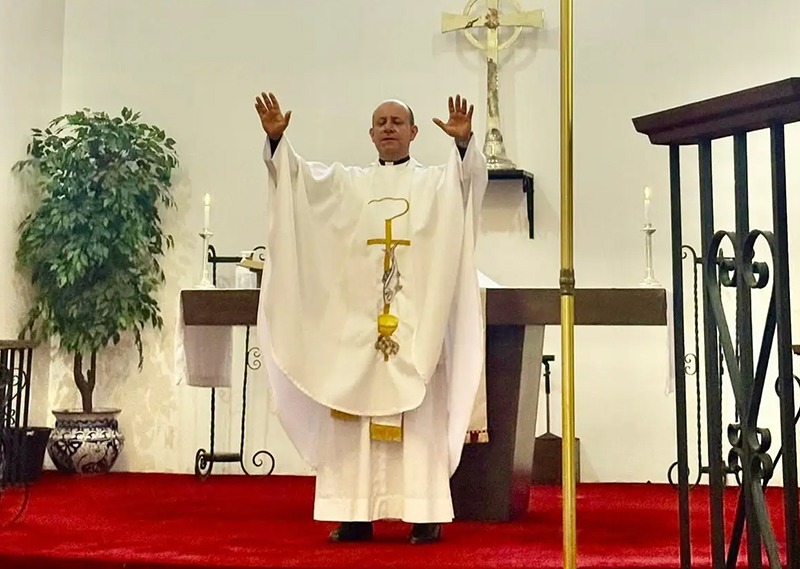
SLM President Martínez blesses the congregation.

During its General Assembly, the church also elected other officers, including Rev. Isaac Neftalí García Castillo as Vice President, Rev. Job Jiménez Tejeda as Secretary, and Rev. Benjamín Quezada Guzmán as treasurer.

The Lutheran Synod of Mexico is a member church of the International Lutheran Council, a global association of confessional Lutheran churches which proclaim the Gospel of Jesus Christ, grounded in the authority of Scripture and the Lutheran Confessions.

———————

Lutheran Synod of Mexico president safe following kidnapping

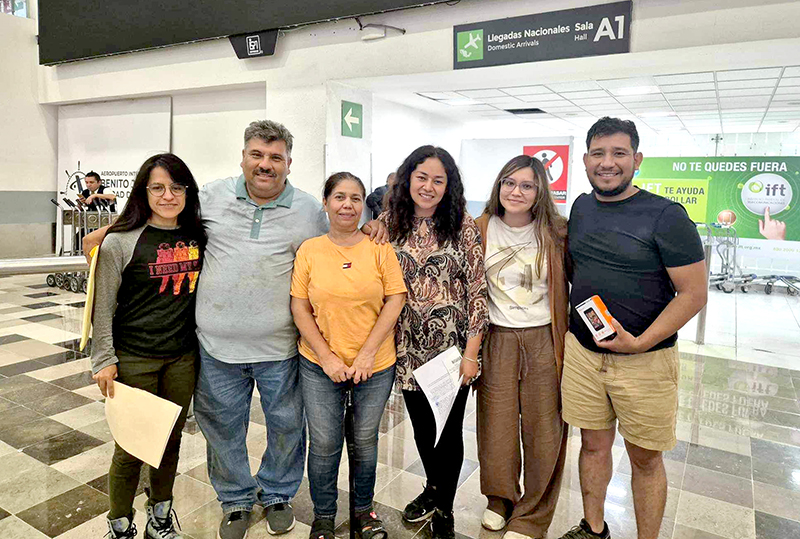
SLM President Isaac Garcia (second from left) and the other five church workers who were kidnapped after returning safely to Mexico City.

MEXICO – Lutherans in Mexico are thanking God for the safe return of President Isaac Garcia of the Lutheran Synod of Mexico (Sínodo Luterano de México – SLM) and five other church workers after they were recently kidnapped.

On September 5, SLM President Garcia was travelling with another pastor and four deaconesses from Mexico City to Cacahoatán, Chiapas in the south of Mexico. “Our intention was to share a workshop with the brothers and sisters on Lutheran identity, to hold a class with the children, to conduct a medical and service brigade, and to finish with Divine Service,” President Garcia explains. “Unfortunately, about 750 kms from Mexico City and five hours from our destination, we were intercepted by two trucks with armed men. We quickly identified ourselves as pastors and told them the purpose of our trip, but they did not care.”

What followed was a harrowing experience. After stripping President Garcia and the others of their money, phones, and other belongings—including their rented van and items that were intended for distribution in Cacahoatán—they were taken off the road to a place where about 24 other people had also been kidnaped. “We were held there for approximately six hours, kneeling, with our eyes closed and some of us blindfolded,” President Garcia says.

“Despite all this, God was with us,” President Garcia continues, “and we were able to feel peace in the midst of the situation, knowing that our lives were in God’s hands, literally living what St. Paul says: ‘For me, to live is Christ and to die is gain.’”

After about six hours, they were finally released. “At that moment, I was able to lead a prayer with all those who had been kidnapped,” President Garcia recalls. “Our intention was to share God’s love in one way” that day, he says, but ultimately “we were able to do so in a different way.” The group eventually made their way safely home to Mexico City.

“After reflecting on the situation, we simply ask God to continue being with us as we know He is,” President Garcia says, “and to keep leading us to those who need to hear, repent, and come to Christ. We pray for all missionaries around the world, that God may watch over and protect them at all times.”

“We are deeply grateful that God safely delivered our brothers and sisters in Mexico from this serious situation,” said Rev. Dr. Klaus Detlev Schulz, General Secretary of the International Lutheran Council (ILC). “May God comfort them with His presence as they recover from this frightening ordeal and encourage them with the knowledge of His love and care for each of them. And may He continue to raise up courageous witnesses for Christ both in Mexico and throughout the entire world.”

The Lutheran Synod in Mexico is a member church of the ILC, a worldwide association of confessional Lutheran churches which proclaim the Gospel of Jesus Christ on the basis of an unconditional commitment to Scripture and the Lutheran Confessions.

———————

ILC Latin America regional conference meets in Mexico

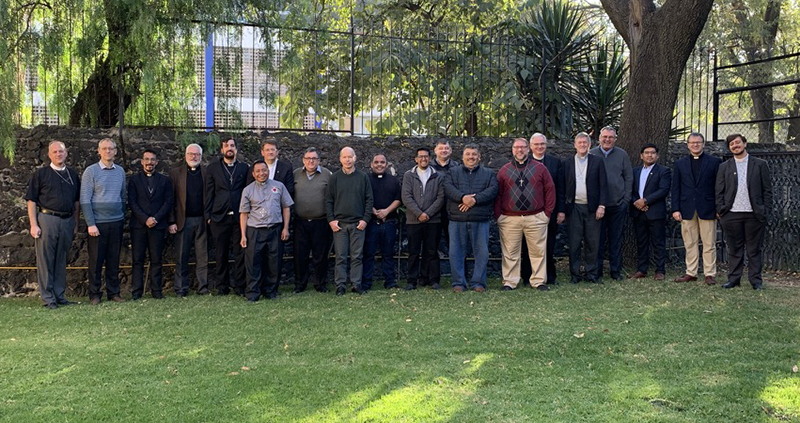
Participants in the ILC’s 2021 Latin America regional conference.

MEXICO – The conference of the International Lutheran Council’s (ILC) Latin America Region met in Mexico City from December 2-5, 2021, following delays due to the pandemic.

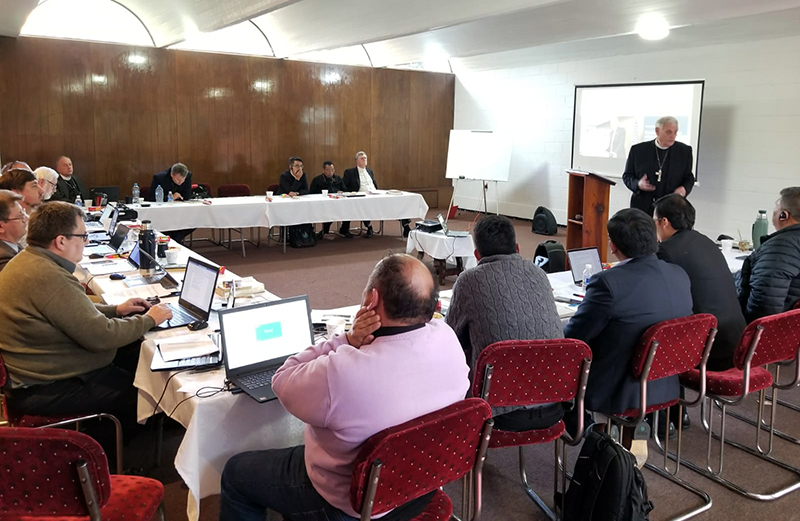
ILC General Secretary Timothy Quill addresses the Latin America regional conference.

The conference brought together representatives from the Evangelical Lutheran Church of Argentina; the Christian Evangelical Lutheran Church of Bolivia; the Evangelical Lutheran Church of Brazil; the Confessional Lutheran Church of Chile; the Lutheran Church of Guatemala; the Lutheran Synod of Mexico; the Lutheran Church of Panama; the Evangelical Lutheran Church of Paraguay; the Evangelical Lutheran Church-Peru; the Lutheran Church of Uruguay; and the Lutheran Church of Venezuela. The ILC’s General Secretary Timothy Quill and Assistant to the General Secretary Roger James were also present, as were a number of other guests.

Theological presentations were given on two themes: 1) “The Confessional Orthodox Lutheran Role in a Heterodox and Subjective Context” (Prof. Dr. Clóvis Prunzel of Concordia Seminary in Sao Leopoldo, Brazil); and 2) “Pastoral Vocation: Lack, Stimuli, and Contextual Factors” (Prof. Dr. Sergio Schelske of Concordia Seminary in Buenos Aires, Argentina). Discussion centered on two areas: 1) the need to recruit a larger number of pastoral candidates; and 2) unique challenges related to opening new missions in each country.

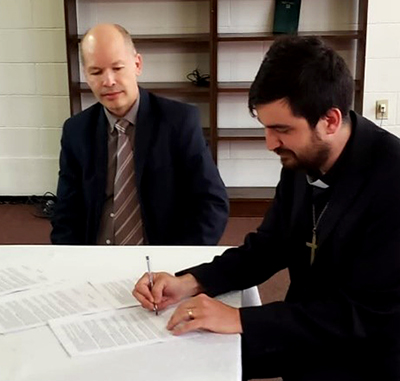
IELA President Arturo Truenow and ILC-Chile President Juan Pablo Lanterna sign a protocol agreement between their two church bodies.

During the conference, the Christian Evangelical Lutheran Church of Bolivia officially announced its intention to seek full membership in the ILC after more than a decade as an Associate Member. Other noteworthy events included the signing of a mutual cooperation protocol between the Evangelical Lutheran Church of Argentina (IELA) and the Confessional Church of Chile (ILC-Chile).

The gathering also celebrated the forthcoming publication of a new Lutheran hymnal in Spanish after fifteen years of work. The hymnal will be welcomed into use throughout Spanish-speaking countries in the region, as well as in other parts of the world.

“It was a great meeting, since it was finally possible to overcome the challenges that have delayed celebrating this moment due to the current pandemic,” noted President Juan Pablo Lanterna of the Confessional Lutheran Church of Chile. “It should be counted as a historic moment.”

———————

From a report by ILC-Chile President Juan Pablo Lanterna

Meetings between Mexican and American Lutherans

2013-12-lcms-mexico

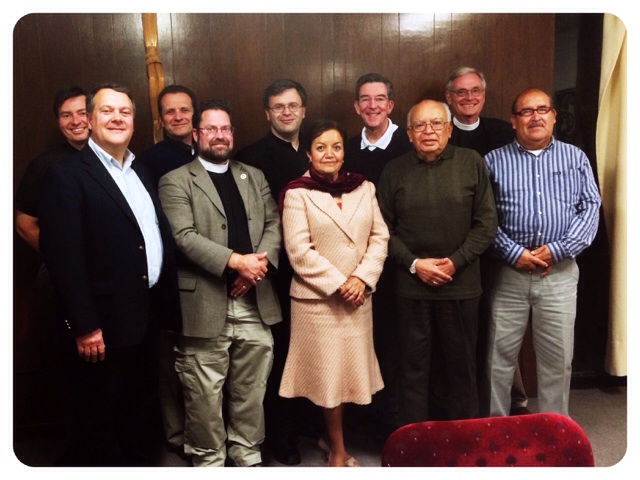
Back row: Rev. Arthur Rickman, Rev. Daniel McMiller, Rev. Ted Krey, Rev. Dr. Scott Murray, Rev. Dr. Timothy Quill. Front row: Rev. Dr. Lawrence Rast, Maria De Lourdes, President Alvaro Lopez Fajardo, Rev. Samuel Peréz.

MEXICO – Representatives of The Lutheran Church–Missouri Synod (LCMS) met with representatives from the Lutheran Synod of Mexico (SLM) on December 16, 2013 in Mexico City, Mexico. In the early 1980s, the LCMS largely withdrew from work in Mexico. On September 29 of this year, the SLM sent a letter to the LCMS’ President Matthew Harrison asking his church to resume and increase its partnership. The LCMS responded by sending Rev. Arthur Rickman to meet with Mexican church officials.

In the meetings, SLM officials explained the challenges faced their nation and their synod. Currently, the SLM has three ordained pastors, and expresses a need for theological education leading to ordained pastors. The church also expressed a need for increasing its Lutheran identity, and deacons and deaconesses.

“It was delightful to renew relationships that had gone fallow and to encourage a church body that felt orphaned,” Rev. Dr. Scott Murray (Fourth Vice President, LCMS) said of the meetings. “We discussed concrete action items for the future that were mutually agreed to. Through these opportunities we look forward to rebuilding our relationship as we walk together in the body of Christ.”

2013-12-lcms-mexico-2

Rev. Roberto Bustamante lectures on Lutheran identity and the theology of the cross.

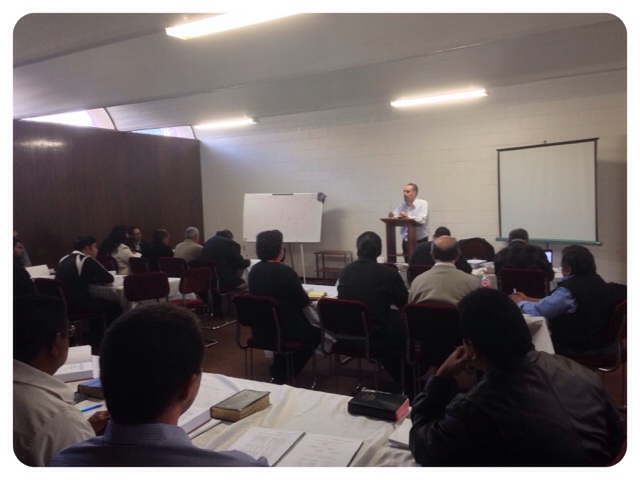
In cooperation with the Luther Academy (an American organization which promotes confessional Lutheran theology), the LCMS sponsored a conference for SLM pastors and laity. Rev. Roberto Bustamante from Concordia Seminary in Buenos Aries, Argentina, served as lecturer, focusing on Lutheran identity and the theology of the cross.

2013-12-lcms-mexico-3

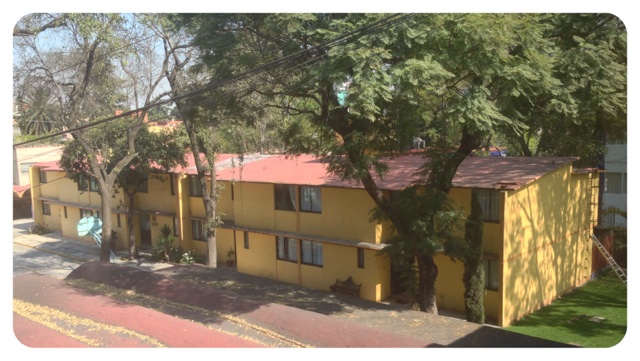
The Lutheran Center in Mexico City.

The conference was held at the Lutheran Center of Mexico City. The Lutheran Center was built in the 1960s largely through the support of the LCMS. As a result of the agreement, the LCMS has a place at the table to discuss how the facility is used to promote Lutheranism in Mexico and Central America. Participants in the event look forward to a closer partnership between the SLM and the LCMS.

Both the SLM and the LCMS are members of the International Lutheran Council (ILC).

——————–

Signup for ILC Updates