News

Posts tagged:

South Africa

The ILC’s 2026 World Seminaries Conference in Brief

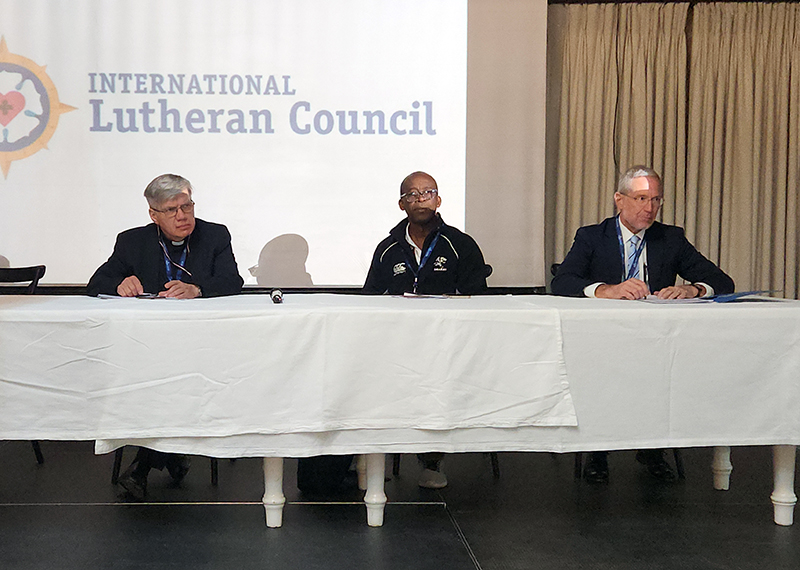
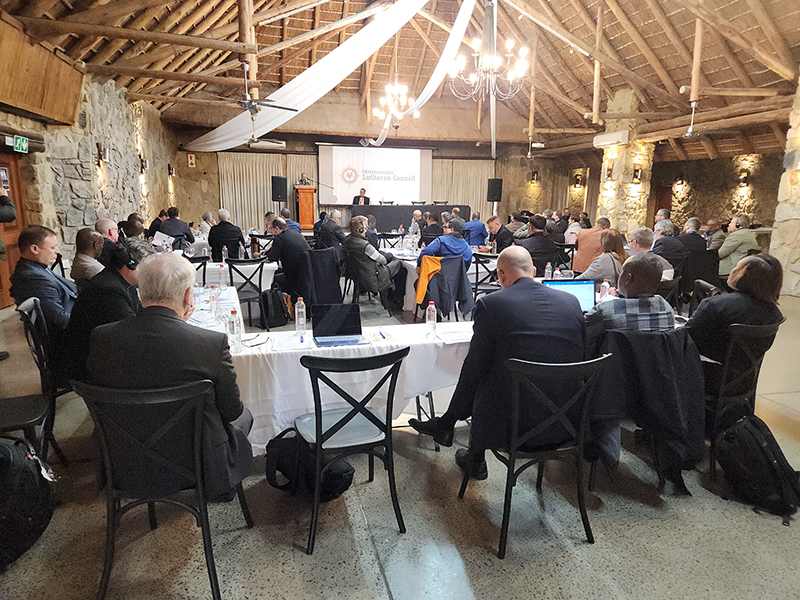
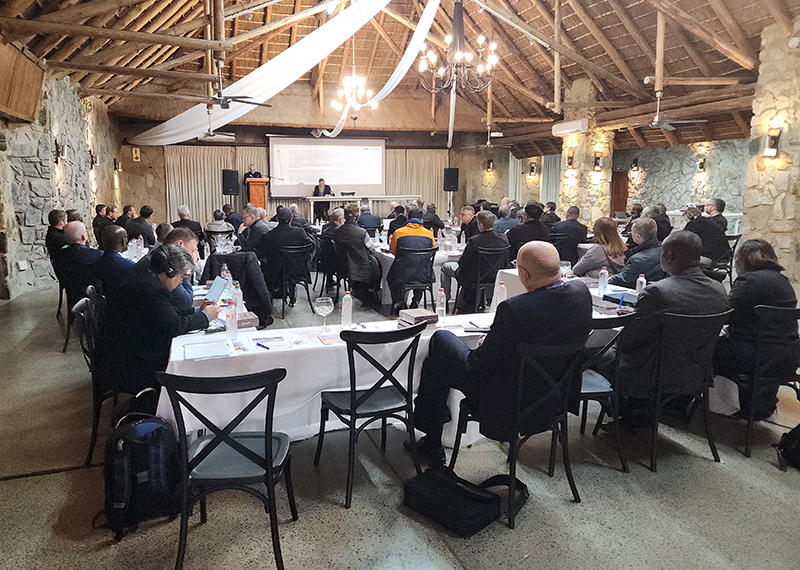
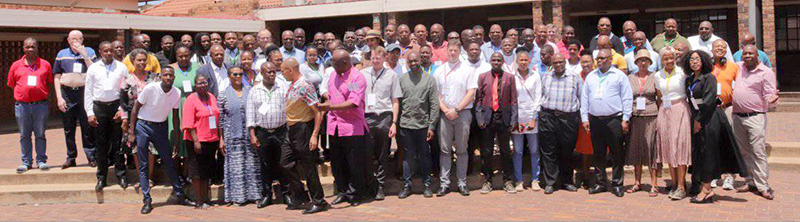
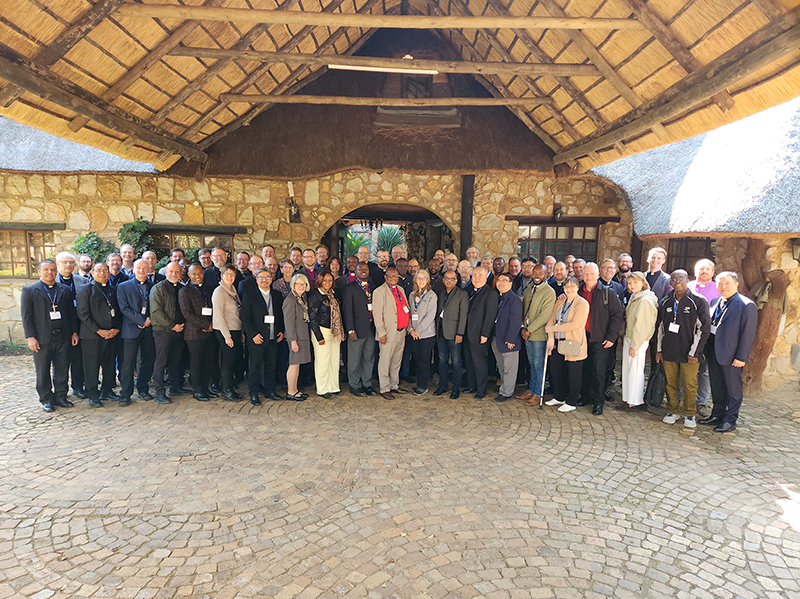
Participants in the ILC’s 2026 World Seminaries Conference in South Africa.

SOUTH AFRICA – The International Lutheran Council’s (2026) World Seminaries Conference took place in Pretoria from June 22-25. The theme for the conference was: “Being Human, Being Christian: Theological Anthropology in Church and Seminary.”

A total of 32 theological schools in 30 nations were represented at the conference, with more than 60 participants in total attending. The host seminary for this year’s event was the Lutheran Theological Seminary in Tshwane, and leaders of the ILC’s three member church bodies in South Africa—the Confessional Lutheran Synod in South Africa (CLCSA), the Free Evangelical Lutheran Synod in South Africa (FELSISA), and the Lutheran Synod in South Africa (LCSA) all participated in the event.

Lectures on Theological Anthropology
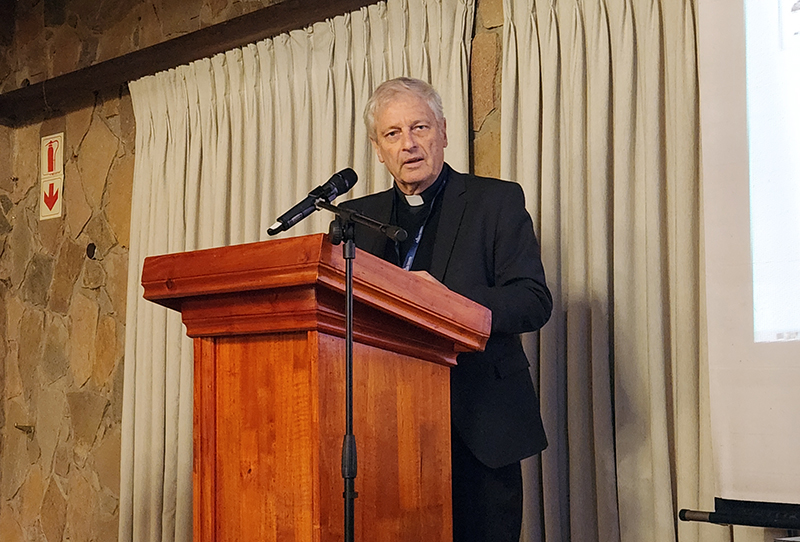
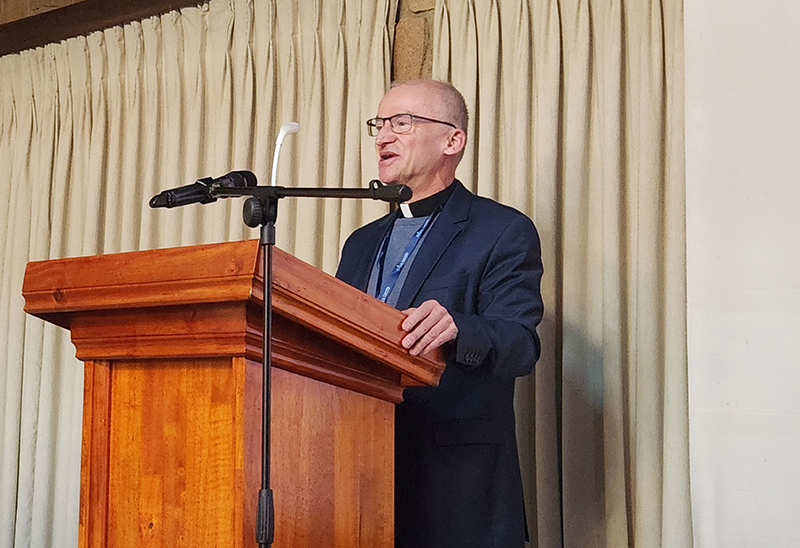
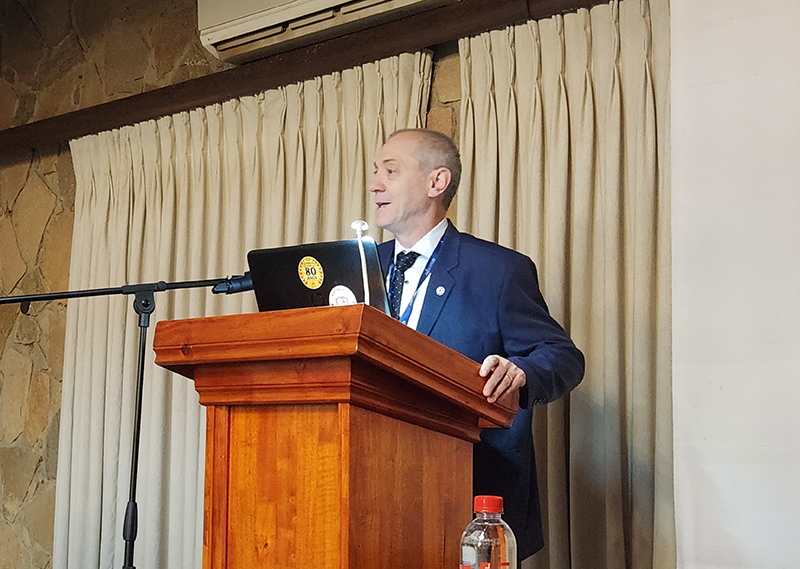
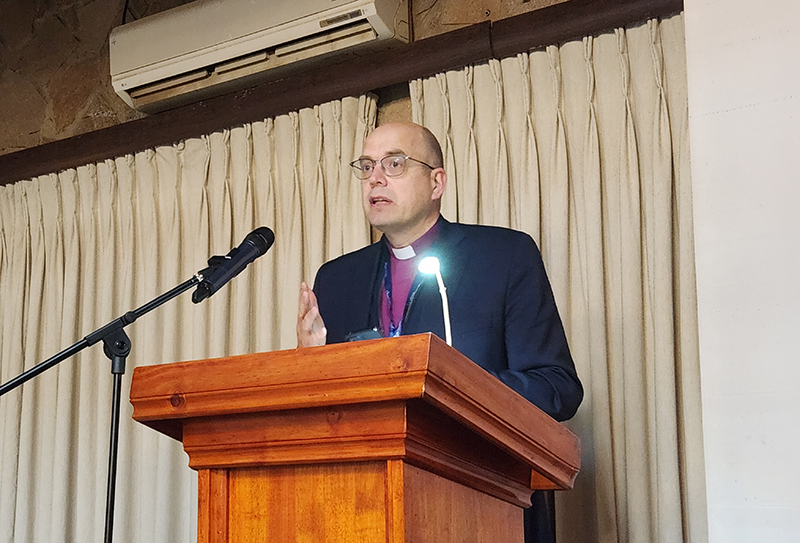
Rev. Dr. Klaus Detlev Schulz presents.
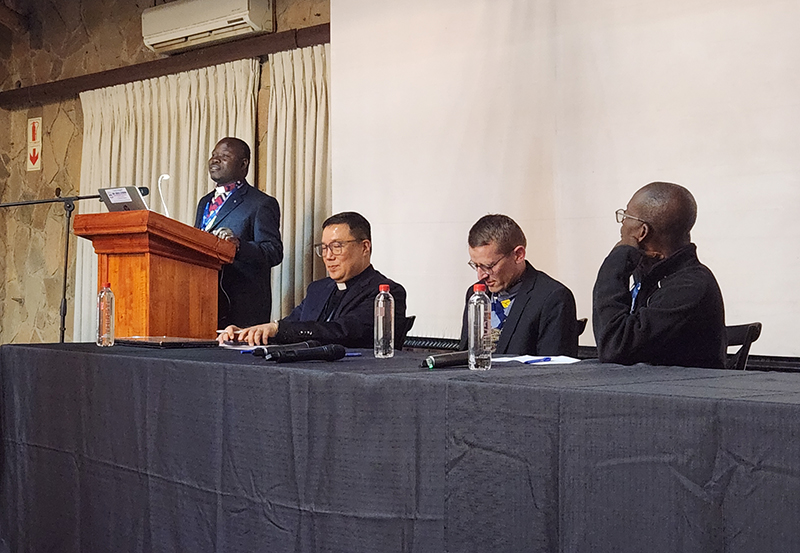
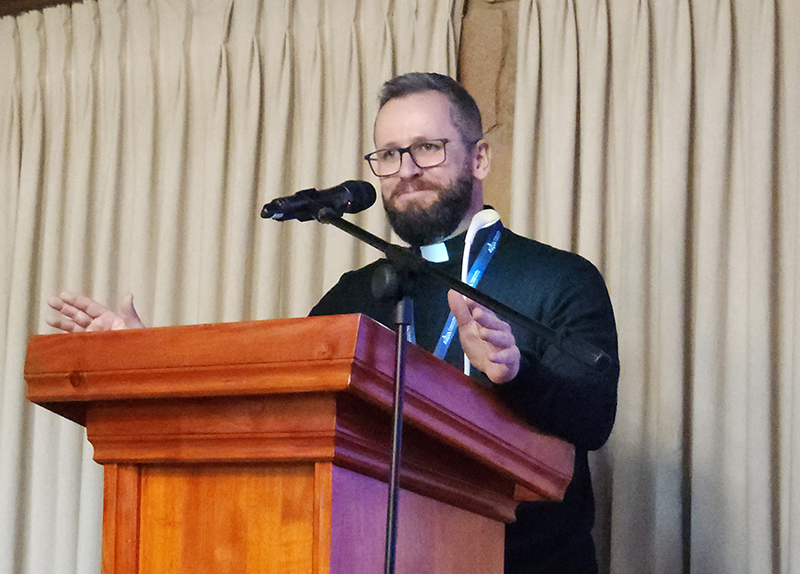
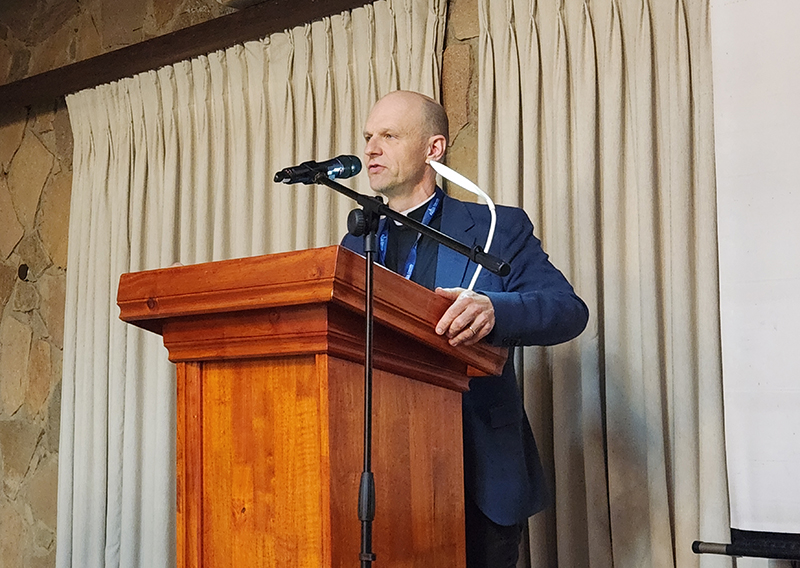
Rev. Dr. Guntis Kalme, Rev. Dr. Ebenezer Boafo, and Rev. Dr. Joel Biermann.

The first day of the conference featured a keynote presentation by ILC General Secretary Klaus Detlev Schulz (Fort Wayne, Indiana), presenting a lecture entitled: “Between Atoms and Illusion: Theological Anthropology Framed by False Epistemologies.” The first day also featured presentations by Rev. Dr. Joel Biermann (St. Louis, Missouri) speaking on “Views on Personhood”; Rev. Dr. Ebenezer Boafo (Accra, Ghana) on “The Incarnated Christ as a Basis for Gospel Communication”; and Rev. Dr. Guntis Kalme (Riga, Latvia) on “The Nicene Pro Nobis: A Lutheran Anthropology for the Digital Age.”
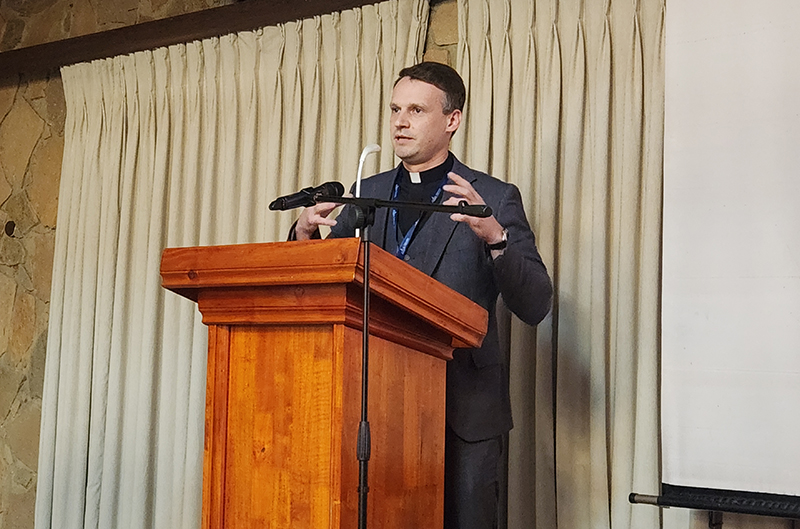
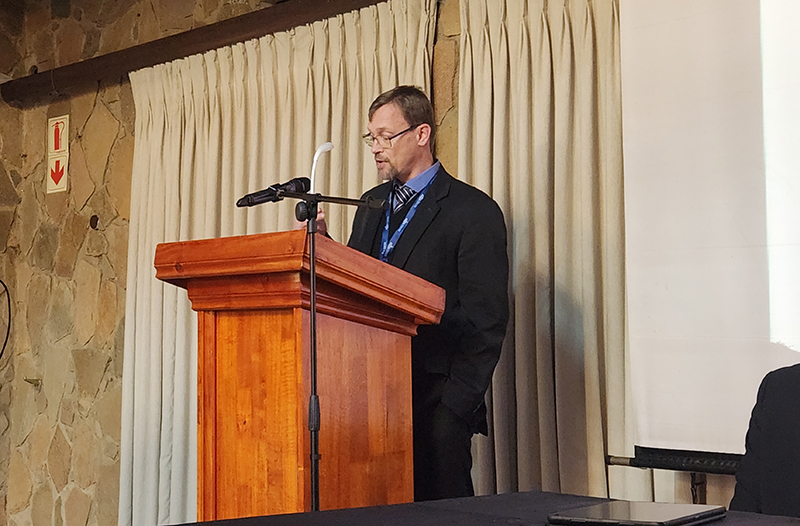
The morning of the second day saw three presentations by Rev. Konstantin Subbotin on “Homo Deus: Anthropotheism as a New Religion of the Modern Age”; Rev. Prof. Clécio Leocir Schadech (Buenos Aires, Argentina) on “Proclaiming the Death of the Lord in the Age of Transhumanism”; and Prof. Dr. Armin Wenz (Oberursel, Germany) on “The Challenge of Transhumanism for Lutheran Dogmatics and Ethics.”
The afternoon of the second day continued with two additional presentations by Rev. Dr. Samuel Furhmann (São Leopoldo, Brazil) on “Towards a Lutheran Theological Response to Secular Egalitarianism” and Rev. Dr. Daniel Johansson (Gothenburg, Sweden) on “Unsuccessful Sanctification as an Argument Against the Biblical View of Sexuality and a Lutheran Response.”
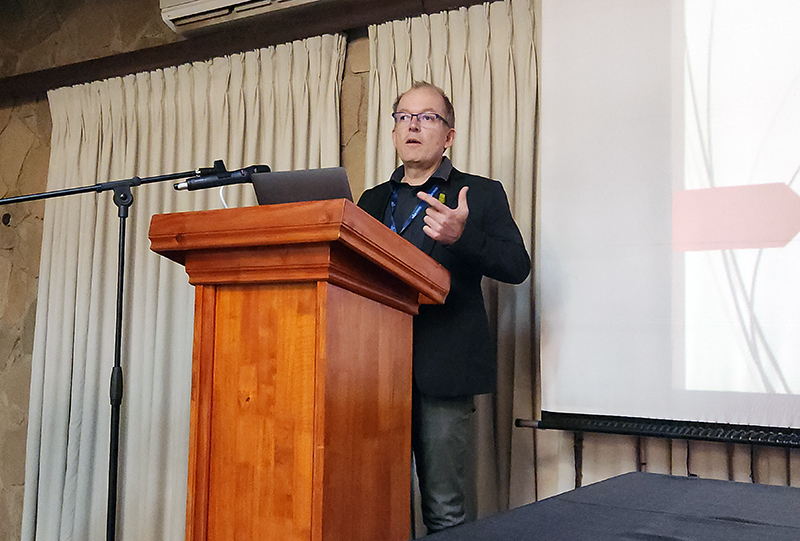
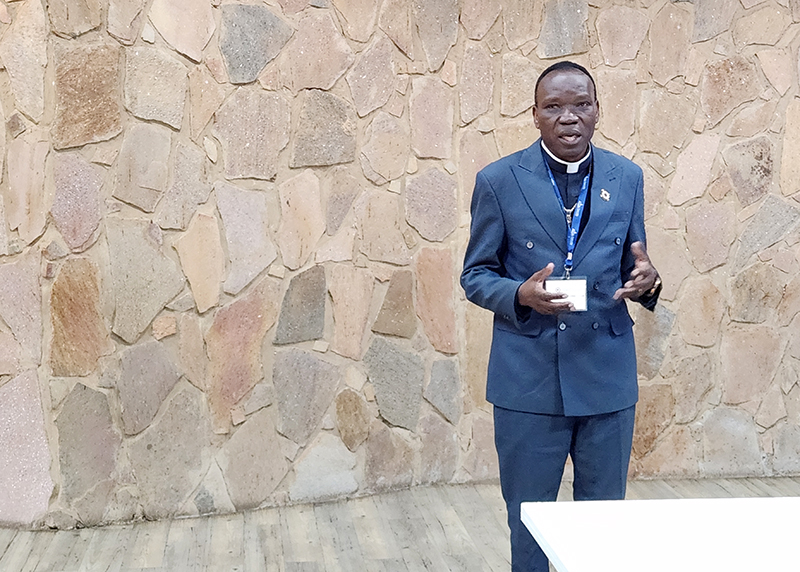
The third day saw parallel presentations by Rev. Dr. Christoph Weber (South Africa) on “Lutheran Anthropology and Sin in Societal Structures” and Rev. Nicholas Kumbo Louis (Sudan and South Sudan) on “Male and Female Relationships in the Church.”
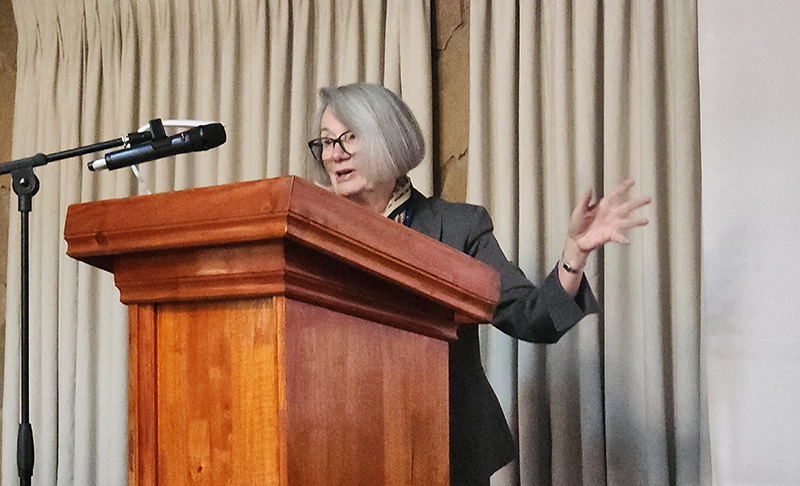
Dr. Cynthia Lumley.

Papers from the conference will be published online at a later date.

Other sessions included a discussion of accreditation led by Dr. Cynthia Lumley of Westfield House (Cambridge, U.K.), as well as a discussion of pedagogy also led by Dr. Lumley. Participants also met for regional meetings, later presenting on regional issues to the wider assembly.

New ILC Seminaries Committee and Closing Service
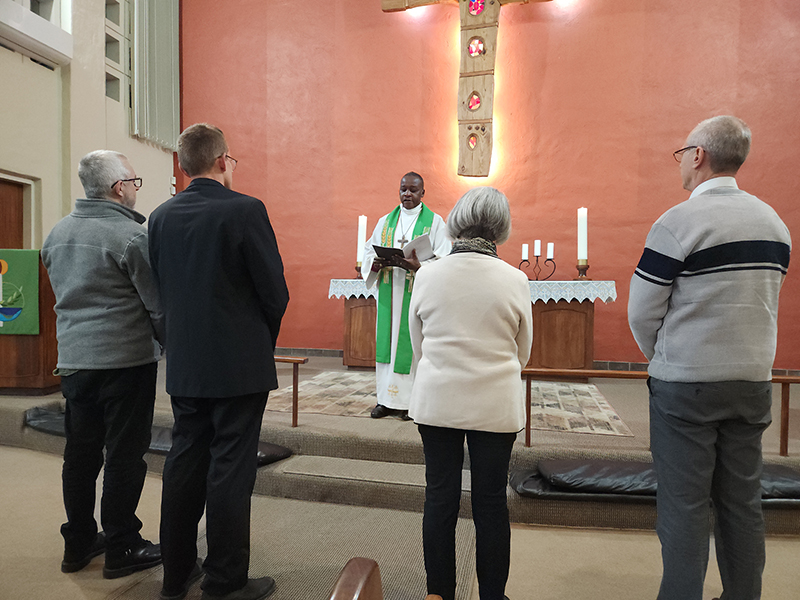
Installation of ILC Seminary Committee members.

The conference also saw the announcement of the new ILC Seminaries Committee. Serving for the next three years are:

  • Rev. Dr. Heinz Hiestermann (Africa)
  • Rev. Dr. Jun Hyun Kim (Asia)
  • Dr. Cynthia Lumley (Europe)
  • Rev. Dr. Sergio Schelske (Latin America)
  • Rev. Kirk Radford (North America)

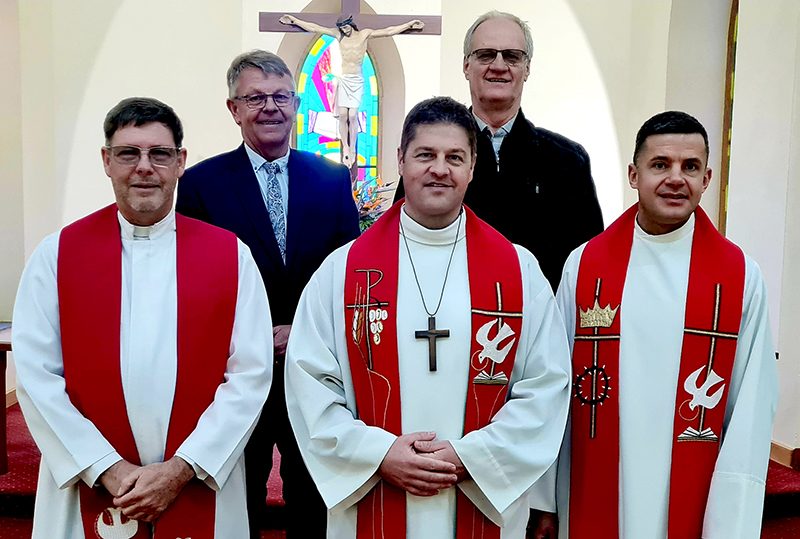
Members of the committee were installed during the conference’s closing service, which was hosted by St. Paul’s Evangelical Lutheran Church in Pretoria, a local FELSISA congregation. After the service, participants enjoyed a braai dinner hosted by the congregation, and had the opportunity to visit the Lutheran Theological Seminary in Tshwane (Pretoria) just down the street.

The final day of the conference saw participants take a historical tour of the region, including visits to the Apartheid Museum, Mandela House, and the Hector Pieterson Memorial.

———————

For more news from the ILC’s 2026 World Seminaries Conference, click here.
2026 World Seminaries Conference: Regional Plans

Participants in the ILC’s 2026 World Seminaries Conference.
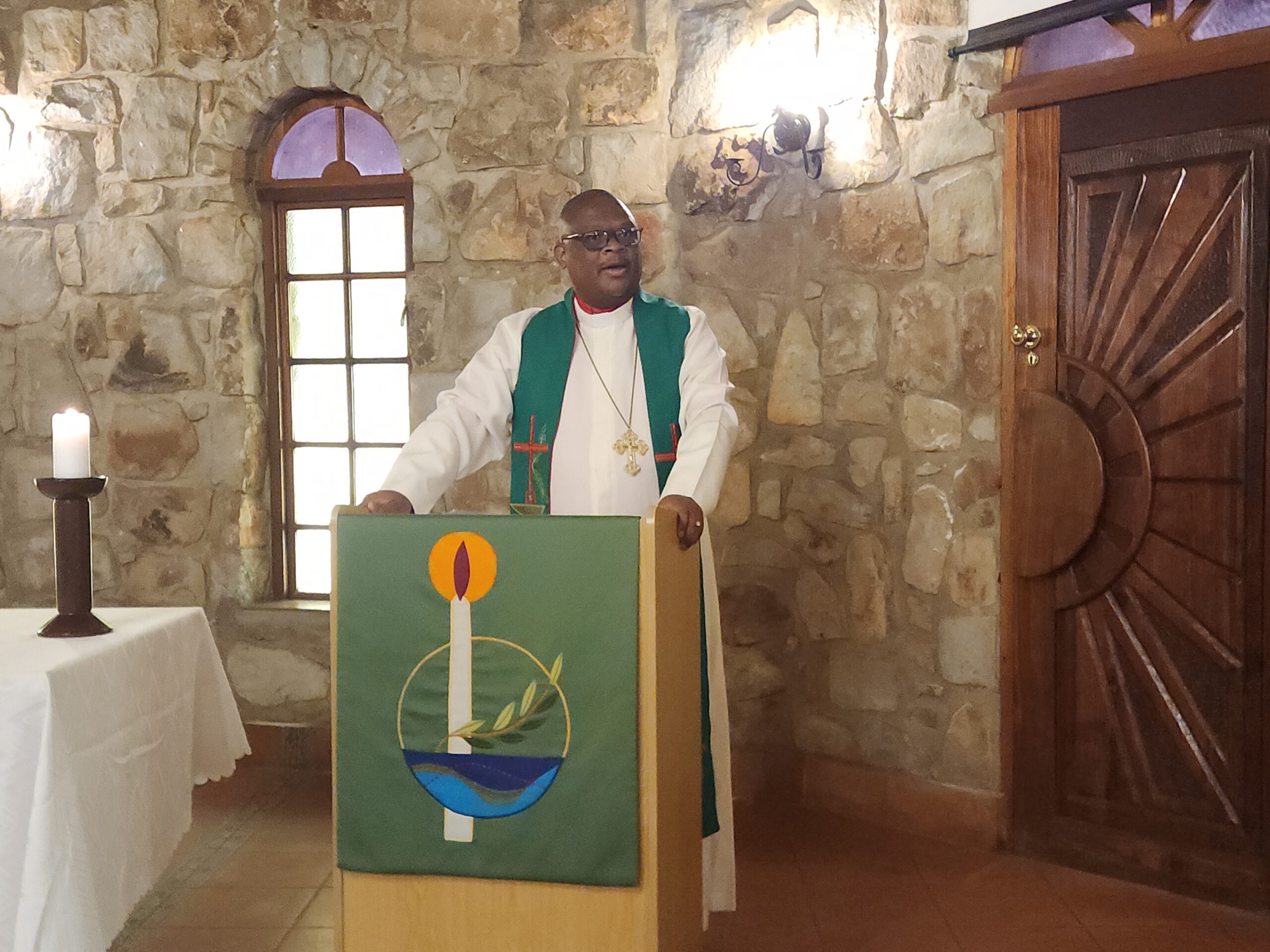
LCSA Deputy Bishop Boss Sebeelo.

SOUTH AFRICA – The third morning of the International Lutheran Council’s (ILC) 2026 World Seminaries Conference saw representatives from each of the ILC’s world regions present to the wider assembly. The reports arose from regional meetings held earlier in the week.

The day began with a service of Responsive Prayer, at which Deputy Bishop Boss Sebeelo of the Lutheran Church in Southern Africa (LCSA) preached.

The first region to report to the assembly was North America, with Rev. Dr. Roland Ziegler of Concordia Theological Seminary (Fort Wayne, Indiana) speaking on behalf of the group. Dr. Ziegler highlighted the current level of cooperation and contact between seminaries in his region, while noting that additional meetings between the leadership of ILC seminaries in North America would be valuable. He also spent much of his time discussing the challenge of generative AI for seminary education today, suggesting that sharing policies on this issue between ILC churches could be helpful.

The European Region reported next, with comments from several representatives. Prof. Dr. Armin Wenz of the Lutherische Theologische Hochschule (Oberursel, Germany) introduced the region’s report, followed by Rev. Dr. Daniel Johansson of the Lutheran School of Theology (Gothenburg, Sweden) who used his institution’s cooperation with institutions in Latvia, Fort Wayne, Russia, and Ethiopia as an example of how ILC seminaries can work together.

Rev. Sakarias Ingolfsson (Norway and Iceland) spoke about the work of his church’s Ad Fontes program in Norway, noting how small schools like his own would benefit from closer collaboration between ILC seminaries. To address this need, the European Region intends to develop a list of professors and instructors, along with their languages, who would be willing to serve as guest instructors at other institutions. Plenary conversation later suggested similar ideas would be helpful for many regions.

Rev. Dr. Alexey Streltsov of the Lutheran Theological Seminary (Novosibirsk, Russia) noted plans to develop regular meetings between representatives of ILC theological institutions in Europe. The hope is that different institutions could host these gatherings each time, and that the discussions would allow for more in depth debate and discussion

The report from the Asian Region was given by Rev. Michael Prenzler of Lutheran Mission–Australia. After noting the current opportunities and challenges facing ILC theological institutions in the region, he noted plans to begin holding regular online meetings to foster greater communication and cooperation between seminaries in Asia, as a complement to in-person international gatherings like the World Seminaries Conference.

The Latin American Region was represented by Rev. Dr. Sergio Schelske of Seminario Concordia (Jose Leon Suarez, Argentina). He noted that a major focus for seminaries in Latin America at present is planning for the 500th anniversary of Luther’s Catechisms in 2029 and the Augsburg Confession in 2030. To that end, the seminaries are discussing possible areas of cooperation to mark the event, including developing video resources, Bible studies, and a special issue of the Argentinian church’s theological journal Revista Teológica; holding virtual region-wide conferences; and creating traveling exhibitions, among other ideas.

Rev. Peter Maganda presents for the African Region.

The African Region’s report was presented by Rev. Peter Maganda of the Lutheran Theological College Uganda (Jinja, Uganda). He noted that accreditation continues to be a challenge for African theological institutions but that for some—in Tanzania and Uganda, for example—progress is being made. He also noted the opportunities and challenges related to French seminary education in the region. Rev. Dr. Ebenezer Boafo of the Lutheran Theological Seminary Ghana (Accra, Ghana) also spoke, noting the region’s need for more resources written in easily-accessible English to assist students whose first language is not English.

Commemoration of the Augsburg Confession

ILC Chairman Juhana Pohjola.

ILC Chairman Juhana Pohjola also spoke in the morning, noting the Commemoration of the Augsburg Confession. He reported on the ecumenical discussions taking place between ILC Lutherans and Roman Catholics through the Augustana Working Group (AWG).

He noted that the AWG hopes to produce an academic book which brings together Lutheran and Catholic essays addressing the various subjects discussed by the working group. The book will be published in both German and English, and hopefully other languages.

He encouraged ILC seminaries to study the work once it is made available, in the hopes that it will not only provide insight into Lutheran-Catholic relations but also enrich our own mutual discussions within the ILC.

———————

For more news from the ILC’s 2026 World Seminaries Conference, click here.
2026 World Seminaries Conference: Addressing Transhumanism

SOUTH AFRICA – The International Lutheran Council’s (ILC) 2026 World Seminaries continued on June 24, with the conference turning to a discussion of transhumanism.

CLCSA Lead Pastor Given Masemola.

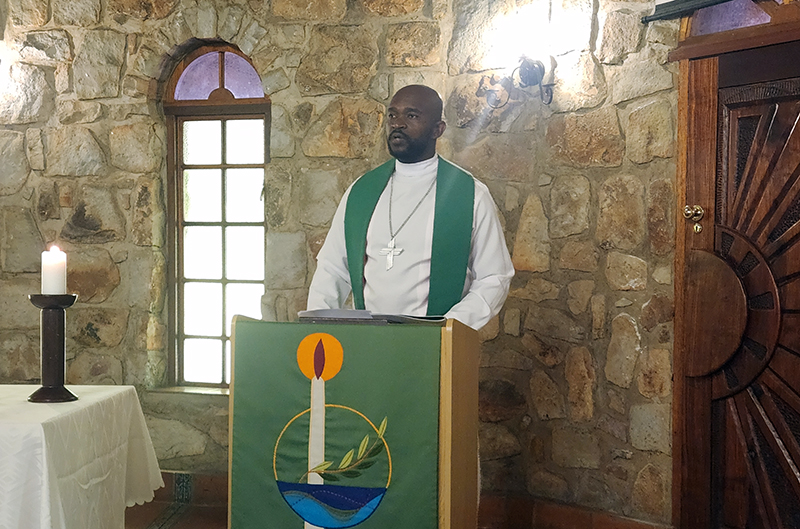
The morning began with a service of Matins, with Lead Pastor Given Masemola of the Confessional Lutheran Church of South Africa (CLCSA) preaching.

The day continued with the conference’s second series of three presenters. Rev. Konstantin Subbotin, Rector of the Theological Institute of the Church of Ingria (Koltushi, Russia), spoke on “Homo Deus: Anthropotheism as a New Religion of the Modern Age.” Rev. Prof. Clécio Leocir Schadech of Seminario Concordia (Buenos Aires, Argentina) gave a paper entitled: “Proclaiming the Death of the Lord in the Age of Transhumanism.” And Prof. Dr. Armin Wenz of the Lutherische Theologische Hochschule (Oberursel, Germany) presented “The Challenge of Transhumanism for Lutheran Dogmatics and Ethics.”

Rev. Subbotin outlined the historical figures and movements which laid the philosophical foundation for modern transhumanism, anthropotheism, and what is now being called anthropotechnotheism.

Rev. Konstantin Subbotin.

In many ways, Rev. Subbotin explained, modern anthropotheism functions as a kind of religion, but in a “non-institutional and unorganized” manner, Rev. Subbotin explained. “This is a religion without a church.”

Key features of this ideology, which can be understood as a sort of “religious application of scientism,” is that it “admits the ongoing evolution of mankind and further developments of the human species” through the application of new technology. “The ultimate goal,” he explained, “is prolonging life and eventually eliminating death”—to “achieve immortality” through technology.

In addition to immortality, humanity also seeks to achieve “omnipresence with the help of the infosphere,” “omnipotence with the help of cutting-edge technology,” and “omniscience with the help of AI.” This is, Rev. Subbotin said, a sort of deification of humanity—a temptation similar to that of Genesis: “You will be like gods.” And while this modern religion may not be institutional in nature, its pervasiveness in contemporary culture makes it an issue that “we need to consider in missionary work and theological studies.”

Prof. Schadech prefaced his talk by noting he was focused on analyzing the practical implications of transhumanism rather than its philosophical underpinnings. He noted the optimism of transhumanists in their goal of conquering death. “But is it realistic?” he asked. “They remain incapable of dealing with the deepest reality of death, whose true significance is revealed only in the death and resurrection of our Lord Jesus Christ.”

Prof. Clécio Leocir Schadech.

Transhumanists believe they will find a way to cheat death, be it through “biological immortality,” “bionic immortality,” or “virtual immortality.” But even if these projects were possible, they would not truly defeat death. “In the end, the ‘dragon’ is still alive,” Prof. Schadech said. After all, “the risk of an accident is always present.”

The problem with transhumanism is that it fails to take seriously the reality of human sin. “Sin came into the world and entered into the entirety of human flesh,” he noted, “corrupting [man’s] decisions, understanding, knowledge, beliefs” in addition to his body. And sin brought with it the dragon death, and this dragon is merciless: “ It will find a way to destroy the future cybernetic world.” The answer to the problem of sin and death is found only in the death and resurrection of Jesus, who has conquered the dragon. “Every human being needs to be saved because all are under the same condition of sin and death,” Prof. Schadech said.

In the face of transhumanist ideology, theological educators should emphasize the teaching of correct theological anthropology, focus on pastoral care for those afraid of death, and embrace a theology of mission that addresses the transhumanist worldview, encouraging people to faith in the death and resurrection of Christ—for God “only can give life everlasting.”

Dr. Wenz began by discussing the ideology of transhumanism, suggesting that “its overall promise and goal can be summarized with the term ‘enhancement.’” But transhumanism’s pursuit of such enhancement can cause significant “collateral damages… on its path to a supposedly brighter future”—including for example, the use of pressure or even law to enforce a transhumanist agenda.

Dr. Armin Wenz.

In addition, we must note “the immense difference” which exists “between the Christian faith based on Scripture and expressed in our confessions and the transhumanist belief system,” Dr. Wenz said. “Transhumanism must be perceived both as a mimicry and as a fundamental reversal of God’s work in creation, salvation, and consummation as revealed in the Scriptures.”

Dr. Wenz noted three ways in which transhumanism challenges Christian teaching. First, he noted its goal of the deification of humanity not through “salvation from sin and the curse that determines the relationship between God and man,” but instead through “salvation from the bodily limitations of a human life.” Secondly, he said transhumanism teaches a “gospel of enhancement which overcomes pain and suffering with all means available”—something akin to “the ancient theology of glory” and a “gospel of prosperity.” Thirdly, it teaches a constructive postmodernism in which “man is not passively receiving divine gifts in creation, salvation, and eschatological consummation, but is the active agent of his own self-realization.”

“Most of these errors have not entered the world with transhumanism, but with the fall of mankind,” Dr. Wenz noted. “Therefore, the criteria to counter the transhumanist errors will ever again be the same criteria and means by which God Himself treats this human defection through Law and Gospel.”

And we must not only pursue a dogmatic response to transhumanism, Dr. Wenz said; we must also pursue a pastoral approach. He concluded: The church’s task even now is to witness to the one and true God who for the sake of eternally being in relationship with us human creatures was incarnate, born of the virgin, suffered death on the cross, defeated sin and death, and bodily rose again in order to share with us, His ever-dying, suffering, but also richly gifted fellow humans this very victory and all the salutary benefits that flow from it.”

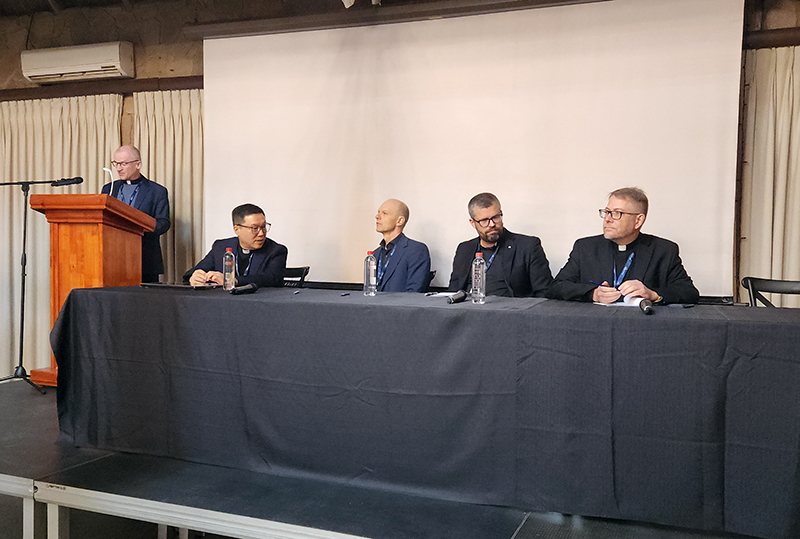
Round table discussion followed the presentations, followed by plenary discussion.

Greetings from LBT

Lutheran Bible Translators presents at the ILC’s 2026 World Seminaries Conference.

A presentation from Lutheran Bible Translators (LBT) closed out the morning session. Attendees learned about the work of LBT and the need to make the Word of God available in the heart languages of people groups who do not yet have access to Scripture in their own language. This need can also impact theological education as well. For example, students who study Scripture and theology only in a second language (and not their heart language) may not gain a clear understanding of Scripture. Alternately, they may end up able to do theology in their language of study but never develop the ability to do so in their heart language, thus hampering their ability to minister.

The presentation invited all of the seminaries and institutions represented at this conference to check whether any of their students have a heart language in which Scripture is not yet available and, if so, to contact LBT. LBT also encouraged the institutions in attendance to teach translation principles so that students would be prepared to translate important resources into the languages of their parishioners.

LBT is a recognized organization member in the International Lutheran Council. As a gift from LBT, all attendees at the World Seminaries Conference received a thumb drive.

———————

For more news from the ILC’s 2026 World Seminaries Conference, click here.
2026 World Seminaries Conference begins in South Africa

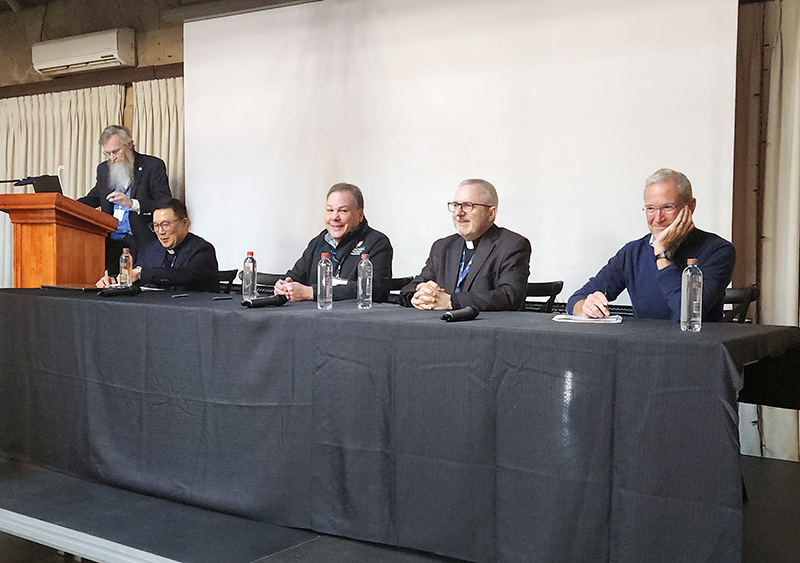
Participants in the ILC’s 2026 World Seminaries Conference.

SOUTH AFRICA – The International Lutheran Council’s (ILC) 9th World Seminaries Conference opened on June 23 in Pretoria, South Africa. The theme for this year’s conference is “Being Human, Being Christian: Theological Anthropology in Church and Seminary.”

FELSISA Bishop Helmut Paul preaches during the opening service.

The conference began with a service of Matins, with Bishop Helmut Paul of the Free Evangelical Lutheran Synod in South Africa (FELSISA) preaching.

Following the service, the conference received greetings from Rev. Dr. Klaus Detlev Schulz, General Secretary of the ILC. The conference also received greetings from the ILC’s three member churches in South Africa: FELSISA, the Lutheran Church in Southern Africa (LCSA), and the Confessional Lutheran Church in South Africa (CLCSA).

We are delighted that you are here as delegates, as professors, as seminary leaders, church representatives, and guests. May God give you a pleasurable time here in South Africa,” Bishop Paul of FELSISA said. “It is a joy that this conference can be co-hosted with the sister churches of the LCSA, FELSISA, and Confessional Lutheran Church in South Africa.”

Deputy Bishop Seeblo Boss of the LCSA also greeted participants. “May our time together be productive, enriching, and inspiring,” he said, “as you seek to equip future generations of pastors, theologians, and church leaders, for faithful, effective and Christ-centered service.”

Lead Pastor Given Ntokozo Masemola of the CLCSA also brought greetings: “We are grateful for the opportunity to be present at this gathering and to share in the fellowship of the International Lutheran Council,” he said. “We thank God for bringing us together around His Word and for the unity we share in the confession of the Gospel.”

Between Atoms and Illusion

ILC General Secretary Klaus Detlev Schulz presents on theological anthropology.

Dr. Schulz then presented the first paper of this year’s conference: “Between Atoms and Illusion: Theological Anthropology Framed by False Epistemologies.” Dr. Schulz is ana authority on the conference topic, having authored the book Theological Anthropology and Sin.

In his talk, Dr. Schulz discussed two epistemological approaches to anthropology: scientific empiricism and subjective idealism. The former “focuses on what is real and scientifically observable,” he noted, while the latter “posits reality as a mental construct.”

Scientific empiricism is ultimately a “reductionist view,” Dr. Schulz said, in which “everything, including consciousness and the mind, can be explained by scientific laws and principles, and the universe is entirely describable in terms of physics, chemistry, and biology.” In this view there is no separately existing soul outside the body and no such thing as free will. Instead, “humans are seen as mere machines.”

Such a position naively assumes that reason “can know” reality “exactly, exhaustively and without bias,” Dr. Schulz noted.  It further reduces humanity to mere “matter or atoms,” thus diminishing “the value of human life,” he said, by limiting humanity to a mere description of what we are made of without also considering what we are capable of.

Subjective idealism, social constructionism, and self-expression on the other hand present a different view of anthropology. Social constructionism “holds that characteristics such as social orders, gender, race, class, ability, and sexuality are products of human definition and interpretation,” he explained. While “it is important and true to affirm that the world around us interacts with us, so that the reality of that world and its structures are shaped by our perception,” he said, it is nevertheless also true that we “do not fundamentally construct… reality in the sense of bringing it into being.”

For Lutherans, then, “anthropology must begin with reality itself and understand it as something that corresponds to—and even corrects—human perception and subjectivism,” Dr. Schulz explained. “Thus, we affirm ontology (reality) first, then epistemology, the mental interpretation of reality.”

Lutherans must recognize the shortcomings of both scientific empiricism and subjective idealism, Dr. Schulz concluded, noting that theological anthropology “offers the most comprehensive account of what it means to be human.”

Accreditation

The morning continued with a discussion of accreditation introduced by Dr. Cynthia Lumley of Westfield House and Dr. Schulz. Dr. Schulz noted the value of seeking accreditation, and the importance of this being spearheaded by members of individual seminaries themselves.

Principal Cynthia Lumley of Westfield House presents on accreditation.

Dr. Lumley presented a report on the current status of ILC seminaries and theological institutions, detailing the different situations facing institutions which are currently accredited, those actively seeking accreditation, and those which are currently non-accredited. She went on to outline general steps towards achieving and maintaining accreditation.

The conference then broke into smaller discussion groups to discuss the value and challenges of accreditation, with each small group composed of representatives from both accredited and non-accredited institutions. The groups then presented back to the larger assembly.

Greetings from CPH

CPH President Jonathan Schultz presents.

The morning concluded with a presentation from Concordia Publishing House (CPH) on how it can assist Lutheran seminaries around the world. CPH President Jonathan Schultz and Vice President Jacob Corzine each spoke, highlighting the resources published by CPH (such as the Concordia Commentary series and new volumes of Luther’s Works) and inviting members to talk with them about opportunities for closer cooperation.

Each participant at the conference was presented with a physical copy of The Lutheran Study Bible. The Lutheran Theological Seminary in Tshwane—the joint seminary of FELSISA and the LCSA, and the host of this year’s World Seminaries Conference—was also presented with a collection of recent books from CPH as a gift for their library.

Concordia Publishing House partners with the International Lutheran Council on a number of projects, including the Lutheran Leadership Development Program, as well as in providing faithful Lutheran resources for pastors in ILC churches around the world.

———————

For more news from the ILC’s 2026 World Seminaries Conference, click here.
CLSSA Interim Bishop concludes service

Bishop David Tswaedi.

SOUTH AFRICA – The Confessional Lutheran Synod of South Africa (CLSSA) is honouring Bishop David Tswaedi upon the completion of his service as Interim Bishop.

Bishop Tswaedi was called to serve as Interim Bishop following the sudden death of the CLSSA’s founding Bishop, Mandla John Khumalo, in 2021. Bishop Tswaedi served as Interim Bishop from March 2022 to December 2025.

The history of the CLSSA dates to 1989, when Bishop Mandla Khumalo founded St. Peter Confessional Lutheran Church in Middelburg. The church would go on to start additional congregations and preaching stations, as well as a school, leading to the eventual formation of the CLSSA.

As an intentional Interim Bishop, Rev. Dr. David Tswaedi helped lead the CLSSA through a difficult transition following the death of their founding bishop. He also led the church body from observer membership to full membership in the International Lutheran Council (ILC) in 2024. Bishop Tswaedi further worked to strengthen the church’s relations with the Lutheran Church in Southern Africa (LCSA), the Free Evangelical Lutheran Synod in South Africa (FELSISA), and The Lutheran Church—Missouri Synod (LCMS), as well as Christian Outreach for Africa (COFA).

Bishop Tswaedi (right) and Rev. Masemola (second from right), along with other pastors of the CLSSA in 2024.

Bishop Tswaedi served as Bishop of the Lutheran Church in Southern Africa (LCSA) from 1993-2009, when he declined to stand for reelection. In addition to serving the LCSA, Bishop Tswaedi has served African Lutherans in numerous ways, including through his involvement with the Lutheran Theological Seminary (LTS) in Tshwane, as well as his service as Executive Director of the Lutheran Communion in Southern Africa (LUCSA). He further served as Africa Region representative on the International Lutheran Council’s Executive Committee from 1997-1999. Bishop Tswaedi originally planned to retire in 2021 before receiving the unexpected call to serve as intentional Interim Bishop for the CLSSA.

Bishop Tswaedi is succeeded as lead pastor of St. Peter Confessional Lutheran Church in Middelburg by Rev. Given Masemola, who was ordained by Bishop Tswaedi in 2024. The leadership of the LCSSA itself will be determined at a later synod still being planned at this time.

———————

The International Lutheran Council is a global association of confessional Lutheran church bodies dedicated to the proclamation of the Gospel of Jesus Christ, grounded in the authority of Scripture and the Lutheran Confessions.

With notes from Rev. Bill Wangelin (Lansing, Michigan)

Lutherans in Malawi enter into fellowship with FELSISA

CLCMS President Davis Wowa and FELSISA Bishop Emeritus Dieter Reinstorf at the CLCMS’ 2024 convention.

MALAWI – The Free Evangelical Lutheran Synod in South Africa (FELSISA) has entered into fellowship with the Confessional Lutheran Church – Malawi Synod (CLCMS).

The official ratification of fellowship came during a vote at the CLCMS’ first synodical convention, held August 1-5, 2024 in Mzuzu, Malawi. The FELSISA had previously voted during its 2023 synodical convention to also declare fellowship with the church in Malawi. The votes in both church bodies passed unanimously.

Delegates to the CLCMS’ convention.

This was the culmination of a process that began in 2019, when FELSISA’s synodical council first decided to hold talks with the CLCMS. The pandemic put those plans on hold, but they recommenced when FELSISA Bishop Dieter Reinstorf was invited to Malawi to teach theology in 2022.

Bishop Emeritus Reinstorf and President Wowa celebrate the declaration of fellowship between FELSISA and CLCMS.

Rev. Dr. Reinstorf retired as bishop of FELSISA in 2023, but he was invited to attend the CLCMS’ first synodical convention as a representative of the South African church. “It was an honour to attend the convention of this rather young but vibrant church,” he said. “Having learned so much on my trip to Malawi, I praise God and pray that the partnership between the CLCMS and the FELSISA will blossom, leading to renewed trust in our faithful God.”

The FELSISA is a member, and the CLCMS an observer member, of the International Lutheran Council (ILC), a global association of Lutheran church bodies and groups, dedicated to proclaiming the Gospel of Jesus Christ on the basis of a shared commitment to the authority of Scripture and the Lutheran Confessions.

———————


New bishop for Lutheran Church in Southern Africa

Participants in the LCSA’s 2024 General Synod.
LCSA Bishop Elect Sithole.

SOUTH AFRICA – The Lutheran Church in Southern Africa (LCSA) held its 21st General Synod from December 9-12, 2024, in White City, Jabavu, Soweto, during which time the church elected a new bishop: Rev. Dr. Sibongiseni Elliot Sithole.

In June 2024, Dr. Sithole was installed as Head of the Department for Biblical Studies at Lutheran Theological Seminary in Tshwane (Pretoria), South Africa, where he also serves as student support coordinator. He previously served as a part-time lecturer with the seminary for many years. He also served with the Bible Society of South Africa on the revised isiZulu translation of the Bible.

CAPTION: Bishop Elect Sibongiseni Elliot Sithole (right) and the new church council elected during the LCSA’s 2024 General Synod.

Dr. Sithole holds a S.T.M. and a Ph.D. in Missiology from Concordia Theological Seminary in Fort Wayne, Indiana, where his doctoral supervisor was Rev. Dr. Klaus Detlev Schulz. “It is a joy to congratulate Elliot on his recent election,” said Dr. Schulz, who also serves as General Secretary of the International Lutheran Council (ILC). “Elliot and I spent our childhood together at Enhlanhleni, KwaZulu Natal. I’m very happy for him, and pray that God will bless his ministry on behalf of the church in South Africa.”

Bishop Elect Sithole succeeds Bishop Modise Maragelo, who did not stand for reelection. Bishop Maragelo was first elected to serve as head of the LCSA in 2015, and was reelected to a second five-year term in 2019.

A service of installation for Bishop Elect Sithole is scheduled to take place on February 23 in Salem (Piet Retief/Mkhondo).

Among other business during its General Synod, the Lutheran Church in Southern Africa also heard reports and conducted elections for other positions on the LCSA’s church council.

The Lutheran Church in Southern Africa is a member church of the International Lutheran Council, a global association of confessional Lutheran church bodies and groups which proclaim the Gospel of Jesus Christ on the basis of an unconditional commitment to Holy Scripture and to the Lutheran Confessions.

———————

New FELSISA Bishop for South Africa

Bishop Helmut Paul (centre-front) and other newly elected members of FELSISA’s Synodical Council.

SOUTH AFRICA – The Free Evangelical Lutheran Synod in South Africa (FELSISA) held its synodical convention May 25-27, during which time the church elected a new bishop: Rev. Helmut Paul. The installation service took place on May 27 in Lüneburg, South Africa, with retiring Bishop Dieter Reinstorf officiating. 

Bishop Helmut Paul

“I rejoice in the election of Rev. Helmut Paul as the new FELSISA bishop,” said Rev. Dr. Timothy Quill, General Secretary of the International Lutheran Council (ILC). “It has been a joy working with him in his capacity as Deputy Bishop and as a student in the ILC’s Lutheran Leadership Development Program (LLDP). I look forward to continuing the close relationship between the ILC and the FELSISA with him in the future.”

“Bishop Paul is a gifted theologian and pastor and exhibits a joyful and humble spirit,” Dr. Quill continued. “Though his participation in the LLDP he has developed a warm, collegial relationship with many of the leaders in the African Region of the ILC.”

Prior to his election, Bishop Paul served the FELSISA as Deputy Bishop. He was ordained on September 17, 2011 in Wittenberg, South Africa, by Bishop Reinstorf. He currently serves as pastor of St. Peter’s Evangelical Lutheran in Durban.

Bishop Paul studied ancient languages at the University of Pretoria. He then studied theology at the Lutherische Theologische Hochschule in Oberursel, Germany, during which time he also served as an exchange student at Concordia Seminary in St. Louis, Missouri. He was also among the first class of graduates from the ILC’s Lutheran Leadership Development Program in 2022.

Bishop Paul succeeds Rev. Dr. Dieter Reinstorf, who became bishop of the FELSISA in 2010. He reached the age of retirement on May 31, 2023. During his tenure, Bishop Reinstorf also served on the ILC’s Board of Directors as the World Region representative for Africa.

“It has been a pleasure working with Bishop Reinstorf the past four years since I became General Secretary of the ILC,” Dr. Quill noted. “His ecclesial wisdom and knowledge of the ILC and the African region has been a great help.”

The synodical convention also saw the election of other officers for the FELSISA’s Synodical Council, including Rev. Kurt Schnackenberg of Johannesburg as Deputy Bishop; Rev. Martin R. Paul (Pretoria); Lutz Böhmer (Newcastle); and Rupert Uhlmann (Wartburg).  

———————

With notes from a FELSISA report

First graduates for Lutheran Leadership Development Program

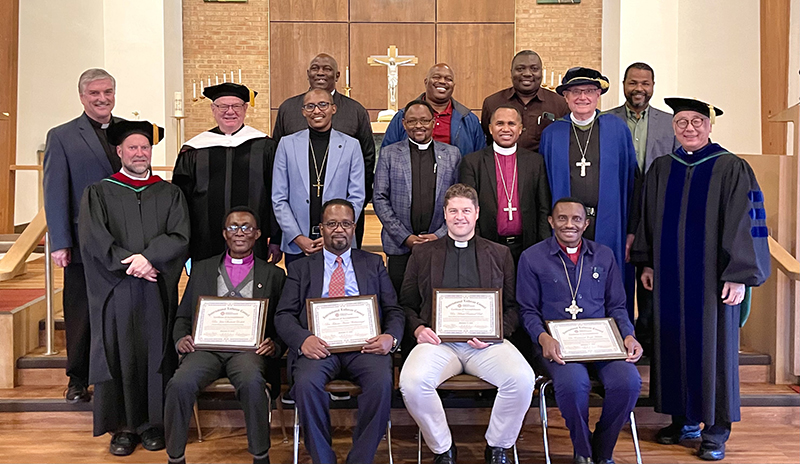
Following the commencement service. The four graduates—President/Bishop John Donkoh, General Secretary Teshome Amenu, Deputy Bishop Helmut Paul, and Bishop Emmanuel Makala—pose in front, along with other participants in the LLDP, some of the LLDP’s teaching faculty (Dr. Collver, Dr. Masaki, Prof. Pless, Dr. Quill), and Dr. Carl Rockroah (Zion Lutheran in Ridgeville Corners, Ohio and former LCMS missionary to Ghana, South Africa, and Ethiopia).

USA – The Lutheran Leadership Development Program (LLDP) celebrated its first commencement ceremony following its most recent session November 8–19, 2022 in Troy, Illinois. The ceremony took place November 17 at St. Paul’s Lutheran Church in Troy.

Dr. Masaki speaks during the commencement ceremony.

“It is a great joy to recognize the accomplishment of the first graduates of the Lutheran Leadership Development Program,” said Rev. Dr. Naomichi Masaki, LLDP Director. “I commend them for their achievement of this Certificate of Theology in Lutheran Leadership, because, despite their demanding ministry context as church leaders back home, they have been diligent in their studies and have accomplished the goals for which the program was created. I pray the Lord of the church to continue to bless them as He uses the confessional Lutheran theology and practical skills that they have acquired in the LLDP in the service of ecclesial leadership in their home church bodies.”

Four graduates were awarded the Certificate of Theology in Lutheran Leadership on behalf of the International Lutheran Council (ILC). In addition to completing coursework on church leadership in various areas, each also wrote a graduation thesis as a culminating exercise. Each was provided a thesis advisor from the LLDP teaching faculty. Their theses were approved by the advisor as well as Dr. Masaki who served as a reader for all four theses. The graduates include:

  • President/Bishop John Donkoh (Evangelical Lutheran Church of Ghana – ELCG) – Thesis: “Why are Some Hermeneutical Approaches Problematic, Even When Using the Bible?: A Consideration of the Proper Principles of Biblical Interpretation.” (Advisor: Rev. Dr. Charles Gieschen, Provost of CTSFW)
  • Bishop Emmanuel Makala (South East of Lake Victoria Diocese, Evangelical Lutheran Church in Tanzania – SELVD-ELCT) – Thesis: “The Dodoma Statement: An Evaluation of the Position Statement of the Evangelical Lutheran Church in Tanzania Regarding Same-Sex Marriage.” (Advisor: Rev. Dr. Albert B. Collver III, former ILC General Secretary)
  • Deputy Bishop Helmut Paul (Free Evangelical Lutheran Synod in South Africa – FELSISA) – Thesis: “According to our Lutheran Confessions, Is Confession and Absolution—be it in a Corporate Service or Private Confession with the Pastor—a Prerequisite for Receiving the Lord’s Supper?” (Advisor: Rev. Prof. John T. Pless, CTSFW).
  • General Secretary Teshome Amenu (Ethiopian Evangelical Church Mekane Yesus – EECMY)– Thesis: “An Analysis of the 1969 Agreement on the Integration Policy between the Mission Partners and the EECMY in the Light of Augsburg Confession, Article VII.” (Advisor: Rev. Dr. Albert B. Collver III, former ILC General Secretary)

Participant Response

The four graduates. From left to right: President Donkoh (ELCG), Deputy Bishop Paul (FELSISA), General Secretary Amenu (EECMY), and Bishop Makala (SELVD-ELCT).

The graduates praised the knowledge and skills they had learned as a result of the program. “I’m privileged to be among the first batch of students who successfully completed the LLDP,” noted President/Bishop John Donkoh of the Evangelical Lutheran Church of Ghana. “This program has been an eye opener for me in many ways. Lutheran churches around the world, particularly in Africa, need assistance in leadership and theological education, particularly in leadership development for current and future leaders in the areas of Lutheran identity and confessions.”

“It is my prayer and hope that this program will continue and that more church leaders on the continent would have such opportunities to acquire leadership training,” said President Donkoh, who was also elected in 2022 to serve as secretary of the International Lutheran Council.

Deputy Bishop Helmut Paul of the Free Evangelical Lutheran Synod in South Africa said that the LLDP provided him time to reflect on concrete problems and challenges in his home church. “It was of an immense value to have had opportunities to discuss and collaborate with professors and esteemed colleagues about their solutions,” he noted.

Bishop Emmanuel Makala of the Evangelical Lutheran Church in Tanzania’s South East of Lake Victoria Diocese reflected that the LLDP was “an overwhelming experience.” “The quality and contents of the program were deep and practical,” he explained. “It exceeded my expectation. I enjoyed everything—except for cold weather, frequent cancellation of flights and jet lags, and deadline pressure for assignments!”

LLDP participants visit with President Tom Egger during a trip to Concordia Seminary in St. Louis, Missouri.

General Secretary Teshome Amenu of the Ethiopian Evangelical Church Mekane Yesus concurred with his colleagues on the benefits of the LLDP. He also remarked that another big benefit of the program was the connections made with leadership of other Lutheran church bodies. “Getting to know them and becoming friends can never happen by meetings,” he said. “We are not isolated. Together we are committed and pledged to exercise confessional leadership in our Lutheran churches in Africa. Particularly meaningful was the fact that selected individuals represented the largest Lutheran church bodies around the world.”

“For me, the LLDP was the best program I have ever attended for higher theological studies,” General Secretary Amenu continued. “The program has already started to impact my church body in a special way. We have now designed a leadership capacity development project in which we train leaders of our church at all levels: head office, synods, parishes, and congregations.”

Additional students from the first cohort of students in the LLDP are expected to complete their studies in 2023, when the LLDP will welcome a new group of students into the program.

During the commencement, letters of congratulations from ILC Chairman Juhana Pohjola (Bishop of the Evangelical Lutheran Mission Diocese of Finland), as well as from LLDP Council member, President Dr. Lawrence Rast of CTSFW, were also read.

Christ, Not Leaders, Sustains His Church

Rev. Dr. Albert B. Collver III gives the commencement address.

Serving as commencement speaker for the event was Rev. Dr. Albert B. Collver III, who helped to found the program during his tenure as General Secretary of the ILC. “As leaders of the church, the task in front of you can seem overwhelming,” he said to the graduates. “You may not feel up to the task. Politics within your church can seem daunting or even make you wonder if the church even exists in this place or if these people around me are Christians.”

“You have been placed where you are to serve your Lord and your church, to be His instruments to guide and lead His church in the way of the Gospel,” he continued. “Jesus has promised you that He will never leave you nor forsake you. But He also has not given you the task to save His church. Jesus is the Saviour of His people. Jesus is the Saviour of His Church.”

“We do not bear that burden,” Dr. Collver stressed. “He has not given us that burden to bear. Yet graciously our Lord Jesus still gives us the privilege to work and serve in His church where He uses us according to His own purpose. Yet the responsibility is His to protect and guard and preserve the church here on earth. He calls us to remain faithful to His confession, to study His Word, and to serve Him where He has called and placed us. There is great comfort in knowing that the Lord makes use of us though we are not responsible for the future of the church. The future of the church belongs solely to Jesus.”

As Dr. Masaki conducted the commencement, he also recounted the history of the program, discussed its Student Learning Outcomes, and expressed his gratitude to the LLDP Council, ILC, and other supporters of the program, especially Concordia Publishing House (CPH), Concordia Theological Seminary in Fort Wayne, Indiana (CTSFW), and The Lutheran Church—Missouri Synod (LCMS). The LLDP is a program of the ILC initiated in partnership with CPH, CTSFW, and the LCMS, and the ILC is grateful for the support of all its partners in this important endeavor.

Studies in the LLDP

Commencement Day at St. Paul’s Lutheran Church in Troy, Illinois, during a break from the thesis forum. Left to right: Dr. Bruce Kintz, former President and CEO of Concordia Publishing House; Dr. Timothy Quill, ILC General Secretary; Dr. Yohana Nzelu, Assistant Bishop (Bishop Elect) of South East of Lake Victoria Diocese, Evangelical Lutheran Church in Tanzania (SELVD-ELCT); Dr. Daniel Mono, District Pastor (Assistant Bishop Elect) of SELVD-ELCT; Dr. Emmanuel Makala, Bishop of SELVD-ELCT; Rev. Helmut Paul, Deputy Bishop of Free Evangelical Lutheran Synod in South Africa (FELSISA); Rev. Teshome Amenu, General Secretary of Ethiopian Evangelical Church Mekane Yesus (EECMY); Rev. John Donkoh, President/Bishop of Evangelical Lutheran Church of Ghana (ELCG); Rev. Modise Maragelo, Bishop of Lutheran Church in Southern Africa (LCSA); Dr. Bruk Ayele, President of Mekane Yesus Seminary (EECMY); Dr. Denis Rakotozafy, President of Malagasy Lutheran Church (FLM); Rev. Mandla Thwala, Deputy Bishop of LCSA; Tsegahun Assefa, Former Director of Children and Youth (EECMY); Dr. Albert Collver, Pastor of St. Paul’s Lutheran Church and School, former General Secretary of ILC; and Dr. Naomichi Masaki, Director of LLDP, Professor of Concordia Theological Seminary, Fort Wayne (CTSFW).

The LLDP is a graduate-level program of the ILC dedicated to equipping confessional Lutheran leaders around the world with the theological and practical knowledge necessary to effectively serve their church bodies.

The first cohort of students accepted into the program all hail from Africa, and began their studies in 2019. The program has seen participants gather for studies in Wittenberg, Germany; Fort Wayne, Indiana; and Troy, Illinois.

Courses and their instructors included:

Dr. Albert Collver and Dr. Naomichi Masaki led chapel and taught classes during the November 2022 sessions. Dr. Collver, with the members of St. Paul’s in Troy, were gracious hosts, as Dr. Masaki presided over the commencement ceremony.
  1. Theology of the Lutheran Confessions – Rev. Dr. Naomichi Masaki (LLDP Director, CTSFW)
  2. World Lutheranism and the Ecumenical Movement – Rev. Dr. Albert Collver (ILC General Secretary)
  3. History of the Lutheran Church – Rev. Dr. Lawrence Rast (CTSFW)
  4. Lutheran Hermeneutics – Rev. Dr. Charles Gieschen (CTSFW)
  5. Ecclesial and Organizational Leadership – Archbishop Dr. Christian Ekong (LCN)
  6. Responding to Contemporary Issues and Neo-Pentecostalism – Rev. Prof. John Pless (CTSFW)
  7. The Lord’s Supper – Rev. Dr. Naomichi Masaki (LLDP Director, CTSFW)
  8. Liturgy and Lutheran Hymnody – Rev. Dr. Timothy Quill (ILC General Secretary)
  9. Strategic Planning and Task Management – Rev. Dr. Jeffrey Skopak (Grace Lutheran Church and School, Jacksonville, Florida)
  10. Budgeting and Financial Accountability – President Dr. Roger Paavola (LCMS, Mid-South District)
  11. The Office of the Holy Ministry – Rev. Dr. Naomichi Masaki
  12. Lutheran Mission, Ecclesiology, and Ecumenism – Rev. Dr. Albert Collver

The program has also seen the publication of three books through Concordia Publishing House during the period of the first cohort:

  • Charles Schaum and Albert Collver, Breath of God, Yet Work of Man: Scripture, Philosophy, Dialogue, and Conflict.
  • Christian O. Ekong, Strengthening Integrity and Accountability in Church Leadership.
  • Victor C. Pfitzner, Led by the Spirit: How Charismatic is New Testament Christianity?

The LLDP plans to publish additional monographs on such topics as strategic planning and accountability in biblical stewardship.

LLDP Support

LLDP participants meet with Dr. Joel Lehenbauer, Executive Director of the LCMS Commission on Theology and Church Relations, and Dr. Rick Serina, Associate Executive Director, during a visit to The Lutheran Church—Missouri Synod’s International Center in St. Louis, Missouri.

You can support the work of the Lutheran Leadership Development Program by making a donation online. You can also mail a donation by cheque to:

International Lutheran Council
PO Box 10149
Fort Wayne, Indiana 46850 USA

———————

A changing of the guard in South Africa as Dr. Winterle retires

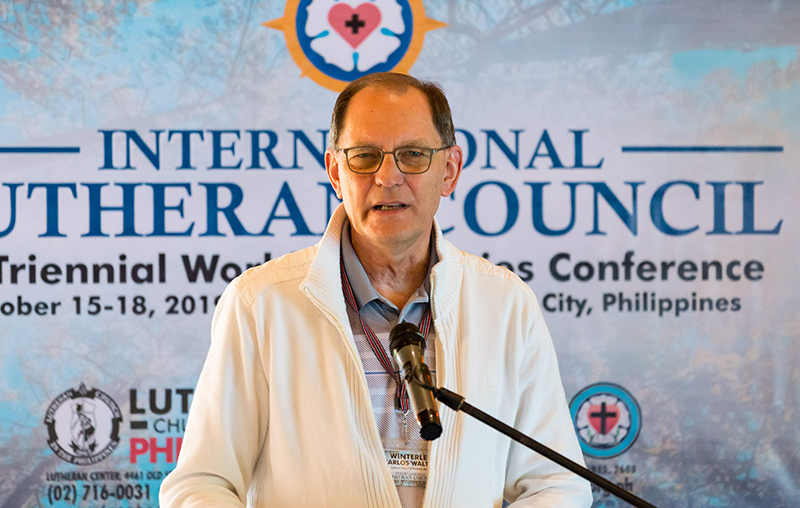
Rev. Dr. Carlos Walter Winterle at the ILC’s 2019 World Seminaries Conference in the Philippines.

SOUTH AFRICA – Rev. Dr. Carlos Walter Winterle has announced his retirement as rector of the Lutheran Theological Seminary (LTS) in Tshwane, Pretoria in South Africa.

Dr. Winterle, who turned 70 earlier this year, said, “It is time to retire and give way to the younger generation.” Succeeding Dr. Winterle as rector of LTS is Rev. Dr. Heinz Hiestermann.

“I thank our God and Father for the opportunity” to have served as rector, Dr. Winterle continued. “It was a huge challenge!”

Dr. Winterle served as President of the Evangelical Lutheran Church of Brazil (Igreja Evangelica Luterana do Brasil – IELB) from 1998-2006. He has spent the next 14 years serving throughout Africa: four years in Kenya; seven in Cape Town, South Africa; and the past three as the rector of LTS in Pretoria. He has also been heavily involved with missions and theological education in Mozambique.

While Dr. Winterle plans to retire home to Brazil when international travel permits, he still hopes to continue serving as coordinator for theological education in Mozambique. “I’m also coordinating projects and doing fundraising for Mozambique missions,” he added. “I hope that I may continue with this special ministry which is so close to my heart, as long as I am able to.”

Rev. Dr. Hans-Jörg Vogt, Chairman of the International Lutheran Council (ILC) and Bishop of Germany’s Independent Evangelical Lutheran Church (Selbständige Evangelisch—Lutherische Kirche – SELK), expressed gratitude for the leadership of Dr. Winterle in Tshwane as well as elsewhere in Africa. “Many young African Lutherans have been strongly shaped by his leadership,” Chairman Voigt noted. “May the Holy Spirit also fill the heart of Dr. Heinz Hiestermann as he takes up this new task.”

Rev. Dr. Heinz Hiestermann

Dr. Winterle’s successor, Dr. Hiestermann, holds a PhD in New Testament from the University of Pretoria, and has served as a guest professor at LTS for several years. He has further served full-time as a lecturer and registrar at LTS since the beginning of this year.

“It will be a smooth transition,” Dr. Winterle notes, “as both of us had time to share our experiences and challenges. I wish him God’s blessing for this special ministry.”

The Lutheran Theological Seminary in Tshwane, Pretoria is an institution operating under the joint governance of the Lutheran Church in South Africa (LCSA); the Free Evangelical Lutheran Synod in South Africa (FELSISA); and the Bleckmar Mission, which is associated with Germany’s Independent Evangelical Lutheran Church.

———————

Signup for ILC Updates