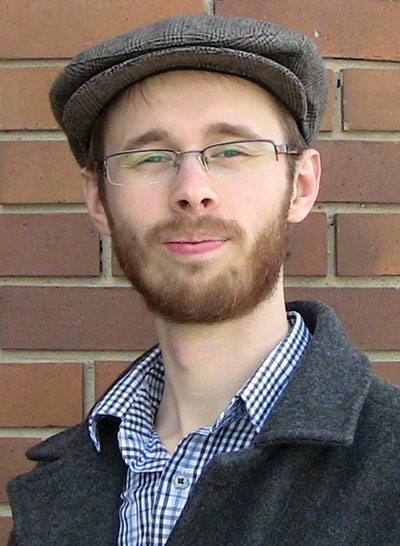
By Mathew Block

ILC welcomes new editor

Mathew Block

Mathew Block

WORLD – The International Lutheran Council (ILC) has announced that Mathew Block will serve as the editor of its news service going forward. Mathew Block is currently Communications Manager for Lutheran Church–Canada (LCC) and editor of The Canadian Lutheran magazine, positions he will continue to hold in addition to his new duties as ILC editor.

“It’s a great pleasure to begin serving world Lutherans in this capacity,” Block said. “God is doing great things for the advance of the Gospel through the churches of the International Lutheran Council. I’m honoured to support the work they’re doing by helping share their stories with the world at large.”

In addition to his work for LCC, Mathew Block blogs for First Things, and has been published in a number of Christian and secular publications. The invitation to serve as the ILC’s editor came from the Executive Council earlier this year. The decision to accept was officially ratified in a November 16 vote by LCC’s Board of Directors.

“There is a growing interest from various parts of the world—including from some places where we never had ties before—in the International Lutheran Council, its witness and work,” said the ILC’s Vice-Chairman, Rev. Dr. Robert Bugbee, who also serves as LCC’s President. “Our Canadian church counts it a real joy to be able to support the ILC’s communications effort by making Mathew Block available to direct this effort. God bless him with energy and love for an exciting assignment!”

In recent years the ILC has published a print newsletter in both English and Spanish. Under Block’s editorship, the ILC will continue its print edition but will also create an online companion to the publication, providing timely news and commentary on global events from a confessional Lutheran perspective. Through the support of communications personnel from The Lutheran Church—Missouri Synod, work is already underway on the development of a new website for the ILC, a large focus of which will be the International Lutheran News service.

In the meantime, the ILC has updated its current website to allow for the publication of news and commentary until such time as the new website is ready (http://www.ilcouncil.org/ilc-news/headlines/). Member church bodies of the ILC are encouraged to submit regular news updates (of national and international import) to ILC Editor Mathew Block at communications [at] ilcouncil [dot] org with the subject line “ILC News.”

The International Lutheran Council is a global association of confessional Lutheran church bodies which proclaim the Gospel of Jesus Christ on the basis of an unconditional commitment to the Holy Scriptures as the inspired and infallible Word of God, and to the Lutheran Confessions contained in the Book of Concord as true and faithful expositions of that Word.
Pontifical Council for Promoting Christian Unity (PCPCU) and the International Lutheran Council (ILC) to Hold Informal International Dialogue

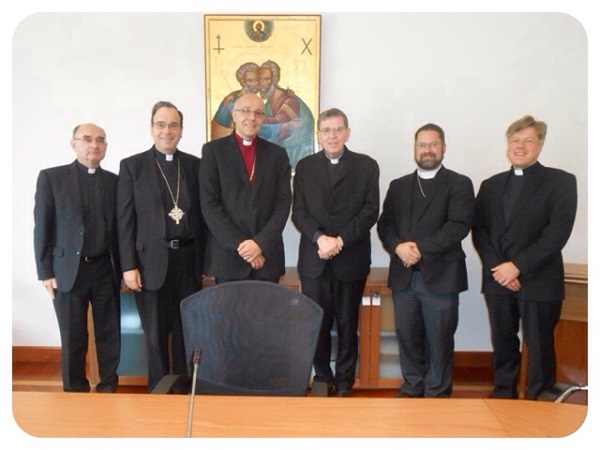
Prof. Dr. Werner Klan, Rev. Dr. Robert Bugbee, Bishop Hans-Jörg Voigt, Cardinal Kurt Koch, Rev. Dr. Albert B. Collver, Monsignore Dr. Matthias Türk

Prof. Dr. Werner Klan, Rev. Dr. Robert Bugbee, Bishop Hans-Jörg Voigt, Cardinal Kurt Koch, Rev. Dr. Albert B. Collver, Monsignore Dr. Matthias Türk

VATICAN CITY – The Pontifical Council for Promoting Christian Unity (PCPCU) and the International Lutheran Council (ILC), an organization for the purpose of encouraging, strengthening, and promoting confessional Lutheran theology, met to discuss the possibility of extending local and regional informal discussions into an
informal ecumenical dialogue process on the international level. The meeting between the PCPCU and the ILC primarily occurred after several informal discussions between some ILC members and Roman Catholic organizations resulted in positive outcomes, especially those held between the Lutheran Theological Seminary Oberursel of the Independent Evangelical Lutheran Church (SELK) and the Johann-Adam-Möhler Institute for Ecumenism in Paderborn, Germany. Other informal discussions that contributed to the meeting between the PCPCU and the ILC included those held between The Lutheran Church—Missouri Synod and the Archdiocese of Saint Louis and the United States Catholic Conference of Bishops, and those between Lutheran Church–Canada (LCC) and representatives of the Canadian Council of Catholic Bishops.

Cardinal Kurt Koch, President of the Dicastery, and Monsignore Dr. Matthias Türk represented the PCPCU. Bishop Hans-Jörg Voigt, Chairman, Rev. Dr. Albert B. Collver, Executive Secretary, Rev. Dr. Robert Bugbee, Vice-chairman, and Prof. Dr. Werner Klän, Lutheran Theological Seminary Oberursel, represented the ILC.

The discussion had three primary points: A Presentation of the International Lutheran Council (ILC) including its history and priorities, Ecumenical Relations between ILC members and the Roman Catholic Church, and Future Ecumenical Goals.

After a productive discussion, it was proposed that the local and regional informal discussions may be extended to an informal international dialogue process between the ILC and the Roman Catholic Church. These international series of consultations would be delegated to the ILC executive committee and to the Johann-Adam-Möhler Institute for Ecumenism. The goals of these discussions would be to define more unity between the churches represented by the ILC and the Roman Catholic Church and to offer a deeper understanding of the work already accomplished by the Lutheran – Roman Catholic dialogue on the international and regional level.

Cardinal Koch and Bishop Voigt expressed gratitude for the meeting and looked forward to a deepening of relationships between member churches of the ILC and the Roman Catholic Church.

The ILC and the Johann-Adam-Möhler Institute for Ecumenism after an organizational meeting, propose to hold two meetings a year for the next three years with the results of these discussions to be presented to the PCPCU.

———————

About the International Lutheran Council
The ILC is a worldwide association of established confessional Lutheran church bodies, consisting of 34 member churches, which proclaim the Gospel of Jesus Christ on the basis of an unconditional commitment to the Holy Scriptures as the inspired and infallible Word of God and to the Lutheran Confessions contained in the Book of Concord as the true and faithful exposition of the Word of God. (www.ilcouncil.org)

About the Pontifical Council for Promoting Christian Unity
The Pontifical Council is entrusted with the promotion of Christian Unity. It carries out this task in liaison with the various departments of the Roman Curia and through ecumenical relationships and theological dialogues with the other Christian Churches and ecclesial Communities on the world wide level. (www.vatican.va/roman_curia/pontifical_councils/chrstuni/)


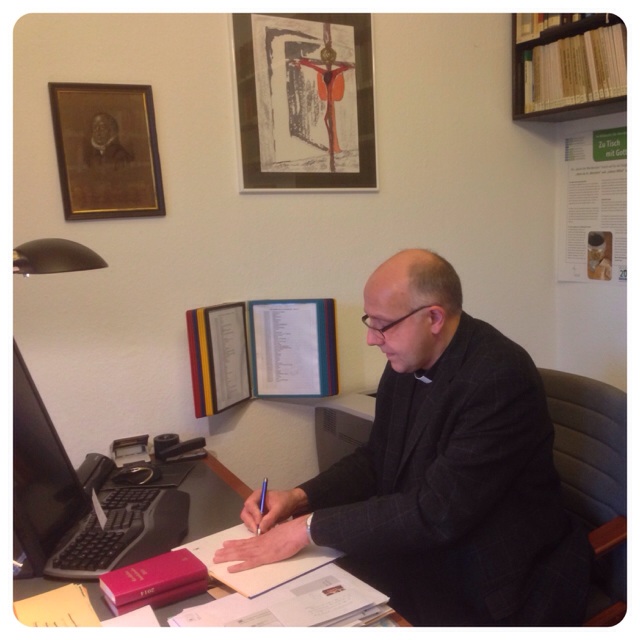
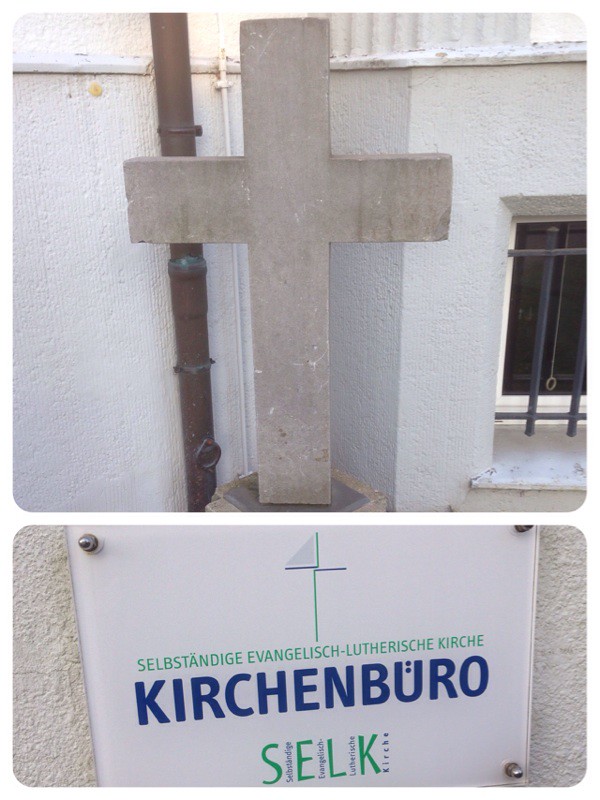
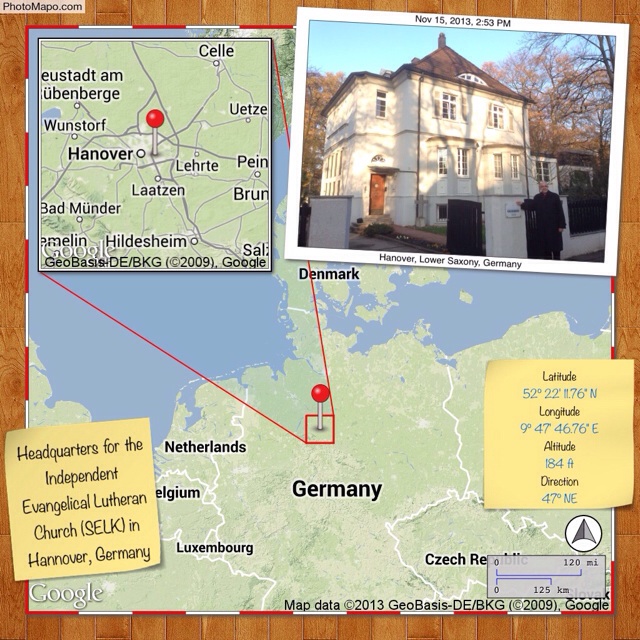
The SELK Headquarters


After spending time in Wittenberg, Germany, there was opportunity to visit the headquarters of the Independent Evangelical Lutheran Church (SELK) in Hannover. SELK is a partner church with the Lutheran Church Missouri Synod (LCMS) and also a member of the International Lutheran Council (ILC).


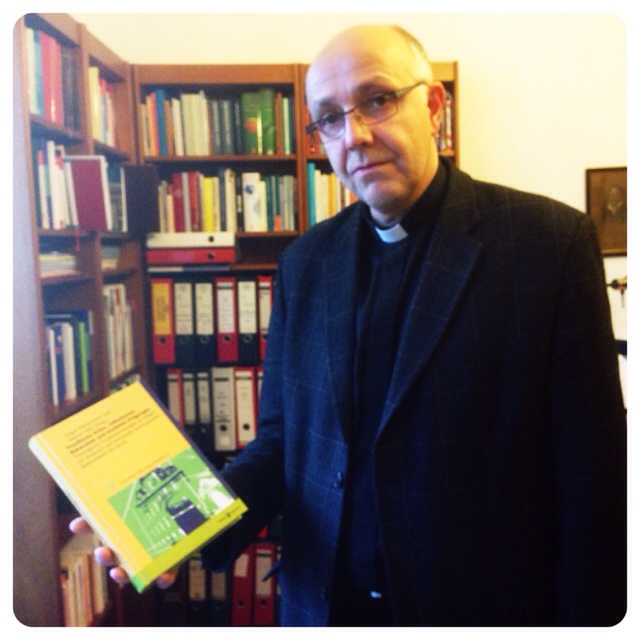
Hans-Jörg Voigt serves as the SELK bishop. He also serves as the chairman of the International Lutheran Council (ILC).


Bishop Voigt presented me with Preußische Union, lutherisches Bekenntnis und Prägungen, (Prussian Union, Lutheran Confession and Mould), which is the history of the independent Lutheran Church in Germany. It also is a part of the Missouri Synod’s history, as it tells the story of Walther’s allies in Germany. This common history is part of the bond that connects the LCMS and SELK together as sisters.


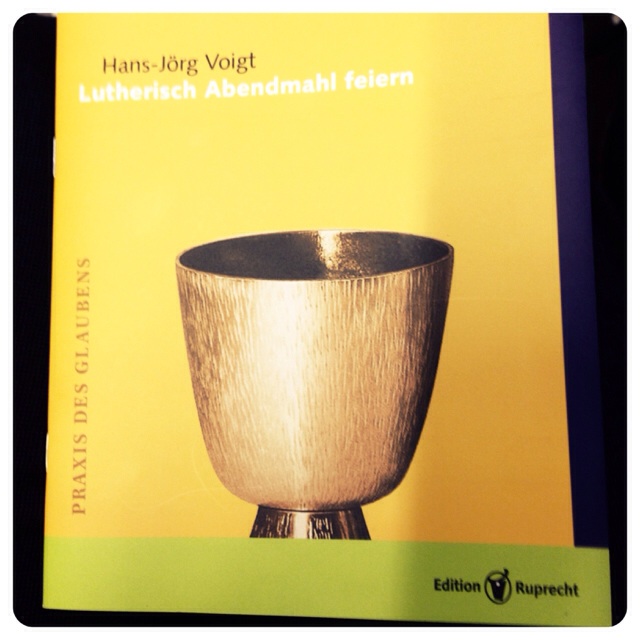
Bishop Voigt also shared his book, Lutherisch Abendmahl feiern (Celebrating the Lord’s Supper as Lutheran). The book is framed around the theme: Prayers and reflections in preparation for the Holy Communion (Gebete und Betrachtungen zur Vorbereitung auf das heilige Abendmahl). Among the “reflections” provided by the book:

1. What I’ve always wanted to know about the Lord’s Supper. (Was ich schon immer mal vom Abendmahl wissen wollte). This section included questions such as “How long does the body and blood of Christ remain in the bread and wine?”, “Do Lutherans believe in the change [of the elements from bread and wine into the body and blood of Christ]?”, “Can a person adore / venerate the body and blood of Christ?” and so forth.

2. Christ in me — Reflections concerning Christ being with me (Christus in mir – Betrachtung über den mitgehenden Christus).

The booklet is very helpful and might be translated for use among ILC members.

——————–

ILC and LWF Meeting in Wittenberg


MEETING BETWEEN REPRESENTATIVES OF
THE INTERNATIONAL LUTHERAN COUNCIL (ILC) AND
THE LUTHERAN WORLD FEDERATION (LWF)
WITTENBERG, GERMANY, 12 – 13 NOVEMBER 2013

LWF PARTICIPANTS:
​Rev. Martin Junge, the General Secretary of LWF
Rev. Dr. Nicholas Tai, Dean of Lutheran Theological Seminary, Hong Kong
​OKR Norbert Denecke, LWF German National Committee
​Rev. Dr. Kaisamari Hintikka, LWF Assistant General Secretary for Ecumenical Relations
​Rev. Dr. Carlos Bock, the Director of LWF Department for Mission and Development

ILC PARTICIPANTS:
​Bishop Hans-Jörg Voigt, ILC Chairman
​Rev. Dr. Albert Collver, ILC Executive Secretary
​President Rev. James Cerdeñola
​President Rev. Gijsbertus van Hattem

Both the LWF and ILC are honoring the commitment they made for the executive committees of each organization to meet with one another as agreed in the memorandum of understanding from 3 March 2005.


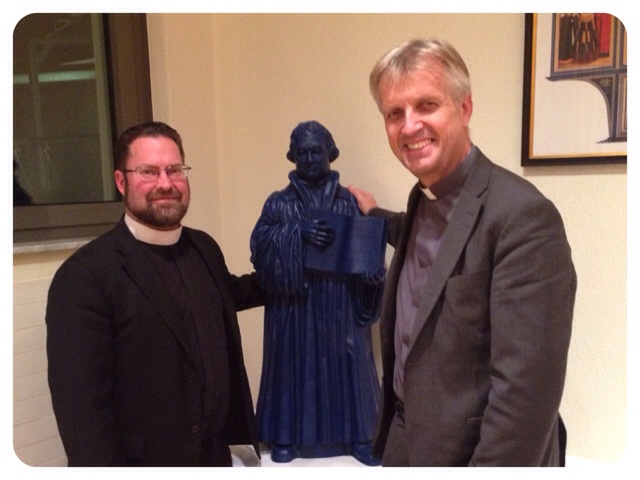
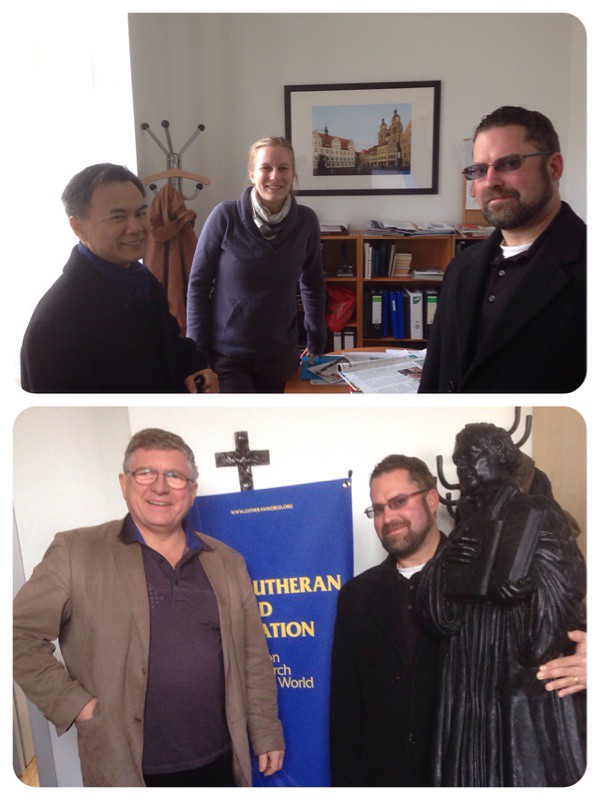
Dr. Collver and General Secretary Rev. Martin Junge with Martin Luther

Both the LWF and ILC thanked one another and appreciated the frank conversation and transparency shown in the discussion. Both agreed that the conversation was valuable and looks forward to the next opportunity to gather. A desire was expressed to meet annually. The LWF will host the next meeting in Geneva on January 14, 2015.


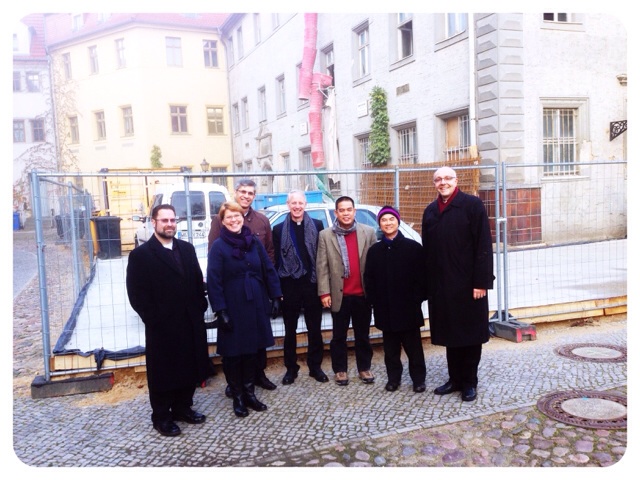
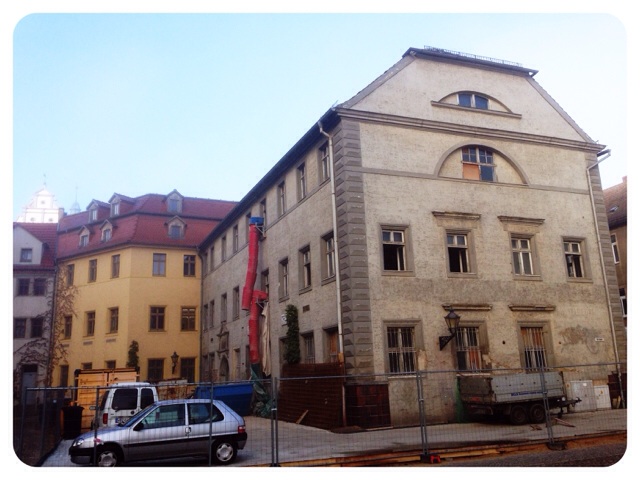
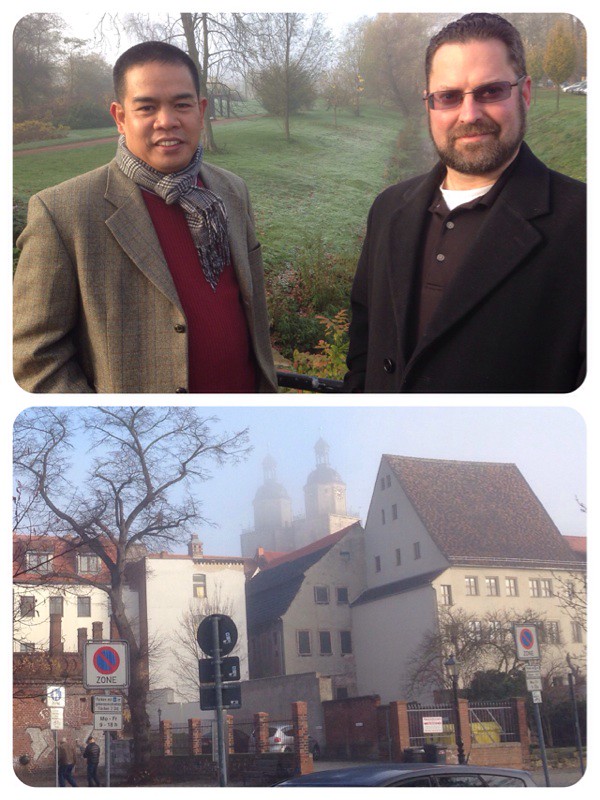
On 14 November 2013, the ILC showed the LWF delegation the “Old Latin School” in Wittenberg. The ILC plans to have a regional office here once construction is completed.


The group saw the building construction and the newly poured concrete foundation.


The Old Latin School was built 18 years after Martin Luther’s death. The book How Wittenberg Looked when Luther Lived describes the Old Latin School: “Eighteen years after Luther’s death the situation changed insofar as under Mayor Heilinger, the father-in-law of Luther’s son Martin, a new boys’ school was built in the northwestern corner of the church square, thus replacing the old ossuary. It still exists today as the old high school (now Wattrodt’s print shop), not, however, after having undergone many changes. – After this building was finished, the old girls’ school was torn down and moved to the former boys’ school which was called girls’ school from then on. This caused some confusion among researchers who were unaware of this change.”


The top photo shows the exposed wood beam from the Old Latin School. The historic records note that Bible verses and sections of the Small Catechism were written on the beams and exterior walls of the school. The lower photo shows what the reconstruction might look like. This photo is near Luther’s house, the old Augustinian Monastery.


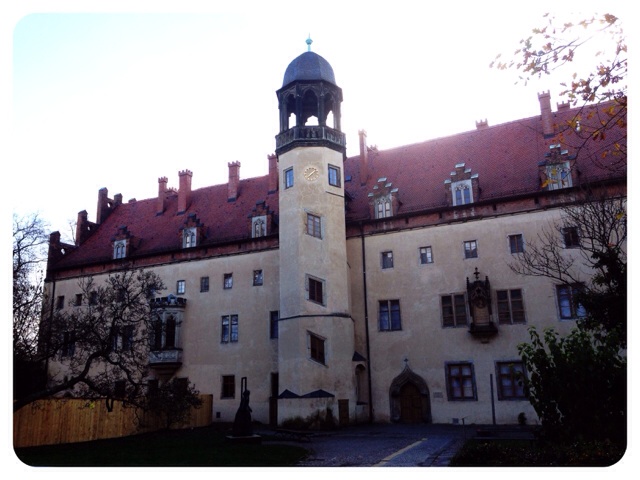
Pictured here is the Augustinian Monastery. Later this became the house of Martin and Katie Luther.


President James Cerdeñola and Dr Albert Collver enjoy the frosty Wittenberg morning at the old Elbe Gate.


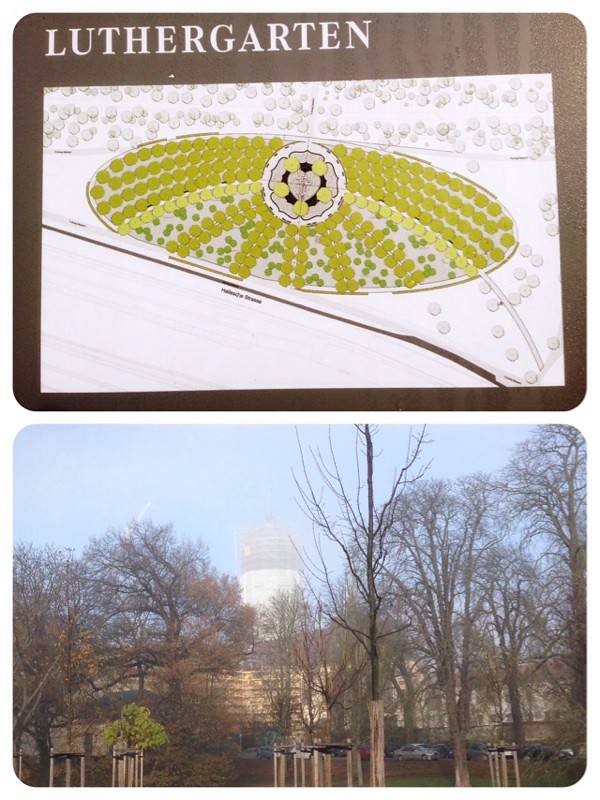
We also visited the Luther Garden near the Castle Church, which is under reconstruction.


The Missouri Synod as well as other ILC partners have trees in the Luther Garden.


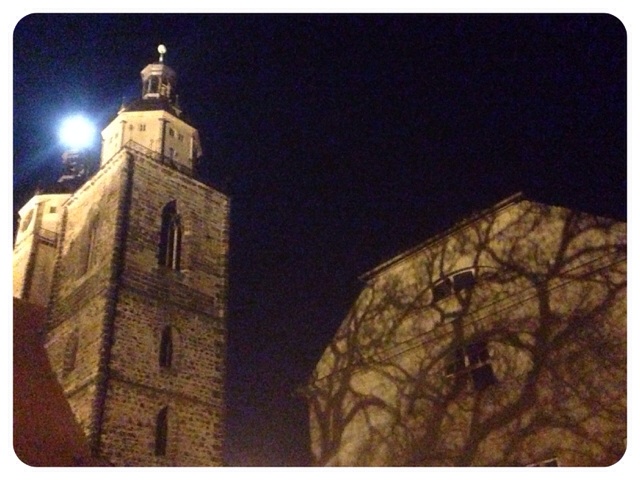
The Wittenberg Town Hall.


We visited both the ELCA Wittenberg Office and the LWF Wittenberg Office.


The visit to Wittenberg was very good and productive.

– Posted by Rev. Dr. Albert Collver on 14 November 2013 using BlogPress from my iPhone

Location:Kirchplatz,Kleinwittenberg,Germany

ILC pledges Philippines relief

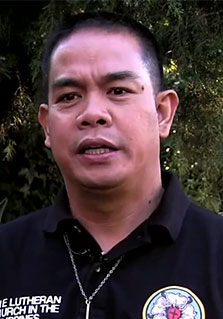
LCP President James Cerdeñola

LCP President James Cerdeñola

PHILIPPINES – As the Philippines struggles in the aftermath of a devastating typhoon, confessional Lutherans around the world are sending aid. More than 2,200 people have been confirmed dead, with thousands more injured and hundreds of thousands displaced. The destruction of homes and infrastructure is widespread. The Philippines’ government has said 11.3 million people have been affected by Typhoon Haiyan.

In the face of this disaster, the International Lutheran Council (ILC) is calling on its member churches to respond with prayer and financial aid. ILC member church The Lutheran Church—Missouri Synod (LCMS) has already offered $100,000 for immediate typhoon relief, and has pledged an additional $50,000 to match donations by other ILC churches.

“As we see the devastation unfolding on our television screens, our hearts go out to the victims of the typhoon,” said Chairman Hans-Jörg Voigt of the International Lutheran Council. “President James Cerdeñola of The Lutheran Church of the Philippines (LCP) was with us in Germany when the disaster struck. I have prayed with him, and promised the ILC will do what it can to help the people of the Philippines.”

ILC churches are already collecting donations. The Japan Lutheran Church has promised 500,000 yen, and the Independent Evangelical Lutheran Church in Germany (SELK) reports it began collecting funds this past Sunday. ILC churches wishing to contribute to the fund are encouraged to contact the ILC’s Executive Secretary, Rev. Dr. Albert Collver at Albert [dot] Collver [at] lcms [dot] org. Individuals and congregations wishing to make donations should contact their church body for further information.

“As people forgiven by God, we are called to show the same love and mercy to others,” said Dr. Collver. “Helping the people of the Philippines now in their time of need is a tangible way we can share with them the love of God in Christ.”

Funds collected by the ILC will be directed to The Lutheran Church of the Philippines. Communications with the Philippines are still spotty, but the LCP’s President Cerdeñola was by Sunday able to determine the following: “We have three congregations in the areas worst hit by the storm,” he reported. “One is in Mahayag, Albuera, Leyte (a coastal town), and the pastor, Rev. Xavier James Palattao, told me that almost all houses in his area including those of our members are either totally destroyed or significantly damaged by Yolanda’s winds. The church building and the parsonage were not spared.”

In a later report, President Cerdeñola noted that the LCP’s three churches in the area “are gone—one, totally flattened.” Despite the devastation, he reports the good news that “many of our members—almost all of them actually—are safe,” though “their properties and means of living are gone.” The LCP’s own disaster response team is already hard at work, but the full extent of damages and loss of life is not yet known. An LCMS World Relief team is set to leave for the Philippines on Friday.

———————

Mathew Block

Typhoon Haiyan update with Pres. Cerdeñola


The Rev. James Cerdeñola, president of the Lutheran Church in the Philippines (LCP), shares this update in the aftermath of Typhoon Haiyan, which wreaked havoc across the Philippines on Friday, Nov. 8. Rev. Cerdeñola has been in contact with LCP officials, Mindanao District officers, as well as the local ALERT team (Active Lutherans Emergency Response Team) as they mobilize in the Philippines to extend the mercy of Christ. For more news on The Lutheran Church—Missouri Synod’s response to Typhoon Haiyan, plus information on how you can help, visit: www.lcms.org/disaster.

Signup for ILC Updates