
News

A Pastoral Letter on COVID-19 from the ILC Chairman

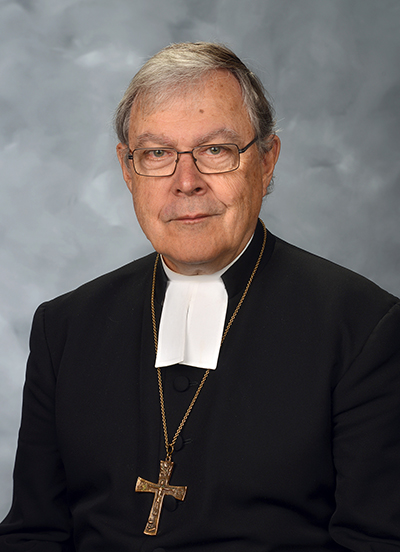
WORLD – As countries around the world grapple with the pandemic caused by the spread of the coronavirus COVID-19, the International Lutheran Council presents this pastoral letter from ILC Chairman, Rev. Hans-Jörg Voigt D.D. (Hannover), Bishop of the Independent Evangelical Lutheran Church (SELK) in Germany.

———————

In View of Human Impotence in Regard to the Spread of the Pandemic We Pray to God, the Creator and Keeper of Mankind

In Christ my dear Brothers and Sisters!

The numbers of those infected by the coronavirus COVID-19 are increasing daily. The transmission of the virus seems to spread exponentially and with it the number of those who have died.

The media are reporting extensively about all developments in the coronavirus crisis. This enables us to get all necessary information in this regard.

In light of the dangers of becoming infected, many are asking these days whether we can responsibly conduct our public worship services. Especially our celebration of Holy Communion is being questioned in regard to aspects of hygiene.

Our faith assures us that “the healing of the soul also helps the body,” as Martin Luther says of Holy Communion in the Large Catechism. And therefore in faith we properly expect salvation and healing from the Lord’s Supper. But at the same time we need to make good use of a healthy dose of our God-given human reasoning.

Therefore I propose the following for your consideration:

  1. 1. During these days Pastors officiating at confession and the absolution pronounced with the laying on of hands will want to make use of an additional washing of their hands.
  2. 2. Especially while administering the communion chalice these days great care is to be taken.
  3. 3. If you yourself belong to a group especially at risk you could, during the distribution of Holy Communion, restrict your reception to the Body of Christ only and decline to receive from the chalice. In that case you can be fully assured that you receive the entirety of salvation, the fullness of forgiveness, as you partake only of the life-giving body of Christ. Indicate your reception of the consecrated bread only by crossing your arms in front of your chest or by putting your hand in front of your mouth as the chalice is administered.

In some of the larger communities in various countries assemblies have been prohibited, among them the worship services. How are we Christians to deal with such a situation? Are we to “obey God more than man”?

In this case, two Christian “values and essentials” compete with one another: on the one hand the Third Commandment about keeping God’s day holy, and on the other the Fourth Commandment about obedience to lawful authority. In assessing these Christian values, we may reasonably assume that governments and health authorities have not acted on the basis of anti-Christian motives; they were rather moved to act out of care and concern for the population. And all these are restrictions of a temporary nature.

Therefore our obedience to these measure is of considerable importance for Christians. Additionally, none of us know what consequences our keeping the Third Commandment to keep the holy day would have in regard to the possibilities of spreading the infection. And even if I do not belong to a group especially at risk, I should not want to be the source of infection for anyone else. For these reasons I recommend that we follow the rules issued by the authorities and do not conduct public worship services.

Here following let me make some recommendations for such a case:

  • 1. With the assistance of technically savvy parishioners the Pastor could have his sermon recorded electronically and inform the church members about the link
  • 2. Pastors might want to increase their offer of private communion to the members

Obviously, none of this can fully take the place of the parish communion service. This present situation clearly indicates how precious are the means of grace that God presents to us in the worship service.

And this pandemic also show us how dependent we are on God’s help and grace. There let us not grow weary of offering up our fervent prayers.

PRAYER

Lord God, merciful Father, Creator of the world, we commend to you all those who are ill. Send them willing helpers. Grant them relief in their suffering and, if it is your will, let them be healed.

Lord Jesus, on the cross you bore for us all sickness. Strengthen those who serve in hospitals and doctors’ offices. Protect them from being infected. Let them not grow weary in their service to others.

Lord, Holy Spirit, in your mercy turn away further danger to our land and to our world. Limit all harm to our schools, our culture, our economy and politics. Guide the scientists in their work and grant their research success.

O blessed holy Trinity, Father, Son and Holy Spirit! We thank you for your gracious gifts, your Word, holy Baptism, Absolution and Communion that you to this day so richly distributed. Forgive us when we looked upon these means of grace without full appreciation and gratitude. Maintain among us our worship services, knowing that in them you seek us and lead us to life eternal Amen.

———————

Translation by Rev. Dr. Wilhelm Torgerson (Windsor, Canada)

German Bishop decries newly-declared “Right to Death”

Bishop Hans-Jörg Voigt.

GERMANY – On February 26, 2020—Ash Wednesday—Germany’s Federal Constitutional Court declared that all people have a constitutional right to end their life in a manner of their own choosing and to seek outside help in doing so. The courts further ruled that access to assisted suicide should not be limited to those suffering from an incurable condition.

In response to the ruling, Bishop Hans-Jörg Voigt of the Independent Evangelical Lutheran Church in Germany (SELK) has issued a letter arguing that “No one has the right to decide the circumstances of his own death.” Bishop Voigt also serves as Chairman of the International Lutheran Council (ILC), a global association of confessional Lutheran churches.

While the letter responds specifically to the declaration of Germany’s highest court, the issues it addresses—euthanasia and assisted suicide—are being increasingly considered in many areas of the world. In Canada, for example, the federal government has recently announced it will expand physician assisted suicide and euthanasia to allow those suffering from mental illnesses, and those not facing imminent death, to seek aid in dying.

Those seeking a Christian response to end of life issues faithful to Scripture will find Bishop’s Voigt’s words helpful. The letter appears below. (You can also read it in German here.)

———————–

“NO ONE HAS THE RIGHT TO DECIDE THE CIRCUMSTANCES OF HIS OWN DEATH”
Death and Birth are not Subject to Human Decisions – for the Sake of Man’s Dignity

Statement by the presiding clergyman of the Independent Evangelical Lutheran Church in Germany (SELK), Bishop Hans-Jörg Voigt D.D. (Hannover), concerning the verdict of Germany’s Constitutional Court of February 26, 2020 regarding “a person’s right to decide on the circumstances of one’s death”.

First Preliminary Remark

The Federal Constitutional Court (“Bundesverfassungsgericht” or BVG) is Germany’s highest constitutional authority and deserves our utmost respect. The welfare of our state, its services, its advantages and their protection which we as citizens and as Christians enjoy every day, is very much dependent on this respect; because, according to Holy Scripture and the Lutheran Confessions, all legitimate state authority is given and willed by God. Thus it is difficult for me to criticize yesterday’s verdict by the Court.

Second Preliminary Remark

We ought to exercise the highest regard and the utmost restraint when we talk about the distress sick people feel and their fervent wish to die. The kind of suffering some people have to endure for years surpasses a healthy person’s way of thinking. In such times of suffering almost every person will likely consider thoughts how actively to end one’s own life. And even those people who will turn such thoughts into action deserve our Christian love and final accompaniment. Dr. Martin Luther often expressed the view that people who committed suicide should be given a Christian burial, because they “did not do it easily” and likely were in an internally vulnerable situation, and were “as if overcome by a robber in the forest.”

There is no “Right to Decide on one’s Own Death”

In its verdict of February 26, 2020 the Constitutional Court established a new legal principle when it stated in Point 1: “The general principle to define your own personality includes, as an expression of a person’s autonomy, the right to decide about one’s own way of dying.”

The Basic Law/Constitution of the Federal Republic of Germany states in Par. 2, Sect. 1: “Every-one has the right to freely live out his personality, provided he does not violate the rights of others and does not transgress the constitutional order or the moral law.” Here the BVG makes a connection to Par 1., Sect. 1 of the German Constitution, where we read: “The dignity of the person is inviolable. To honour and protect it is the duty of all state power.”

At no point does the German Constitution posit a “right of self-determined dying.” This statement could possibly be rightly understood in reference to the manner of a person’s death, e.g. that it is a matter of one’s free determination to die with or without therapy, with or without pain medication. But the sentence that follows in the verdict under Sect. b states: “The right to a self-determined death includes the freedom to take one’s own life.” Within its context this sentence claims that there is a right to determine one’s own time of death. This claim arises out of nowhere. And it is new and wrong, and it is not in accord with the spirit of the German Constitution, as I will try to show hereafter.

This Verdict contravenes the Fifth Commandment

“You shall not murder”—so reads the Fifth of the Ten Commandments. This Commandment applies in regard to the life of others and also in regard to my own life. The dignity of man is based on the uniqueness of his being born. And that also implies the non-violability of his end. That man cannot in principle decide his own death is one of the reasons for his dignity.

These days various commentaries made the point that religious convictions cannot be applied to the general public in a secular state. But the Constitution of the Federal Republic does precisely that. The very first sentence of the preamble defines its background: “In full awareness of our responsibility before God and man…” The Constitution’s reference to God is the reminder that there is a higher law, so to speak, “the connection with on high”; human law needs to have a connection to divine law, to prevent it from ending up in arbitrariness.

The legal philosopher Ernst-Wolfgang Böckenförde has defined the ethical-moral connection this way: “The secular libertarian state is dependent on presuppositions that it cannot guarantee of its own.” Because the verdict of the BVG contravenes the ethical standard set by the Fifth Commandment—which is posited not only in the Judeo-Christian religion—the Court has cut itself off from the reference to the Divine in the Constitution.

Legal Uncertainty for Physicians and Supporters is not the Real Problem

Legal flaws and uncertainties as they derive out of Par. 217 of the Law until now prohibiting commercial support for suicide since December 3, 2015 are not the real problem. It is much more fundamental, because to posit a “right of self-determined dying” and the freedom to take one’s own life, there might then arise as a consequence the duty for the state to provide the necessary conditions for that right.

Up until now self-inflicted death was a taboo. Now that it has fallen, we can expect a subtle pressure on terminally ill patients to follow the expectations of their relatives and friends—even though they may be wrongly assumed—and have them take their own life. The first two articles of the German Constitution set forth the ethical position of a “culture of life.” Its present subsequent formulation now defines a “culture of death.”

I believe that February 26, 2020 will enter into the legal history of the Federal Republic of Germany as a kind of Ash Wednesday.

Hans-Jörg Voigt, D.D.
Bishop, Selbständige Evangelisch-Lutherische Kirche (SELK)
Hannover, Germany

———————

Translation by Rev. Dr. Wilhelm Torgerson (Windsor, Canada)


Ingrian Lutherans consecrate new bishop

The consecration of Bishop Ivan Laptev as head of the Evangelical Lutheran Church of Ingria. (ELCI Media).

RUSSIA – The Evangelical Lutheran Church of Ingria (ELCI) consecrated its new bishop, Rev. Ivan Laptev, at St. Mary Cathedral in St. Petersburg on February 9, 2020. Rev. Laptev was elected bishop during the church’s synod in October 2019.

Bishop Laptev.

Participating in the service of ordination were the ELCI’s outgoing Bishop Arri Kugappi, who this month reached the church’s canonical age of retirement; Archbishop Jānis Vanags of the Evangelical Lutheran Church of Latvia; Bishop Vsevold Lytkin of the Siberian Evangelical Lutheran Church; Bishop Tiit Salumäe of the Evangelical Lutheran Church of Estonia’s West and Northern Region; Bishop Seppo Hyakkinen of the Evangelical Lutheran Church of Finland’s Mikkeli Diocese; and the ELCI’s Chief Secretary Mikhail Ivannon.

Rev. Ivanov served as liturgist for the event, with Bishop Elect Laptev preaching. His sermon was based on Matthew 20:1-16, the parable of the workers in the vineyard. Prior to the consecration, Bishop Kugappi called on his successor to remember the example of their predecessors and to stand firm on God’s Word even during times of persecution.

A number of ecumenical guests were present for the event, including General Secretary Timothy Quill of the International Lutheran Council (ILC). Following the service, Dr. Quill brought greetings on behalf of the ILC and its member churches, congratulating Bishop Laptev on his elevation to the bishopric. The Evangelical Lutheran Church of Ingria is a member church of the ILC.

Rev. Timothy Quill with translator Alexey Zubstov brings greetings from the International Lutheran Council.

Quoting from St. Paul’s writings to Timothy, Dr. Quill encouraged Bishop Laptev: “You then, my child, be strengthened by the grace that is in Christ Jesus, and what you have heard from me in the presence of many witnesses entrust to faithful men, who will be able to teach others also” (2 Timothy 2:1-2). Dr. Quill said he looked forward to continued cooperation between the ILC and ELCI as they “work together and pray together for the strengthening of confessional Lutheranism throughout the world.”

Other ecumenical guests included representatives from the Russian Orthodox Church, the Russian Church of Christians of Evangelical Faith, the Evangelical Lutheran Church of Kyrgyzstan, and Kazakhstan’s Evangelical Lutheran Church of Almaty. A number of other churches who were unable to be present for the event sent letters of greetings marking the event.

The evening before the installation of Bishop Laptev, a special service was held in St. Mary Cathedral to mark the service of Bishop Arri Kugappi. The event featured several of Bishop Kugappi’s favourite hymns, a presentation of historical photographs, and refreshments after the service. Those wishing to honour Bishop Kugappi’s service to the church were invited to make a donation to the Theological Institute of the Church of Ingria.

———————

Photos by Liliann Keskinen and Heikki Jaskelyainen via ELCI media.

ILC concerned over investigation of Finnish Lutherans, urges prayer

FINLAND – The Evangelical Lutheran Mission Diocese of Finland (Suomen evankelisluterilainen Lähetyshiippakunta – ELMDF) has announced that their Dean, Rev. Dr. Juhana Pohjola, was summoned for questioning at the Helsinki Police Department on February 11, 2020.

The interrogation lasted five hours. He has been declared suspected of “ethnic agitation.”

The ELMDF is under investigation by Finland’s Prosecutor General for the publication of a booklet upholding historic Christian teachings on human sexuality. That booklet is “Male and Female He Created Them: Homosexual Relationships Challenge the Christian Concept of Humanity,” written by Dr. Päivi Räsänen, a Member of Parliament in Finland and former Minister of the Interior. Dr. Räsänen is also under investigation by the Prosecutor General.

The ELMDF’s booklet was published in 2004, well before the 2017 legalization of same-sex marriage in Finland. In the work, Dr. Räsänen argues that homosexual activity must be identified as sin by the Church on the basis of the teachings of Scripture.

Dean Pohjola acknowledged that, as editor-in-chief of Luther Foundation Finland, he is responsible for the publication and distribution of the work. “I denied, however, being guilty of the crime of ethnic agitation,” he said. “In my view, Mrs. Räsänen’s text is not defamatory or insulting to homosexuals. In my answers, I showed that the booklet teaches in line with Christian anthropology that every person is precious as [being created in] the image of God, regardless of sexual orientation.”

“This does not mean, however, that people are not responsible before God for their way of life or moral choices,” he continued. “The homosexual lifestyle is contrary to God’s order of creation and a transgression against His will. If one is not allowed to teach this publicly, the message of sin and grace will be left without a foundation, and freedom of religion will decline.”

The investigation of the ELMDF is worrisome, according to Rev. Dr. Timothy Quill, General Secretary of the International Lutheran Council (ILC). “We are extremely concerned over recent actions by the Finnish authorities in targeting faithful Lutherans,” Dr. Quill said. “We understand that the ELMDF and its Dean are under suspicion of a hate crime simply for upholding biblical Christian teachings on sexuality. We urge Finnish authorities to conclude their investigation and reaffirm the rights of Christians to believe and teach in accord with the Word of God.”

“We encourage Christians throughout the world to remember the Evangelical Lutheran Mission Diocese of Finland in prayer,” continued Dr. Quill. “Pray that Finnish authorities will uphold the rights of Christians to confess the faith of Scripture clearly and without fear. May God give comfort and strength to His faithful people in Finland.”

The ELDMF is a member of the International Lutheran Council, a global association of confessional Lutheran church bodies representing millions of Lutherans around the world.

———————

New President for Brazilian Lutherans

IELB President Geraldo Schüler following his election.

BRAZIL – On November 14, 2019, Rev. Geraldo Walmir Schüler was elected President of the Evangelical Lutheran Church of Brazil (Igreja Evangélica Luterana do Brasil – IELB).

The decision came during the annual meeting of the IELB’s Board of Directors, which brought together pastoral counsellors and lay leaders from across the IELB’s 59 Districts, as well as representatives from various departments, boards, and auxiliary organizations. The meetings were held November 14-17, 2019 in Campo Grande, Mato Grosso do Sul.

Prior to his election, President Schüler previously served the church as Vice President of Missionary Expansion (2014-2019). Before that, he served as Second Vice President of the IELB (2010-2014) with responsibilities for Missionary Expansion and Social Action. He also served as pastor of congregations in Vila Velha, Espírito Santo (1994-1999) and Cacoal, Rondônia (1999-2010).

President Schüler succeeded President Rudi Zimmer, who resigned as President of the IELB in March 2019 for health reasons. Dr. Zimmer had been elected as President in May 2018 during the IELB’s 62nd National Convention. Rev. Joel Müller, Vice President of Education, served as Interim President of the Brazilian church between President Zimmer’s resignation and President Schüler’s election.

The November meetings also saw the election of Rev. Héder Gumz as Vice President of Missionary Expansion, filling the vacancy caused when Rev. Schüler was elected President. Also elected during the meeting were Rev. Egon Kopereck as Vice President of the Board of Directors and Rev. Ademir Stahl as Deputy Secretary.

The Evangelical Lutheran Church of Brazil has more than 240,000 members in more than 1,500 congregations and 440 mission stations across the country. It is a member church of the International Lutheran Council, a global association of confessional Lutheran church bodies.

———————

North American Lutherans continue interchurch discussions

USA – The end of 2019 saw two regular interchurch meetings between North American Lutheran church bodies.

From November 11-12, 2019, representatives of The Lutheran Church—Missouri Synod (LCMS), Lutheran Church-Canada (LCC), and the North American Lutheran Church (NALC) held their latest round of dialogue in Columbus, Ohio. Newly elected NALC Bishop Daniel Selbo was present for the dialogue for the first time.

The dialogue featured presentations by LCMS and NALC representatives, discussing First Peter as a pillar letter of the New Testament. The dialogue between the LCMS, LCC, and NALC first began in 2011. The next meeting will take place May 20-21, 2020 in St. Louis, Missouri.

In December, representatives of the LCMS, the Wisconsin Evangelical Lutheran Synod (WELS), and the Evangelical Lutheran Synod (ELS) met together in Jacksonville, Florida for annual informal discussions. These discussions have helped the three church bodies more clearly define areas of theological agreement as well as areas where differences remain.

During this meeting, discussions focused on the doctrine of justification, particularly objective justification—an area in which the churches find full agreement. This was the eighth regular meeting between the three churches. When representatives of the LCMS, WELS, and the ELS come together again in 2020, discussion will focus on the topics of prayer fellowship and the ministry, as well as a discussion of the WELS statement “Male and Female in God’s World.”

The Lutheran Church—Missouri Synod and Lutheran Church–Canada are members of the International Lutheran Council, a global association of confessional Lutheran church bodies.

———————

Unity talks begin between South African Lutherans

LCSA Deputy Bishop Mandla Thwala, FELSISA Deputy Bishop Helmut Paul, FELSISA Bishop Dieter Reinstorf, the CLCSA’s Rev. Geoffrey Skosana, the LCSA’s Rev. John Nkambule, CLCSA Bishop Mandla Khumalo, and LCSA Bishop Modise Maragelo.

SOUTH AFRICA – On January 14, 2020 representatives of the three confessional Lutheran church bodies in South Africa met for a first round of unity talks in Pretoria.

The Lutheran Church in Southern Africa (LCSA) was represented by Bishop Modise Maragelo, Deputy Bishop Mandla Thwala and Rev. John Nkambule; the Free Evangelical Lutheran Synod in South Africa (FELSISA) by Bishop Dr. Dieter Reinstorf and Deputy Bishop Helmut Paul; and the Confessional Lutheran Church in South Africa (CLCSA) by Bishop Mandla Khumalo and Rev. Geoffrey Skosana.

These initial talks in Pretoria focused on establishing church fellowship between the LCSA and the FELSISA (who are already in declared church fellowship with one another) and the more recently established CLCSA. The foundational articles of the respective churches as well as the central doctrines of the Lutheran Church as contained in the Book of Concord were extensively discussed. The three churches will now provide feedback to their respective church councils in the hope that church fellowship will be formalized in upcoming church conventions.

These unity talks were largely prompted by discussions held at a meeting of the Africa Region of the International Lutheran Council (ILC) held in Pretoria from September 17-20, 2019. At this meeting gratitude was expressed for the number of newly established confessional Lutheran churches in Africa, while also raising concern that many of these Lutheran Churches work independently without establishing formal relationships with other regional churches—something which creates a formal expression of unity in doctrine. As a result, the regional meeting adopted a motion to encourage confessional Lutheran Churches, especially those within the same country, to make every effort to keep the unity of the church. Part of this process is to formally establish church fellowship where there is agreement in doctrine and to consider amalgamation or the establishment of a federation of confessional churches.

The Lutheran Church in South Africa, the Free Evangelical Lutheran Synod in South Africa, and the Confessional Lutheran Church in South Africa are all members of the International Lutheran Council.

———————

ILC World Representatives for Latin America and Europe announced

WORLD – The International Lutheran Council (ILC) has announced updates to the representatives for the Latin American and European World Regions.

Appointed to serve as the World Region Representative for Latin America is President Eugenio Wentzel of the Evangelical Lutheran Church of Paraguay (Iglesia Evangélica Luterana del Paraguay – IELP). President Wentzel had previously served as the Latin American representative until the spring of 2018, but was ineligible for reappointment because he had announced he wouldn’t seek reelection as President of the Paraguayan church. In the end, he consented to stand for reelection of the IELP and was elected, making him eligible for reappointment to as the ILC’s regional representative.

Appointed to serve as the World Region Representative for Europe is Chairman Georg Samiec of the Evangelical Lutheran Church of England (ELCE). This seat was previously held by the ELCE’s Chairman Jon Ehlers, but Chairman Ehlers had announced he would not seek reelection. Chairman Samiec was subsequently elected, and consented to serve as the ILC’s regional representative for Europe.

In total, five World Regional Representatives serve on the ILC’s Board of Directors (formerly known as the Executive Committee), along with the ILC Chairman, Secretary, two appointed members, and the ILC’s General Secretary (as a non-voting, ex-officio member).

———————

“Glory to God in the Highest” – Where Did it Go?

The annunciation to the shepherds, Govert Flinck: 1639.

by Timothy Quill

This past Sunday was the last in Advent, and once again immediately following the Kyrie ,the pastor went directly into the Greeting and Salutation: “The Lord be with you,” “and with your spirit.” The Gloria in Excelsis was nowhere to be found. It has been gone since the first Sunday in Advent.

When Martin Luther undertook his remarkable 1526 restoration and German translation of the Latin Mass, he did not include the ancient Gloria in Excelsis. How was it possible for someone as theologically and musically gifted as Dr. Luther to delete the Gloria? At first glance this seems a bit baffling, but a closer look reveals that the reason for the omission was most likely because the German Mass was first sung in December of 1525 which put it during the penitential season of Advent when the Gloria was not customarily sung. New compositions of the Gloria would eventually be composed by Nicolaus Decius, Luther, and others.

The Gloria is also omitted during the penitential season of Lent, but its omission is most striking during the Advent-Christmas season since it is the song of the angels to the shepherds on the night of Jesus’ birth.

Lutherans greatly value and retain the traditional liturgical practices of the church.

In the Introduction to his 1523 revision of the Latin Mass, Luther explained: “It is not now or ever has been our intention to abolish the liturgical service of God completely, but rather to purify the one that is now in use from accretions which corrupt it and to point out an evangelical use.” He commends those parts of the service added by the early church fathers and recommends they be retained in the liturgy: Psalms and Introit Psalm, Kyrie, Readings from Epistle and Gospel, Gloria in Excelsis, and so forth (LW AE 53:20-21).

In 1530, the Lutherans confessed in Article 15 of the Augsburg Confession, “We gladly keep the old traditions set up in the church because they are useful and promote tranquility, and we interpret them in an evangelical way, excluding the opinion which holds that they justify” (Ap XV, Tappert 220:38, emphasis mine).

One year after the Diet of Augsburg, Luther was preaching at St. Mary’s parish church in Wittenberg. He expressed amazement that the evangelical movement was still alive: “A year ago, at the Diet of Augsburg, the [general] opinion was that everything would go topsy-turvy within four weeks, and that all Germany would founder. [No one knew how things would end up,] or from what source help and comfort might come. The situation baffled and defied all reason and wisdom, and one was constrained to say: ‘It all depends on God’s power, and it is all staked on His Word’” (LW AE 23:400).

It is now 489 years after the Diet of Augsburg and the world in which we live—including numerous churches which bear the names “Evangelical” and “Lutheran”—are in many respects topsy-turvy, upside down, and in a state of confusion. And we too are led to express amazement and thanksgiving that after all she has gone through, the Lutheran Church has not foundered. She continues to depend on “God’s power, and it is all staked on His Word.” This is articulated on the International Lutheran Council website: “The International Lutheran Council is a growing worldwide association of established confessional Lutheran church bodies which proclaim the Gospel of Jesus Christ on the basis of an unconditional commitment to the Holy Scriptures as the inspired and infallible Word of God and to the Lutheran Confessions contained in the Book of Concord as the true and faithful exposition of the Word of God” (emphasis mine). It is extremely encouraging to know that we are not alone. Over 50 churches worldwide have chosen to be part of an association of confessional Lutheran church bodies which share this commitment to the Gospel and the Word of God.

Martin Luther retained the historic liturgy but insisted that it be in the vernacular, so that the people could understand and participate meaningfully in the Divine Service. For this reason, the Gloria in Excelsis was also composed in hymn form in order to foster congregational singing.

As Advent gives way to Christmas, ILC Churches from many countries and cultures will worship in different languages yet share in the common faith, the common Lutheran confession, and common Lutheran liturgical tradition. In the Divine Service the Lord Jesus Christ, the incarnate Word made flesh, comes to us through the Word and in his very Body and Blood in the Blessed Sacrament to bestow upon us the forgiveness of sins, life, and eternal salvation. Lutherans from all ages and throughout the world join the angels, who sang to the shepherds when Jesus was born in Bethlehem: “Glory be to God on high; and on earth peace, goodwill toward men” (Luke 2:14).

All glory be to God alone,
Forever more the highest one,
Who did our sinful race befriend
And grace and peace to us extend.
Among us may His gracious will
All hearts with deep thanksgiving fill.
– Martin Luther, All Ehr und Lob, stanza 1

———————

Rev. Dr. Timothy Quill is General Secretary of the International Lutheran Council.

Signup for ILC Updates