News

ELC: Living in an ecumenical world

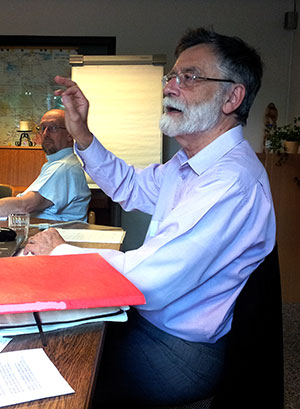
ELC President Jean Thiébaut Haessig takes part in group-discussions on "living in an ecumenical world." In the back, ELC Secretary George Samiec listens in.

ELC President Jean Thiébaut Haessig takes part in group-discussions on “living in an ecumenical world.” In the back, ELC Secretary George Samiec listens in.

GERMANY – The European Lutheran Conference (ELC) continued into its second day of meetings May 23 in Bleckmar, Germany.

Discussion of this year’s theme—“Living in an Ecumenical World”—continued Friday, with Chairman Jon Ehlers of the Evangelical Lutheran Church in England (ELCE) giving the event’s third major presentation. Chairman Ehlers, who also serves the International Lutheran Council as its European world region representative, spoke on the practical challenges confessional Lutheran churches face today, using the experiences of the ELCE to illustrate. Among the topics he discussed were who can serve as baptismal sponsors, visitors attending worship services at which Holy Communion is being served, participation in local ecumenical events, and more.

Conference participants then broke into small groups where they discussed Chairman Ehler’s presentation, before reporting their thoughts back to the larger conference. A day earlier the same groups discussed two additional topics: the nature of the church, and how confessional Lutherans should relate to other denominations. The conclusions drawn by the ELC in these discussions will be used in the formation of a guidance document on “Living in an Ecumenical World”—a series of recommendations on the subject for confessional Lutheran congregations in Europe.

———————
European Lutheran Conference meets in Germany

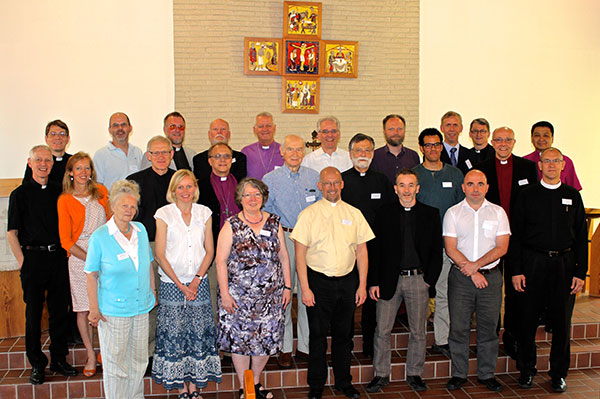
Participants at the ELC's 2014 conference in Germany.

Participants at the ELC’s 2014 conference in Germany. (Photo: Rick Steenbock)

GERMANY – From May 22-25, the European Lutheran Conference (ELC) is meeting in Bleckmar, Germany for its 23rd conference. The conference follows on the heels of the International Lutheran Council’s (ILC) European world region conference, also held in Bleckmar, on May 21.

The ELC has six-full member churches, all of which are also members of the ILC. The ELC’s full-member churches include the Evangelical Lutheran Free Church of Denmark, the Evangelical Lutheran Church of England, the Evangelical Lutheran Church – Synod of France, the Portuguese Evangelical Lutheran Church, the Evangelical Lutheran Church in Belgium (ELKB), and Germany’s Independent Evangelical Lutheran Church (SELK). In addition to church leaders and lay representatives from these churches, this year’s conference includes guest participants from Spain, Switzerland, Russia, Kirghistan, Finland, and Sweden.

“Member churches need such meetings to realize that other churches know similar joys and problems,” ELC President Jean Thiébaut Haessig explains, “and to discover new ideas for their own church life, even if they live and work in different cultures, languages, and situations. Contacts are built between lay people of different churches which are necessary complements to the contacts between the church leaders.”

On the first day of the conference, presentations centered on two major topics. The first—what makes a Church a Church—was led by President Gisjbertus van Hattem of the ELKB. President van Hattem also serves as Secretary on the Executive Council of the ILC. The second focus of discussion—how confessional Lutheran churches ought to regard and relate to other denominations—was led by Rev. Roger Zieger, Director of SELK’s mission agency, the Lutheran Church Mission.

The origins of the ELC date back to just after the Second World War, when Confessional Lutheran churches from across Europe began meeting together in regular Mission Conferences. In 1986, these meetings transitioned to become the European Lutheran Conference. The purpose of the ELC according to its Guiding Principles is to “promote unity, fellowship, and cooperation between the member churches.”

The ELC’s conferences are currently held biannually, with the 2012 convention having taken place in Mulhouse, France.

———————

ILC European Region conference discusses church fellowship

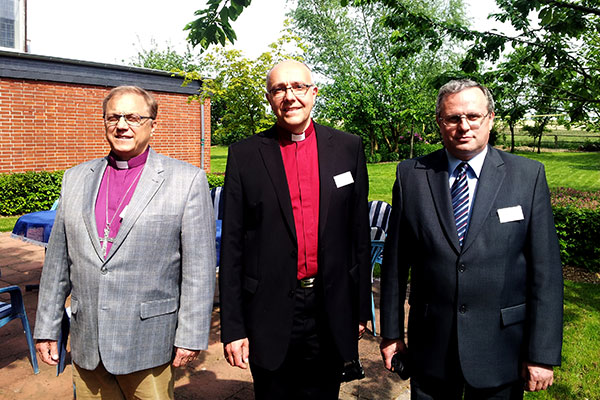
The presenters for the 2014 ILC Europe Conference: Bishop Risto Soramies Bishop Hans-Jörg Voigt, and Rev. Ing. Libor Šikula.

The presenters for the 2014 ILC Europe Conference: Bishop Risto Soramies, Bishop Hans-Jörg Voigt, and Rev. Ing. Libor Šikula.

GERMANY – The International Lutheran Council (ILC) held its 2014 European regional conference on March 21, 2014 in Bleckmar, Germany.

14 church leaders from all over Eurasia attended the conference, with many of the attendees representing churches and groups of Lutherans that are not currently members of the ILC officially, but are nevertheless interested in and supportive of its work.

Presentations during the day centered around the subject of church fellowship. Bishop Risto Soramies of the Evangelical Lutheran Mission Diocese of Finland (SEL), Bishop Hans-Jörg Voigt of Germany’s Independent Evangelical Lutheran Church (SELK), and Rev. Ing. Libor Šikula, a member of the Church Council of the Czech Republic’s Silesian Evangelical Lutheran Church of the Augsburg Confession (SECAC), all addressed the conference, explaining their church’s understanding of the nature of fellowship. Discussion then moved to the floor, where attendees contemplated how the ILC can foster greater fellowship between confessional Lutherans in Europe.

Of the three presenters at the conference, only Bishop Voigt represents a church that is currently a full-member of the ILC. The Independent Evangelical Lutheran Church in Germany has more than 34,000 baptized members. In addition to serving as head of SELK, Bishop Voigt further serves the ILC as Chairman of its Executive Council.

The Evangelical Lutheran Mission Diocese of Finland emerged after confessional Lutherans within the established Evangelical Lutheran Church of Finland grew concerned over the church’s break from historic Lutheran doctrine. It officially formed as an independent diocese in May 2013. It has 33 congregations all across Finland. The diocese has strong ties to the Mission Province of Sweden and the Evangelical Lutheran Diocese of Norway, Scandinavian Lutheran groups who have similarly registered confessional disagreement with their countries’ established Lutheran church bodies.

The Silesian Evangelical Lutheran Church of the Augsburg Confession is a member of the Lutheran World Federation, but also has close ties to ILC churches. SECAC has a partnership agreement with SELK, for example, and also cooperates with The Lutheran Church—Missouri Synod in a number of areas. SECAC has approximately 20,000 members, making it the largest Lutheran church in the Czech Republic.

Following the ILC’s Regional European Conference, most of the attendees are staying on in Bleckmar for the convention of the European Lutheran Conference (ELC).

———————

Coming Through Disaster: An update on Philippines relief

Photo courtesy of LCMS Communications/Erik M. Lunsford.

The scene of the disaster. (Photo courtesy of LCMS Communications/Erik M. Lunsford.)

PHILIPPINES – On November 8, 2013, a devastating typhoon rocked the Philippines. Destruction was widespread throughout the country. More than 6,000 people were killed and 4 million people were displaced. Members of the Lutheran Church in the Philippines (LCP) did not escape unscathed. Three LCP churches were severely damaged—“one totally flattened,” noted the LCP’s President James Cerdeñola at the time—and countless people were left homeless, both members of the church and their neighbours.

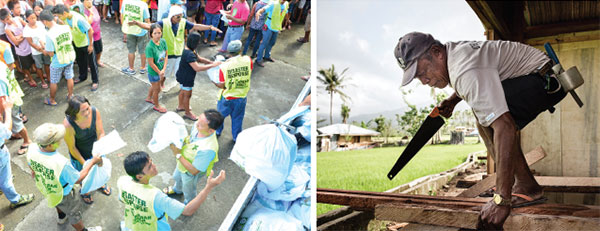
Following the typhoon, the Lutheran Church in the Philippines reacted quickly, sending their emergency response teams to help those in some of the hardest hit areas. Relief focused on immediate needs—like food provision and temporary shelter—as well as long-term needs, like rebuilding homes and livelihood projects. And the work continues.

It’s work that has been noticed by people in wider society as well. “When I went to these areas and talked to the people—not only among our members but also the people in the community—they were saying so many good things,” President Cerdeñola explained, “things like: ‘When the Lutherans give, they give not only to their members but also to the people in the community.’”

“It gives us an opportunity to be known as a church—as a church that cares, a church that loves” President Cerdeñola continued. “And as those great gifts were given, the Word was preached.”

Left photo courtresy of Lutheran Church in the Philippines. Right photo courtesy of LCMS Communications/Erik M. Lunsford..

Distributing goods and rebuilding homes. (Left photo courtesy of Lutheran Church in the Philippines. Right photo courtesy of LCMS Communications/Erik M. Lunsford).

The LCP was aided in its relief work through the support of a number of International Lutheran Council churches. The Lutheran Church—Missouri Synod (LCMS) offered $100,000 USD in immediate aid, though its contributions have since risen to more than $528,400 USD in aid for the Philippines. That number includes grants the LCMS pledged to make to match donations from ILC members and other partner churches that were directed through LCMS World Relief. The American Association of Lutheran Churches, the Confessional Lutheran Church of Chile, Japan Lutheran Church, the Silesian Evangelical Lutheran Church of the Augsburg Confession, and the Evangelical Lutheran Free Church in Denmark all responded, and together raised more than $20,200 USD for relief work in the Philippines.

Because of legal restrictions in their countries, a number of other churches sent contributions directly to the Philippines. The Evangelical Lutheran Church of England raised more than $4,750 USD in relief, while the Independent Evangelical Lutheran Church in Germany raised more than $130,300 USD in relief. In total, then, ILC members and partner churches have contributed more than $683,650 USD for relief work in the Philippines to date, in addition to the money and man-power the Lutheran Church in the Philippines has itself offered.

———————

ILC: Confessional Unity in Service to the Mission

Chairman Jon Ehlers

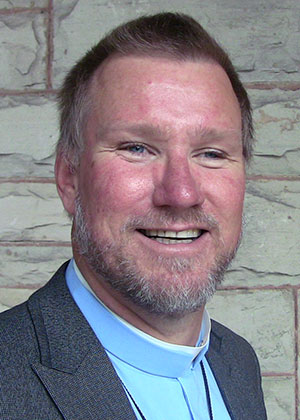
Chairman Jon Ehlers

by Jon Ehlers

As part of a new initiative, the International Lutheran Council’s (ILC) website will feature regular articles from members of the ILC’s Executive Council (composed of church leaders from around the world). These articles—devotions or commentaries on world events—are designed to nurture and foster our faith in Jesus Christ. This is the inaugural article in that series.

The International Lutheran Council is composed of 35 Lutheran Churches from around the world which proclaim the Gospel of Jesus Christ on the basis of an unconditional commitment to the Holy Scriptures as the inspired and infallible Word of God, and the Lutheran Confessions contained in the Book of Concord as the true and faithful exposition of the Word of God.

To assist us in accomplishing these goals, the Executive Council of the ILC recently met in Brazil to continue long range planning. We also had the great pleasure of attending the Convention of the Evangelical Lutheran Church of Brazil (Igreja Evangelica Luterana do Brasil—IELB), whose convention theme was “Our Confessional Unity in Service to the Mission.” This theme, I think, summarizes the purpose of the ILC marvelously—for ILC churches are firmly founded on the confession of Jesus Christ as our Saviour from sin.

This confession of salvation in Christ alone is revealed to us in the Bible, which is God’s inspired Word. We confess what God has revealed to us. We also hold to the Lutheran Confessions as a clear and accurate exposition of the Holy Scriptures. Being anchored solidly in the Bible and the Lutheran Confessions, our confession of faith is centred on Jesus Christ alone. ILC churches are churches which believe, teach and confess that we are saved by grace alone, through faith alone, in Jesus Christ alone. For in Christ we know and understand that God is for us and that God really does love and forgive us.

This confession then serves as the basis for the mission of the ILC churches. We do not keep this wonderful Good News to ourselves, but we desire to share this message of salvation with all people. We take Jesus’ mandate seriously to go into all nations making disciples by baptising and teaching everyone about what Jesus has done for them. This mission to all people is based on the confession of faith revealed in the Bible and the Lutheran Confessions. We understand Confession and Mission as things that go hand in hand, in response to God’s love which has come to us through the Word made flesh in Jesus Christ.

It is our prayer that over the coming years, you will be able to find many items on this website which clearly and unashamedly confess Jesus Christ, as well as items which rejoice in and inform us of how God’s Word is reaching people around the world through the mission activities of ILC churches. Together we seek to keep these two important aspects of the Christian faith in their proper balance. So come along and join us as we share our “Confessional Unity in Service to the Mission.”

———————

Rev. Jon Ehlers is Chairman of the Evangelical Lutheran Church of England. He serves on the Executive Council of the International Lutheran Council as the representative for the European world region.

IELB celebrates 110th anniversary

BRAZIL – The Evangelical Lutheran Church of Brazil (Igreja Evangelica Luterana do Brasil—IELB) celebrated their 110th anniversary as a church in Brazil at its national convention May 1-4. President Egon Kopereck was re-elected May 2 to serve the IELB for another term. See the convention in photos below:

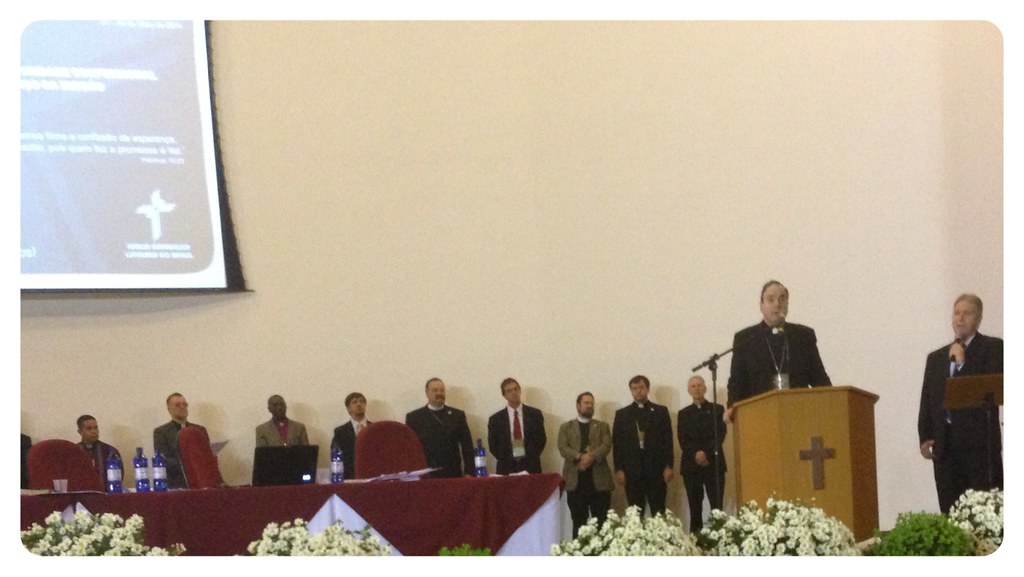
President Matthew Harrison (left) of The Lutheran Church—Missouri Synod gives the keynote presentation at the IELB’s 61st convention. His presentation was titled “The Challenge to Preserve Confessional Identity,” and was based upon Martin Luther’s On Counsels and the Church. Rev. Gerson Lindon (right) translates for President Harrison.

International Lutheran Council (ILC) Vice Chairman Robert Bugbee (President of Lutheran Church–Canada) greets the convention. ILC members and other international guests stand in the background.

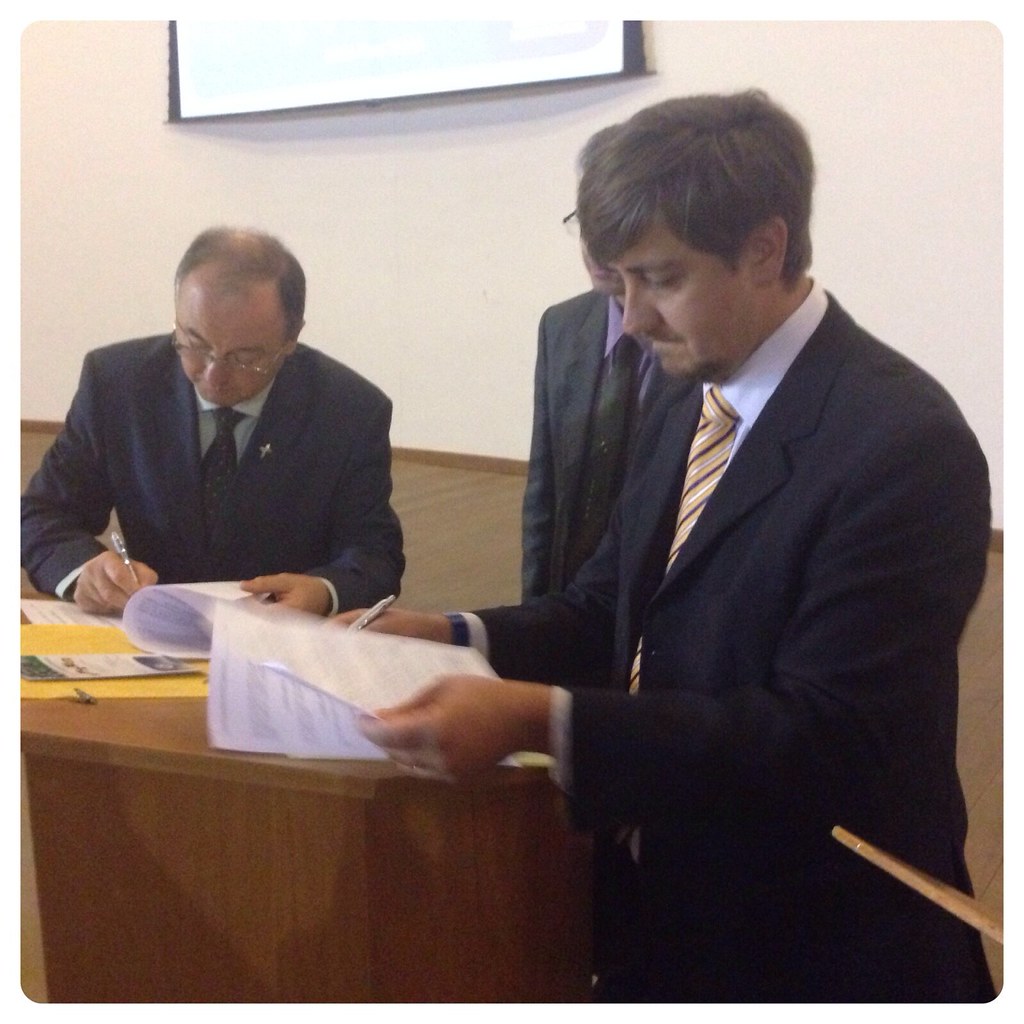
President Egon Kopereck (left) of the IELB signs a protocol document for altar and pulpit fellowship with St. Paul’s Evangelical Lutheran Congregation (Congregacion Evangélica Luterana San Pablo) of Montevideo, Uruguay. At the convention, the IELB also committed to church planting in Mozambique.

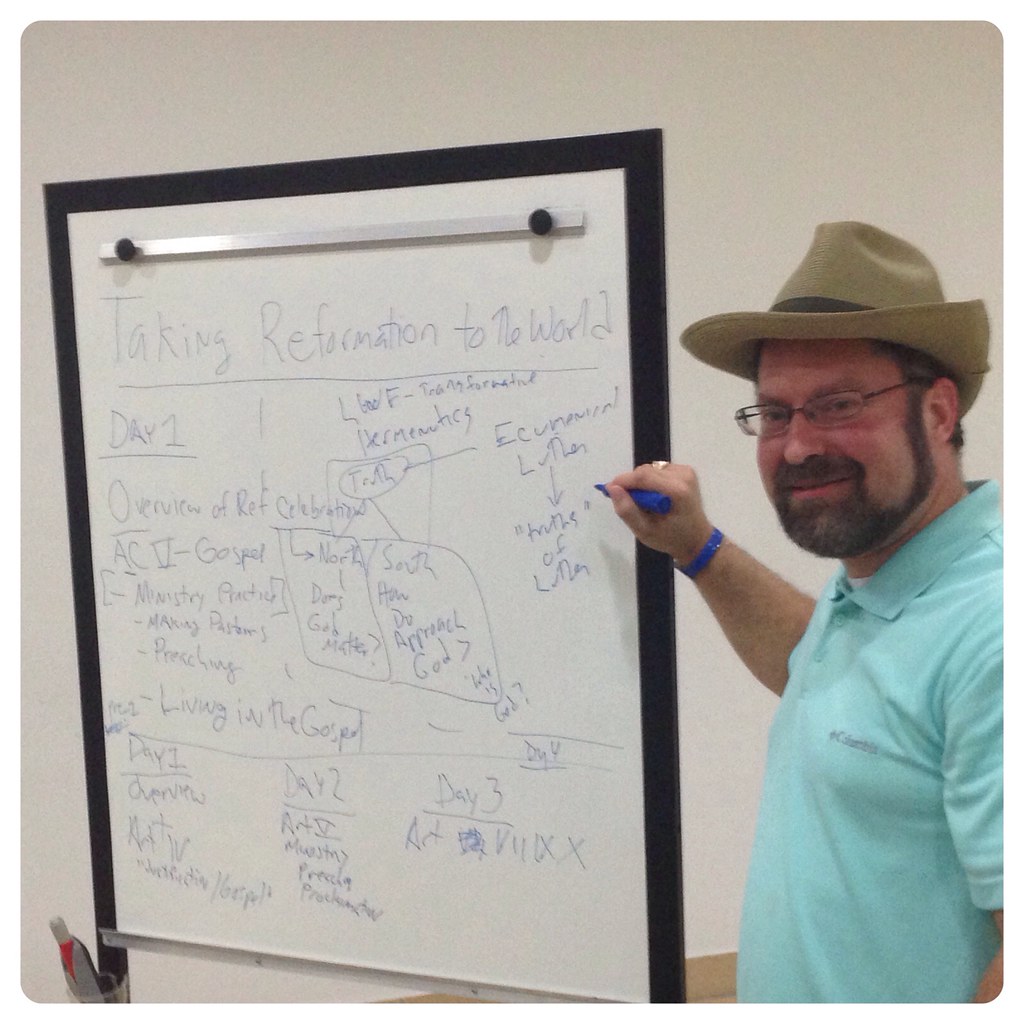
In between sessions of the IELB convention, the ILC conducted strategic planning. A significant part of the time was spent planning for next year’s World Conference in South America. ILC Executive Secretary Albert Collver is featured in this photo.

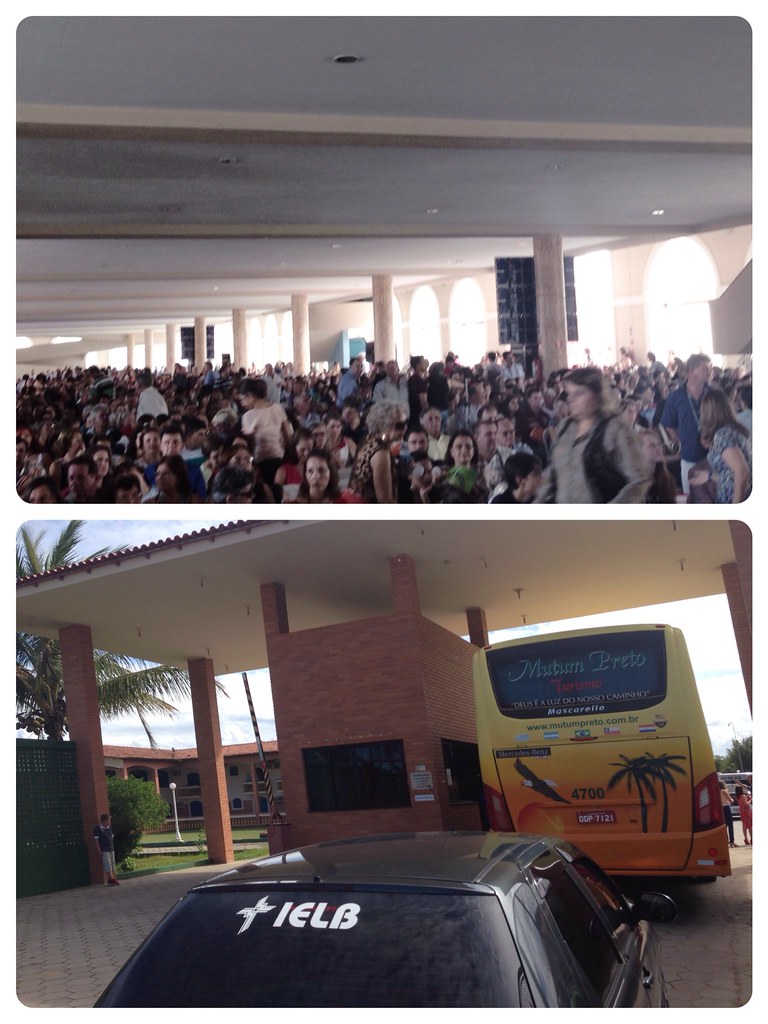
Over 7,000 people arrived by the bus load for the worship service commemorating the 110th anniversary of the IELB. The choir alone numbered in the thousands.

Some of the international guests at the IELB convention. LCMS President Matthew Harrison, ILC Secretary Gijsbertus van Hattem (President of the Evangelical Lutheran Church in Belgium), ILC Executive Secretary Albert Collver, and ILC Chairman Hans-Jörg Voigt (Bishop of Germany’s Independent Evangelical Lutheran Church.

———————

ILC Meeting in Brazil

BRAZIL – On the first weekend of May, the International Lutheran Council’s (ILC) Executive Council held meetings together in Acracuz, Brazil, where they had gathered for the 61st convention of the Evangelical Lutheran Church of Brazil (Igreja Evangelica Luterana do Brasil—IELB). A visual snapshot of their meetings appear below:

ILC Chairman Hans-Jörg Voigt (Bishop of Germany’s Independent Evangelical Lutheran Church) talks to Rev. Ted Krey (Latin American Regional Director for The Lutheran Church—Missouri Synod) about the situation of the church in Latin America.

The ILC Executive Committee is interviewed by press for the IELB. Pictured in top frame: ILC Executive Secretary Albert Collver and ILC Vice Chairman Robert Bugbee (President of Lutheran Church–Canada).

A look at the agenda for the ILC’s meetings.

In addition to regular business, the ILC Executive Committee worked on strategic planning centered around the ILC’s core objectives.

The ILC Executive Committee meets in Brazil (left to right): ILC Executive Secretary Albert Collver; ILC Africa Region representative Christian Ekong (Archbishop of the Lutheran Church of Nigeria); ILC Chairman Hans-Jörg Voigt (Bishop of Germany’s Independent Evangelical Lutheran Church); ILC Latin America Region representative Egon Kopereck (President of the Evangelical Lutheran Church of Brazil); President Matthew Harrison of The Lutheran Church—Missouri Synod (guest at the meetings); ILC Vice Chairman Robert Bugbee (President of Lutheran Church–Canada and ILC North America Region representative); ILC representative for the European region Jon Ehlers (Chairman of the Evangelical Lutheran Church of England; ILC Secretary Gijsbertus van Hattem (President of the Evangelical Lutheran Church in Belgium); and ILC Asia Region representative James Cerdinõla (President of the Lutheran Church of the Philippines.

———————

Brazilian Church holds 61st National Convention

IELBwebBRAZIL – The Evangelical Lutheran Church of Brazil (Igreja Evangelica Luterana do Brasil—IELB) is holding its 61st National Convention from May 1-4 in the city of Aracruz in the province of Espírito Santo. More than 1,100 people are registered to take part in the convention, with more than 7,000 people expected to attend the convention’s closing worship service.
The convention begins the morning of May 1 with an opening worship service. President Egon Kopereck of the IELB will preach that day. The convention will include a presidential election, with President Kopereck having indicated his willingness to stand for a second term. He first came to office in 2010.

On May 2, Brazilian pastor Rev. Mario R. Yude Fukue will take the stage as the convention’s first lecturer, speaking on “The Challenge of Being a Confessional Church in Missions Today.” The day following, Rev. Dr. Matthew C. Harrison (President of The Lutheran Church—Missouri Synod) will lecture on “The Challenge of Preserving Confessional Identity.”

A number of dignitaries will be present for the event in addition to President Harrison. Partner churches from various countries are sending representatives, including International Lutheran Council (ILC) Chairman Hans-Jörg Voigt (Bishop of Germany’s Independent Evangelical Lutheran Church), ILC Vice-Chairman Robert Bugbee (President of Lutheran Church–Canada), President Gijsbertus van Hattem (Belgium), Chairman Jon Ehlers (United Kingdom), Archbishop Christian Ekong (Nigeria), and President James Cerdeñola (Philippines).  Local Brazilian government officials, including Espírito Santo’s Governor, José Renato Casagrande, and Deputy Governor, Givaldo Vieira, have also confirmed their attendance at the convention’s closing service.

Among other business, the convention will see the signing of a cooperation protocol document between the IELB and St. Paul’s Evangelical Lutheran Congregation (Congregacion Evangélica Luterana San Pablo) in Montevideo, Uruguay.

The Evangelical Lutheran Church of Brazil grew out of missionary work by The Lutheran Church—Missouri Synod in the early 1900s. It became self-governing in 1980. Today, the IELB has approximately 240,000 baptized members.

———————

Lutheran institute in England granted Coat of Arms

Westfield-House-Crest-Ceremony

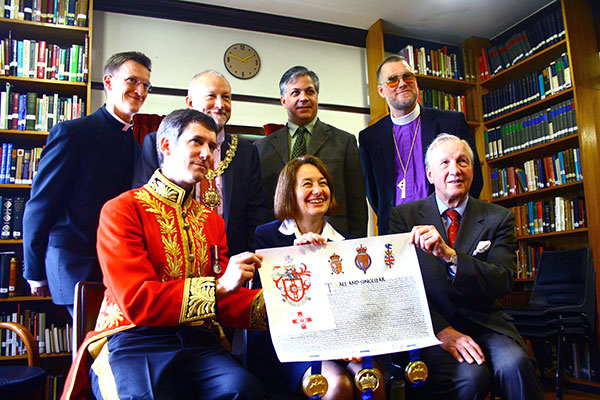
Back row: Rev. Dr. Jonathan Mumme, Mayor Paul Saunders of Cambridge, Rev. Dr. Joel Humann, and Chairman Jon Ehlers. Front row: York Herald of Arms Peter O’Donoghue, Principal Cyndy Lumley, and Lord Lieutenant of Cambridgeshire,  Hugh Duberly. (Image from Westfield House’s Facebook page).

ENGLAND – The Evangelical Lutheran Church of England (ELCE)’s theological institute, Westfield House, was granted its own Arms, Crest, and Badge in a special ceremony in Cambridge, April 22. In the United Kingdom, the right to grant heraldry is possessed by the monarchy, which in England exercises this right through the College of Arms.

“This was a very exciting occasion,” Cambridge News quoted Dr. Lumley, “as it marked the granting of our own Arms, Crest, and Badge, for which the development and application have been made possible by a generous grant from the Sukup Family Foundation in Iowa.” Dr. Lumley is scheduled to discuss the honour on BBC Radio Cambridgeshire the morning of April 27.

Civil leaders present for the ceremony were Her Majesty’s York Herald of Arms, Peter O’Donoghue; Lord Lieutenant of Cambridgeshire, Hugh Duberly; and Mayor Paul Saunders of Cambridge. Church leaders present included Westfield House’s Principal, Dr. Cynthia Lumley, the school’s Interim Preceptor, Rev. Dr. Joel Humann, and the ELCE’s Chairman, Rev. Jon Ehlers.

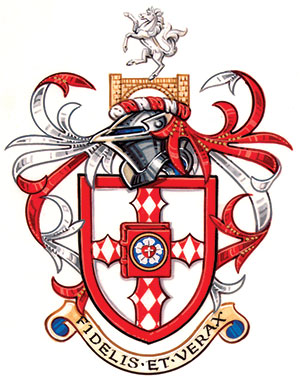
Westfield House's new Coat of Arms.

Westfield House’s new Coat of Arms.

The arms and crest were designed by Rev. Dr. Jonathan Mumme, a Tutor at Westfield House, and Rev. David Jackson, an alumnus of Westfield and former ELCE pastor, now serving as a Lieutenant Chaplain the Royal Canadian Navy.

The crest features a rearing white horse, in reference to the White Horse Inn, a former Cambridge pub where the works of Martin Luther were read and discussed. The arms features a cross as its central motif; a book which alludes to Scripture, the Lutheran Confessions, and education in general; and a Luther rose. The motto is Fidelis et verax—Latin for “faithful and true.” Additional information on the meaning of the crest, arms, moto, and badge are available at the website of The Friends of Westfield House.

Westfield House was first inaugurated as a house of theological studies on February 22, 1962.

———————

Latvian and German Lutherans hold meetings

Dean Andris Krauliņš, Romāns Ganiņš, and Bishop Hans-Jörg Voigt.

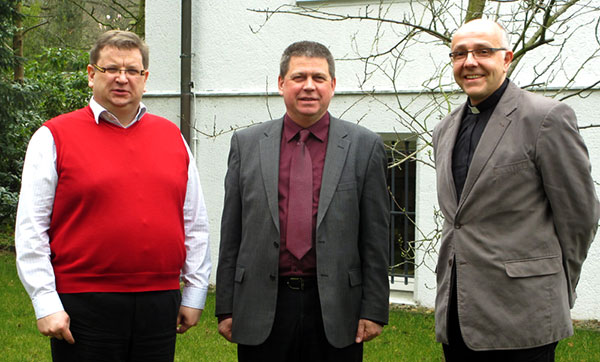
Dean Andris Krauliņš, Romāns Ganiņš, and Bishop Hans-Jörg Voigt.

GERMANY – From March 24-25, representatives of the Latvian Evangelical Lutheran Church (ELCL) visited Hanover for meetings with Germany’s Independent Evangelical Lutheran Church (SELK). Dean Andris Krauliņš of Latvia’s Jūrmala circuit and Romāns Ganiņš, Head of Administration at the Consistory in Riga, represented the ELCL. SELK was represented by its Bishop, Rev. Hans-Jörg Voigt.

Discussions over the two days focused on church-congregational life in the two partner churches. Michael Schätzel of the German church’s council gave Romāns Ganiņš a detailed description of the financial systems of SELK, focusing on congregational budget-planning systems. Dean Andris Krauliņš and Bishop Voigt shared together the different structures of organization in the two church bodies, with the latter describing the meeting structure of the church’s council.

“Last year I visited the synod of the Evangelical Lutheran Church of Latvia,” Bishop Voigt noted. “Whenever I meet together with our brothers and sisters in Latvia, I appreciate our closeness in the liturgy of the Lutheran worship service and in our confessions. We need to support one another as we face our secularizing European culture.”

The Independent Evangelical Lutheran Church of Germany has 187 churches, 124 active pastors, and approximately 35,000 members. Its bishop, Rev. Hans-Jörg Voigt, also serves as Chairman for the International Lutheran Council.

The Evangelical Lutheran Church of Latvia, a member of the Lutheran World Federation, is one of the largest Christian church bodies in Latvia, with nearly 300 churches throughout the nation served by 140 pastors and ten evangelists. Of Latvia’s 2.3 million population, approximately 430,000 identify as Lutheran, with about a tenth of these active in the life of the church.

The German and Latvian churches signed an “Agreement of Partnership” in 2002 on the grounds of common subscription to the Lutheran Confessions. The two churches are in the process of seeking full altar and pulpit fellowship. In addition to SELK, the Evangelical Lutheran Church of Latvia has ties to other ILC churches, including The Lutheran Church–Missouri Synod with which it achieved altar and pulpit fellowship in 2001.

———————

Signup for ILC Updates