News

Posts tagged:

ILC

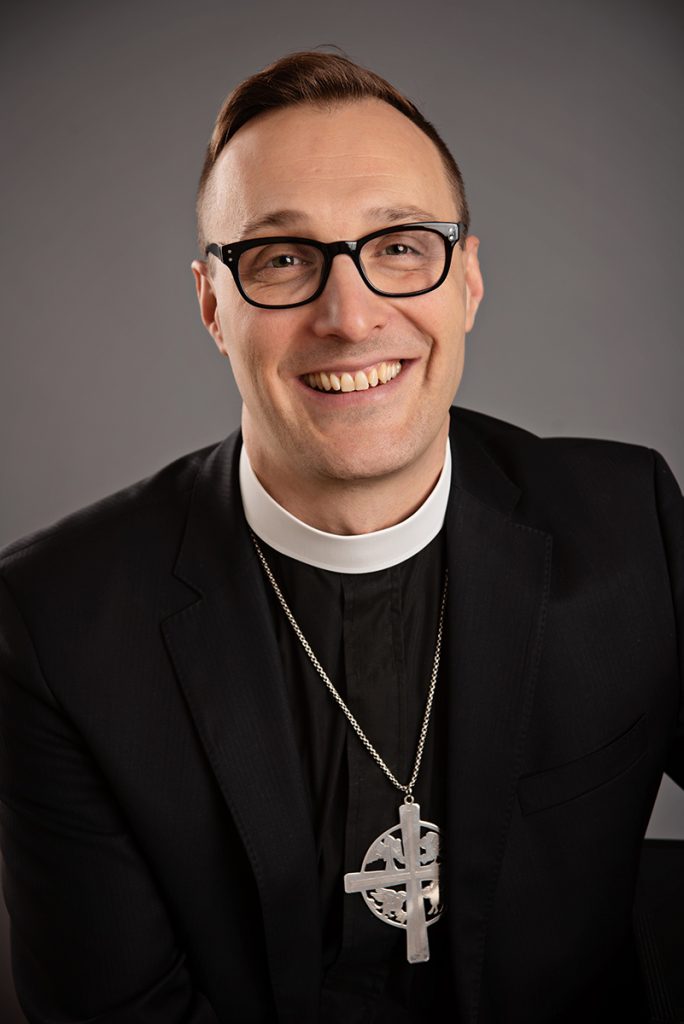
ILC Chairman responds to LWF

WORLD – The International Lutheran Council (ILC) rejects public accusations by the Lutheran World Federation (LWF) that it has directed members to leave the LWF.

“The International Lutheran Council was not involved in any way with the decision of the Evangelical Lutheran Church in Kenya to leave the LWF, though I personally consider their decision justified and consistent,” said ILC Chairman Juhana Pohjola, “Recent comments from the LWF reveal a deeply patronizing and condescending attitude towards the Kenyan church—as if they were incapable of evaluating for themselves the theological positions  of the LWF and their continued membership in it. This is, in my view, a kind of Western paternalism that should come to an end.”

“The ILC has repeatedly affirmed that member churches are responsible for determining their own church relationships, according to their ‘conscience on the basis of the revealed Word of God and our Confessions,’” Chairman Pohjola explained. “The ILC has never directed its members to leave the LWF, though I understand the concerns that have led some—including the Kenyan church—to do so.”

“From our perspective, the real source of tension seems to be that a growing number of Lutheran church bodies around the world, including LWF members, have expressed discomfort with the theological positions and direction of the LWF,” Chairman Pohjola continued. “At the same time, many of these churches have expressed a desire for a closer relationship with the ILC and its member churches, as they value our council’s strong commitment to the Gospel of Jesus Christ, grounded in the authority of Scripture and the Lutheran Confessions.”

In recent years, a number of LWF-associated churches and groups have contacted the ILC in hopes of developing closer relations. A 2018 report by former LWF General Secretary Martin Junge expressed disapproval of the ILC’s fielding of such requests, and the LWF unilaterally broke off relations with the ILC that same year.

The ILC responded to the LWF’s stated concerns, noting it was ready to resume contact with the LWF at any time “in a spirit of friendliness and mutual respect.” At its 2018 World Conference in Belgium, the ILC further adopted a resolution inviting renewed contact with the LWF. Despite this and other outreach, the LWF has never agreed to reopen relations. Attempts at renewed friendly contact by the ILC in the years since—following the appointment of Rev. Dr. Klaus Detlev Schulz as General Secretary in 2023, for example—have been ignored by the LWF.

By contrast, the LWF’s posture towards the ILC has been frequently hostile. One church which joined the ILC during its 2018 World Conference, for example, was subsequently visited by the LWF’s regional secretary and directed to break ties with the ILC. The church did so, explaining the pressure they were under from the LWF in a letter to ILC leadership.

“It is quite remarkable to see the LWF—which is far larger than the ILC and has far more resources, financial and otherwise—accuse the ILC of influencing churches to leave the LWF,” said Chairman Pohjola. “In reality, pressure has been exerted in the other direction. I commend those churches who take a stand against such pressure to follow their consciences in accordance with Scripture and the Lutheran Confessions.”

“It is clear that, for many years now, a realignment of global Christianity has been underway, with churches committed to classical biblical doctrine and ethics distancing themselves from churches pursuing progressive theology,” said Chairman Pohjola. “As far as world Lutheranism is concerned, the Evangelical Lutheran Church in Kenya has recently decided to leave the LWF. The Evangelical Lutheran Church of Ghana made the same decision somewhat earlier. I do not believe they will be the last churches to make this decision. But to suggest that the ILC must be directing such decisions is simply false, as well as deeply patronizing to the churches in question.”

“Despite recent comments by the LWF, the International Lutheran Council remains open to renewed contact with the LWF,” Chairman Pohjola concluded. “But such relations require a commitment to mutual respect.”

The International Lutheran Council is a global association of confessional Lutheran churches dedicated to the proclamation of the Gospel of Jesus Christ, grounded in the authority of Scripture and the Lutheran Confessions.

———————

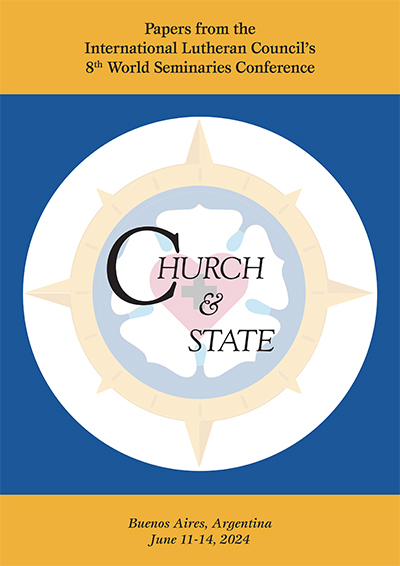
Church and State: Papers from 2024 World Seminaries Conference released

ARGENTINA – Papers from the International Lutheran Council’s (ILC) 2024 World Seminaries Conference have now been released. The theme for the 2024 conference was “Church & State.”

The papers are available to read in three different languages: English, Spanish, and Portuguese.

Published papers include:

  1. Theological Perspectives on Church and State – Rev. Dr. Juhana Pohjola
  2. The Korean Situation and Christian Education – Rev. Dr. Jun Hyun Kim
  3. Historical Perspectives on Church and State and What It Means for Theological Education – Rev. Prof. Clécio Schadech
  4. Government Interference in Seminary Education – Rev. Dr. James A. Kellerman
  5. Crucifixion of Identity: Resurrection of + – Rev. Dr. Boris Grunjević
  6. ILC Accreditation – Rev. Dr. Klaus Detlev schul and Dcs. Dr. Cynthia Lumley
  7. Core Competencies for Theological Education Leading to Ordination/Deaconess Certification – Rev. Dr. Ron Mudge

The ILC’s 8th World Seminaries Conference took place June 11-14, 2024, in Buenos Aires, Argentina.

The next World Seminaries conference will take place in Pretoria, South Africa, from June 23-26. The theme for this year’s conference is “Being Human, Being Christian: Theological Anthropology in Church and Seminary.”

The International Lutheran Council is a global association of confessional Lutheran church bodies dedicated to the proclamation of the Gospel of Jesus Christ, grounded in the authority of Scripture and the Lutheran Confessions.

———————

Meeting of the Augustana Working Group in Wittenberg

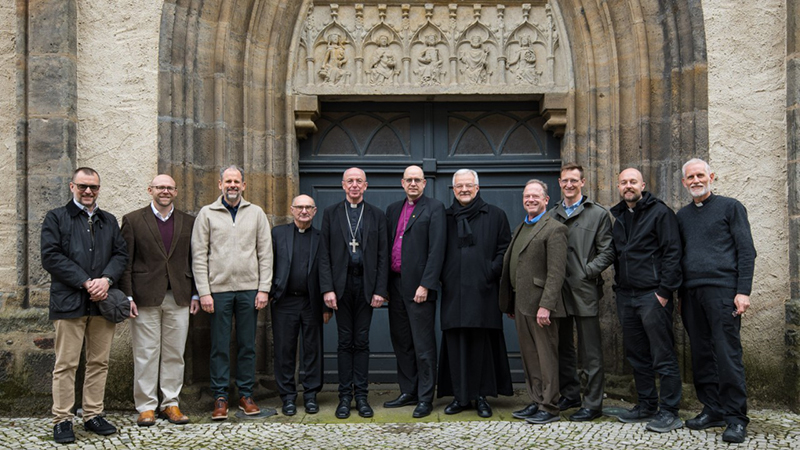
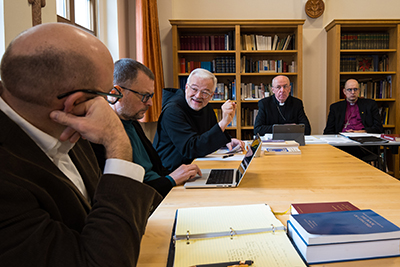
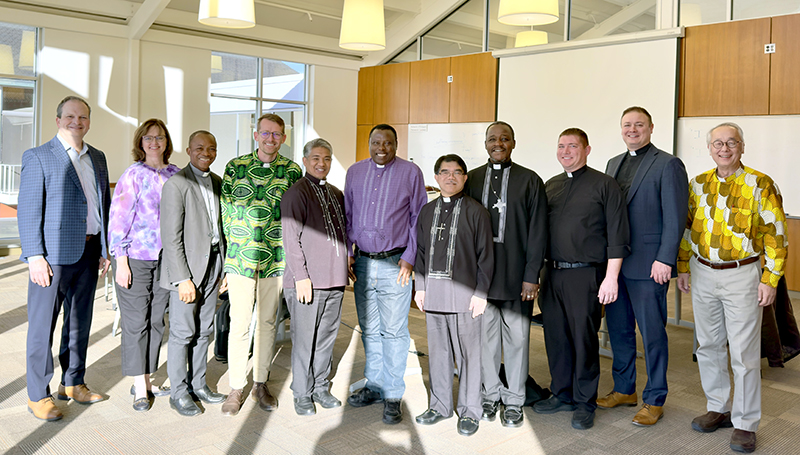
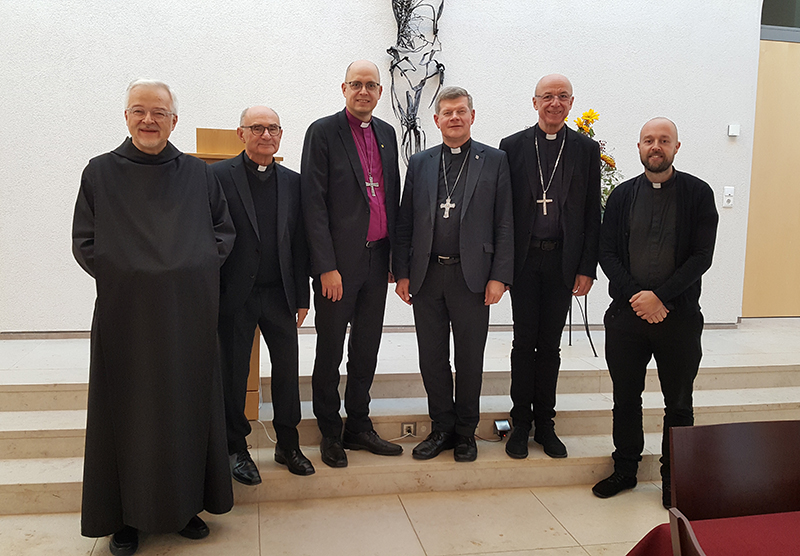
GERMANY – The fourth meeting of the Concordia Lutheran-Catholic Augustana Working Group (AWG) took place in Wittenberg, Germany, from March 24-26, 2026. Under the chairmanship of Bishop Dr. Juhana Pohjola, Chairman of the International Lutheran Council (ILC), and Auxiliary Bishop Dr. Peter Birkhofer, the participants discussed the statements of the Augsburg Confession and further relevant documents from the 16th century on ordination and episcopacy from a pre-confessional perspective and in the further confessional development and findings from the ecumenical discussions. In the meantime, the working group had exchanged progress reports via Zoom.

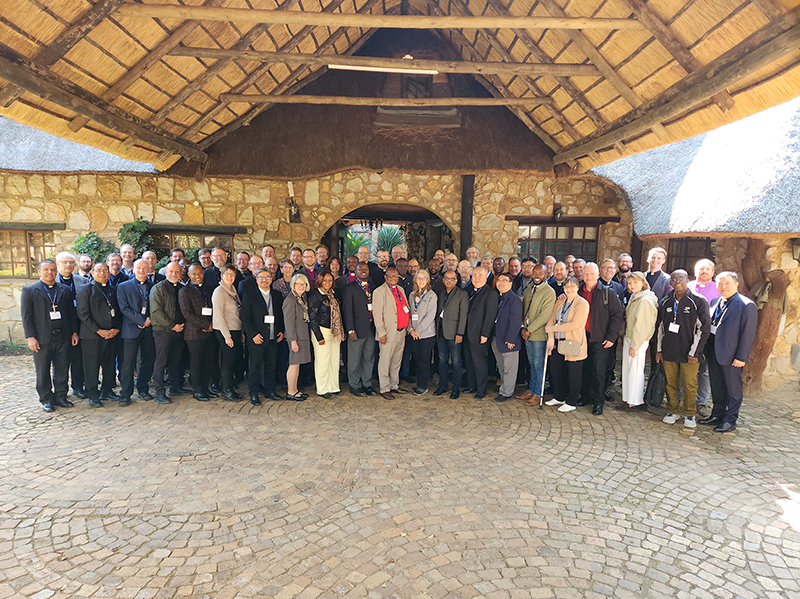
Augustana Working Group, March 2026 meeting in Wittenberg

The Augustana Working Group includes representatives of the International Lutheran Council and the Catholic Church. Following the conclusion of the theological discussions between the ILC, an association of Concordia Lutheran churches, and the Catholic Church (2014-2019), both sides suggested the establishment of a working group as a specific ecumenical-theological format. The working group is not an official dialogue commission. Father Dr. Augustinus Sander OSB takes part in the meetings as a permanent guest of the Dicastery for Promoting Christian Unity (DPCU). Rev. Dr. Sebastian Grünbaum was appointed as a minute writer for the group.

The next meeting is scheduled to take place in spring 2027.

Participants of the International Lutheran Council (ILC)

  • Bishop Dr. Juhana Pohjola, Helsinki, Finland, Bishop of the Evangelical Lutheran Missionary Diocese of Finland; Chairman of the International Lutheran Council (ILC)
  • Prof. Dr. Joel Elowsky, St. Louis, Mo., USA
  • Prof. em. Dr. Werner Klän, D.Litt., Lübeck, Germany
  • Associate Prof. Dr. Jonathan Mumme, Hillsdale, Mich., USA
  • Prof. Dr. Tom Winger, St. Catharines, Ont., Canada
  • Rev. Dr. Sebastian Grünbaum, Helsinki / Vatican (minute writer)

Catholic participants

  • Auxiliary Bishop Dr. Peter Birkhofer, Freiburg / Breisgau, Germany
  • Prof. Dr. Markus Lersch, Siegen, Germany
  • Dr. Tim Lindfeld, Aachen, Germany
  • Associate Professor Dr. James Prothro, St. Louis, Mo., USA
  • Father Dr. Augustinus Sander OSB, Vatican, permanent guest of the Dicastery for Promoting Christian Unity

———————

ILC prepares for 2026 World Seminaries Conference

SOUTH AFRICA – The International Lutheran Council (ILC) will hold its 2026 World Seminaries Conference in Pretoria, South Africa, from June 23-26.

The theme for this year’s conference is “Being Human, Being Christian: Theological Anthropology in Church and Seminary.” In an era of transhumanism, gender ideology, and post-modern anthropology, this conference will equip seminary leaders and faculty to faithfully teach a biblical and confessional Lutheran understanding of what it means to be human.

The International Lutheran Council is a global association of confessional Lutheran church bodies dedicated to the proclamation of the Gospel of Jesus Christ, grounded in the authority of Scripture and the Lutheran Confessions.

———————

LLDP studies contemporary issues in ethics and biblical hermeneutics

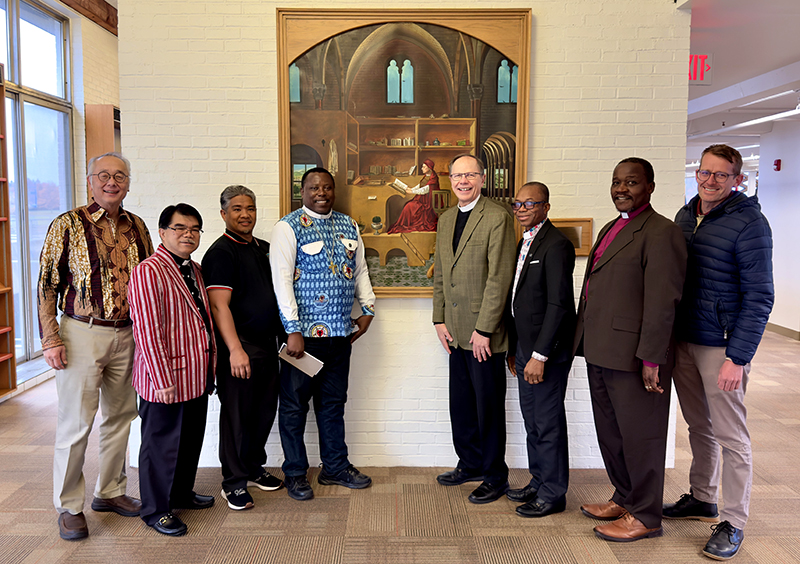
LLDP participants with instructor Rev. Dr. Charles Gieschen (Provost at Concordia Theological Seminary). From left: Rev. Dr. Naomichi Masaki, LLDP Director; Rev. Felipe Ehican, Vice President of the Lutheran Church in the Philippines (LCP); Rev. Fredirick Flores, Secretary of North Luzon Highland District, LCP; Rev. Daniel Akoh, President/Bishop Elect of the Evangelical Lutheran Church of Ghana (ELCG); Rev. Dr. Charles Gieschen; Rev. Dr. John Lanbon, National Director of Young Adult Fellowship, ELCG; Rev. Charles Bameka, National Presiding Bishop of Lutheran Church of Uganda (LCU); and Rev Dr. Heinz Hiestermann, Rector of Lutheran Theological Seminary in Tshwane, South Africa, Free Evangelical Lutheran Synod in South Africa (FELSISA).

USA – From November 10-21, 2025, church leaders from four Lutheran church bodies in Africa and Asia travelled to the United States for another session of the Lutheran Leadership Development Program (LLDP). During this session, participants engaged two of the most important topics in the church today: issues in theological ethics, and biblical doctrine and hermeneutics.

Rev. Peter Brock teaches on Issues in Theological Ethics.

The course on Issues in Theological Ethics helps participants form a disciplined and accurate analysis of key ethical problems confronting the church on issues like personhood, sexuality, marriage, technological advance, the beginning and end of human life, and vocation. Rev. Peter Brock, senior pastor of St. John’s Evangelical Lutheran (Bingen, Indiana) and First Vice President of the LCMS’s Indiana District—and also a theological capacity builder for the ILC—taught this vital subject. Rev. Brock discussed a variety of misconceptions contained in contemporary pluralistic approaches to ethics, modeling instead a Lutheran approach grounded in the doctrine of justification and trinitarian theology. Rev. Brock engaged in contemporary issues through key Lutheran themes like the Law/Gospel distinction, the three estates, and the two kingdoms. While teaching as a theologian and church leader, he also brought to bear his experience as a parish pastor who deals with these issues day in and day out.

“I learned many new things!” said Rev. Dr. Heinz Hiestermann, Rector of Lutheran Theological Seminary (Tshwane, South Africa), speaking on the course. “Many issues we discussed in class are not talked about in my church. We need to talk about these issues, and now I have the knowledge to do this. I believe I learned a lot that will benefit the church.” Dr. Hiestermann is a trained New Testament scholar, but attending LLDP sessions has inspired him to incorporate what he is learning in the program into the education offered at his own seminary; the seminary is beginning to offer, for example, courses on ecclesial leadership and pastoral administration.

The second course—Lutheran Hermeneutics—was taught by Rev. Dr. Charles Gieschen, Provost and Professor of the New Testament at Concordia Theological Seminary (Fort Wayne). This was his third time teaching the course for the LLDP. Dr. Gieschen taught the basics of hermeneutics in light of the confessional Lutheran approach to the Scriptures. His chief point was the Christocentricity of Scripture. His lectures covered essential points of the broad history of biblical interpretation from early, patristic, medieval, Reformation, post-Reformation, and modern periods, complemented by many readings, and helped participants evaluate the historical-critical method and reader-oriented trends in biblical interpretation. Much appreciated was his concrete demonstration of sound hermeneutics in response to challenges participants face in their own contexts such as the various claims of neo-charismatic and Pentecostal movements, millennialism, proponents of women’s ordination, and more.

Rev. Dr. Charles Gieschen teaches Lutheran Hermeneutics.

Participants were thankful for this course because they knew that many people in their parishes and even some pastors are often ill-equipped on the fundamentals of a confessional Lutheran approach to Scripture and sound biblical hermeneutics. “The proper way of reading the entire Scripture with Christocentricity that Dr. Gieschen taught has made the scales fall from my eyes,” said one participant. And another: “That Dr. Gieschen took a lot of time to answer the questions of the students helped us apply the Bible better in our context.”

The International Lutheran Council (ILC) works with its partners The Lutheran Church—Missouri Synod (LCMS), Concordia Publishing House (CPH), and Concordia Theological Seminary (Fort Wayne, Indiana) to administer the LLDP under program director, Rev. Dr. Naomichi Masaki. “Participants studied day and night to read, attend lectures, and write for these two very demanding courses,” Dr. Masaki observed. “This program calls for serious study of theological topics and practical issues that are designed to assist participants in their ecclesial leadership in their context.” He went on to praise the participants for their hard work.

Of the instructors, Dr. Masaki said: “Once again, my colleague Dr. Gieschen exceeded my expectations through one-of-a-kind instruction and with deep respect and care for the participants. He knows how important the subject matter of proper biblical interpretation remains in world Lutheranism.” And again: “How often have I observed the way Pastor Brock teaches the subject of theological ethics in Tanzania in an incredibly masterful manner! He is not only a first-class scholar but also a competent instructor. It was my special joy to acknowledge that he is now a part of our LLDP teaching faculty!”

LLDP participants, Dr. Masaki, Rev. Brock, Mrs. Alison Blodget (ILC Treasurer and Office Manager) meet with CPH President/CEO Jonathan Schultz (left) along with CPH Vice President of Publishing Rev. Dr. Jacob Corzine (second from right).

During the November session, LLDP participants enjoyed participating in campus life at Concordia Theological Seminary, including the institution’s annual Good Shepherd Institute, as well as the in-home hospitality of several seminary and ILC families. A distinct joy was when LLDP members were reunited for a visit with Concordia Publishing House’s President/CEO Jonathan Schultz and Vice President of Publishing Rev. Dr. Jacob Corzine. LLDP members expressed their thanks to CPH for the gifts of many essential resources this year to the seminary libraries and individual pastors of LLDP member churches.

The next session of the LLDP is taking place in Wittenberg, Germany, from February-March 2026, with a particular focus on the history of the Lutheran Church and the theology of the Lutheran Confessions. You are invited to support the work of the LLDP by making a donation online. You can also mail a donation by cheque to:

International Lutheran Council
P.O. Box 10149
Fort Wayne, Indiana 46850 USA

———-

The ILC’s 2025 World Conference in Brief

Participants in the ILC’s 2025 World Conference.
ILC General Secretary Klaus Detlev Schulz and the new board of directors: LCC President Timothy Teuscher (North America), SLM President Omar Garza Martínez (Secretary), IELP President Alceu Alton Figur (Latin America), ELMDF Bishop Juhana Pohjola (Chairman), LCU Bishop Charles Bameka (Africa), and LM-A President Matt Anker. Archbishop Rinalds Grants was unable to attend in person.

PHILIPPINES – The International Lutheran Council (ILC) held its 28th (13th) triennial World Conference took place September 14-19, 2025, in Panglao, Bohol, Philippines. In total, more than 130 people representing more than 60 different church bodies and 55 nations participated in the event.

During the conference, Bishop Juhana Pohjola of the Evangelical Lutheran Mission Diocese of Finland (ELMDF) was reelected as chairman of the ILC. Bishop Pohjola was first elected to the position in 2022 during the ILC’s World Conference in Kenya. Elected or reelected to serve alongside Chairman Pohjola were:

  • Africa – Bishop Charles Bameka (Lutheran Church of Uganda)
  • Asia – President Matt Anker (Lutheran Mission – Australia)
  • Europe – Archbishop Rinalds Grants (Evangelical Lutheran Church of Latvia)
  • Latin America – President Alceu Alton Figur (Evangelical Lutheran Church of Paraguay)
  • North America – President Timothy Teuscher (Lutheran Church–Canada)
  • Secretary: President Omar Garza (Lutheran Synod of Mexico)
Representatives of church bodies received as full members during the ILC’s 2025 World Conference. Pictured are ILC Chairman Juhana Pohjola, FLM Bishop Denis Rakotozafy, CLCMS President Davis Robert Wowa, LM-A President Matt Anker, ELCK Bishop Alexander Burtsev, ILK/ELCB representative Rev. Mikko Tiira, and ILC General Secretary Klaus Detlev Schulz.

The conference also saw six observer member churches received into full membership in the ILC: the Confessional Lutheran Church – Malawi Synod (CLCMS); Lutheran Mission – Australia (LM-A); the Evangelical Lutheran Church of Kazakhstan (ELCK); the Istanbul Lutheran Church (ILK)/Evangelical Lutheran Church of Bulgaria (ELCB); the Evangelical Lutheran Church of Haiti (ELCH); and the Malagasy Lutheran Church (FLM).

Unity in Christ

Rev. Dr. Thomas M. Winger.

The theme for the ILC’s 2025 World Conference was “Unity in Christ: Confession and Cooperation in a Fragmented World.” The keynote speaker for the event was Rev. Dr. Thomas M. Winger of St. Catharines, Ontario, Canada, who gave a three-part presentation entitled “The Spiritual Temple,” focused on Ephesians 2:11-22.

The conference also featured several sessions with a regional focus, including an Asia Regional Focus on Shamanism and Syncretism; a Latin America Focus on migration; and an African Regional Focus on the charismatic movement. The ILC’s General Secretary, Rev. Dr. Klaus Detlev Schulz, gave a presentation entitled “Affirming Constants in an Everchanging World,” and the conference also heard presentations on history, Bible translation, and Christian publishing.

On the final day of the ILC’s world conference, participants adopted two statements: one on the Nicene Creed and the other on unity in Christ. The first of these—An Affirmation of the Nicene Creed—was adopted in light of this year’s anniversary commemorations of the Council of Nicaea. The second statement adopted—Unity in Christ and His Gospel—reflects on the theme of this year’s ILC World Conference.

———————

Full news from the ILC’s 2025 World Conference can be found here.

World Conference 2025: ILC issues statements on the Nicene Creed and Unity in Christ

PHILIPPINES – On the final day of its 2025 World Conference, the International Lutheran Council adopted two statements: one on the Nicene Creed and the other on unity in Christ.

The first of these—An Affirmation of the Nicene Creed—was adopted in light of this year’s anniversary commemorations of the Council of Nicaea. “During this 1,700th anniversary year of the Council of Nicaea, we, the member churches of the International Lutheran Council, reassert our commitment to the teachings of the Nicene Creed,” the statement notes. It goes on to cite the creed’s place as a “binding statement of faith” for Confessional Lutherans today, also acknowledging the creed’s importance “as a touchstone for relations between different Christian traditions.”

The second statement adopted—Unity in Christ and His Gospel—reflects on the theme of this year’s ILC World Conference. In the face of the serious “division and confusion” afflicting nations and even church bodies today, the statement says, “the member churches of the International Lutheran Council reassert the centrality of the Gospel of Jesus Christ.” On the basis of their shared faith, members go on to “encourage each other to seek opportunities for closer unity and cooperation between our churches, recognizing that we share a common mission: proclaiming salvation through Christ alone.”

Other business during the conference’s final day included a series of reports, votes on revisions to the ILC’s bylaws, and other matters.

Closing Service and the Installation of the ILC’s New Board

Rev. Dr. Klaus Detlev Schulz preaches during the closing service of the ILC’s 2025 World Conference.

The 2025 World Conference ended with a service of Vespers, at which time the ILC’s newly-elected board of directors was installed into office. Serving as liturgist was Rev. Michael Blodgett. Serving as organist was Ivy Parotina, who also served in that capacity for all the services during this year’s conference.

Rev. Dr. Klaus Detlev Schulz, General Secretary of the ILC, preached for the concluding service, reflecting on John 17:20-23. Why does the Lord pray for our unity in this passage, Dr. Schulz asked. “Because our unity with one another is meant to be a compelling witness to the world,” he said. “Jesus prays that believers will be one with each other and with the Father and Son, so that the world will recognize Jesus’ divine mission and the Father’s love for them.”

The unity which Jesus speaks of here is “a spiritual unity—that is, one established through faith,” Dr. Schulz continued. “As Confessional Lutherans, we believe that such a unity transcends denominational lines, and exists as the one church of Christ—the una sancta. All who believe (the vere credentes) in Christ are united in His body.”

This spiritual unity is meant to be “uniform in the faith confessed,” Dr. Schulz explained, on “who Jesus is, what He did, and how we are saved.” But unfortunately, he noted, even on these points Christians sometimes disagree. “That is why Jesus prays for it with his core request ‘that they may all be one.’”

“There is a call to action implied with the understanding that the church on earth is meant to be one united body in Christ, not to exist as single individuals,” Dr. Schulz continued. “We cannot be complacent about it, we cannot say: ‘Oh, Jesus has here a dream, a vision of a unified church. But it will never happen, so let us drop the idea of talking to each other.’ No, work on it. Actively pursue unity through repentance, forgiveness, and striving for understanding and compassion in our relationships. Pursue unity not by compromising the truth of God’s Word, but by holding to it with humility and love. And then live as a witness: Allow the unity within the church to be a powerful testimony of God’s love and presence to a watching world.”

LCP President Antonio del Rio Reyes installs the International Lutheran Council’s board for the new triennium.

The ILC’s outgoing Asia Region representative, President Antonio del Rio Reyes of the Lutheran Church in the Philippines, then conducted the installation of the ILC’s new board. The service—and with it, the 2025 World Conference—subsequently concluded with the singing of the hymn “For All the Saints.”

———————

For more news from the ILC’s 2025 World Conference, click here.

2025 World Conference: Membership Votes and Board Elections

ELCE Chairman George Samiec preaches.

PHILIPPINES – The final day of the International Lutheran Council’s 2025 World Conference saw six observer member churches accepted as full members in the ILC and the election of board members for a new triennium.

The day began with a service of matins led by Rev. Michael Blodgett, with the ILC’s Europe Regional Representative, Chairman George Samiec of the Evangelical Lutheran Church of England (ELCE), preaching a sermon on Luke 8:1-3 and 1 Timothy 6:2-12.

“The New Testament is not a how-to-book for running an organization,” Chairman Samiec noted. “Sure, we hear about financial issues and organizational issues… [but] the Church has never wanted to impose burdens.” Organizational details like constitutions and bylaws vary depending on “your churches, your countries, finances, relationships, and the fine print each of us work under,” he said. What matters is that “the heart, attitude, and desires are right—godliness with contentment,” he continued—and consequently we find St. Paul talking “big picture things” about living relationally “first with Jesus and then with those around you.”

African members sing in Swahili.

“Our goal is not empire building for ourselves,” Chairman Samiec continued. “If we have food and clothing—today we might say ‘basic necessities’—and Christ, then we can live in His Kingdom and do Kingdom work as we have means, as we are able.” We do not need to be “supermen;” we are called simply to daily patterns and rituals of faithfulness: “[moving] away from what causes us to sin towards absolution, towards Holy Communion,” and [striving] and [confessing] the hope we have in Christ Jesus.” He concluded: “Coming close to Jesus, the God who serves, and realizing that He is the one who comes to us gives us our daily identity… and so we flee from sin and pursue righteousness because Jesus is our loving Lord who has saved us, declared us righteous already—and we want this for our church—and we want this for the world.”

The matins service also featured a special musical performance by members of the ILC’s African region, singing the hymn “Mfurahini, Haleluya” (“Christ has Arisen, Alleluia”) in Swahili.

Acceptance of Full Members and ILC Elections

Representatives of church bodies received as full members during the ILC’s 2025 World Conference. Pictured are ILC Chairman Juhana Pohjola, FLM Bishop Denis Rakotozafy, CLCMS President Davis Robert Wowa, LM-A President Matt Anker, ELCK Bishop Alexander Burtsev, ILK/ELCB representative Rev. Mikko Tiira, and ILC General Secretary Klaus Detlev Schulz.

Following worship, the conference turned to a discussion of ILC business. Among other business, six observer members were received as full voting members: the Confessional Lutheran Church – Malawi Synod (CLCMS); Lutheran Mission – Australia (LM-A); the Evangelical Lutheran Church of Kazakhstan (ELCK); the Istanbul Lutheran Church (ILK)/Evangelical Lutheran Church of Bulgaria (ELCB); the Evangelical Lutheran Church of Haiti (ELCH); and the Malagasy Lutheran Church (FLM).

ILC General Secretary Klaus Detlev Schulz and the new board of directors: LCC President Timothy Teuscher (North America), SLM President Omar Martínez Garza (Secretary), IELP President Alceu Alton Figur (Latin America), ELMDF Bishop Juhana Pohjola (Chairman), LCU Bishop Charles Bameka (Africa), and LM-A President Matt Anker. Archbishop Rinalds Grants was unable to attend in person.

The ILC also held elections for members of the board of directors for the new triennium. Bishop Juhana Pohola of the Evangelical Lutheran Mission Diocese of Finland (ELMDF) was reelected to another term as ILC Chairman. Other elections and reelection include:

  • Africa – Bishop Charles Bameka (Lutheran Church of Uganda)
  • Asia – President Matt Anker (Lutheran Mission – Australia)
  • Europe – Archbishop Rinalds Grants (Evangelical Lutheran Church of Latvia)
  • Latin America – President Alceu Alton Figur (Evangelical Lutheran Church of Paraguay)
  • North America – President Timothy Teuscher (Lutheran Church–Canada)
  • Secretary: President Omar Martínez Garza (Lutheran Synod of Mexico)

ILC Chairman Pohjola took the opportunity to thank ELCE Chairman George Samiec (Europe) and LCP President Antonio Del Rio Reyes (Asia) for their faithful service to the board. Neither stood for reelection at this year’s conference. Chairman Pohjola also acknowledged the service of other board members who completed their service on the board during the past triennium or in the lead up to this year’s conference, including LCU Bishop John Donkoh, LCK Archbishop Joseph Omolo, and LCC Past President Robert Bugbee. He further noted with thanks the blessing of ELKB President Gisjbertus van Hattem, whose service with the ILC lasted until his death in 2024.

———————

For more news from the ILC’s 2025 World Conference, click here.

2025 World Conference: ILC Regional Representatives Panel

ELCE Chairman George Samiec, LCP President Antonio del Rio Reyes, LCU Bishop Charles Bameka, IELP President Aceu Alton Figur, and LCC President Timothy Teuscher.

PHILIPPINES – On Wednesday afternoon, the regional representatives on the International Lutheran Council’s (ILC) board of directors held a question-and-answer panel during the 2025 World Conference.

The ILC’s Europe Representative, Chairman George Samiec of the Evangelical Lutheran Church of England (ELCE), chaired the discussion, in which he was joined by Asia representative, President Antonio del Rio Reyes (Lutheran Church in the Philippines); Latin America representative, President Alceu Alton Figur (Evangelical Lutheran Church in Paraguay); and North America representative President Timothy Teuscher (Lutheran Church–Canada). Bishop Charles Bameka (Lutheran Church of Uganda), Secretary of the ILC board, participated in place of the Africa Representative.

The panelists answered a number of questions, including questions about ILC member churches holding membership in other international organizations; what communication is like between churches in each region; regional challenges; and the joys each region experiences.

The day concluded with regional meetings.

Thursday Events

LCP President Antonio del Rio Reyes preaching.

The conference continued on Thursday, beginning with a service of matins led by LCP Vice President Felipe Ehican. LCP President Antonio del Rio Reyes was the preacher, speaking on Luke 7:36-50.

The story under discussion, President Reyes said, involves two sinners: a woman who knew she was a sinner, and a Pharisee who did not. “The woman’s sin was a public scandal,” he noted, “while Simon’s was hidden beneath a layer of self-righteousness. But in God’s eyes, both had a massive debt.”

“We are all tempted to be like Simon, comparing ourselves to others, thinking we are good enough and judging others as ‘worse’ than us,” President Reyes continued. “But the truth is, we are all sinners. We are all like the woman—with a debt we can never repay. But the good news is that Jesus has already paid it…. He came to declare to you, just as He did to the woman, ‘Your sins are forgiven.’”

This “forgiveness of God in Christ” serves as a “powerful unifying force,” President Reyes concluded, and it, “with the help of the Holy Spirit, moves and compels us to be united—to proclaim this forgiveness and to cooperate with one another as we live out our redeemed Christian life in this fragmented world.”

The famous Chocolate Hills—currently green—in Bohol.

The rest of Thursday saw participants get a chance to stretch their legs and learn more about Bohol’s history, culture, and natural beauty, including by: visiting historic churches in the region; enjoying live music and traditional dances during lunch; a visit to a tarsier conservation site; and an excursion to the famous Chocolate Hills of Bohol.

———————

For more news from the ILC’s 2025 World Conference, click here.

2025 World Conference: Affirming Constants in an Everchanging World

LCU Bishop Charles Bameka preaches during the conference.

PHILIPPINES – The International Lutheran Council’s (ILC) World Conference continued on Wednesday, beginning with a service of Matins. The Lutheran Church in the Philippines’ (LCP) Vice President Felipe Ehican served as liturgist, and the ILC’s Secretary, Bishop Charles Bameka of the Lutheran Church of Uganda (LCU), serving as preacher.

Bishop Bameka said that our world is increasingly confused and fragmented—including, sadly, within some historic Christian denominations. “So what is the role” of God’s faithful people, the Church, “in this confusion and chaos?” he asked. The answer is found in 1 Timothy 3:15. “We are called upon to be the ‘Pillar and Foundation of Truth,’” he explained, “proclaiming Christ to the fragmented world around us.”

That message is not welcomed by the outside world, he noted, but that only points to our need for God’s mercy in living out the calling He has given us. “The only way the Church can move forward as a ‘Pillar and Foundation of Truth’… is by calling out to the Almighty God to do what only God can do in and through us by His Holy Spirit: proclaim and teach the Word as we preach the resurrected Christ… to the sin-sick fragmented world we live in today.”

Spanish- and Portuguese-speaking delegates sing during Matins.

Wednesday’s service of matins also featured a special performance by Spanish and Portuguese-speaking delegates to the conference, with the group singing the hymn “Da Igreja o fundamento” (“The Church’s One Foundation”). The musical arrangement for the rendition was newly prepared for this conference by Rev. Dr. Raul Blum of Brazil’s Seminário Concórdia. The group sang three verses in Spanish and two in Portuguese.

Affirming Constants in an Everchanging World

ILC General Secretary Klaus Detlev Schulz presents at the 2025 World Conference.

Following matins, the convention heard an address from the ILC’s General Secretary, Rev. Dr. Klaus Detlev Schulz. Dr. Schulz began by noting that the Church has two directional focuses—one looking first towards its grounding in Christ and one also looking outward as it represents Christ to others. “The church cannot divorce her second activity from the first,” Dr. Schulz said. “That means that while they saw themselves as blessed possessors of the saving faith in Christ, they also embraced an outward expansion in the form of this faith being proclaimed and confessed to others. To have faith without its confession, or a church without a mission, is like a dove flying with one wing only, not able to get off the ground.”

And yet, Dr. Schulz, continued, there have been diverging views of missions in world Christianity since the 20th century. Since the 1970s, he noted, a number of theological institutions have seen the replacement of missiology with “intercultural theology, claiming theologies around the world exist parallel to each other, without being one singular, uniting theology.”

While “it is true that theology is never done in a vacuum,” Dr. Schulz said, “the crucial question becomes what theological system is available to us by which we can affirm the eternal Word and its constants in a changing world around us.” He drew participants’ attention to a 1952 work of George Vicedom on missiology. Vicedom “bemoans a drift away from the central article to a more inclusivistic inner-worldly understanding of salvation and a pursuit of missions that no longer sees the need for the church’s proclamation as central in God’s mission to people outside of Christ,” Dr. Schulz explained.

That drift is what resulted in the anemic understanding of missiology which prevailed in the 1970s. But what is the state of missiology today? Dr. Schulz examined two recent international statements: 2011’s Cape Town Commitment (CTC), a product of the Lausanne Movement, and 2012’s Together Towards Life (TTL) from the World Council of Churches. In TTL, “the radical missiology of the 1970s… has been tempered and the church’s role in mission has been reaffirmed,” Dr. Schulz said. But the statement still represents “a shift away from Christology and the redemptive nature of mission by the Holy Spirit through the church to an inclusion of all creation.” He continued: “There is thus a hesitation in TTL to admit an exclusive understanding of salvation in Jesus Christ, making concessions to people of other religions.” CTC, meanwhile, certainly “affirms the Christocentric approach with the church as the instrument.”

“As confessing Lutherans, we need to be reminded of the current discussions on missions and missiology,” Dr. Schulz continued. “For missions is, as Vicedom states, ‘the seismograph in the life of the church, where catastrophes that threaten the church are most apparent.’”

“As Confessional Lutherans, we know that we do not exist in a vacuum but in specific contexts with specific issues and challenges,” Dr. Schulz concluded. “At the same time, we are also aware of what joins us together regardless of situation and location. It is the mission of the proclamation of the Gospel that justifies the sinner extending forgiveness through Word and Sacraments.”

To accompany Dr. Schulz’ presentation, convention participants each received a copy of Vicedom’s Justification as the Formative Power of Mission, translated by Dr. Schulz, as a gift from Concordia Publishing House.

Missions in Europe

ELCE Chairman George Samiec; ELCE Chairman-Elect Tapani Simojoki; ELCIR Bishop Ivan Laptev and translator Rev. Evgenii Raskatov; and LKNI Bishop Torkild Masvie.

Dr. Schulz’ presentation was followed by the conference’s final Regional Focus, this time discussing the challenge of church-planting in secular Europe. Europe’s Regional Representative, Chairman George Samiec of the Evangelical Lutheran Church of England (ELCE) served as the moderator, with presentations by Bishop Torkild Masvie of the Lutheran Church in Norway and Iceland (LKNI), Bishop Ivan Laptev of the Evangelical Lutheran Church of Ingria (ELCIR), and Chairman-Elect Tapani Simojoki of the ELCE.

LNKI Bishop Torkild Masvie presents.

Bishop Masvie spoke about the work of the LKNI in its West-Nordic context, highlighting the history of the church and its church planting efforts. Their church is small, he said, and “if you’re small, you’re forced to work smart.” For the LKNI, that has meant strategic outreach following this general pattern: A mature pastor identifies a city with a university and issues invitations there to attend worship services. Once a small group is identified–“We usually start with three, four, or five people,” Bishop Masvie noted, although they’ve sometimes started “even with just one”—they begin holding services, something possible thanks to the scalability of liturgical worship. As the congregation becomes settled, the mature pastor moves on to identify another mission site while care of the congregation is handed over to one of the church’s young pastors.

Bishop Masvie noted that what works in their context may not work for others, but that this strategy has had encouraging results for their own church. “We are small but we are growing,” he noted, “with a 20 percent growth in attendance every year.”

ELCIR Bishop Ivan Laptev speaks.

Next to speak was Bishop Laptev, who outlined the work pursued by the Ingrian church. He noted that the Reformation sought to bring Christ to people by preaching the Gospel in the language of the people. In the same way, he said, the church’s challenge is to ask today: “What is the language of preaching for our post-Christian society?”

He went on to highlight stories of outreach in the Ingrian church. In one example, he noted that the church had been given the opportunity to use a historic church building no longer in use. In an attempt to speak through “the language of images” to unchurched people in the region, they used that space to set up elaborate biblical exhibits—on creation, on the Passion, and more—which drew great interest in the community, bringing people into the church. While an investment, these same exhibits have also been able to be used in other community with similar results. This has led naturally to offering introductory classes on the faith, with 80 percent of those participating between the ages of 18-35. “The language of images has been very helpful to us in preaching the Gospel,” Bishop Laptev concluded.

ELCE Chairman Elect Tapani Simojoki presents.

Chairman Elect Simojoki then discussed challenges related to their missions in the United Kingdom and in Ireland. “Our experience of church planting in recent years is this: essentially, we’ve had this ‘Man of Macedonia’ approach,” he explained. “We go when we are called, either when members move or when outsiders contact us.”

Not that this is easy. He noted that Lutheran outreach in the region faces many challenges: the church is quite small, and its congregations are separated by large geographic spaces. “We have fewer pastors than congregations,” he noted, “and so our personnel resources are thinly spread.” He also noted the challenge of limited funds, and the cost to rent premises for mission sites—as well as the challenges of member commitment. And sometimes they make mistakes. But “one of the most important assets that a church worker, a missionary, a church planter can have is to recognize when we mistakes,” Chairman Elect Simojoki said, “and learn from them.”

———————

For more news from the ILC’s 2025 World Conference, click here.

Signup for ILC Updates