News

Posts tagged:

ILC

ILC reelects Bishop Voigt as Chairman

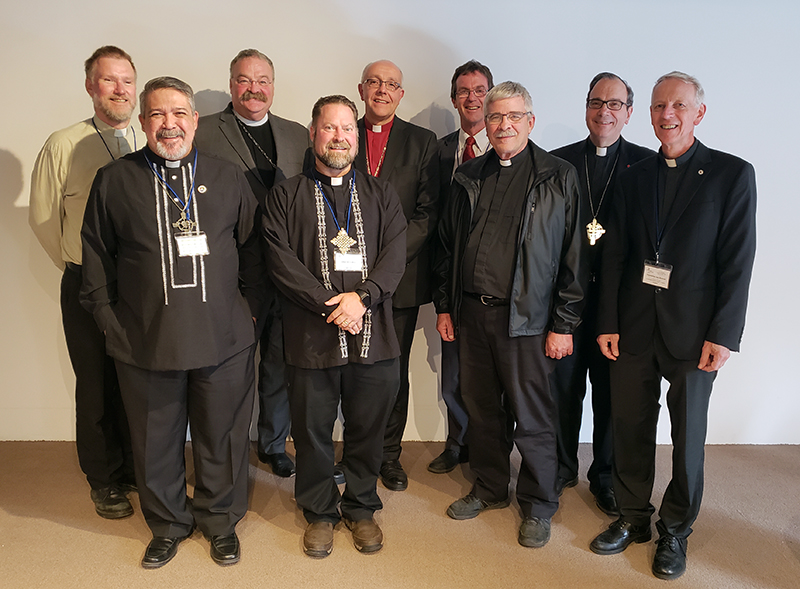
The ILC’s Executive Committee (l-r): ELCE Chairman Jon Ehlers; LCP President Antonio Reyes; LCMS President Matthew Harrison; Rev. Dr. Albert Collver, ILC Executive Secretary;  SELK Bishop Hans-Jörg Voigt, Chairman of the ILC; FELSISA Bishop Dieter Reinstorf; LCC President Timothy Teuscher; Rev. Dr. Robert Bugbee; and ELKB President Gijsbertus van Hattem, ILC Secretary. Not present: President Rudi Zimmer of the Evangelical Lutheran Church of Brazil.

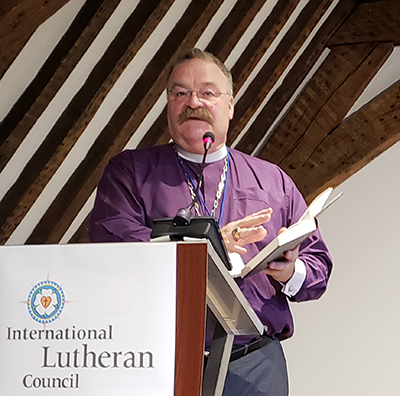
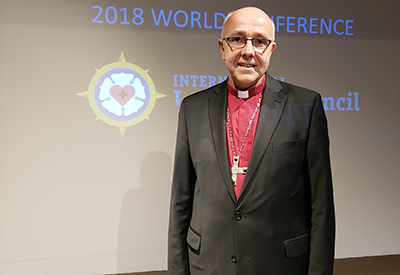
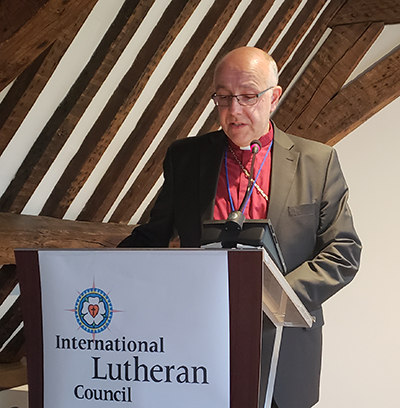
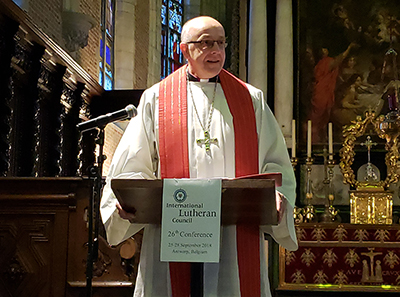
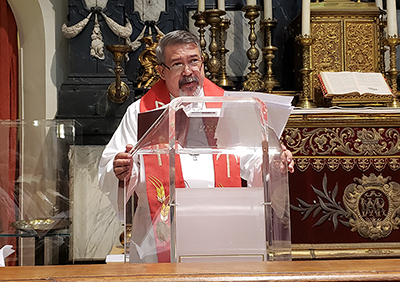
ILC Chairman Hans-Jörg Voigt.

BELGIUM – On September 27, 2018 delegates to the International Lutheran Council’s (ILC) World Conference unanimously reelected Rev. Dr. Hans-Jörg Voigt as ILC Chairman for another triennium.

Chairman Voigt is Bishop of Germany’s Independent Evangelical Lutheran Church, a position he has held since 2006. He was first elected Chairman of the ILC in 2012 and was reelected to the position in 2015. He had previously served as Interim Chairman of the ILC beginning in 2010.

The ILC also reelected President Gijsbertus van Hattem of the Evangelical Lutheran Church in Belgium to serve as Secretary for the Executive Committee.

The remaining five elected positions on the ILC’s Executive Committee are filled by church bodies as opposed to specific individuals. Serving as the representative for Africa is the Free Evangelical Lutheran Synod in South Africa, which is led by Bishop Dieter Reinstorf. The region of Asia will be represented by The Lutheran Church in the Philippines, which is led by President Antonio Reyes. Europe will be represented by the Evangelical Lutheran Church of England, which is led by Chairman Jon Ehlers. The world region of Latin America will be represented by the Evangelical Lutheran Church of Brazil, led by President Rudi Zimmer. Finally, the North American region will be represented by Lutheran Church–Canada, which is led by President Timothy Teuscher.

The Executive Committee has the right to appoint additional voting members to the committee, as per new bylaws adopted in 2017. On September 28, the Executive Committee reported that Rev. Dr. Robert Bugbee (Past President of Lutheran Church–Canada and former Vice-Chairman of the ILC) has been reappointed to serve on the Executive Committee, and that President Matthew Harrison of The Lutheran Church—Missouri Synod has also been appointed to serve.

The Vice-Chairman of the ILC is not elected by the World Conference, and is instead elected by the Executive Committee from its World Area Representatives. That election will take place during the Executive Committee’s first meeting.

———————

Note: This story and its photo have been updated to indicate additional members appointed to the Executive Committee.

ILC pledges gift to Latvian church following fire

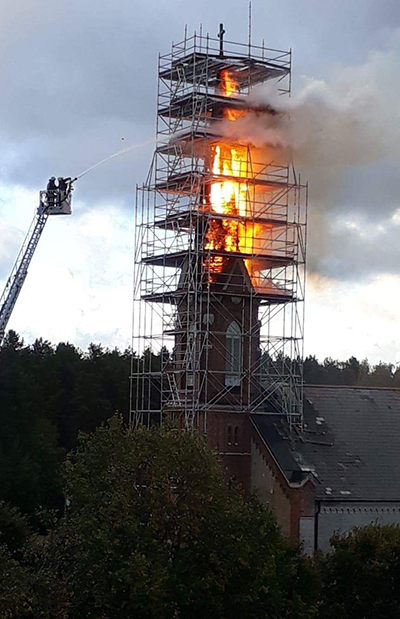
The fire in St. John’s church in Pink, Latvia.

LATVIA – The International Lutheran Council (ILC) has pledged a small gift to the Evangelical Lutheran Church of Latvia (ELCL) to assist with repairs following a fire September 25 at St. John’s church in the town of Pinki, just outside Riga.

News of the fire broke during the ILC’s World Conference in Belgium, at which two members of the ELCL are present as guests: Archbishop Janis Vanags and Rev. Andris Kraulins, who serves the ELCL in its international relations. Rev. Kraulins is pastor of the affected congregation, and had to depart the conference early to assess the situation.

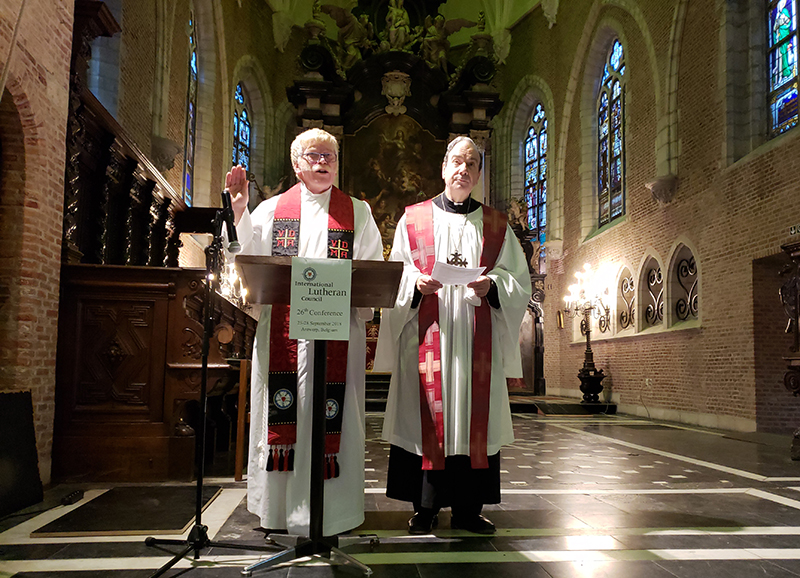
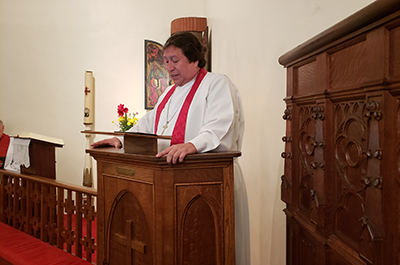
The convention paused from its work as ILC Chairman Hans-Jörg Voigt led a prayer for the building and the people of the congregation.

“We are deeply moved to hear about the fire at this congregation,” said Rev. Dr. Albert Collver, Executive Secretary of the International Lutheran Council. The ILC has offered a small gift in the amount of $5,000 to assist in repairing the damage.

Thanks to the work of firefighters, damage to the church was not as severe as it could have been.

The International Lutheran Council and the Evangelical Lutheran Church of Latvia enjoy a growing relationship, with Dr. Collver and the Chairman Hans-Jörg Voigt recently visiting the Latvian church to address their General Pastors Conference on the work of the ILC.

———————

ILC World Conference: Martyrdom and Ecumenism

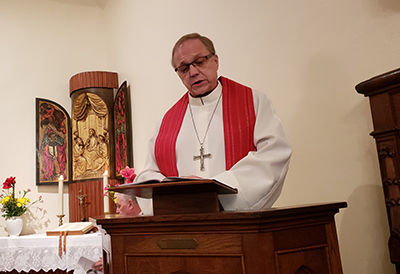
ELMDF Bishop Risto Soramies preaches during matins.

BELGIUM  – The second day of the ILC’s 2018 World Conference (September 26) began with a service of matins and a commemoration of the martyrs Johann Esch and Heinrick Voes. Esch and Voes were Augustinian monks who had converted to Lutheranism along with the rest of their monastery in Antwerp. For this crime, Esch and Voes would become the first Lutheran martyrs when they were burned at the stake in Brussels on July 1, 1523.

Bishop Risto Soramies of the Evangelical Lutheran Mission Diocese of Finland (ELMDF) preached for the service, reflecting both on the Belgian martyrs Esch and Voes and the lesser sufferings we too face as Christians. “Most of us bear lighter crosses than brothers Johann and Heinrich,” he noted. “Nevertheless the enemy of our souls is trying and tempting us in many ways. But we do not have to resign and grow weary or even be sad or sorry. Through Jesus we are God’s people, beloved, forgiven and upon us rests God’s glory, hidden to human eyes, including ours, but seen by the angels.

“Therefore,” he concluded, “let those who suffer according to God’s will entrust their souls to a faithful Creator while doing good.”

The message took on particular poignancy for those who know Bishop Soramies’ own story: he, along with several other pastors in the ELMDF, were defrocked by the state church in Finland as a result of their faithfulness to the authority of Scripture.

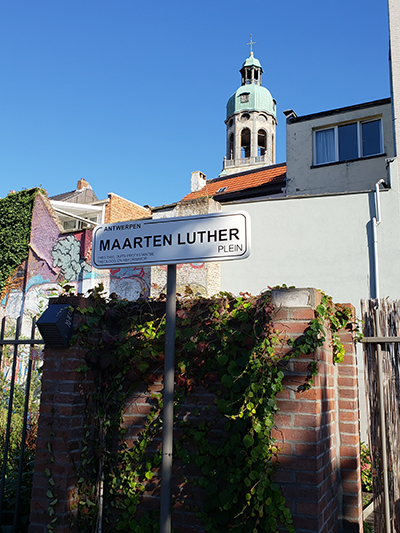
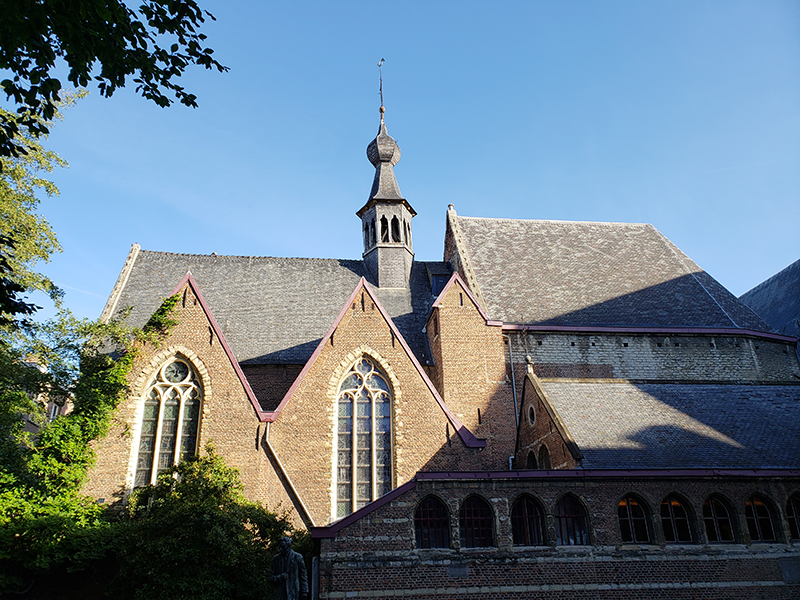
The service was held in Antwerp’s Holy Trinity Lutheran Church

Following matins, Rev. Isaiah Obare of the Evangelical Lutheran Church in Kenya presented a Bible study delving deeper into the subject of martyrdom.

Confessional Ecumenism in history and in the current moment

During the morning, the conference heard a report on the ILC’s 2017 incorporation and the bylaws adopted by the ILC Executive Committee at that time. The elevation in legal status better equips the ILC, as the bylaws themselves state, “to enable its further growth and development in the worldwide service of Confessional Lutheranism.” Later in the afternoon, the conference voted to accept the bylaws and commend the Executive Committee for their work.

Rev. Dr. Lawrence Rast presents on the history of fellowship talks in the LCMS.

The morning also featured the next lecture on the theme of “Ecclesiology and Ecumenism.” Rev. Dr. Lawrence Rast (President, Concordia Theological Seminary in Fort Wayne, Indiana), gave a lecture entitled “Turning Points – A History of the Fellowship Issue in the Lutheran Church—Missouri Synod.” Dr. Rast examined the history of the LCMS’ approach to ecumenical relationships with others Lutherans, noting that its twin desire “to avoid both separatism/schism and unionism/syncretism” manifested itself in different ways in different contexts.

“How we determine or assess agreement in confession with other church bodies can vary from situation to situation,” he explained. “Given the vastly different situations that are increasingly encountered in today’s ecclesial context, it seems necessary and appropriate to avoid a ‘one size fits all’ approach and instead develop different ways of assessing agreement that are appropriate to the church body or group in question.” To that end, Dr. Rast invited conference attendees to discuss how the churches of the ILC might: (1) better appreciate the relevance of each church’s individual histories in inter-church discussions; (2) identify appropriate modes for assessing confessional agreement in different contexts; (3) consider different procedures by which altar and pulpit fellowship might be declared between churches; (4) examine the relationship between public confession and public membership in a church body; and (5) consider how we might relate to confessional groups within larger church bodies.

Delegates considered these questions in smaller World Region groups, with spokesmen sharing some of the results of their discussions with the wider conference afterwards.

ILC Growth and Dogmatics Presentation

The most prominent piece of business in the afternoon was the reception of new members into the International Lutheran Council. In total, the ILC voted to receive seventeen new church bodies as members, representing 4.15 million Lutherans across the globe (full story here).

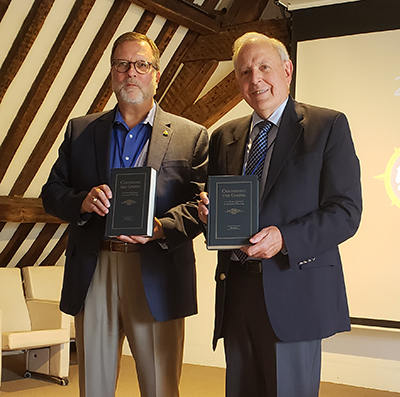
Dr. Bruce Kintz of Concordia Publishing House and Dr. Samuel Nafzger show the new dogmatics series from the LCMS.

Later in the afternoon, Rev. Dr. Samuel H. Nafzger spoke on the subject of dogmatics, noting the publication of a new two-volume dogmatics text from The Lutheran Church—Missouri Synod entitled Confessing the Gospel: A Lutheran Approach to Systematic Theology (published by Concordia Publishing House). Dr. Nafzger, who is editor of the series, formerly served as Executive Secretary of the ILC from 1993-2011. He also served as LCMS as director of the Commission on Theology and Church Relations from 1974-2008.

In his lecture, Dr. Nafzger outlined the multi-decade development of the series and detailed the “building blocks” approach which frames the book. Each chapter considers its subject from a variety of viewpoints, including its Scriptural Foundation and Confessional Witness, a Systematic Formulation, Historical and Contemporary Developments, and its Implications for Life and Ministry.

Every participant in the ILC’s 2018 World Conference will receive a copy of the new dogmatics series.

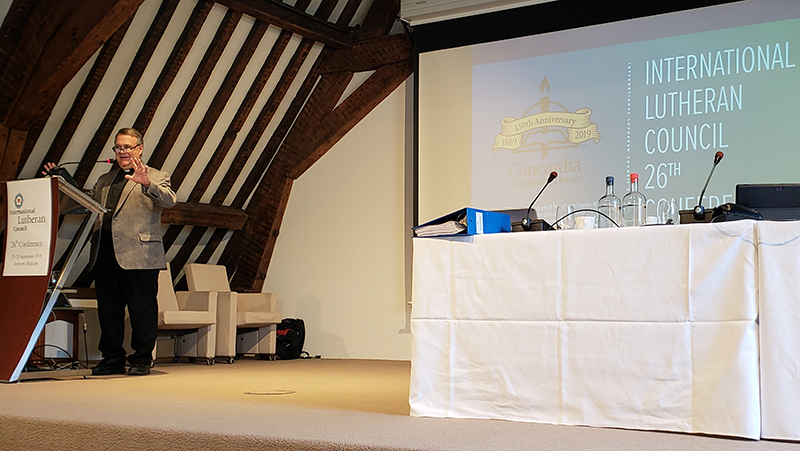
ILC Chairman Hans-Jörg Voigt gives his report.

The convention also heard the report of ILC Chairman Hans-Jörg Voigt, who framed his thoughts around the subject of the ILC’s ecumenical relations and the catholicity of the Lutheran Church. “Ecumenism and catholicity matter to us strongly,” he said. Drawing on the definition provided by Vincent of Lérins as adapted in the Lutheran tradition, Chairman Voigt defined catholicity as that which has been believed always, everywhere, and by all on the basis of Scripture. This understanding of catholicity gives us a platform for a “rightly understood ecumenism.” And because we have a

solid grounding in the Scriptures and the Confessions, he said, “we are strong enough to be open to ecumenical dialogue in our day.”

The rest of the afternoon was dedicated to regional meetings, and reports from World Areas, with the conference hearing reports from Asia, Africa, and North America.

A return to martyrdom

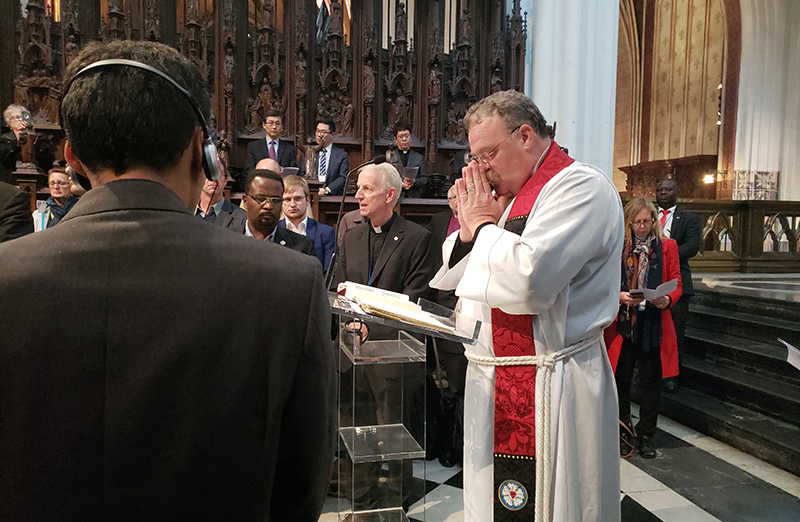
LCMS President Matthew Harrison prays in preparation before giving his sermon.

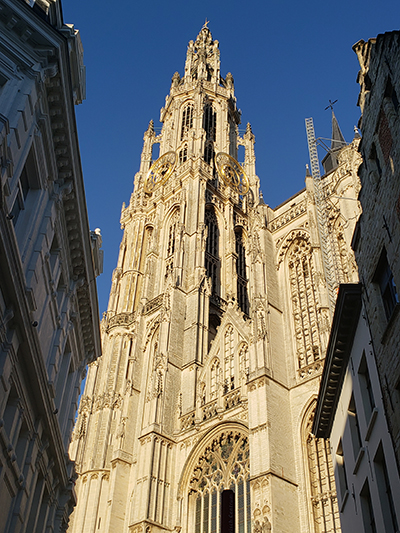
The Cathedral of Our Lady in Antwerp, Belgium.

The day ended, as it began, with a service reflecting on martyrdom. LCMS President Matthew C. Harrison preached a sermon reflecting on the martyrs Esch and Voes, tying their stories back to the work of Luther, to earlier martyrs in the Church, and finally to the great Martyr, Christ Himself. In the end, President Harrison explained, it is the sacrifice of Christ alone—His death and resurrection—which gives meaning to the deaths of all the other martyrs and to our own struggles to stand firm in suffering and opposition. For it is by the blood of Christ that we are saved.

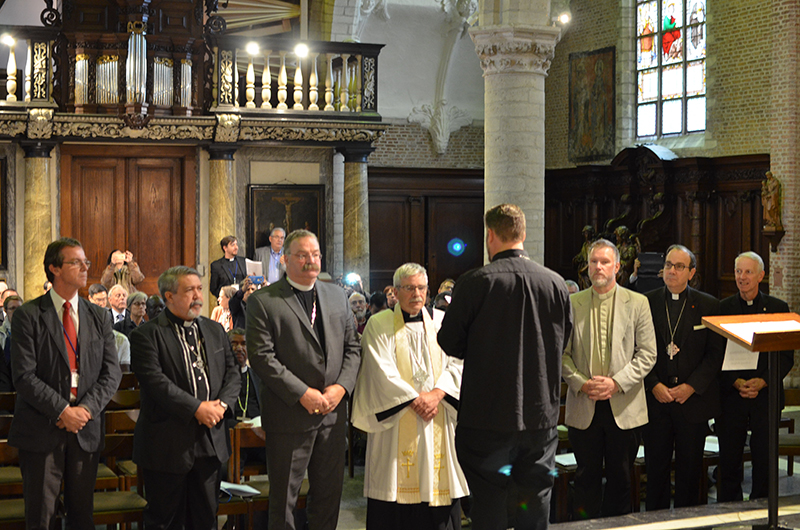
The service was held in Antwerp’s Cathedral of our Lady, a place “touched by the Reformation and Counter-Reformation,” noted Vicar General Bruno Aerts, who welcomed the ILC to the church on behalf of the Roman Catholic Archdiocese of Antwerp. The building was subject to major iconoclastic attacks and destruction in 1566 by Calvinist iconoclasts. The church today is celebrated for its artistic beauty, including three major pieces by Peter Paul Rubens completed in the early 17th century.

President Gijsbertus van Hattem of the Independent Evangelical Lutheran Church in Belgium served as lector, while the organist and choir of the cathedral provided musical accompaniment for the service.

———————

ILC welcomes 17 new member churches representing 4.15 million Lutherans worldwide

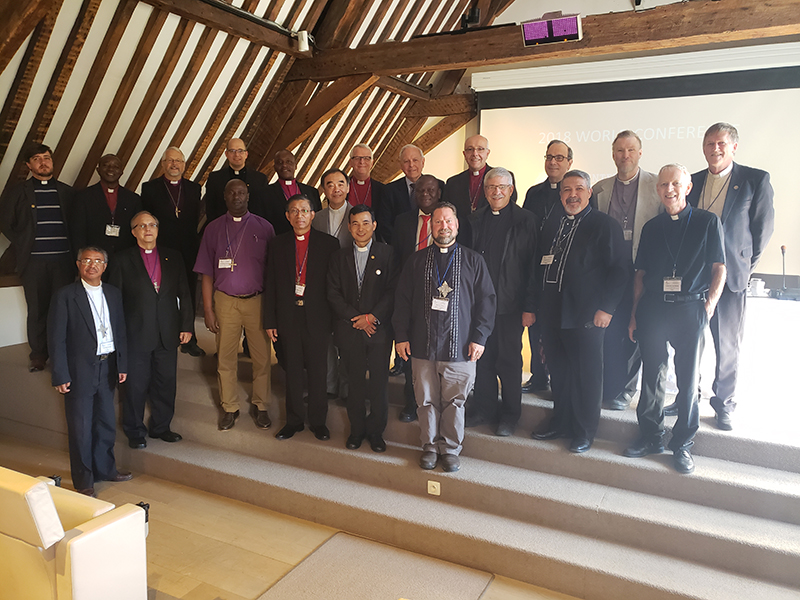
The ILC’s Executive Committee pose with representatives of new member churches.

BELGIUM – On September 26, 2018, the International Lutheran Council (ILC) welcomed seventeen new church bodies into membership, representing approximately 4.15 million Lutherans across the globe. Their addition more than doubles the number of Lutherans worldwide associated with the ILC, bringing the total to approximately 7.15 million members.

Votes to accept the new churches took place September 25-26, 2018, during the ILC’s 2018 World Conference meeting in Antwerp, Belgium.

In total, the ILC received ten new member churches from Africa, three from Europe, and four from Asia (including Sri Lanka’s Ceylon Evangelical Lutheran Church, which succeeds the now defunct Lanka Lutheran Church). That brings the total number of church bodies holding membership in the International Lutheran Council to 54.

Two additional church bodies applying for membership were declined at this time.

Of the new church bodies aligning with the ILC, eleven were received as full members and six as observer members. A synopsis of each new member church, including information on its history, membership numbers, leadership, and ILC membership class, appear below in alphabetical order by country.

 ———————

Benin: Lutheran Church in Africa—Benin Synod
The Lutheran Church in Africa—Benin Synod (Eglise Luthérienne en Afrique—Synode du Bénin – ELA-SBe) has 400 members in five congregations throughout Benin. The church itself was established in 2012 and officially registered in 2014, but its history goes back to 1996, when The Lutheran Church—Missouri Synod began supporting missionary work begun by the Evangelical Lutheran Church of Ghana. The ELA-SBe was born out earlier attempts to establish a confessional Lutheran church body in Benin. The church is led by President Abona Legue Koumbi. The ELA-SBe was accepted as a full member of the ILC.

Burkina Faso: Evangelical Lutheran Church of Burkina Faso
The Evangelical Lutheran Church of Burkina Faso (Eglise Evangelique Lutherienne du Burkina Faso – EELBF) has approximately 1,400 members in eight parishes and four preaching points throughout Burkina Faso. The church was officially established and recognized in 1996. It was born through the pioneering mission work of the evangelist Rufus K. Kormah, who passed away in early 2011. The EELBF is led by President Tanpo Tchiriteme. The EELBF was accepted as a full member of the ILC.

Finland: Evangelical Lutheran Mission Diocese of Finland
The Evangelical Lutheran Mission Diocese of Finland (Suomen evankelisluterilainen Lähetyshiippakunta – ELMDF) has approximately 2,000 members in 33 congregations throughout Finland. The Mission Diocese was founded in 1999 as method to support confessional groups within the larger Evangelical Lutheran Church of Finland, and transitioned into an independent church body in 2013. The ELMDF is led by Bishop Risto Soramies. The ELMDF was accepted as a full member of the ILC.

Indonesia: Indonesian Lutheran Christian Church
The Indonesian Lutheran Christian Church (Gereja Kristen Luther Indonesia – GKLI) has almost 21,000 members in 102 congregations throughout Indonesia. The church was founded in 1965 and emerged out of a reform movement that began within the Protestant Christian Batak Church. The GLKI is led by Bishop Esra Sinaga. The GKLI was accepted as an observer member of the ILC.

Liberia: Evangelical Lutheran Church of Liberia
The Evangelical Lutheran Church of Liberia (ELCL) has more than 7,300 members in 91 congregations throughout Liberia. The church officially began as a mission project of The Lutheran Church—Missouri Synod in 1978, but also traces its history to earlier work by Lutheran Bible Translators beginning in 1969. As a result of civil wars in Liberia, the Lutheran presence was scattered, resulting in four separate church bodies. These groups merged in 2009 to become the Evangelical Lutheran Church of Liberia. The ELCL is led by President Amos Bolay. The ELCL was accepted as a full member of the ILC.

Madagascar: Malagasy Lutheran Church
The Malagasy Lutheran Church (Fiangonana Loterana Malagasy – FLM) is one of the largest Lutheran church bodies in the world, with approximately 4 million members in 8,500 congregations. The church’s history dates back to the work of Norwegian missionaries in 1867, and was officially established as the FLM in 1950. The church is a member of the Lutheran World Federation. The FLM is led by Presiding Bishop David Rakotonirina. The FLM was accepted as a full member of the ILC.

Myanmar (Burma): Myanmar Lutheran Church
The Myanmar Lutheran Church (Myanmar Lutheran Kamkawm – MLC) has more than 3,400 members in 14 congregations throughout Myanmar. The church was founded in 1998, and has been a member of the Lutheran World Federation since 2010. The MLC is led by Bishop Mang Lone Andrew. The MLC was accepted as an observer member of the ILC.

Norway: Evangelical-Lutheran Diocese in Norway
The Evangelical-Lutheran Diocese in Norway (Det evangelisk-lutherske stift i Norge – ELDiN/DELSiN) has 150 regular communicants in five congregations throughout Norway. The church began as a confessional movement in the Lutheran Church of Norway, eventually leading to the creation of the “Church of Norway in Exile” under the counter-bishop Børre Knudsen. In 2013, the movement formerly organized as the Evangelical-Lutheran Diocese in Norway. The ELDiN is led by Bishop Thor Henrik With. The ELDiN was accepted as a full member of the ILC.

Rwanda: Lutheran Mission in Africa—Synod of Thousand Hills
The Lutheran Mission in Africa—Synod of Thousand Hills (Misioni y’Abaluteri muri Afrika—Sinodi y’imisozi igihumbi – LMA-STH) has more than 2,000 members in 22 congregations throughout Rwanda. The church came out of the Lutheran Church of Rwanda over doctrinal concerns in late 2014 and established a new church body at the end of that year. The LMA-STH is led by Bishop Selestine Munyentwari Seburikoko. The LMA-STH was accepted as an observer member of the ILC.

South Africa: St. Peter Confessional Lutheran Synod of South Africa
The St. Peter Confessional Lutheran Synod of South Africa (CLCSA) has 22,000 members in congregations and 15 preaching stations throughout South Africa. The church grew out of mission efforts centered in the town of Middelburg. The CLCSA is led by Bishop John Mandla Khumalo. The CLCSA was accepted as an observer member of the ILC.

South Sudan: South Sudan Evangelical Lutheran Church
The South Sudan Evangelical Lutheran Church (Kanitha de Yibenyjelikol Ludheran de Junub Thudan – SSELC) has approximately 5,000 members in 15 congregations. The church was formed in 2011, when 21 former ministers of the Episcopal Church of the Sudan left the church over doctrinal issues. The church is led by Bishop Nathaniel Boi Nyok Apar. The SSELC was accepted as an observer member of the ILC.

Sri Lanka: Ceylon Evangelical Lutheran Church
The Ceylon Evangelical Lutheran Church (CELC) has 500 members in 15 congregations throughout Sri Lanka. The church was officially founded in 2017, and succeeds the Lanka Lutheran Church, which was founded in 1978 but went defunct in the mid-2000s. The CELC is led by Chairman Roger B. James. The CELC has been accepted as a full member of the ILC. At the same time, the ILC has voted to remove the former Lanka Lutheran Church, which no longer exists, from its membership.

Sweden: Mission Province in Sweden
The Mission Province in Sweden (Missionsprovinsen i Sverige) has sixteen congregations throughout Sweden, and serves several other independent congregations in that country as well. The Mission Province was founded in 2003 as a reform group within the Church of Sweden by those attempting to maintain the biblical understanding of the ministry, after several decades of increasing pressure on ministers who sought to remain faithful to Scripture and the Lutheran Confessions. The Mission Province is led by Bishop Roland Gustafsson. The Mission Province has been accepted as a full member of the ILC.

Taiwan: The Lutheran Church of the Republic of China
The Lutheran Church of the Republic of China (財團法人台灣中國基督教信義會總會 – LCROC) has 640 members in 11 congregations throughout northern and northeastern Taiwan. The church was founded through the work of the Norwegian Lutheran Mission in Taiwan, with congregations founded in the early 1950s. The church has been fully independent since 2006. It is a member of the Lutheran World Federation. The LCROC is led by Bishop Nong-Ruay Chen. The LCROC has been accepted as an observer member of the ILC.

Togo: Lutheran Church of Togo
The Lutheran Church of Togo (Eglise Luthérienne du Togo – ELT) has 8,000 members in 45 congregations throughout Togo. It emerged out of mission work first begun by The Lutheran Church—Missouri Synod in 1980. The church body was officially founded in 2009. The church is led by President Kolani Lambon Lare. The ELT has been accepted as a full member of the ILC.

Uganda: Lutheran Church of Uganda
The Lutheran Church of Uganda (LCU) has more than 50,000 members in 140 congregations across Uganda. It emerged in 1993 out of mission work of the Evangelical Lutheran Church of Ghana working in partnership with The Lutheran Church—Missouri Synod. The church is led by Bishop Charles Bameka Isabirye. The LCU has been accepted as a full member of the ILC.

Uruguay: Lutheran Church of Uruguay
The Lutheran Church of Uruguay (Iglesia Luterana del Uruguay – ILU) has approximately 200 members in 3 congregations throughout Uruguay. The church arose out of the mission work of Argentinian Lutherans beginning in 1936. Depending on external circumstances, the original congregation was first a member of The Lutheran Church—Missouri Synod, the Evangelical Lutheran Church of Argentina, and the Evangelical Lutheran Church of Brazil. The church became independent in 2004, and by 2010 was established a national church body. The church is led by Principal Pastor André Luiz Muller. The ILU has been accepted as a full member of the ILC.

———————–

ILC 2018 World Conference opens in Antwerp, Belgium

Our Lady’s Chapel at the Elzenveld, site of the opening worship service of the International Lutheran Council’s 26th (11th) World Conference.

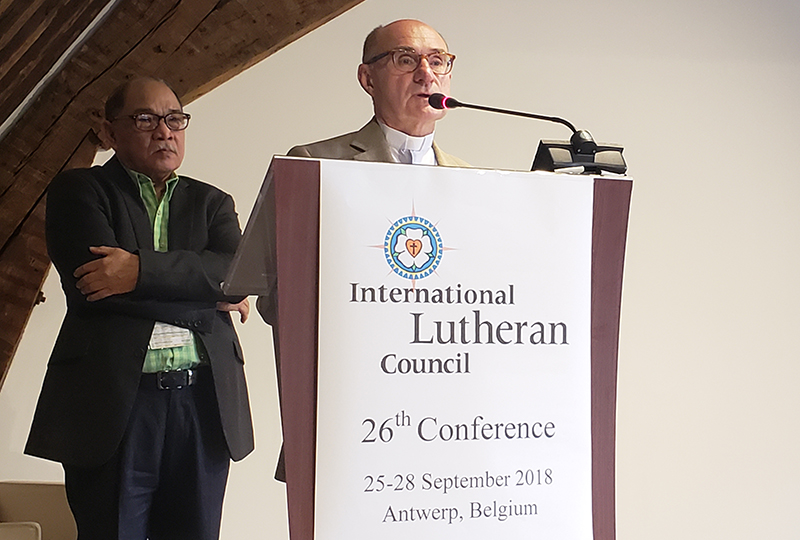
BELGIUM – The 26th (11th) World Conference of the International Lutheran Council (ILC) opened the morning of September 25, 2018 in Antwerp, Belgium. The event also marks the 25th anniversary of the ILC in its current form. The conference runs until September 28.

ILC Chairman Hans-Jörg Voigt preaches during the opening service of the International Lutheran Council’s 2018 World Conference in Antwerp, Belgium.

An opening service was held in Our Lady’s Chapel, a fifteenth century chapel of the medieval St. Elizabeth convent (now the Elzenveld Hotel and Conference Centre). ILC Chairman Hans-Jörg Voigt (Bishop of Germany’s Independent Evangelical Lutheran Church) served as preacher for the service, with Rev. Dr. Albert Collver (ILC Executive Secretary) serving as liturgist.

Following the service, the ILC received greetings from several local political and ecclesiastical dignitaries, including Antwerp’s Mayor, Bart De Wever; Antwerp’s Vice-Mayor of Culture and Religion, Jan Rombouts; Vicar General Bruno Aerts on behalf of the Roman Catholic Archdiocese of Antwerp; and Chairman John van der Dussen of the Antwerp Council of Churches.

Each was presented with a copy of the book 450 Years – Lutheran Church in Antwerp: 1566-1586 and Beyond, a new history by President Gijsbertus van Hattem of the Evangelical Lutheran Church in Belgium. It details in both Flemish and English the early history of Lutheranism in Belgium.

Ecclesiology and Ecumenism

Rev. Dr. Albert Collver speaks on ecumenism.

The morning of the first day of the ILC’s 2018 World Conference focused on a discussion of the convention theme: “Ecclesiology and Ecumenism.” Dr. Collver introduced the topic, joined by Rev. Dr. Roland Ziegler (Professor of Systematic Theology and Confessional Studies at Concordia Theological Seminary in Fort Wayne, Indiana).

In his remarks, Dr. Collver noted that the very first meeting of the group that would become the ILC likewise focused on the topic of church fellowship. The 2018 convention’s focus on ecclesiology and ecumenism is therefore a return to a discussion that has been ongoing for decades.

He went on to note that the first arrest of Lutherans took place 497 years ago this week in Antwerp. Two years later, the first Lutheran martyrs—Johann Esch and Heinrich Voes—were burned at the stake in Antwerp. And yet the opening of the ILC World Conference in 2018 saw greetings from the local Roman Catholic Archdiocese. So too the ILC has for several years been participating in an informal international dialogue group with the Pontifical Council for Promoting Christian Unity. “Times have changed,” Dr. Collver reflected, “yet our Confessions remain the same.”

Rev. Dr. Roland Ziegler continues the introduction of the convention theme.

Dr. Ziegler continued the discussion, noting that a confessional Lutheran understanding of ecumenism begins first by remembering the unity of Christ’s body which already exists, and recognizing that spiritual reality to be the work of God and not man. From that foundation, he turned to a discussion of the seventh article of the Augsburg Confession, unpacking what it means for the unity of the visible church to be dependent on the Gospel being taught purely and the sacraments rightly administered. Dr. Ziegler outlined four different interpretations of this article, ultimately arguing that agreement on the Gospel and the sacraments includes agreement not only on the teachings of the Confessions but also in all teachings of Holy Scripture.

Beginning from such a point, confessional Lutheran ecumenism seeks to determine what schisms in the church are justified (as a rejection of errant doctrine) and which are unjustified (where people prefer one human tradition over another), while ultimately seeking resolution to both forms of division through: the preaching of the Gospel in its fullness, seeking opportunities to speak with one another through the work of groups like the ILC, praying for the unity of the Church, and working to preserve unity in our own individual church bodies. At its heart, confessional Lutheran ecumenism is grounded in both truth and love, Dr. Ziegler said: “Love and truth belong together,” he explained. Both are necessary “in our striving for unity.”

The theme will be further unpacked through three keynote lectures over the next days of the conference.

Growing to meet the needs of confessional Lutherans worldwide

Work in the afternoon was overshadowed in part by the report of a fire in the tower of a Lutheran church in Latvia. ILC Chairman Voigt led the World Council in prayer for the affected congregation and community.

The afternoon featured the report of the ILC’s Executive Secretary, who traced the history of the ILC from earlier confessional Lutheran inter-church assemblies in the 19th century down to the present day, where the ILC is celebrating 25 years in its current form. “In 25 years, much has remained the same about the ILC,” noted Dr. Collver in his report, “particularly the ILC’s commitment to the inspired, inerrant Word of God as revealed in the Holy Scriptures and unreserved acceptance of the Lutheran Confessions found in the Book of Concord.” But one thing that has changed, he noted, is ever-growing interest in the work of the ILC by Lutheran churches around the world.

“Back in 1993 when the ILC was formed, it represented approximately four million Lutherans worldwide,” Dr. Collver noted. By contrast, he said, the current gathering in Belgium “has church leaders in attendance representing around 20 million Lutherans worldwide.” That number includes current member churches, 19 churches currently seeking membership in the ILC, and church bodies represented at the conference which are not yet seeking membership in the ILC, but whose leaders have grown close to the ILC in recent years as a result of the organization’s defense of the authority of Scripture and the Lutheran Confessions.

President Antonio Reyes of The Lutheran Church of the Philippines preaches during vespers.

The ILC is expanding its capacity to meet the growing interest and needs of confessional Lutherans around the world, Dr. Collver noted. Some of these initiatives—the formalization of the ILC’s legal status, for example, and the Lutheran Leadership Development Program—will be discussed in greater detail over the coming days.

Other business attended to in the afternoon of the first day of the conference included initial votes on the acceptance of new members to the ILC, World Region breakout sessions, and the report of the European World Region.

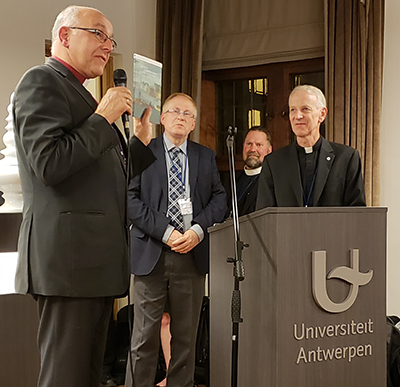
ILC Chairman Voigt (left) greets the publication of a new history of Lutheranism in Antwerp, following an introduction by Dr. Guido Marnef (centre). The book was written by President Gijsbertus van Hattem of the Evangelical Lutheran Church in Belgium (right).

The day’s business closed with Vespers, held in the historic St. Anne’s Chapel (also known as the Emperor’s Chapel), first built in 1512. The church is notable not only for its remarkable Counter-Reformation artwork, but also because it served as a Lutheran church from 1578 until the fall of Antwerp in 1585. President Antonio Reyes of The Lutheran Church of the Philippines preached the sermon, with Rev. Dr. Timothy Quill (Concordia Theological Seminary in Fort Wayne, Indiana) serving as liturgist.

Following dinner, attendees of the ILC convention were presented with copies of President van Hattem’s new history of Lutheranism in Antwerp, which was revealed earlier in the day when it was given as a gift to several dignitaries attending the ILC World Conference’s worship. Professor Guido Marnef of the University of Antwerp introduced the book, saying that “this fascinating but not well-known history deserves a broad circulation within the Lutheran community and far beyond.”

———————

The International Lutheran Council is a global association of confessional Lutheran church bodies which proclaim the Gospel of Jesus Christ on the basis of an unconditional commitment to the Holy Scriptures as the inspired and infallible Word of God and to the Lutheran Confessions contained in the Book of Concord as the true and faithful exposition of the Word of God. Every three years, member churches of the ILC and friends gather for the ILC World Conference, where they conduct business, hold elections, and discuss challenges and opportunities facing the confessional Lutheran church around the world.

ILC Visit to The Large Cross Church — Dr. Werner Klän

Dr. Klän lecturing to an ILC and PCPCU delegation at the Large Cross Church in Hermannsburg.

GERMANY – In the above video, Dr. Werner Klän, professor emeritus of LTS Oberursel, explains some history of The Large Cross Church (Große Kreuzkirche) in Hermannsburg, Germany. Rev. Louis Harms began the mission movement in Hermannsburg by establishing a mission seminary in 1849, which led to the development of the Hermannsburg Mission. The Hermannsburg Mission was active in both South Africa and Ethiopia. Due to the Prussian Union, Theodore Harms, the brother of Louis Harms, was removed as pastor by the State. After this a large number of people formed the Large Cross Church in 1878. Eventually, the Bleckmar Mission formed out of the Hermannsburg Mission.

The Large Cross Church was founded as an independent Lutheran congregation and later became part of the Independent Evangelical Lutheran Church (SELK), which is a member of the International Lutheran Council (ILC). Delegates from the ILC and from the Pontifical Council for Promoting Christian Unity (PCPCU) recently met in Bleckmar for an informal dialogue. The visit to Hermansburg and Bleckmar was to help explain a Lutheran view of mission for the church.

Dr. Roland Ziegler, Professor at Concordia Theological Seminary in Fort Wayne, at the Large Cross Church in Hermmansburg.

Dr. Ziegler described the Hermannsburg Mission theory: “Mission is the activity that originates in a living church. Rev. Harms stated in a sermon on the parable of the mustard seed and the leaven (Matthew 13:31-33), that this parable contains two points: ‘The Christian church will spread over the entire world. The church shall permeate the entire world. Both things must go together in true missions, but can only go together if we who do missions are not only Christians in name but when the sourdough of the gospel has permeated interiorly hearts and we therefore have become converted people, true, living members of Christ’s body and therefore send no other messengers but those who also are permeated by the Gospel, as far as men can judge.'”

The establishment of the Large Holy Cross Church and the mission societies in Hermannsburg were connected to the awakening caused by powerful preaching. Let us remember and live the motto of the Great Cross Church, “No cross, no crown” (“Ohne Kreuz keine Krone“).

———————

Meetings between ILC and PCPCU continue

GERMANY – On September 17-22, 2018 the Informal Dialogue Group between the International Lutheran Council (ILC) and the Pontifical Council for Promoting Christian Unity (PCPCU) will meet again. This time the gathering will take place on the premises of the Lutherische Kirchenmission (Lutheran Church Mission centre) in Bleckmar, Germany. The general topic of this informal dialogue is “The Presence of Divine Salvation in this World,” especially in the Church and its liturgy. This was stated at the beginning of the informal dialogue.

In Bleckmar, the conversations will center on the understanding of the real presence of Christ’s body and blood in the Lord’s Supper, the understanding of the presence of Christ’s sacrifice and the sacrifice of the Church, the co-operation between God and man in this regard, the office of the ministry, and the doctrine of justification.

Delegates on the ILC side are Rev. Dr. Albert Colver III (St. Louis, Missouri), Prof. Dr. Werner Klän (Lübeck, Germany), Prof. Dr. Roland Ziegler (Ft. Wayne, Indiana), Prof. Dr. Gerson Linden (São Leopoldo, Brazil), and Prof. Dr. John Stephenson (St. Catharines, Canada); for the topic of “time and simultaneousness”, Mr. Pavel Butakov has been co-opted. On the Roman Catholic side are Prof. Dr. Josef Freitag (Lantershofen, Germany), PD Dr. Burkhard Neumann (Paderborn, Germany), Father Dr. Augustinus Sander (Maria Laach, Germany), and Prof. Dr. Wolfgang Thönissen (Paderborn, Germany).

The dialogue group will prepare a final report that is meant to be adopted in the course of next year. Then it will be submitted to the President of the Pontifical Council for Promoting Christian Unity, Cardinal Koch, and to the Executive Committee of the International Lutheran Council.

———————

Latvia celebrates 25th anniversary of Archbishop’s consecration; ILC brings greetings, addresses Eastern European bishops conference

Celebrating the 25th anniversary of the consecration of Archbishop Jānis Vanags of the Evangelical Lutheran Church of Latvia. (Photo: Ulda Muzikanta)

LATVIA – The Evangelical Lutheran Church of Latvia (Latvijas Evaņģēliski Luteriskā Baznīca – LELB/ELCL) celebrated the 25th anniversary of the consecration of Archbishop Jānis Vanags in a special jubilee service in the Cathedral of Riga, Latvia on August 29, 2018. The anniversary coincided with the ELCL’s General Pastors Conference as well as an international gathering of church leaders for the Eastern European and Scandinavian Bishops Conference.

During the service, Archbishop Vanags preached on John 1:35-39, reflecting on Jesus’ call for all people to follow Him. “Jesus words ‘come and see’ are the most beautiful thing,” Archbishop Vanags said. “God calls. Jesus calls. He called me in my early childhood, during the Soviet era,” he reflected. “In an incredible way, He called me out of the darkness to Himself, to faith, and to ministry. It happens that God called me to serve in a unique way. But He also calls to every person, and every call is just as important… God’s call is your opportunity.”

Jesus’ words to “come and see,” Archbishop Vanags noted, are an answer to the question of the disciples: “Teacher, where are you staying?” That matters, he said, because God is not to be found everywhere, but only where He has made His dwelling. “Our church is often accused of being too conservative,” Archbishop Vanags noted, and of holding too rigidly to its doctrinal stances. “But our church does nothing of the sort,” he said. Instead, it merely seeks to ask the same thing that the disciples asked: “Lord, where do you live?” The church is called to “come and see” Christ where He has revealed Himself to be.

“Where is this place where Jesus lives?” Archbishop Vanags asked in conclusion. “Find it by listening to His preaching. For there, where Christ preaches, there is the Holy Christian church…. Let us listen again and again to hear the call of Jesus: ‘Come and see!’”

The ILC brings greetings, addresses conferences

Rev. Dr. Albert Collver (left) and Bishop Hans-Jörg Voigt (centre) bring greetings to the gathering on behalf of the International Lutheran Council.

Bishop Hans-Jörg Voigt, the Bishop of Germany’s Independent Evangelical Lutheran Church (SELK) and Chairman of the International Lutheran Council (ILC), was present for the event, bringing greetings and congratulations to Archbishop Vanags and the Latvian church. Rev. Dr. Albert Collver, Executive Secretary of the ILC, was also present, joining Bishop Voigt in bringing greetings on behalf of the International Lutheran Council. Both participated, along with numerous other church leaders, especially bishops from Eastern Europe, in the service of thanksgiving and prayer at the cathedral in Riga.

During the ELCL’s General Pastors Conference, Bishop Voigt gave a lecture on “International Relations and the International Lutheran Council.” He began by noting the distinction between “nation” and “nationalism”—something all too necessary today. Anytime one adds a sense of superiority to our understanding of “nation,” he warned, then we descend into nationalism.

Bishop Hans-Jörg Voigt presents on International Relations and the International Lutheran Council.

Such “nationalism” must not govern church relationships, Bishop Voigt said. Instead, when it comes to the topic of international relations from the perspective of the International Lutheran Council, he said, we do better to focus on the theological concept of the “catholicity” of the Church. Bishop Voigt appealed to the definition of catholicity given by the church father Vincent of Lérins, as alluded to and supplemented by the Formula of Concord—namely, that “catholicity” means what has been believed at all times, in all places, and taught by all Scripture. Such an understanding of the church will not lead to confessional arrogance, Bishop Voigt noted, but rather to repentance and humility.

Together with Dr. Collver, Bishop Voigt fielded questions about the International Lutheran Council from the pastors and bishops present. Both Bishop Voigt and Dr. Collver affirmed that they consider churches with dual membership in the International Lutheran Council and the Lutheran World Federation to be a valuable bridge between the two world organizations.

Events continued the next day in Saldus, Latvia, with the Eastern European and Scandinavian Bishops’ Conference. A major focus of discussion was the future of theological education in Europe, and the possibility of combining resources to meet challenges in that area. Plans were discussed for future meetings in the coming year. Present this year were leaders from Latvia, Lithuania, Germany, Belarus, Ukraine, Russia, Norway, Finland, Sweden, and the United States.

During the Bishop’s Conference, Dr. Collver presented on the “Present and Future of the International Lutheran Council.” He began with a brief overview of the ILC’s history before describing some of the ILC’s plans for the future. Among other topics, he noted the development of the Lutheran Leadership Development Program, an educational program which aims to assist Lutheran church bodies around the world in developing leaders who are competent in both solid confessional Lutheran theology as well as practical leadership skills.

———————

Preparing for the 2018 World Conference of the International Lutheran Council

BELGIUM – The International Lutheran Council (ILC) will hold its 26th (11th) World Conference September 25-28, 2018 in Antwerp, Belgium, meeting under the theme “Ecclesiology and Ecumenism.” The event will also mark the ILC’s 25th anniversary in its current form.

Among other business, the World Conference will elect officers to the ILC’s Executive Council as well as vote on the acceptance of several new members to the ILC.

“It is an honor and a blessing for our rather small Lutheran church in Belgium to host the ILC’s World Conference,” said President Gijsbertus van Hattem of the Evangelical Lutheran Church in Belgium (Evangelisch-Lutherse Kerk in België). “May the Lord of the Church bless our studies and decisions, in order to advance His Kingdom through the work of our confessional Lutheran churches.”

“We’re excited to be celebrating this special 25th anniversary for the ILC,” noted Rev. Dr. Albert Collver, Executive Secretary for the ILC. “The International Lutheran Council has become a strong voice for confessional Lutheranism worldwide, and we’re planning to continue that forward momentum during our meetings in Belgium.”

The conference theme of “Ecclesiology and Ecumenism” will be introduced by Dr. Collver and Rev. Dr. Roland Ziegler of Concordia Theological Seminary (CTS – Fort Wayne, Indiana) during the first day of the conference. Lectures on the topic over the following three days will be given by Rev. Dr. Lawrence R. Rast Jr. (CTS); Prof. Dr. Werner Klän (Emeritus, Lutherische Theologische Hochschule in Oberursel, Germany); and Rev. Wilando T. Roa (Lutheran Theological Seminary in Baguio City, The Philippines).

Rev. Dr. Samuel H. Nafzger will also be giving a special presentation on Confessing the Gospel: A Lutheran Approach to Systematic Theology. The two-volume Confessing the Gospel, released in 2017, is the first new dogmatics published by The Lutheran Church–Missouri in nearly a century. Dr. Nafzger was General Editor for the work. He formerly served as Executive Secretary for the International Lutheran Council from 1993-2011.

Throughout the week, additional church leader from around the world will lead delegates in Matins, Bible Studies, and Vespers.

The ILC is a global association of confessional Lutheran church bodies, presently counting 38 members throughout the world. While this year’s conference marks the 25th anniversary of the ILC in its current form, its predecessor body—the International Lutheran Theological Conference—dates back to 1952.

The ILC as it currently exists was formed in 1993 in Antigua, Guatemala, when representatives from all six continents adopted a constitution founding the International Lutheran Council as a global council of Lutheran church bodies.

———————

LWF unilaterally suspends regular meetings with the ILC

GENEVA – The Lutheran World Federation (LWF) has unilaterally moved to suspend regular meetings with the International Lutheran Council (ILC), following a joint decision by LWF General Secretary Martin Junge and LWF President Musa Panti Filibus.

Dr. Junge announced the decision in a report to the LWF Council in Geneva on June 29, 2018.

The International Lutheran Council received the news with regret. “We are disappointed in the LWF’s decision to break off regular discussions,” said ILC Executive Secretary Albert Collver. “It is difficult to see how unilateral action of this kind does anything but damage the relationship between our two organizations.”

“It is true that the ILC and the LWF have significant differences of opinion on a number of theological issues,” Dr. Collver continued. “But despite these very real differences, the ILC remains willing to meet with LWF leaders in a spirit of friendliness and mutual respect.”

The ILC and the LWF have held regular annual discussions since 2011, honouring an earlier 2005 Memorandum of Understanding which called for such meetings. Eleven church bodies currently hold membership in both the International Lutheran Council and the Lutheran World Federation, making regular contact between the two organizations particularly valuable.

The Lutheran World Federation considers itself a communion whose members are in altar and pulpit fellowship with one another. By contrast, the International Lutheran Council is instead an association of church bodies and not does consider itself a communion. While many members of the ILC are, in fact, in communion with one another, this is neither a requirement for nor a direct result of membership in the ILC itself.

LWF Objections

In recent years, a number of LWF churches and confessional groups within LWF churches have contacted the ILC in hopes of developing a closer relationship. In his report, Dr. Junge indicates that he disapproves of the ILC’s fielding of such requests as well as its plans to make room in its organizational structure to recognize these groups. The LWF is therefore suspending meetings with the ILC at the present time.

The ILC is unapologetic in its position. “When faithful Lutherans come seeking closer ties to the ILC, we will of course welcome and support them, even if they should be a minority in their own country or church body,” said Dr. Collver. “Christian hospitality and love demand nothing less.”

The LWF report also suggests the ILC has not been clear in affirming that churches may hold membership in both organizations. While the ILC feels it has been clear on this matter, it here reaffirms that it permits dual membership in the International Lutheran Council and the Lutheran World Federation.

In his report, Dr. Junge also accuses the ILC of spreading “aggressive and wrong communications about the LWF”—charges that the ILC categorically denies. “We take very seriously the Christian’s call not to bear false witness against one’s neighbour,” Dr. Collver noted, “just as we take seriously the entire Law and Gospel in God’s Holy Scripture.”

The LWF writes that it envisions the suspension of meetings with the ILC as temporary in nature, with plans to resume meetings “after the second half of 2019.” The ILC for its part stands ready to resume contact with the LWF at any time.

———————

Signup for ILC Updates